Rodent & pest control · Bellevue, WA
Rats out, gaps sealed: pest control in Bellevue
Roof rats from Bellevue's greenbelts climb fences and fir branches into attics. We trap them, seal every entry point, and clean up what they left behind.
- Roof returns, gable vents and plumbing vent gaps
- Runways along fence tops and overhanging limbs
- Crawl space vents and burrows under decks

 Rodent & pest control for Bellevue homes
Bellevue homes
Rodent & pest control built around Bellevue houses
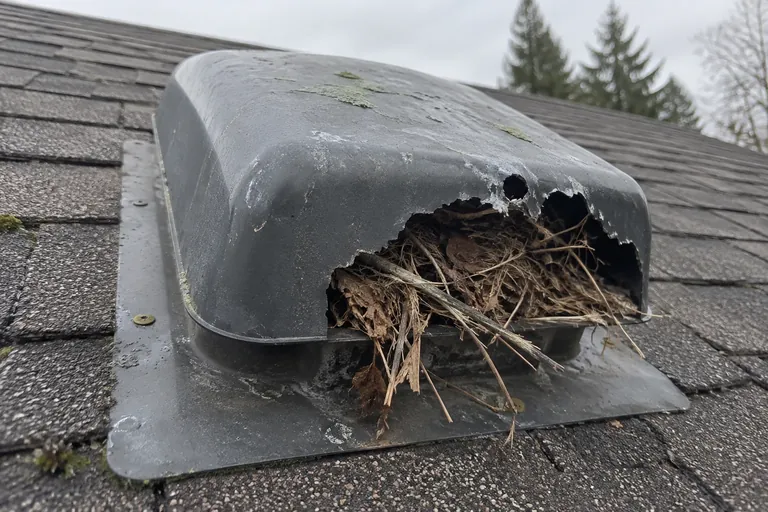
Bellevue keeps a lot of green space between its neighborhoods: Mercer Slough, Kelsey Creek, the Coal Creek corridor and dozens of smaller greenbelts. Roof rats live comfortably in that cover and travel along fence tops, overhead lines and tree limbs to reach houses. Once they're on the roof, a gap about the size of a quarter is enough. Common openings on Bellevue homes are roof returns where the gutter meets the fascia, gable vent screens, gaps around plumbing vents, and the corners of garage doors. Norway rats come in lower, burrowing under decks and through crawl space vents, and both kinds return to the same routes night after night.
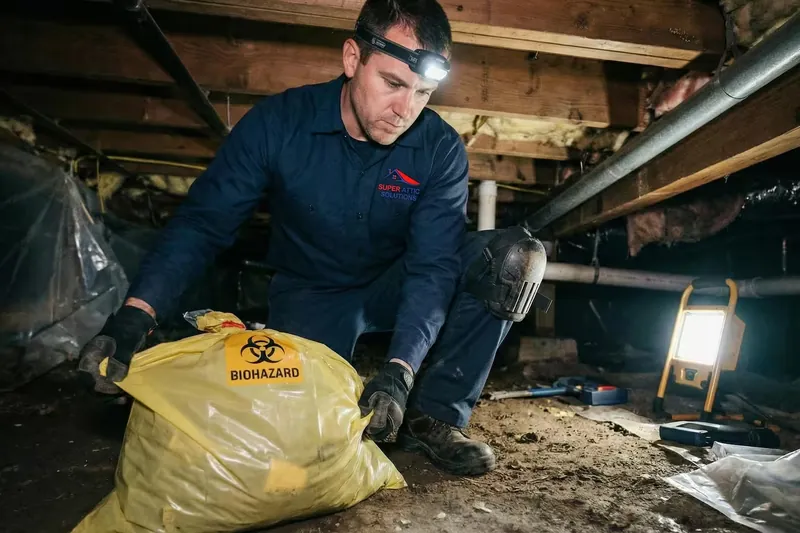
We start with a free inspection of the roofline, attic, crawl space and foundation, with photos of droppings, runways and openings. Then we trap the rats that are inside. We tell you exactly what we use and where it goes. Once activity stops, we seal every entry point with materials rodents can't chew through, such as galvanized mesh and metal flashing, and cover vents with sturdy screens. After that comes cleanup: soiled insulation out, droppings removed, surfaces sanitized, and fresh insulation in. Cut tree limbs back from the roof as well, and you've taken away the route they used to get there.
- Roof returns, gable vents and plumbing vent gaps
- Runways along fence tops and overhanging limbs
- Crawl space vents and burrows under decks
- Droppings and nesting in attic insulation
Local conditions
What Bellevue throws at attics and crawl spaces
The houses
Most of Bellevue's single-family housing went up between the 1950s and the 1980s. Lake Hills, Crossroads and Eastgate are full of 1950s and 1960s ramblers and split-levels on vented crawl spaces, with low-pitch roofs and shallow attics. Newport Hills and Somerset added 1960s and 1970s split-levels and daylight basements stepped into sloped lots. Bridle Trails has larger custom homes on wooded acre lots. West Bellevue and Woodridge mix originals with big new rebuilds. Older attics often still hold the first layer of fiberglass batts, now thin and compressed, topped with whatever a later owner blew in.
The weather
Bellevue sits between Lake Washington and Lake Sammamish, and humidity stays high through the wet season from October to May. Mercer Slough and Kelsey Creek run through low ground where crawl spaces stay damp. Hillside neighborhoods like Somerset and Newport Hills take more wind in winter storms. Mature Douglas firs and cedars shade many roofs, holding moss and dropping needles that clog gutters and soffit screens.
The wildlife
Bellevue's greenbelts, creek corridors and parks give rodents cover close to houses. Roof rats run fence tops, overhead lines and fir branches to reach roofs, then slip in at roof returns and vent gaps. Norway rats burrow along Kelsey Creek and Mercer Slough and under decks and sheds. Mice move indoors each fall. Raccoons and squirrels test loose vent screens and soffits.
Typical results
What rodent & pest control looks like

 BeforeAfter
How it works
Same crew, same standard, in Bellevue
- 01
Identify the animal and entry
- 02
Make sure it's out
- 03
Remove nests and debris
- 04
Repair and seal openings
- 05
Clean and restore
How we handle attic and crawl space pest control, step by step →
FAQ
Rodent & pest control in Bellevue: FAQ
Still unsure? Call (800) 674-4933 and talk it through with us.
Are roof rats or Norway rats more common in Bellevue?
Both live here. Roof rats are the climbers and usually end up in attics, getting in high from trees and fences. Norway rats are heavier burrowers and tend to show up in crawl spaces, garages and under decks. The droppings, entry points and runways tell us which one you have, and the sealing plan changes to match.
Why do I hear rats at night but never see them?
Rats are most active after dark, and roof rats travel hidden routes: inside soffits, along top plates and through insulation. Scratching or running sounds in the ceiling at night, especially in fall and winter, usually mean they're nesting in the attic. A free inspection confirms it with droppings and entry points we can photograph.
More in Bellevue
Other services here
Other cities
Rodent & pest control nearby
Free rodent & pest control inspection in Bellevue.
Book a free inspection. We'll photograph your attic and crawl space and walk you through what we find, before you decide anything.