
Rodents & pests
Rodent removal services
We trap the rats and mice living in your home, remove nests and droppings, then seal the way in.
Learn more →Attic & crawl space rat removal · Puget Sound
Attics and crawl spaces are where rats live in Puget Sound homes. Each space has its own rat, its own damage and its own fix. We work both, because rats move between them.
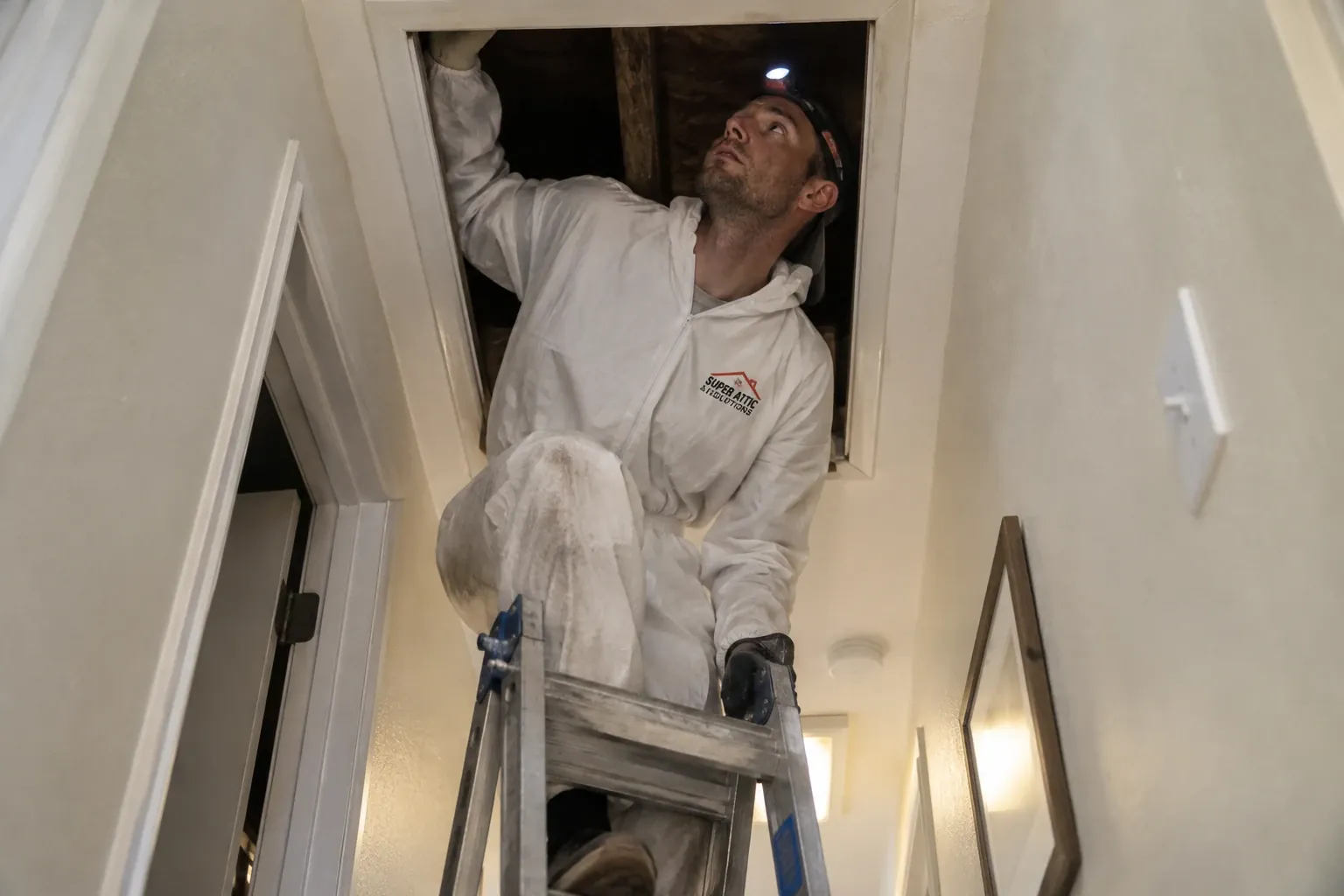 Technician entering the attic through the ceiling hatch · Seattle, WA
The problem
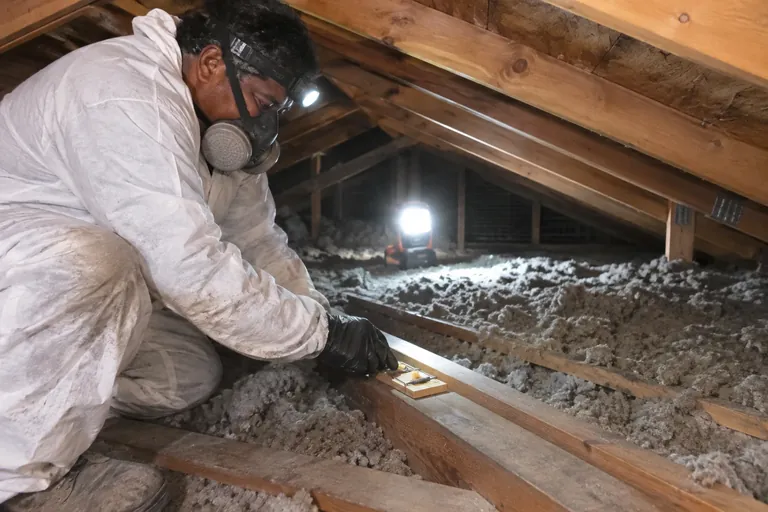
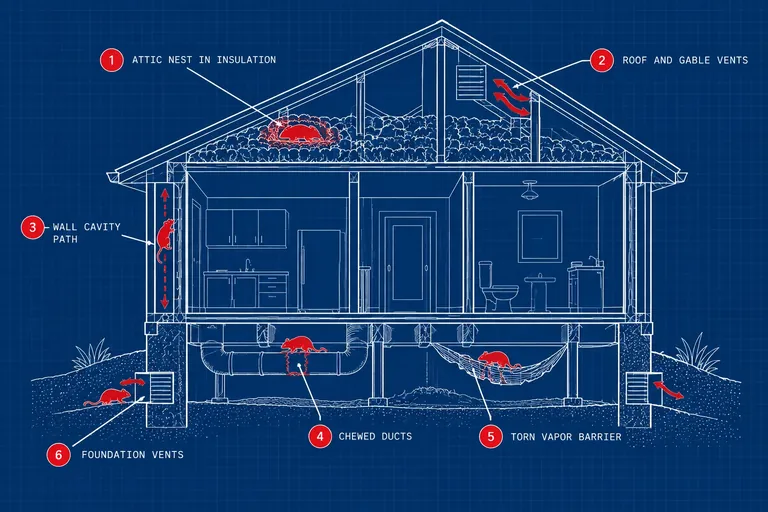
In the attic, rats burrow into the insulation and build nests along the eaves, where it's warm and quiet. They flatten tunnels through blown-in insulation, chew the wiring that runs across the joists and tear open bath fan ducts and flexible HVAC ducts. Their droppings and urine soak into the insulation, which loses much of its value once it's matted and soiled. You hear them overhead at night.
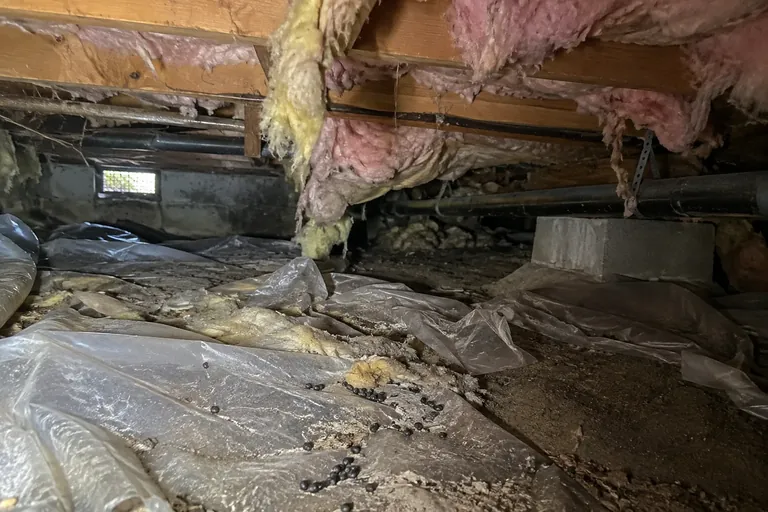
In the crawl space, the damage is lower and wetter. Rats run along the sill and joists, rip up the plastic vapor barrier, pull down the batts between the floor joists and chew ducts hanging below the floor. Norway rats sometimes burrow into the soil. You smell them through floor registers more than you hear them. A rat problem that seems to be in one space is often in both, using a wall cavity or plumbing chase to move between them.
Warning signs
Some clues point up, some point down. The first three are attic signs, the last three are crawl space signs.
Rats in the attic are loudest in the hours after dark, running along joists and over the top plates near the eaves.
From the attic hatch, look for trails or dips in blown-in insulation and droppings on the boards around the opening.
A bath fan that suddenly roars or stops venting, or weak heat at a register, can mean a duct chewed open in the attic.
A musty, ammonia smell from floor registers or the crawl space hatch points to urine and droppings under the house.
Look through the crawl space hatch. Ripped, pulled-back or shredded plastic on the ground is a sign of rat traffic.
Batts hanging down or lying on the ground under the floor are often pulled out by rats nesting between the joists.
Proof of work
Drag the slider to compare. Illustrations of typical results on homes like yours.

 BeforeAfter
 STEP 01
 STEP 02
 STEP 03
 STEP 04
How we do it
We treat both spaces as one connected job. Here is the order of work.
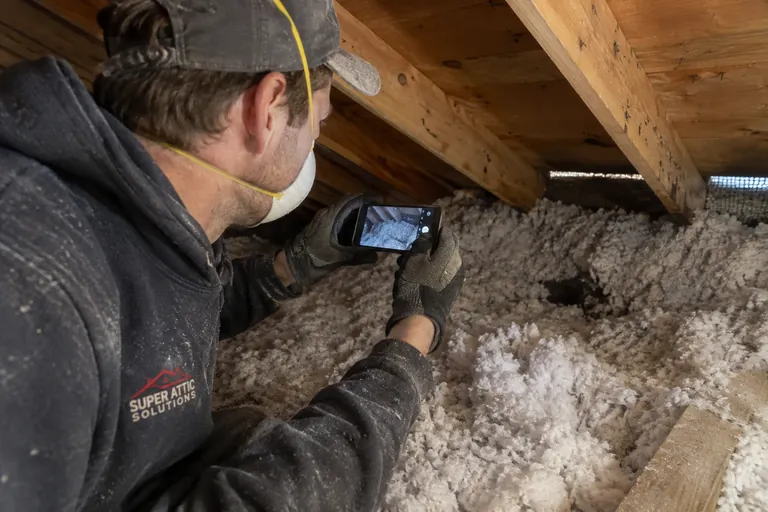
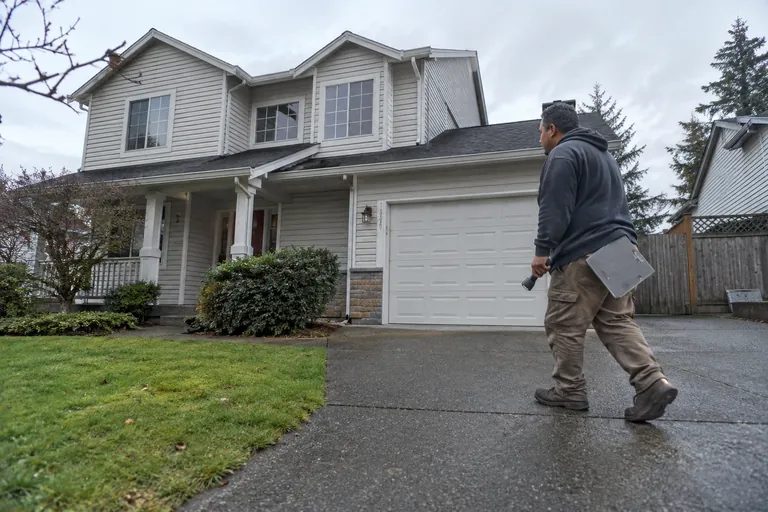
We go into the attic and the crawl space on the same visit, then walk the roofline and foundation outside. Droppings, nests, chewed wires, torn barrier and entry points get photographed. We also check the paths between the two spaces, like plumbing chases and open wall cavities, so we know if the rats are moving between them.
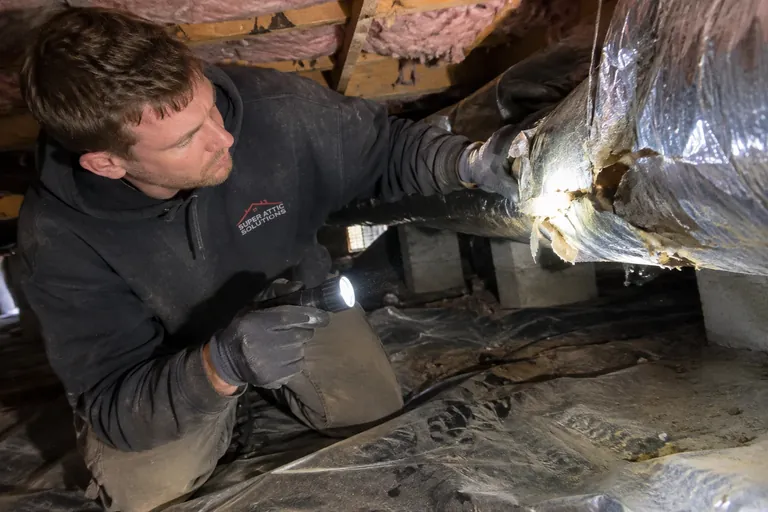
Traps go on the runways in each space: along attic top plates and joists near nests, and along crawl space sill plates, pipes and the foundation wall. You'll know where every trap is and what type it is. Any bait station use is explained before it's placed.
We return to clear catches and reset traps in the attic and crawl space. One space often goes quiet before the other. We keep working until both stay empty and fresh droppings stop appearing, then pull the traps and note which entry points showed the most traffic.
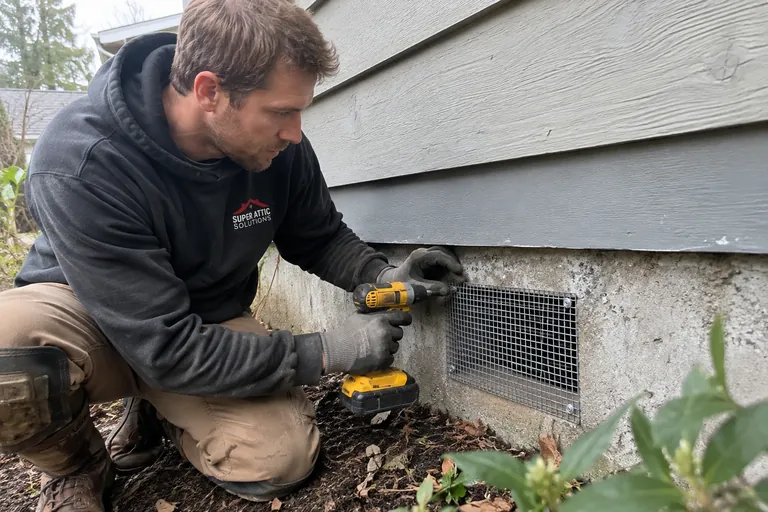
Attic rats usually come in high, through roof vents, gable vents and soffit gaps. Crawl space rats usually come in low, through foundation vents, sill gaps and pipe entries. We seal both ends with metal mesh, hardware cloth and sheet metal, keeping vents open to air.
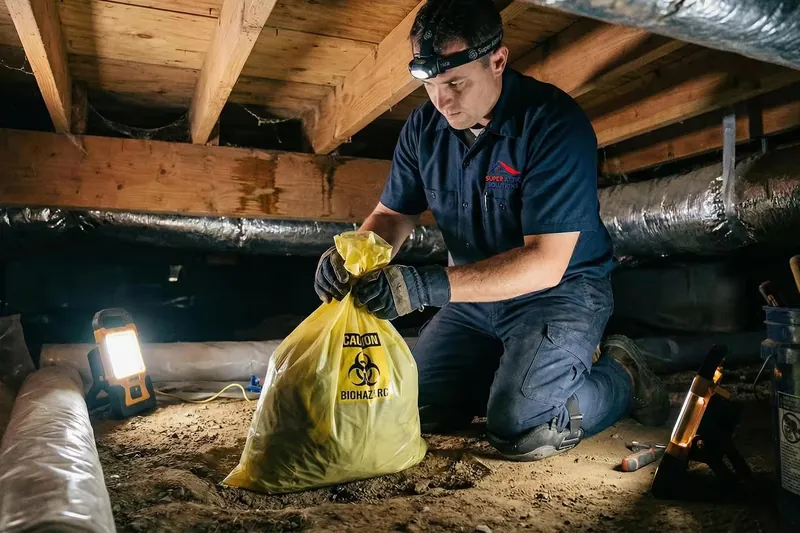
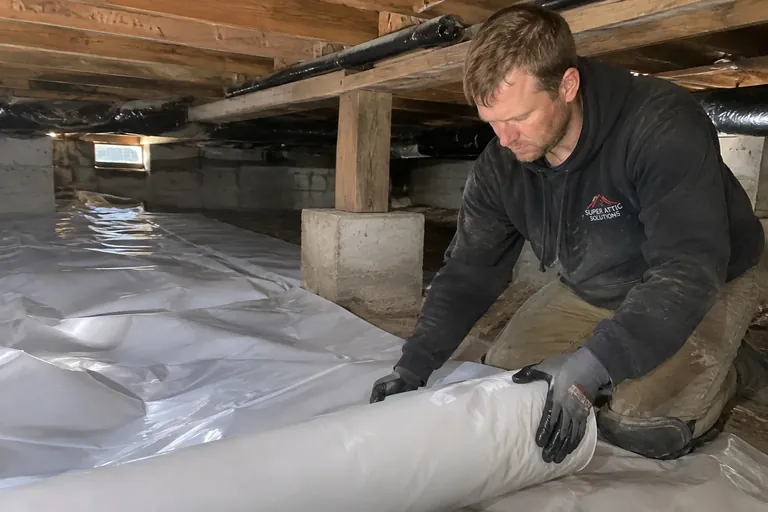
We quote cleanup for each space: removing soiled attic insulation and reinsulating, and replacing torn crawl space vapor barrier and fallen floor batts. Chewed ducts and bath fan lines can be replaced too. You get before and after photos of both spaces.
What you get
| Inspection | Attic, crawl space, roofline and foundation in one visit, with photos |
|---|---|
| Attic trapping | Traps on top plates and joists near nests and eave entries |
| Crawl space trapping | Traps along sill plates, pipes and the foundation wall |
| High entry sealing | Roof vents, gable vents and soffit gaps closed with metal |
| Low entry sealing | Foundation vents, sill gaps and pipe entries closed with metal |
| Attic restoration | Soiled insulation removed and replaced, quoted separately |
| Crawl restoration | Vapor barrier and floor batts replaced, quoted separately |
| Photos | Before and after of both spaces and every sealed entry |
Compare
The two spaces attract rats for different reasons, and the work in each looks different.
| Factor | Attic | Crawl space |
|---|---|---|
| Usual rat | Roof rats, which climb | Norway rats, which dig |
| How they get in | Roof vents, gable vents, soffit gaps | Foundation vents, sill gaps, pipe entries |
| Main damage | Soiled insulation, chewed wires and ducts | Torn vapor barrier, fallen batts, ducts |
| How you notice | Noise overhead at night | Smell through floor registers |
| Restoration | Insulation removal and reinsulating | Vapor barrier and floor insulation |
Puget Sound homes
Many Puget Sound homes have both an attic and a vented crawl space, which gives rats two large, quiet spaces to live in. Seattle's older houses in neighborhoods like Wallingford, Beacon Hill and Queen Anne often have balloon-framed walls that connect the crawl space directly to the attic, so rats climb inside the wall from one to the other. Their crawl space vents may still have the original screens, long since rusted through, and the attics are often small and low, with thin, patchy insulation laid down decades ago that rats nest in easily. Cleaning up both spaces in these houses is often the moment to bring the insulation up to date.
Eastside homes in Bellevue, Kirkland and Redmond built from the 1970s through the 1990s usually have blown-in attic insulation that rats tunnel through easily, with box vents and long soffit runs at the roofline. Down south in Kent, Auburn and Puyallup, many homes sit over crawl spaces that stay damp through the wet season. Rats love that mix of cover and moisture, and the vapor barrier takes the worst of it. Out toward Snohomish and Duvall, homes on larger lots near fields and woods see rats arrive from outbuildings, woodpiles and hay storage nearby.
Pricing
Working two spaces means two sets of factors. We quote both after the inspection.
Rats in just the attic or just the crawl space is a smaller job than rats in both and the walls between.
Low crawl spaces and attics with little headroom take longer to trap, clean and seal.
The count of openings at the roofline and the foundation sets the sealing part of the quote.
Soiled attic insulation and torn crawl space barrier are each quoted once we see how much is affected.
Chewed HVAC ducts or bath fan ducts add replacement work if they've been opened up.
We had a pretty bad rat problem in our attic. We heard noises every night. Guys from Super Attic Solutions came out and they trapped the rats and blocked all the holes that allowed the rats to get in. They were on time, professional and fairly priced.
FAQ
Still unsure? Call (800) 674-4933 and talk it through with us.
Yes, and they often do. In older homes with balloon framing, the wall cavities run from the crawl space all the way to the attic. In newer homes, rats use plumbing chases, gaps around vent pipes and the space behind a bathtub. That's why we inspect and trap both spaces even if you only hear them in one.
Not always. If droppings and urine are limited to a small area, we can remove that section. If rats have tunneled through much of the attic and the insulation is matted and soiled, full removal and reinsulating is usually the better fix. The photos from the inspection make the extent clear.
Rats often tear up the plastic barrier as they move across the crawl space, and droppings collect on top of it. Once the rats are out and the crawl space is sealed, we remove the damaged sections or the whole barrier and lay new plastic, so moisture stays in the ground and the space is clean.
Usually through damaged foundation vent screens, gaps at the access door, openings around pipes and drain lines, or gaps under the sill plate. Norway rats can also dig under footings in soft soil. We check each of these from outside and from inside the crawl space.
They chew wiring, which can expose bare wire near insulation and framing. They tear open ducts, which wastes heat. Their droppings and urine soil the insulation, and dried droppings shouldn't be swept or vacuumed, since that puts particles in the air. It's worth dealing with promptly rather than waiting.
You can look from the hatch with a flashlight. We'd suggest not crawling in if you see droppings, since disturbing them puts dust in the air. Wear a respirator and gloves if you must go in. Otherwise our free inspection covers the crawl space and you'll see the photos.
Related services
We trap the rats and mice living in your home, remove nests and droppings, then seal the way in.
Learn more →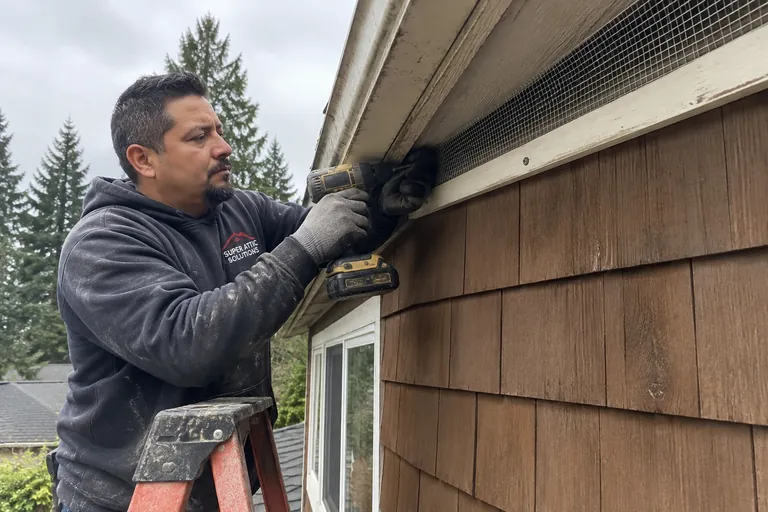
We find every gap rats and mice use, from roof vents to crawl space, and seal it with metal.
Learn more →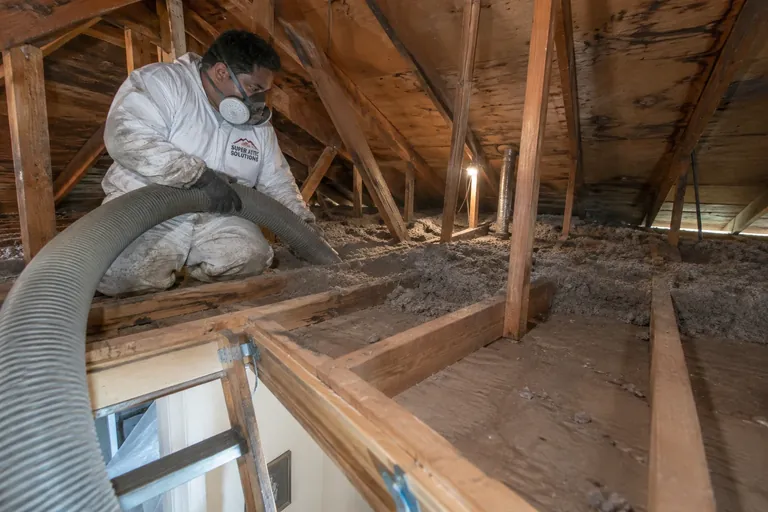
Vacuum removal of old, wet or contaminated attic insulation, bagged outside and hauled away.
Learn more →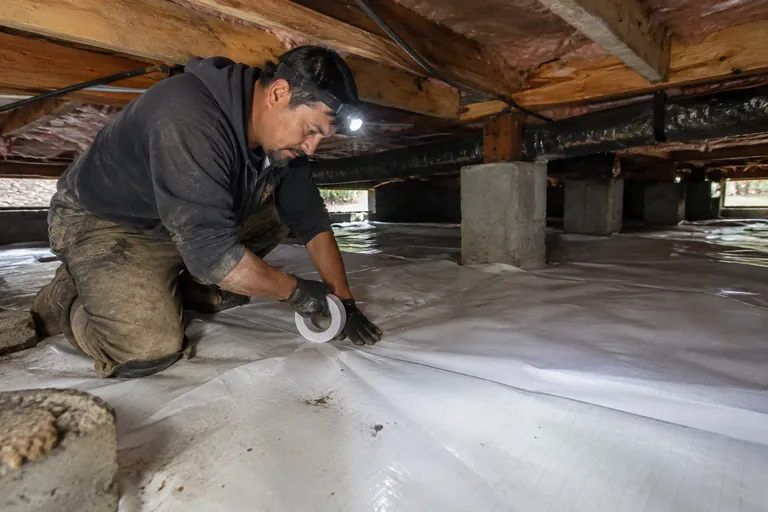
New crawl space ground cover, 6-mil or reinforced, lapped at the seams and run to the foundation walls.
Learn more →Book a free inspection. We'll photograph your attic and crawl space and walk you through what we find, before you decide anything.