
Attic services
Attic cleaning
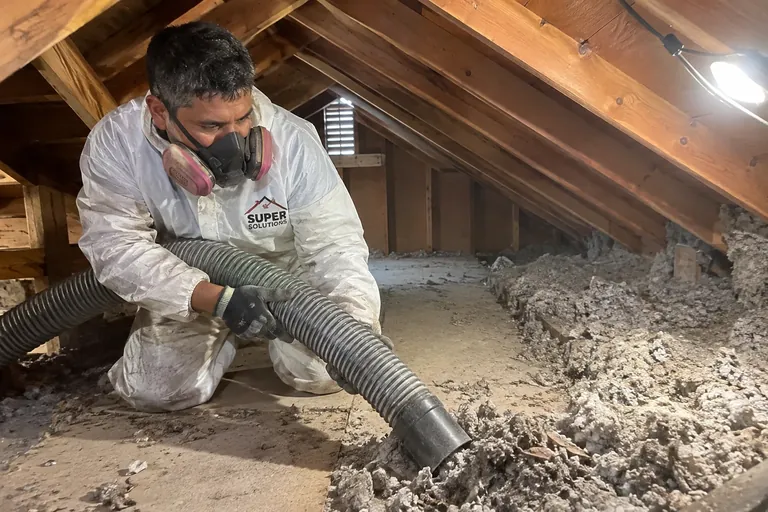
Removal of rodent droppings, nesting, old debris and soiled insulation, hauled out in sealed bags.
Learn more →Dryer vent cleaning & installation · Seattle area
We clean dryer vents end to end and follow the duct through the attic or crawl space, where we often find it crushed, disconnected or dumping lint and wet air under the house.
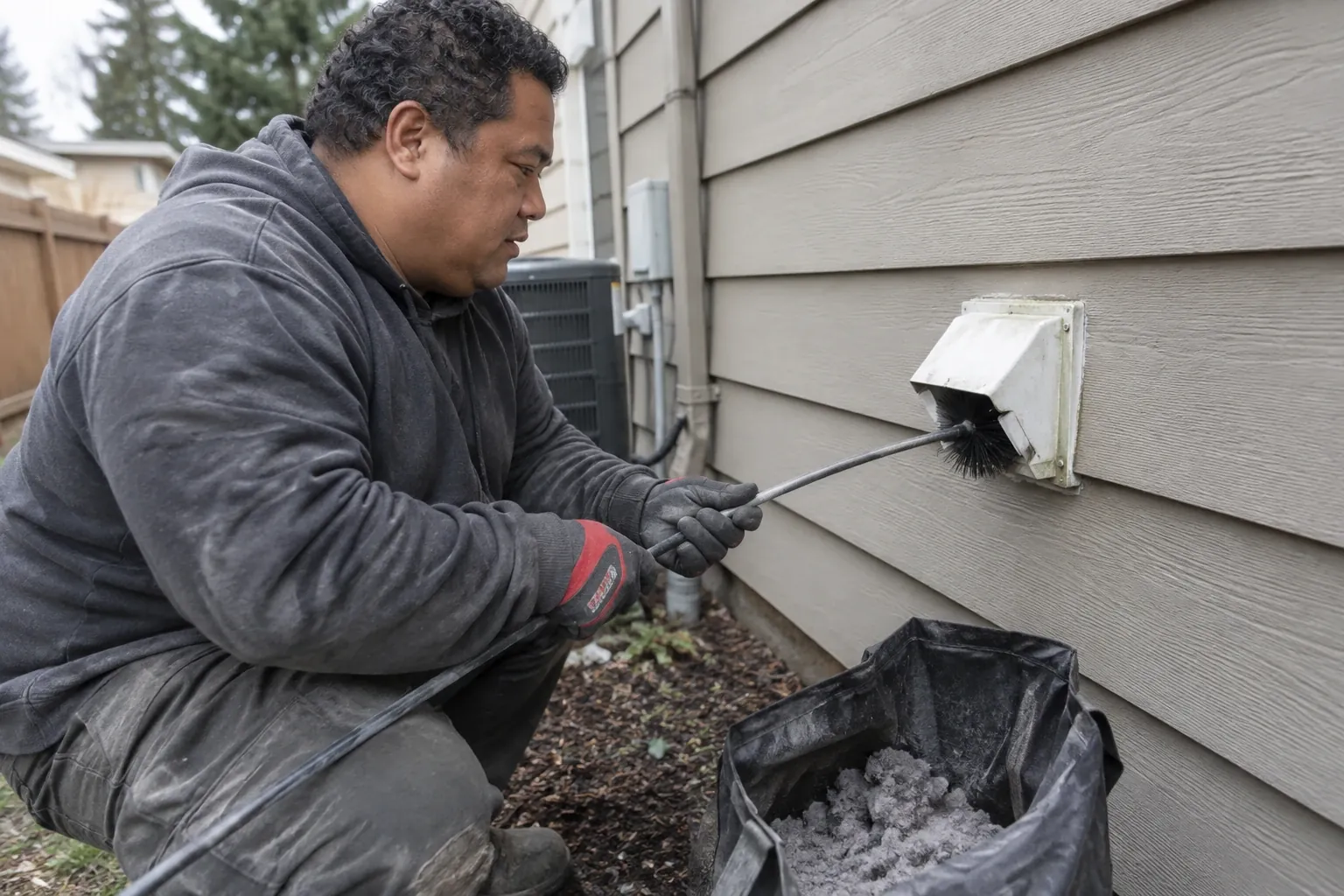 Cleaning a dryer vent from the outside · Seattle, WA
The problem
Every load sends lint past the filter and into the duct. It builds up quietly at bends, sags and the exterior cap. As the duct narrows, the dryer runs hotter and longer, and the lint sitting in the duct is highly flammable. Clothes dryers are a well-known cause of house fires, and a clogged vent is the usual reason they catch.
In a lot of homes, the duct doesn't go straight out a wall. It runs through the attic, under the floor in the crawl space or up through a closet. We work in those spaces every day, and we regularly find dryer ducts that have pulled apart, been crushed under insulation or were never connected to an exterior cap. When that happens, lint and warm, wet air pour into the attic or crawl space with every load.
Warning signs
If you notice any of these, stop using the dryer for long loads until it's checked.
Restricted airflow traps moisture in the drum. Long drying times are the most common sign of a clogged vent.
A dryer that's hot to the touch, or a warm, humid laundry room, means exhaust isn't leaving the house.
With the dryer running, the cap flap should open. If it doesn't, the duct is blocked or disconnected somewhere.
Gray fuzz on insulation or framing near the duct path means the duct has separated and is venting inside.
How we do it
We trace the whole run, not just the two ends.
We pull the dryer out, check the transition duct behind it and follow the vent to the exterior cap. Where the duct runs through the attic or crawl space, we go in and look at every joint and bend. We photograph crushed sections, separations, lint piles and damaged caps, and show you.
We disconnect the dryer and clean the full length of the duct with rotary brushes and air, working from the inside and the exterior cap. Lint from the cap, the transition duct and the dryer's lint chute comes out too. We vacuum any lint that spilled into the laundry area.
Crushed, foil or plastic duct gets replaced with rigid or semi-rigid metal, joined and sealed with foil tape, not screws that catch lint. We shorten the run and remove extra bends where we can, support sagging sections, and replace broken or screened caps with a proper dampered hood.
With the dryer reconnected, we run it and check airflow at the exterior cap and that the flap opens fully. If lint or moisture has soaked insulation in the attic or crawl space, we tell you and can replace the affected area.
What you get
| Inspection | Full run traced, including attic and crawl space sections |
|---|---|
| Cleaning | Duct, transition, exterior cap and dryer lint chute |
| Duct material | Rigid or semi-rigid metal, foil-taped joints |
| Exterior cap | Dampered hood without a screen, so lint can't catch |
| Routing | Shorter runs and fewer bends where the house allows |
| Attic and crawl space | Lint and wet insulation near the duct checked |
| Airflow test | Dryer run and flow checked at the cap |
| Photos | Before and after photos of the duct and cap |

Compare
Most problem ducts we find are foil or plastic. Here's why we replace them.
| Factor | Foil or plastic flex | Rigid or semi-rigid metal |
|---|---|---|
| Inside surface | Ribbed, catches lint | Smooth, lets lint pass |
| Durability | Crushes, sags and tears easily | Holds its shape in attics and crawl spaces |
| Fire safety | Plastic can melt or burn | Metal contains heat and flame better |
| Airflow over long runs | Drops quickly as it sags | Stays steadier along the run |
| Rodents | Easily chewed through | Hard to chew |
Puget Sound homes
Many Seattle-area homes have the laundry in the middle of the house, a basement or an upstairs hall, so the dryer duct takes a long route through the attic or crawl space. Those long runs collect lint faster and are often made of flexible foil that sags and tears over time. In our wet season, a disconnected duct is especially bad news. Warm, wet air from every load adds to the moisture already in the attic or crawl space, which feeds condensation, mold and wet insulation. And a cap with a broken flap is an easy opening for birds and rodents to nest in.
Pricing
The inspection is free. These factors set the cost of cleaning or replacement.
A short run straight out a wall is quick. Long runs through attics or crawl spaces take longer.
Roof caps need roof access and are harder to clean than wall caps.
Crushed, foil or disconnected duct needs replacing, not just cleaning.
Tight attics, low crawl spaces or ducts behind finished walls add labor.
Lint or wet insulation in the attic or crawl space adds a separate cleanup and replacement.
Great service. I highly recommend this company. Wish I would have found them years ago... Isaac, Kareem and Irving were professional, courteous, and friendly. Pricing was clear and there were no surprises. Very happy with our experience.
FAQ
Still unsure? Call (800) 674-4933 and talk it through with us.
Once a year is a good baseline. Large households, long duct runs, roof exits and homes with pets often need it more often. Cleaning the lint filter every load helps but doesn't stop lint from collecting in the duct. If drying times start creeping up, don't wait for the annual cleaning.
It can pass through them, but it must end outside. A dryer that vents into an attic, crawl space or garage fills that space with lint and moisture. That's a fire hazard and a mold problem. If your duct ends inside, we'll extend it to a proper exterior cap.
Only for the short, visible connector behind the dryer, and even there semi-rigid metal is better. Inside walls, attics and crawl spaces, the duct should be rigid metal. Foil and plastic duct crush easily, trap lint in their ribs and won't hold up if lint ignites.
A screen catches lint and clogs quickly, which blocks airflow right at the exit. Dryer exhaust caps should use a damper flap that opens under airflow and closes when the dryer stops, which keeps out birds and rodents without catching lint. We replace screened caps when we find them.
It can. When the vent is restricted, the dryer runs hotter and longer to dry the same load. That strains the heating element, thermal fuse and blower, and many dryers will trip a safety cutoff or stop heating. Clearing the vent often fixes what looks like a dryer problem.
Related services
Removal of rodent droppings, nesting, old debris and soiled insulation, hauled out in sealed bags.
Learn more →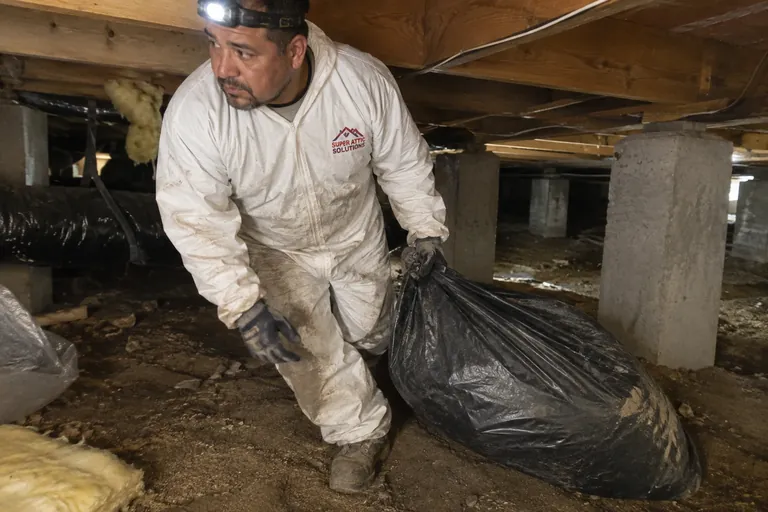
Droppings, fallen insulation, torn plastic and debris bagged and hauled out from under your house.
Learn more →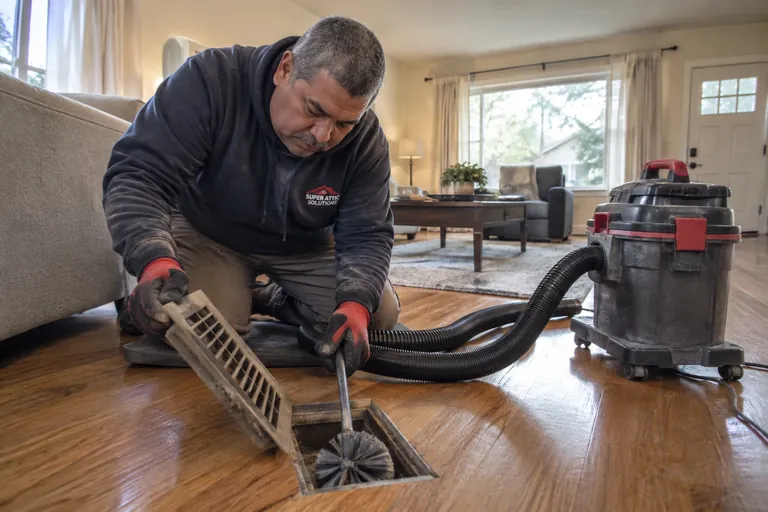
Supply and return ducts cleaned register to furnace, with photos and a straight call on what to replace.
Learn more →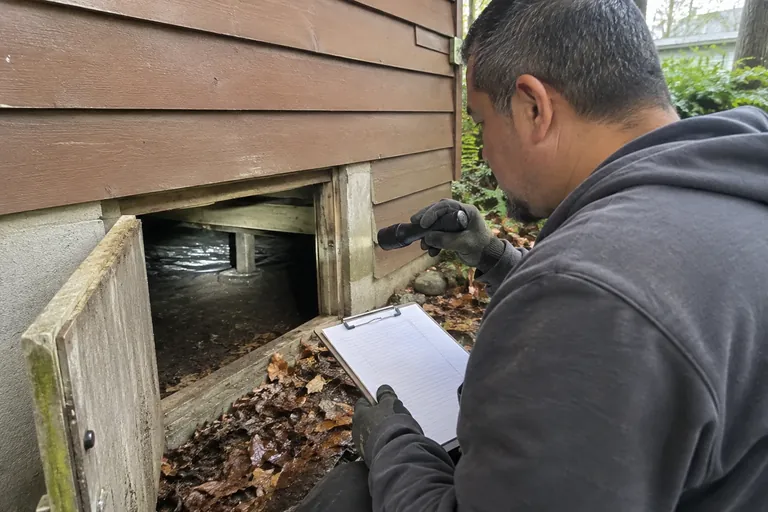
Scheduled checks of the attic, crawl space, ducts, chimney and dryer vent, with photos after every visit.
Learn more →Book a free inspection. We'll photograph your attic and crawl space and walk you through what we find, before you decide anything.