
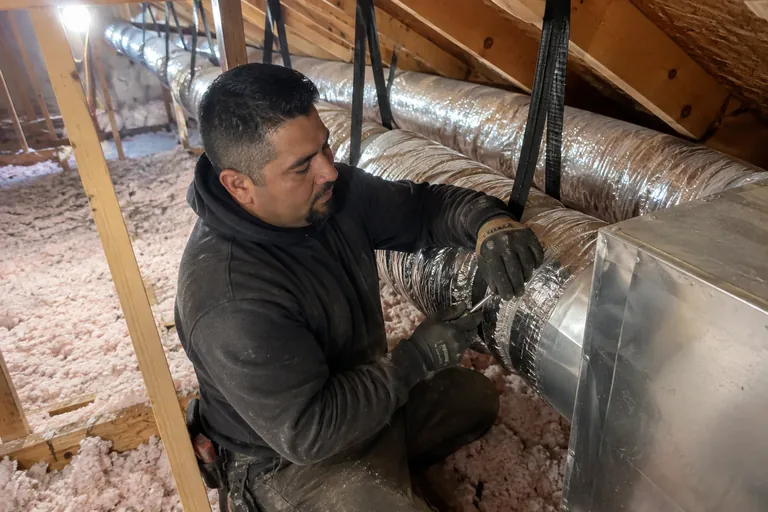
Heating, cooling & ducts
Air duct replacement
Damaged, leaky and rodent-fouled duct runs pulled and replaced, with sealed joints and photos of the work.
Learn more →Multi-family air duct replacement · Seattle & Puget Sound
Torn, crushed or disconnected ducts in an attic or crawl space spill heated air before it reaches the unit. We trace the runs serving each unit, replace what has failed and seal every connection.
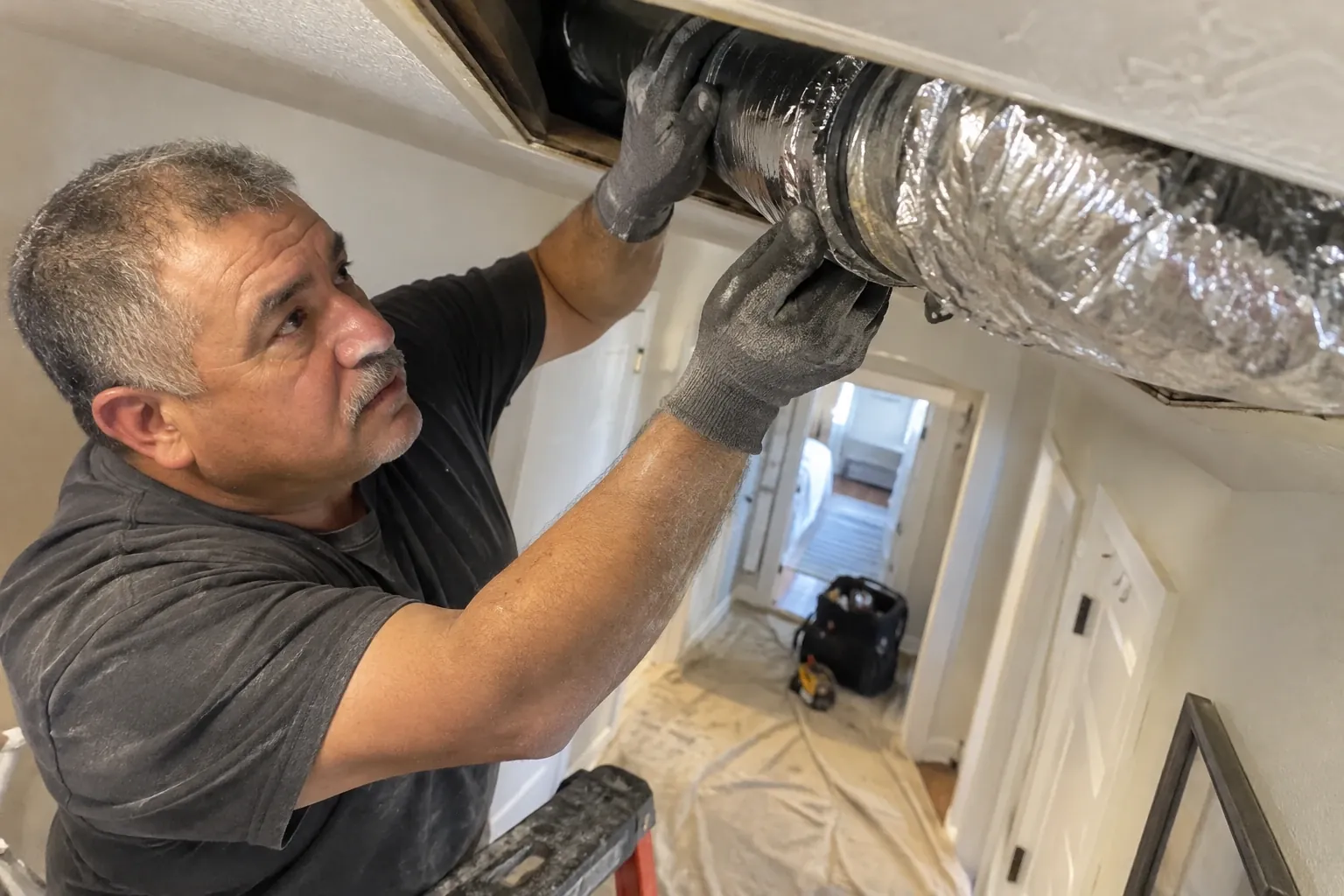 Replacing ducts through an apartment ceiling access panel · Redmond, WA
The problem
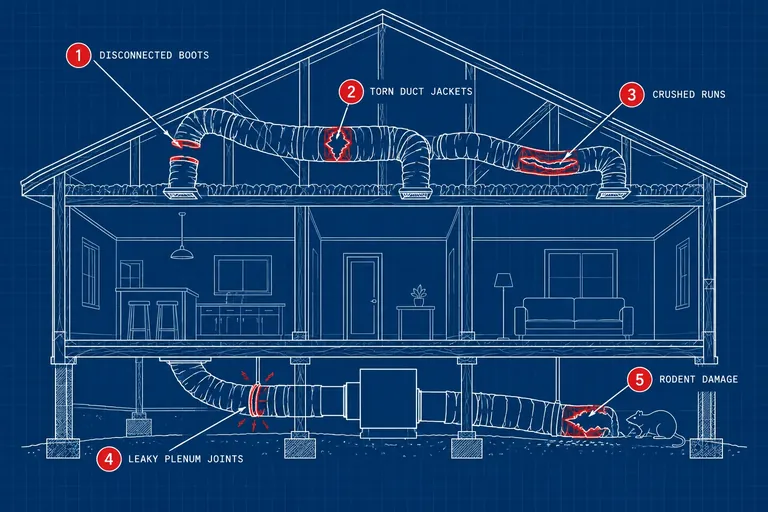
In many multi-family buildings, each unit has its own furnace or heat pump, with ducts running through a shared attic or crawl space. Those ducts get stepped on by cable installers, chewed by rats, crushed under insulation and pulled loose at the boots. The tenant only notices that one bedroom never warms up or that the heating bill climbs every winter. The cause is often a duct run a few feet above their ceiling that nobody has looked at in years.
We trace the duct runs that serve each unit, mark the ones that are leaking, torn or separated, and photograph each problem. Then we replace damaged sections or whole runs with new insulated ductwork, seal the joints and support it off the attic floor. You decide whether to do the units with complaints first or the whole building in one phase.
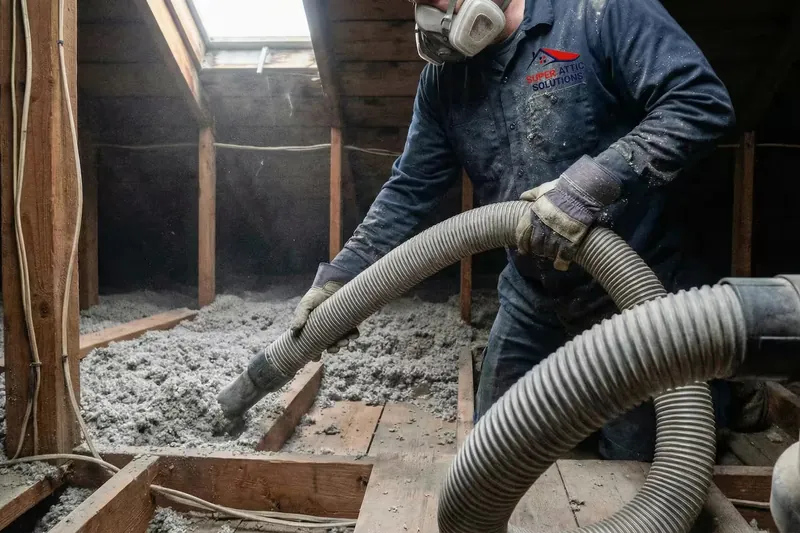
Warning signs
These usually start as one tenant's complaint. Often they turn out to be a building pattern.
A bedroom at the end of a run that stays cold often has a disconnected or crushed duct feeding it.
Low airflow at some registers while others blow hard points to leaks or kinks along the run.
Fiberglass or debris blowing from registers can mean a torn duct is pulling attic air into the system.
Rats tear duct jackets for nesting material. Chewed ducts leak and can draw in contamination.
Units with similar layouts but higher heating bills may be losing air through failed ducts.
Flex duct lying on the joists or buried in insulation has usually collapsed in spots and lost insulation.
Proof of work
Drag the slider to compare. Illustrations of typical results on homes like yours.
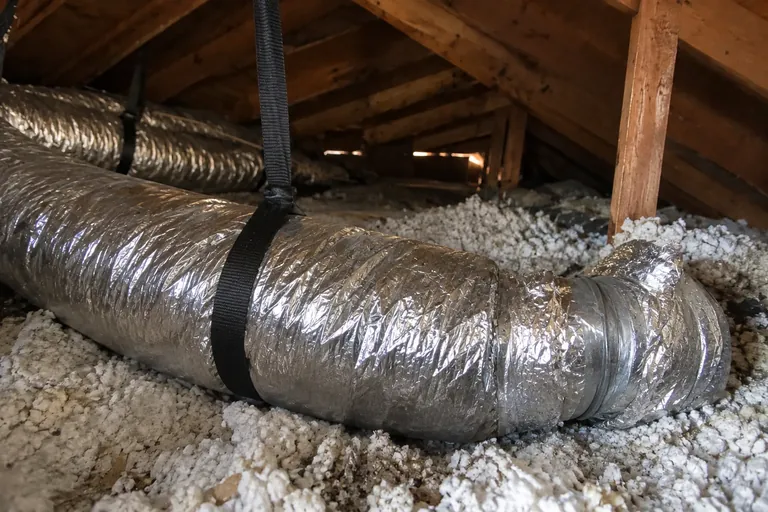
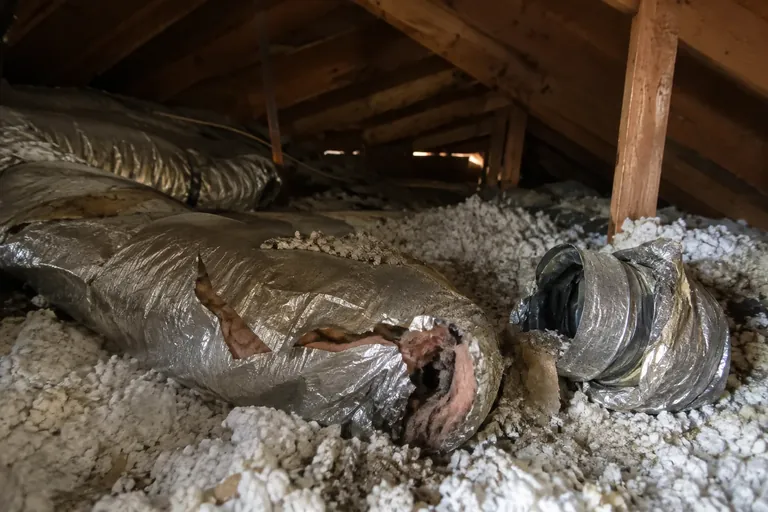 BeforeAfter
How we do it
Trace each system, then replace and seal what has failed.
We follow the supply and return runs from each unit's equipment through the attic or crawl space, checking the connections at the plenum and boots, the condition of the duct jacket and how the duct is supported. Each problem is photographed and tagged to its unit.
Some runs only need a reconnection and sealing. Others are torn, crushed or rodent-damaged and should be replaced. The scope lists each unit with what we found and what we recommend, so you can prioritize by severity, by complaint or by budget.
Duct work mostly happens in the attic or crawl space, but a unit's heat may be off for part of the work. We give you dates and time windows for each unit for tenant notices, and plan around the weather so nobody is left without heat on a cold day.
We disconnect and remove the failed ducts and bag any rodent-soiled material. New insulated ductwork goes in, sized to match the existing system, with smooth bends and hangers or straps that keep it off the attic floor and out from under the insulation.
Every joint, boot and plenum connection is sealed with mastic or approved tape. We check airflow at the registers before we leave each unit. You get photos of the new runs for each unit and notes on any equipment issues we noticed along the way.
What you get
| Areas covered | Duct runs in shared attics and crawl spaces serving each unit |
|---|---|
| Inspection | Supply and return runs, boots, plenums, jackets and supports |
| Replacement | New insulated ductwork for torn, crushed or rodent-damaged runs |
| Sealing | Joints, boots and plenum connections sealed with mastic or approved tape |
| Support | Hangers or straps keep ducts off the attic floor |
| Cleanup | Old ducts and rodent-soiled material bagged and removed |
| Tenant coordination | Dates and heat-off windows for each unit, for your notices |
| Reporting | Photos of problems and new runs, tagged by unit |
Compare
Not every bad duct needs replacing. This is how we decide.
| Factor | Repair and reseal | Replace the run |
|---|---|---|
| Typical problem | Disconnected joint or loose boot | Torn jacket, crushed section or chewed duct |
| Duct condition | Duct and insulation still sound | Insulation failed or inner liner damaged |
| Rodent damage | Not suitable | Removes soiled material with the old duct |
| Time per unit | Shorter visit | Longer visit, heat off for part of it |
| Result | Restores the connection | New run, sealed and supported |
Puget Sound homes
Many townhome and condo communities in the region were built with furnaces in closets or garages and flex duct running through the attic. Decades later, that duct has often sagged, flattened under insulation or been torn open by roof rats. Because our winters are long and mild, heating systems run for many months of the year, and every leak adds up over a season. Ducts in a vented crawl space also sit in damp air from October to May, which wears out old duct jackets faster.
Many owners are now weighing heat pumps and ductless mini-splits as old equipment wears out. If that is on your list, a duct inspection first tells you whether the existing runs can be reused with a ducted heat pump, or whether ductless makes more sense for some units. We install both, so the recommendation is not tied to one product. You get the findings unit by unit, so the board or owner can weigh the options and the budget with real information.

Pricing
We quote each building after tracing the ducts. These are the factors.
Each unit's system and the number of supply and return runs set the basic scope.
Reconnecting and sealing a run takes less than replacing it end to end.
Low attics, tight crawl spaces and ducts buried in insulation add crew time.
Soiled ducts and insulation need careful removal and disposal.
Pairing duct work with a new furnace or heat pump changes the scope and duct sizing.
Great service. I highly recommend this company. Wish I would have found them years ago... Isaac, Kareem and Irving were professional, courteous, and friendly. Pricing was clear and there were no surprises. Very happy with our experience.
FAQ
Still unsure? Call (800) 674-4933 and talk it through with us.
If the furnace runs and blows warm air but some rooms stay cold, the ducts are the usual suspect. If no room gets warm, the equipment is more likely the cause. We check both during the inspection and tell you which one is behind the tenant's complaint.
Yes. Most of the work happens in the attic or crawl space. The heat for that unit is off while we disconnect and reconnect, so we schedule those windows with you in advance. Tenants may hear the crew overhead during work hours, and we keep any indoor access to a minimum.
Not necessarily. If the inspection shows failures in only a few units, you can start with those. If the whole building has the same aging flex duct, one phase saves repeat setup and gives every unit the same result. We show you the findings for each unit so you can choose.
Yes. Rats tear flex duct jackets for nesting material and chew through the inner liner. A chewed duct leaks and can pull attic air and debris into the system. If we find rodent damage, we recommend dealing with the rodents and sealing entry points before or alongside the new ducts.
Cleaning removes dust and debris from ducts that are still intact. It does not fix tears, crushed sections or disconnected joints. If the inspection shows physical damage, replacement is the fix. If the ducts are sound but dirty, cleaning may be all the building needs.
Sometimes. It depends on the duct size, condition and layout compared with what the new heat pump needs. We inspect the existing runs and tell you whether they can be reused, need partial replacement, or whether ductless mini-splits make more sense for those units.
Related services
Damaged, leaky and rodent-fouled duct runs pulled and replaced, with sealed joints and photos of the work.
Learn more →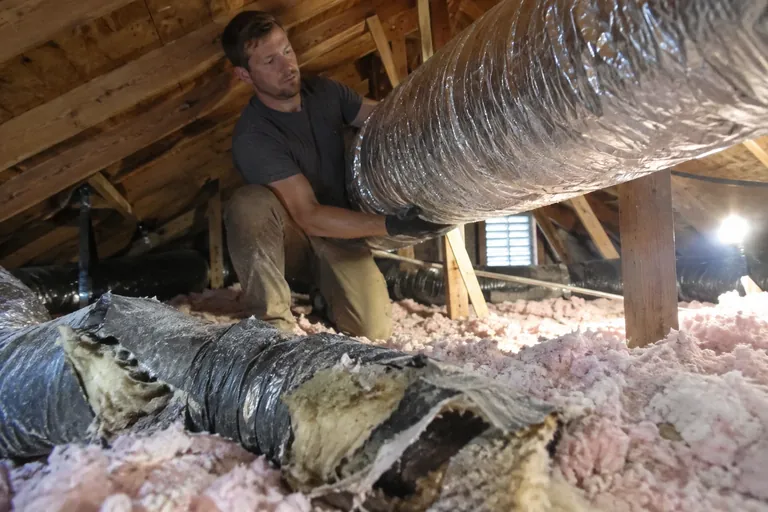
Crushed, chewed and leaky attic flex duct replaced with insulated duct, sealed and supported properly.
Learn more →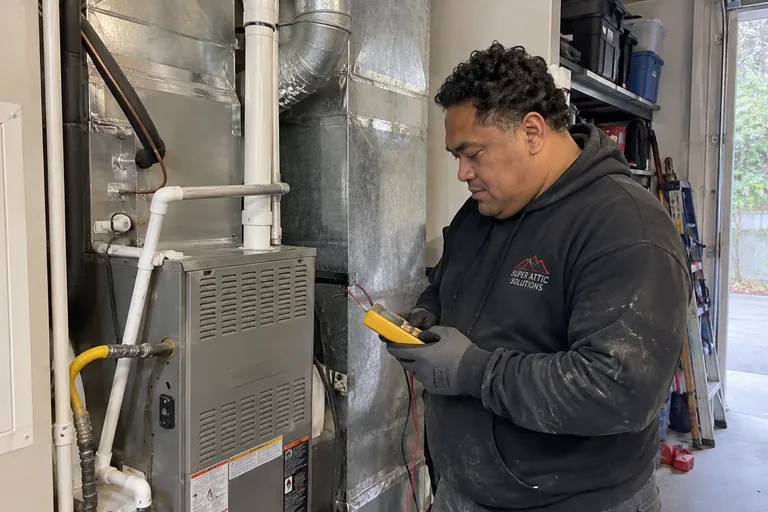
Furnaces, heat pumps, AC, mini-splits and the attic and crawl space ducts they depend on.
Learn more →
Ductless heating and cooling for homes without ducts, ADUs, additions and bonus rooms.
Learn more →Book a free inspection. We'll photograph your attic and crawl space and walk you through what we find, before you decide anything.