
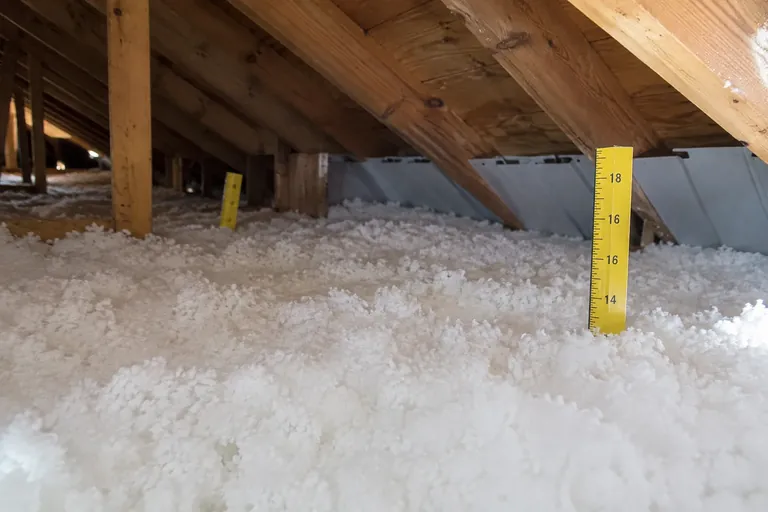
Insulation
Attic insulation installation
The install itself: air sealing, eave baffles, flue clearances and an even layer to the planned depth.
Learn more →Radiant barrier installation · Seattle & Puget Sound
A radiant barrier reflects the heat a sun-baked roof throws down into the attic. Here it pays off most in hot top-floor rooms in summer. We will tell you plainly if your attic needs insulation first.
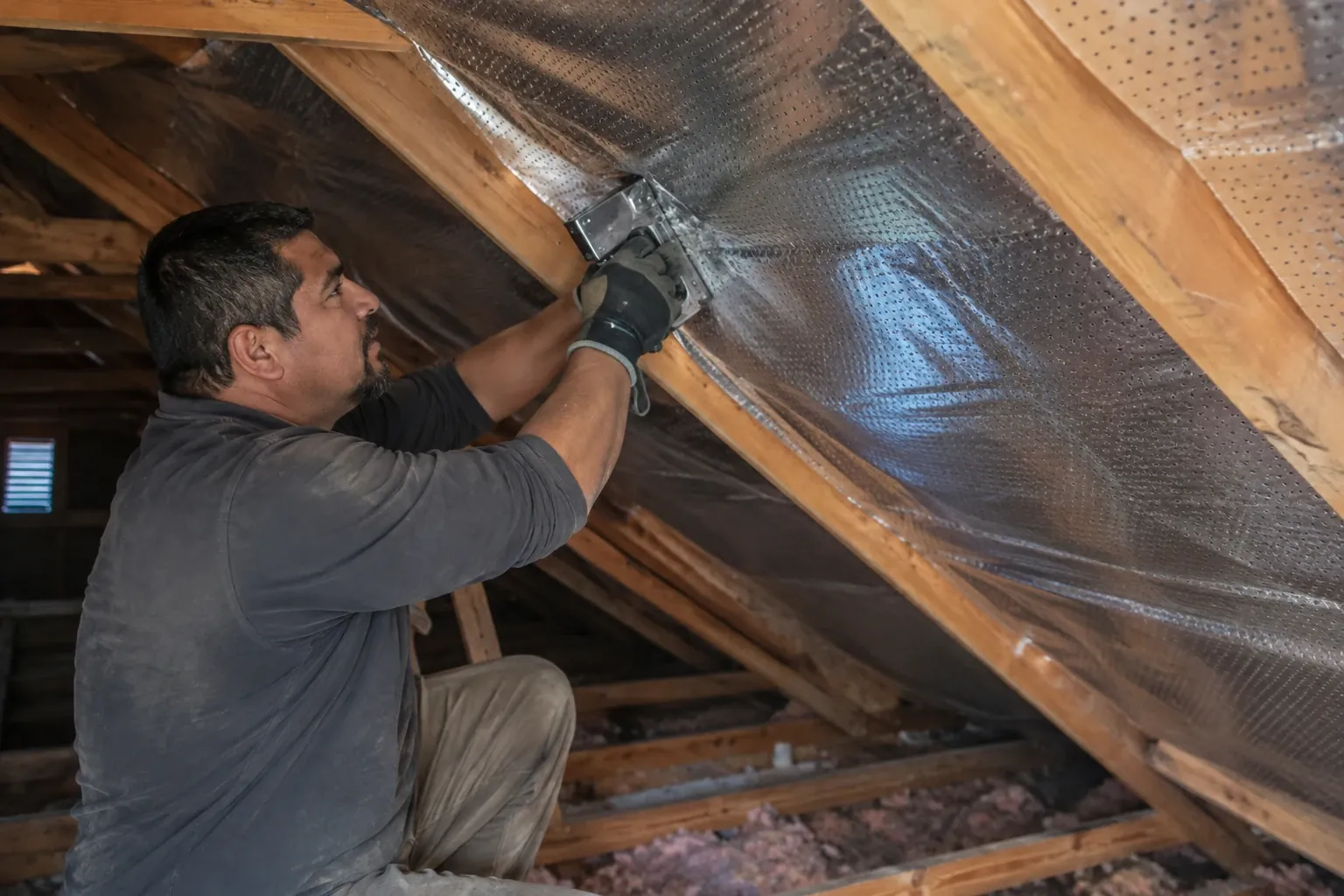 Radiant barrier foil installed on the underside of attic rafters · Renton, WA
The problem
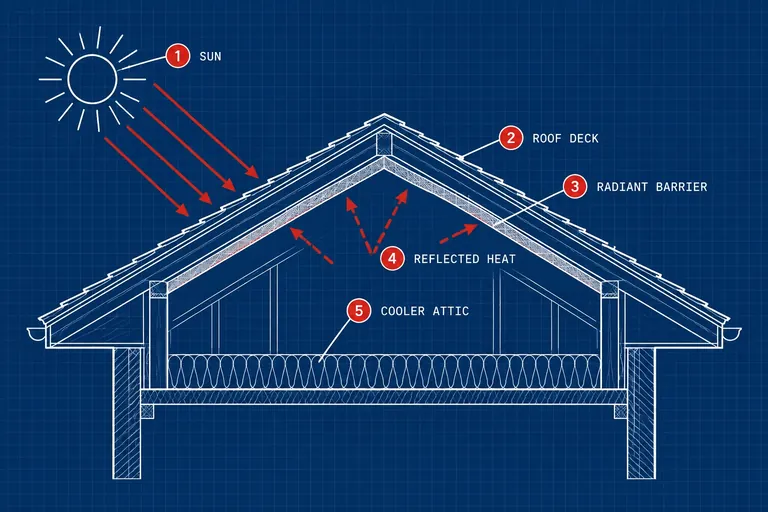
On a sunny afternoon, your roof shingles get very hot. The roof deck under them heats up and radiates that heat down into the attic like a stove burner, warming the insulation, the ducts and the ceiling of the rooms below. Insulation slows heat that moves by conduction, but it does little to stop radiant heat at the source. A radiant barrier is a sheet of reflective aluminum foil that faces that hot roof deck across an air gap and bounces most of the radiant heat back.
The air gap is essential. Foil pressed directly against a hot surface simply conducts heat through, so the barrier is stapled to the underside of the rafters or roof trusses, leaving space between it and the deck. Done that way, the attic stays noticeably cooler on hot days. The benefit is mostly in summer. In winter, when heat is flowing up and out of the house, a radiant barrier does very little. Insulation and air sealing handle that.
Warning signs
A radiant barrier is a summer fix. These are the homes where it earns its place.
Top-floor bedrooms stay warm well into the evening during heat waves, even after the outside air cools.
Supply ducts or an air handler sit in the attic, where hot air works against your cooling on summer days.
Rooms built into the roof line with little space above them heat up first and fastest.
Large roof areas facing the afternoon sun with no shade from trees take on the most heat.
You now cool the house in summer and want to reduce the load on the system in upstairs rooms.
The attic is air sealed and well insulated, and you want the next step for summer comfort.
Proof of work
Drag the slider to compare. Illustrations of typical results on homes like yours.

 BeforeAfter
How we do it
We install the barrier on the roof framing, not on the attic floor, and we check the basics first.
We inspect the attic floor before recommending anything. If the insulation is thin or the ceiling leaks air, those are the bigger wins for most homes here, and we tell you so. A radiant barrier makes the most sense once the attic floor is sealed and insulated.
A radiant barrier works best with good attic ventilation. We confirm the soffit vents are open and that there is exhaust at the ridge or roof vents, so the heat the barrier reflects can leave the attic instead of building up under the deck.
We roll perforated, reflective foil across the underside of the rafters or truss top chords, stapling it so there is an air gap between the foil and the roof deck. Perforated foil lets water vapor pass, so moisture does not get trapped against the wood.
We stop the foil short of the ridge and leave the eaves open so air can still flow from the soffits up to the exhaust vents. Seams are overlapped and the foil is kept clear of flues, chimneys and light fixtures.
We remove scraps and packaging, check that nothing was disturbed on the attic floor, and confirm the soffit vents are still clear. Then we take photos of the finished installation, so you can see where the foil went, where the gaps were left and how the vents were kept open.
What you get
| Material | Perforated reflective foil radiant barrier |
|---|---|
| Location | Underside of rafters or truss chords, facing the roof deck |
| Air gap | Space left between foil and roof deck; never laid on insulation |
| Ventilation | Soffit and ridge airflow kept open; foil stopped short of the ridge |
| Clearances | Kept away from flues, chimneys and light fixtures |
| Pre-check | Insulation depth, air sealing and attic ventilation reviewed first |
| Photos | Before and after photos of the roof framing |
| Estimate | Free inspection and an honest read on whether it fits your home |
Compare
They solve different problems. For most Puget Sound homes, insulation comes first.
| Factor | Radiant barrier | More attic insulation |
|---|---|---|
| What it stops | Radiant heat from a hot roof deck | Heat moving through the ceiling in either direction |
| Best season here | Summer, on sunny afternoons | Winter and summer, all year |
| Effect on heating bills | Small | Larger, especially if insulation is thin now |
| Upstairs summer comfort | Noticeable improvement | Some improvement |
| Where it goes | Under the rafters, facing the roof deck | On the attic floor, over the ceiling |
| Best order | After the attic floor is sealed and insulated | First |
Puget Sound homes
Our climate is mild, and that shapes what a radiant barrier can do. Radiant barriers were developed for places with long, hot, sunny summers, where they make a large difference all season. Around Seattle, most of the year is cool and cloudy, and the main energy cost is heating. A radiant barrier will not do much for your winter bills. If your attic floor is underinsulated or leaks air into the attic, that money goes further on insulation and air sealing, and we will say so at the inspection.
Where it does help here is summer. Recent heat waves have made top-floor bedrooms in Seattle, Tacoma and Eastside homes miserable for days at a time, and more homes now have heat pumps or AC that run in July and August. A radiant barrier keeps the attic cooler on those afternoons, which takes the edge off rooms under the roof and helps ducts in the attic. We install radiant barriers across the region and will be straight with you about the expected payoff.

Pricing
Radiant barrier jobs are quoted after an inspection of the roof framing.
The barrier covers the underside of the roof, so roof square footage matters more than floor size.
Hips, valleys, dormers and low pitches mean more cutting and slower work.
Tight attics with low clearance near the eaves take longer to work in.
Flues, ducts, wiring and stored items in the way need to be worked around or cleared.
Adding air sealing or insulation in the same visit changes the scope and the quote.
Daniel was thorough, professional, and quick to respond to all my questions. He crawled into a hard to reach places in my attic to make sure all my needs were met. I appreciate how quickly the Super Attic team completed the job and now my attic, crawl space and garage look infinitely better.
FAQ
Still unsure? Call (800) 674-4933 and talk it through with us.
Yes, but mainly in summer. It reflects radiant heat from a hot roof, so it helps most on sunny days in top-floor rooms and with ducts in the attic. Because our winters are mild and cloudy and most energy goes to heating, the payoff is smaller here than in hot, sunny climates. We will tell you plainly whether it fits your house.
Not by much. In winter, heat is leaving the house through the ceiling, and a radiant barrier does little to slow that. Insulation and air sealing are what cut heating costs. If lower heating bills are your main goal, we will usually recommend those first and a radiant barrier only if summer heat is also a problem.
We do not recommend it. Foil laid on the attic floor collects dust, which ruins the reflective surface over time. In a cold climate it can also trap moisture on top of the insulation in winter. Installing it on the rafters, facing the roof deck with an air gap, avoids both problems.
Not when it is installed correctly. We use perforated foil, which lets water vapor pass through, and we keep the soffit and ridge vents open so the attic still breathes. Moisture problems in Puget Sound attics usually come from warm house air leaking into the attic, which is why we check air sealing first.
In some homes it can weaken cell or Wi-Fi signals a little, especially upstairs, because metal foil reflects radio waves as well as heat. Many people notice little or no change. If your signal is already weak, or you rely on a cell booster or an attic-mounted antenna, tell us at the inspection and we will plan around it.
No. A radiant barrier works by reflecting heat across an air gap. Foil facing on insulation that is pressed tight against drywall or framing has no air gap, so it does little as a radiant barrier. The two can work together, but they do different jobs.
Related services
The install itself: air sealing, eave baffles, flue clearances and an even layer to the planned depth.
Learn more →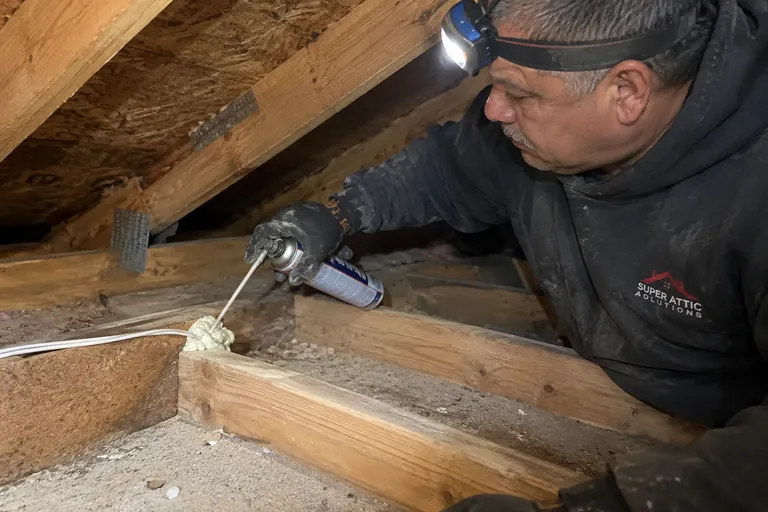
Sealing top plates, can lights, bath fans and chases from the attic side before new insulation goes in.
Learn more →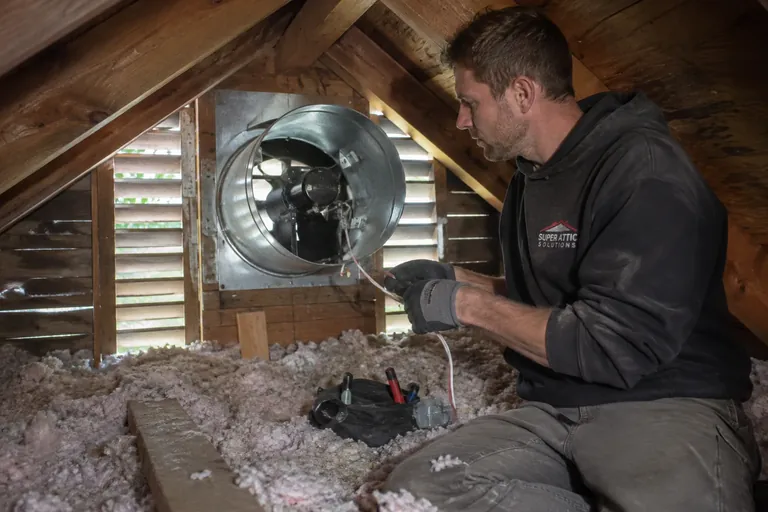
Powered roof and gable fans, sized to the attic, with intake balanced and ceiling leaks sealed first.
Learn more →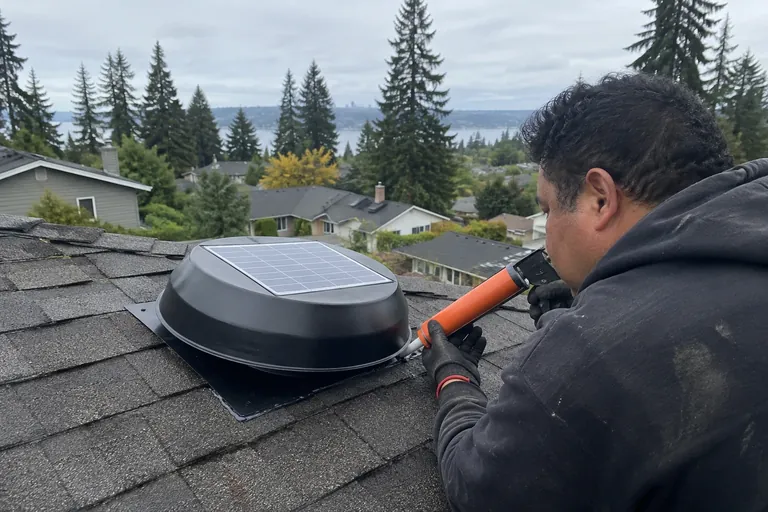
Solar-powered attic exhaust fans with no wiring, placed for sun and paired with a sealed ceiling.
Learn more →Book a free inspection. We'll photograph your attic and crawl space and walk you through what we find, before you decide anything.