
Heating, cooling & ducts
Air duct replacement
Damaged, leaky and rodent-fouled duct runs pulled and replaced, with sealed joints and photos of the work.
Learn more →Attic air duct replacement · Seattle & Eastside
Attic flex duct gets crushed, chewed and buried. We replace it with insulated duct, hang it on proper supports and seal every joint, so the air ends up in your rooms.
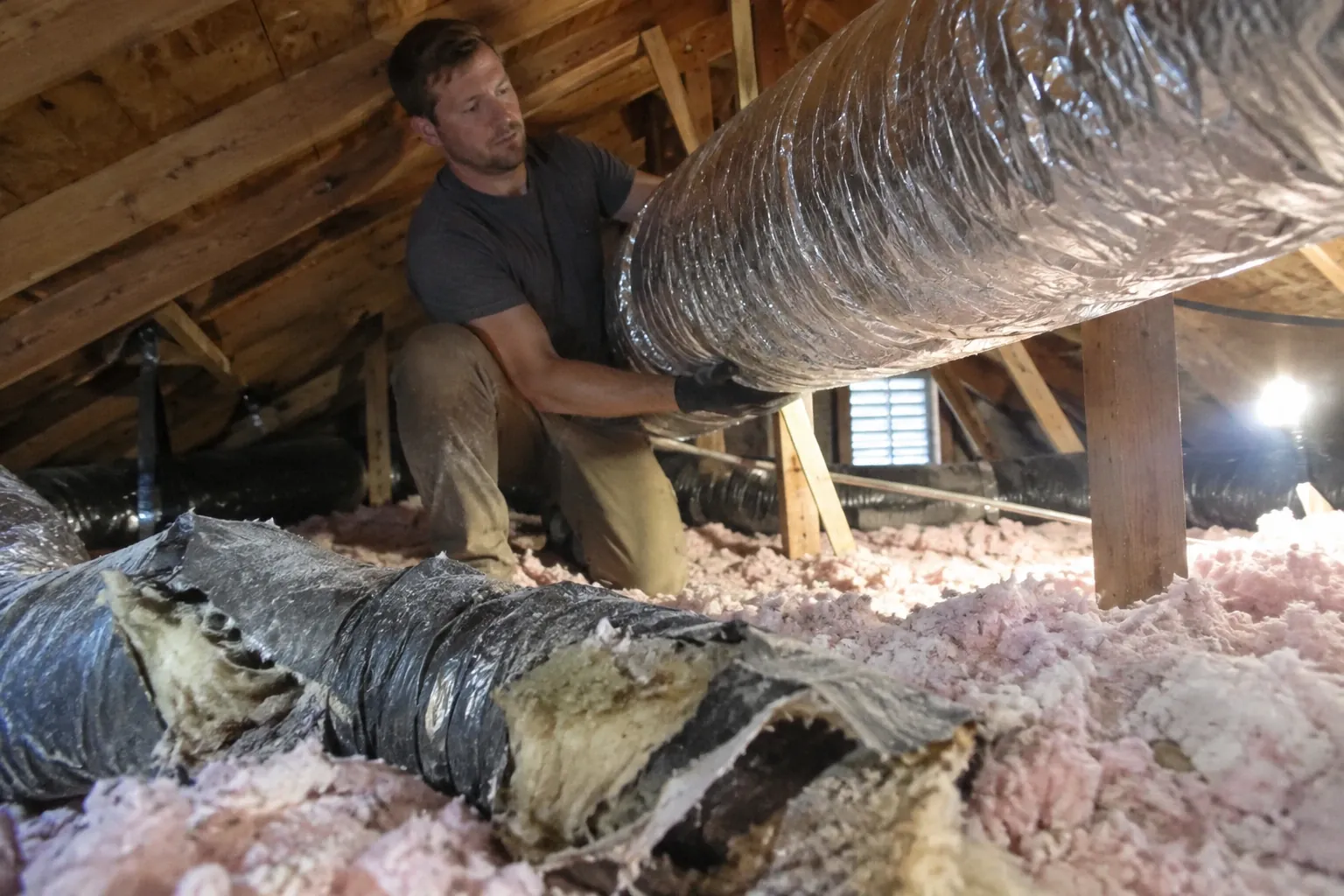 Replacing crushed attic ducts with new insulated duct · Seattle, WA
The problem
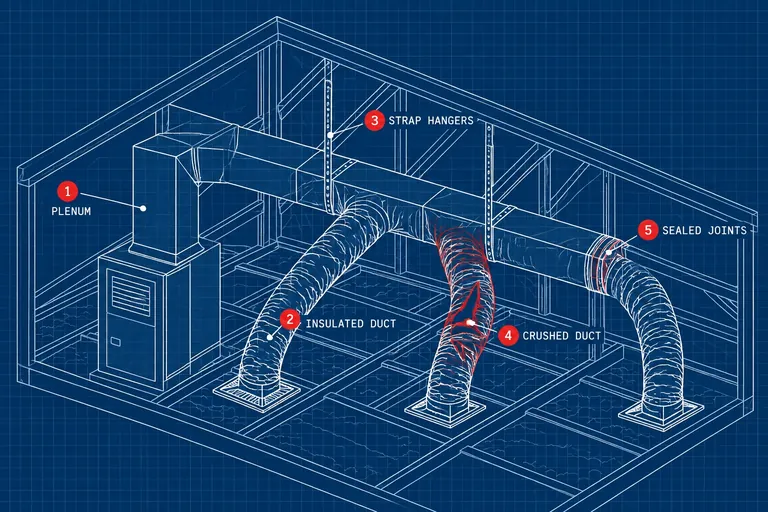
In many homes with the furnace in the garage or a hall closet, the supply runs go up and across the attic to ceiling registers. Up there, the duct sits in air that's close to the outdoor temperature in January and well above it on a July afternoon. The duct's insulation jacket is all that keeps your heated or cooled air from losing its temperature before it reaches the room. When the jacket tears, the insulation slumps or the inner liner pulls off its collar, the system works harder and the rooms at the end of the line feel it.
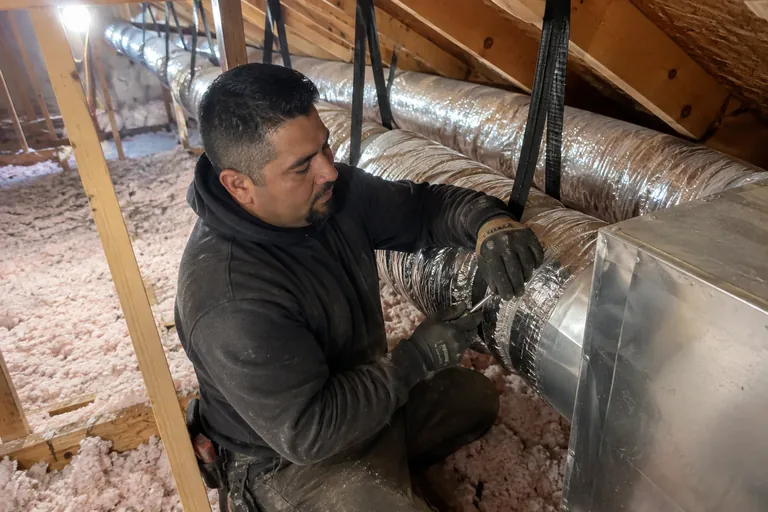
Attic ducts also take damage nobody sees. Cable and solar installers crawl over them. Insulation crews bury them or pull them loose. Roof rats shred the outer jacket for nesting. Replacing attic duct means taking out the failed runs, installing new insulated flex duct with clean bends and proper support, sealing the collars and boots, and putting the attic insulation back where it belongs around them.
Warning signs
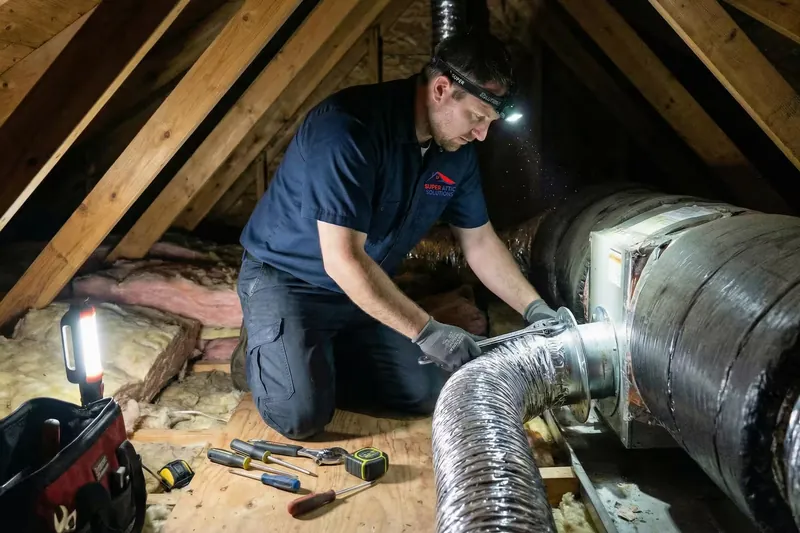
Most homeowners never go into the attic. These are the clues from below, and what we find when we go up.
Ceiling registers fed by attic ducts lose the most. A room that never keeps up often has a leaking or crushed run above it.
Hold your hand at each register. If one is much weaker than the others, its attic run may be disconnected or kinked.
Dark lines around a ceiling register can mean the boot isn't sealed and attic air is being pulled in around it.
Roof rats and squirrels tear into flex duct jackets. Any attic rodent activity is a reason to check every duct run.
Ducts that have been stepped on, pinched at a joist or bent in a tight turn lose airflow to the room they serve.
Older gray or silver flex jackets turn brittle with age and attic heat, then split and let the insulation fall away.
Proof of work
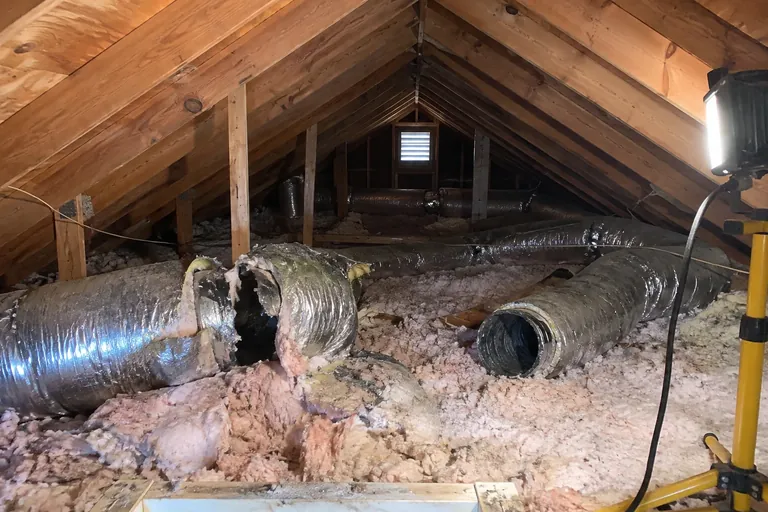
Drag the slider to compare. Illustrations of typical results on homes like yours.

 BeforeAfter
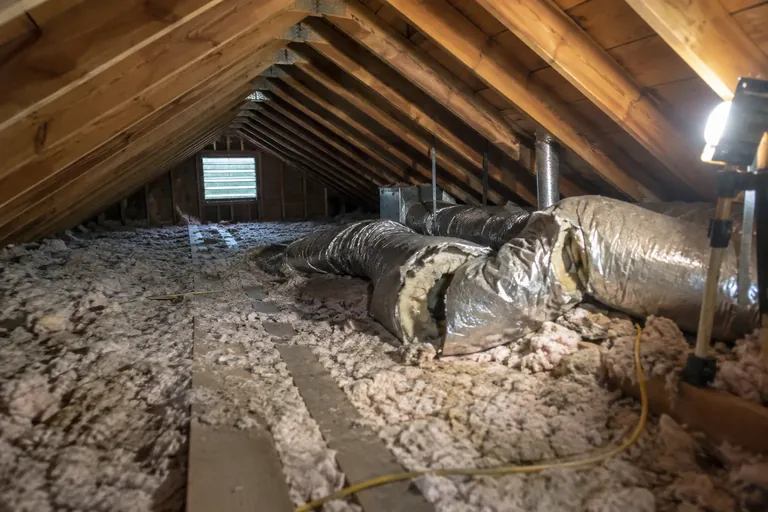 STEP 01
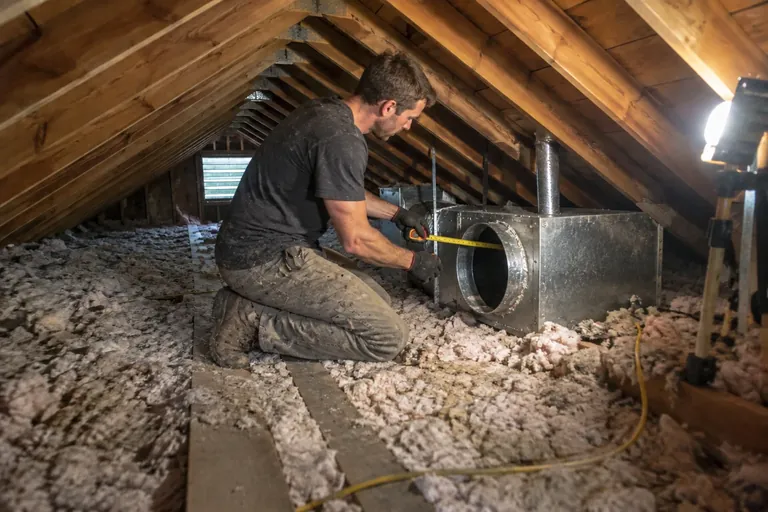 STEP 02
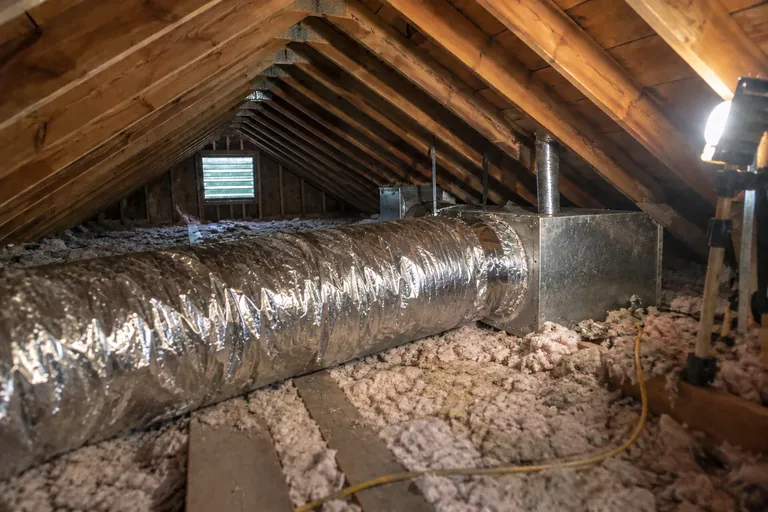 STEP 03
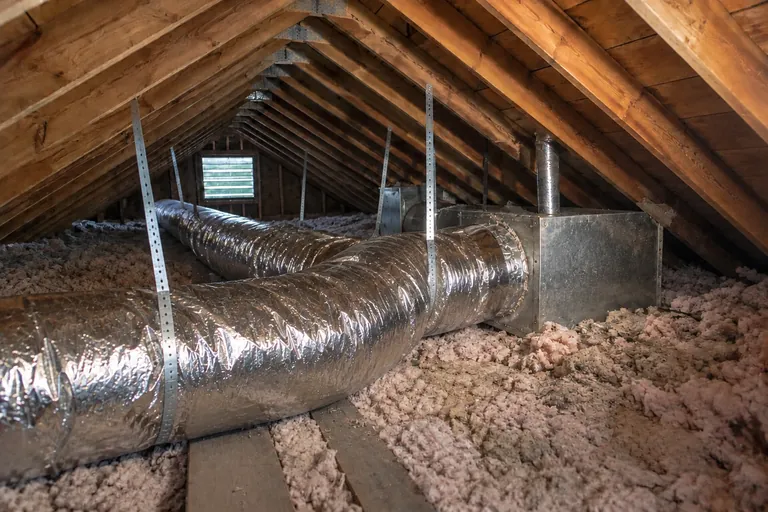 STEP 04
How we do it
Attic work means tight spaces and loose insulation. We plan for both.
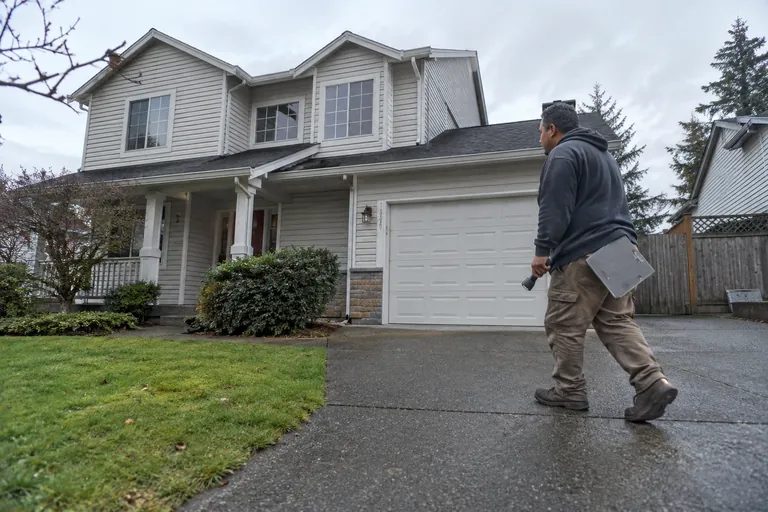
We go up and photograph every run from the furnace to its ceiling boot, noting what's crushed, torn, disconnected, undersized or fouled by rodents. We also check the attic insulation and ventilation, since ducts and insulation have to be planned together. You get the photos with the quote.
We lay walk boards across the joists so nobody steps through your ceiling, protect the hatch area and the hall below, and move insulation away from the runs we're replacing. Insulation that's contaminated by rodents is bagged rather than pushed aside.
Failed duct is cut loose from the takeoffs and boots, bagged in the attic and carried out. Rodent-fouled runs are handled with protective gear and bagged on the spot, so droppings aren't spread through the house on the way out.
We install new insulated flex duct, typically R-8, sized for each room and pulled tight so the liner isn't bunched. Runs are routed with long bends, hung on wide straps at proper spacing and kept off sharp framing. Collars and boots are fastened and sealed with mastic.
We put the attic insulation back around the runs and fill the gaps we made, then check airflow at each ceiling register. You get after photos from the same angles as the before photos, so you can see every new run without going up there yourself.
What you get
| Duct | Insulated flex duct, typically R-8, sized to each room |
|---|---|
| Connections | Collars clamped; joints and boots sealed with mastic |
| Support | Wide straps at proper spacing; no kinks or sharp bends |
| Ceiling boots | Sealed to the drywall so attic air isn't pulled in |
| Attic protection | Walk boards across the joists; hatch and hallway covered |
| Insulation | Moved for access, then restored around the new runs |
| Old duct | Cut out, bagged in the attic and hauled away |
| Photos | Before and after photos of each run, from the same angles |
Compare
Both work when they're installed well. Most attic runs to ceiling registers are flex; trunk lines are often metal.
| Factor | Insulated flex duct | Rigid metal duct |
|---|---|---|
| Where it fits | Branch runs to ceiling registers, around framing | Main trunk lines and long straight runs |
| Insulation | Built into the duct jacket | Wrapped with duct insulation after install |
| Airflow | Good when pulled tight with gentle bends | Smooth interior holds airflow over long runs |
| Weak points | Kinks, sagging and crushing if poorly hung | Seams and joints leak if they aren't sealed |
| Rodent risk | Outer jacket can be torn for nesting | Harder to chew; the wrap can still be torn |
Puget Sound homes
Eastside neighborhoods built from the 1970s through the 1990s, in Redmond, Sammamish, Bothell, Kirkland and beyond, are full of homes with the furnace in the garage and flex duct running across the attic to ceiling registers upstairs. Much of that duct is original. Its jacket has been through decades of summer attic heat, and plenty of runs have been flattened by later insulation top-ups or cable work. Two-story homes with bonus rooms over the garage often have the longest, worst-performing attic runs in the house.
Roof rats are the other big factor here. They live in trees and travel along fences and utility lines, and they love an attic with soft duct insulation to nest in. When we replace attic duct, we look at how the rodents got in and can seal those gaps in the same visit. We also look at the attic insulation itself. If it's thin or soiled, replacing the ducts and the insulation together saves you opening up the attic twice.
Pricing
Attic duct work is priced after we've been up there. These are the factors that matter.
A couple of bedroom runs is a short job. Every attic run on a two-story house takes more duct and more time.
Low-slope roofs, small hatches and tight eaves slow the work. Some ceiling boots can only be reached lying flat.
Deep blown-in insulation has to be moved and then restored around each run, which adds labor.
Fouled duct and insulation need protective gear, bagging and cleanup before new duct goes in.
Adding insulation, sealing rodent entry points or air sealing while the attic is open is quoted separately.
Great service. I highly recommend this company. Wish I would have found them years ago... Isaac, Kareem and Irving were professional, courteous, and friendly. Pricing was clear and there were no surprises. Very happy with our experience.
FAQ
Still unsure? Call (800) 674-4933 and talk it through with us.
For attic runs we typically install R-8 insulated flex duct, the common choice for new work in Washington. Older ducts in many homes have a thinner jacket, or one that has slumped and torn so it insulates far less than it once did. When we inspect, we'll tell you what you have and show you photos of its condition.
Tape can close a small tear in the outer jacket and keep the insulation in place. It doesn't fix a crushed run, a torn inner liner or a duct full of droppings. Cloth duct tape also tends to dry out and let go in attic heat. If the damage is more than a small tear, replacing the run is the fix that lasts.
Attic ducts are part of it. If you have AC or a heat pump and the supply ducts run through a hot attic, cool air picks up heat before it reaches the room, and any leaks dump cooled air into the attic. Thin attic insulation and missing air sealing add to it. We look at all three and show you which is the biggest problem.
Yes. We move insulation away from the runs we're working on, then restore it around the new ducts and fill the gaps we made. If the insulation is contaminated by rodents or too thin to be worth moving, we'll show you and quote replacing it, so you can decide whether to do the attic insulation at the same time.
They do it all the time. Roof rats tear into the outer jacket for nesting material, leave droppings in the insulation and sometimes chew through the inner liner. Once a duct is open, it pulls attic air and debris into your house. Any run with rodent damage gets replaced, and we seal the entry points so the new ducts stay intact.
Replacing a few runs often takes a day. A full attic system on a larger home can take longer, especially when the attic is tight or the insulation is deep. We'll give you a time estimate with the quote. Your heating or cooling is off only while we're making the connections, and the rest of the time the house runs as normal.
Related services
Damaged, leaky and rodent-fouled duct runs pulled and replaced, with sealed joints and photos of the work.
Learn more →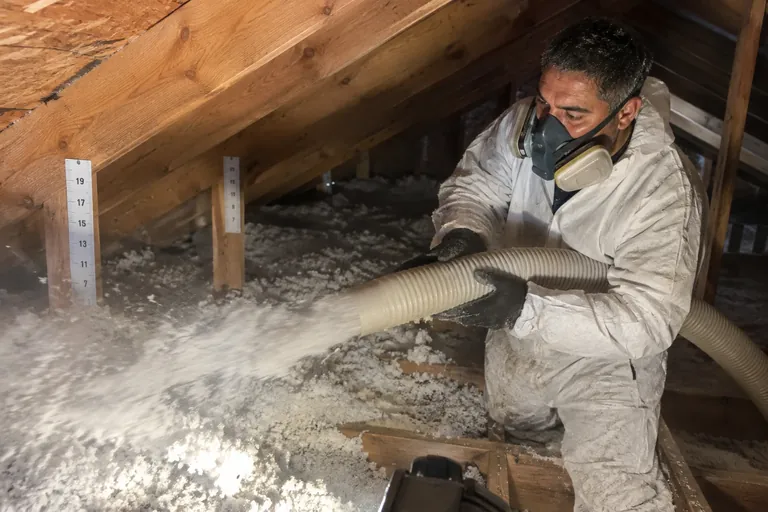
How much insulation your attic needs, which material fits, and what it takes to get there.
Learn more →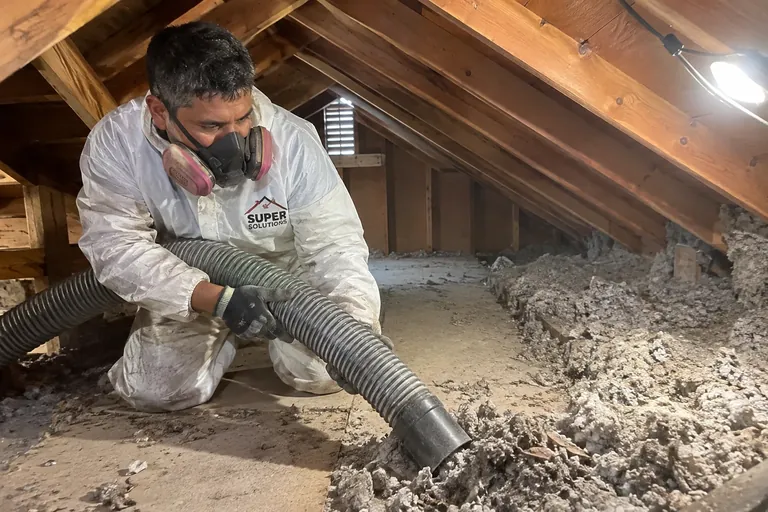
Removal of rodent droppings, nesting, old debris and soiled insulation, hauled out in sealed bags.
Learn more →
We find every gap rats and mice use, from roof vents to crawl space, and seal it with metal.
Learn more →Book a free inspection. We'll photograph your attic and crawl space and walk you through what we find, before you decide anything.