
Insulation
Attic insulation installation
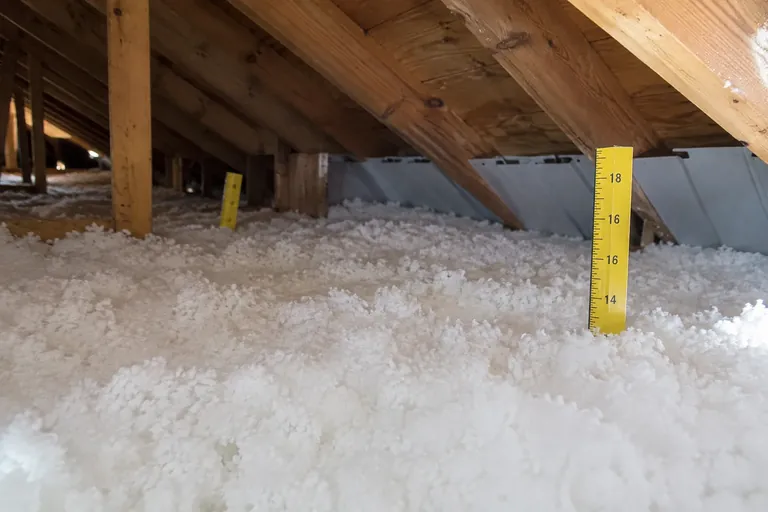
The install itself: air sealing, eave baffles, flue clearances and an even layer to the planned depth.
Learn more →Attic insulation · Seattle & Puget Sound
Most attics we open have less insulation than the owner thinks. We measure the depth, check the condition, and tell you how much you need and which material fits your house.
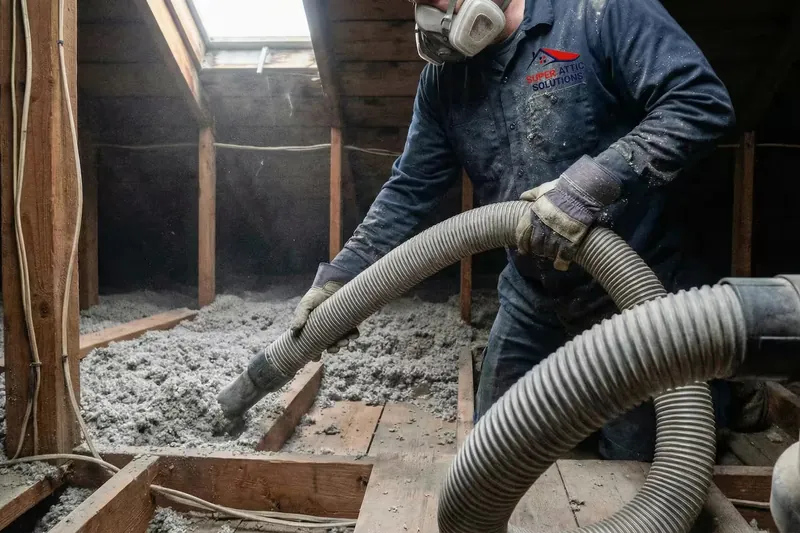
 Blowing loose-fill insulation into an attic · Seattle, WA
The problem
Warm air rises. In a Puget Sound winter, the heat your furnace or heat pump makes drifts up to the top floor ceiling and keeps going into the attic unless something stops it. That something is the insulation lying between and over your ceiling joists. When it's thin, flattened or full of gaps, the heat leaves faster than the system can replace it, and the rooms right below the attic feel it first.
Two questions decide the fix: how much insulation is up there now, and what shape it's in. A shallow but clean layer can often be topped up. A layer that's wet, matted or full of droppings has to come out first. We answer both questions with a tape measure, a flashlight and photos, then give you a plan in plain words.
Warning signs
You can spot most of these without going up the ladder.
If you can see the top edges of the ceiling joists, the insulation is shallower than the joists are deep. Current targets sit well above that line.
Bedrooms under the attic run warm on summer afternoons and chilly on winter mornings while the main floor stays steady.
Put a hand on the top floor ceiling on a January night. A cold ceiling means heat is passing straight through to the attic.
Old fiberglass turns gray where air filters through it. Flat, compacted patches near the hatch or under walkways have lost much of their value.
When the furnace or heat pump runs longer each winter with no change in habits, the attic is a likely place the heat is going.
Rats and mice nest in loose insulation and pack it down. Contaminated insulation should come out before anything new goes in.
Proof of work
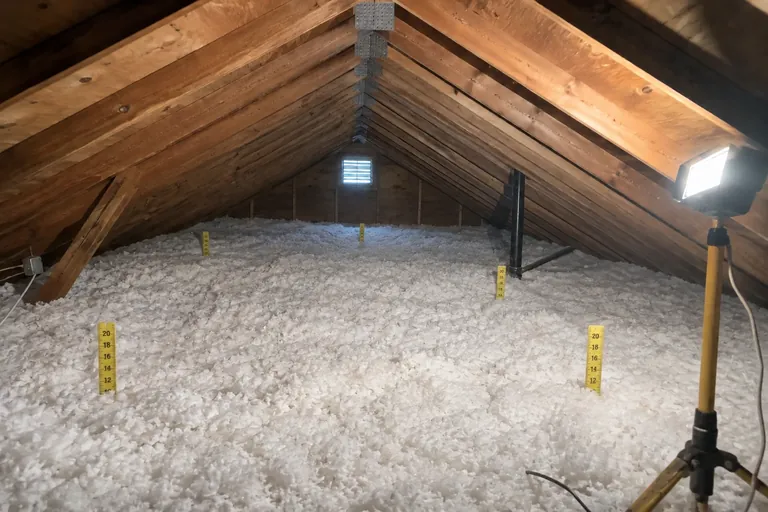
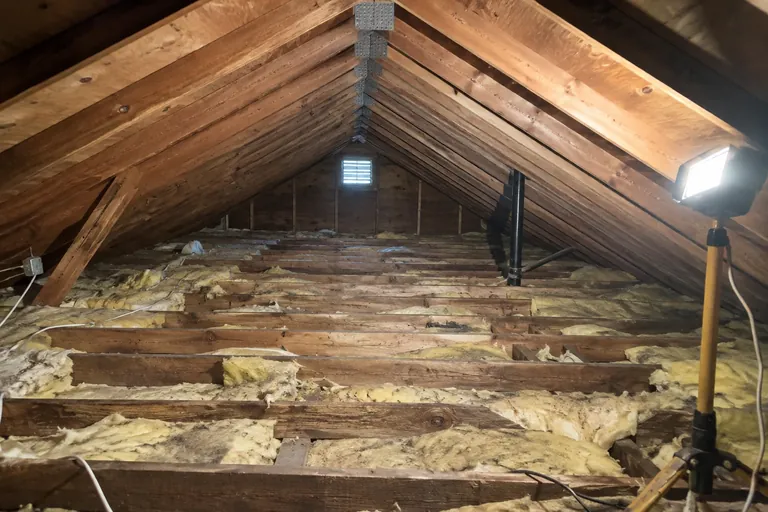
Drag the slider to compare. Illustrations of typical results on homes like yours.
 BeforeAfter
 STEP 01
 STEP 02
 STEP 03
 STEP 04
How we do it
The same order on every job, so nothing gets covered up before it's checked.
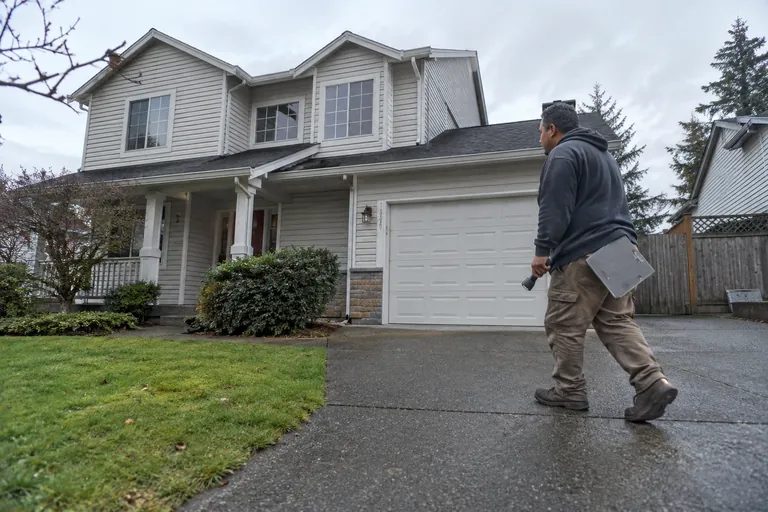
A technician goes into the attic and checks the depth in several spots, the type of material, its condition, soffit vents, bath fan ducts and any signs of rodents or moisture. We take photos the whole time and walk you through them before we talk about options.
We tell you what R-value you have now, what level makes sense for your house, and which material gets you there. If the old layer can stay, we say so. If it has to come out, we show you why with the photos we just took.
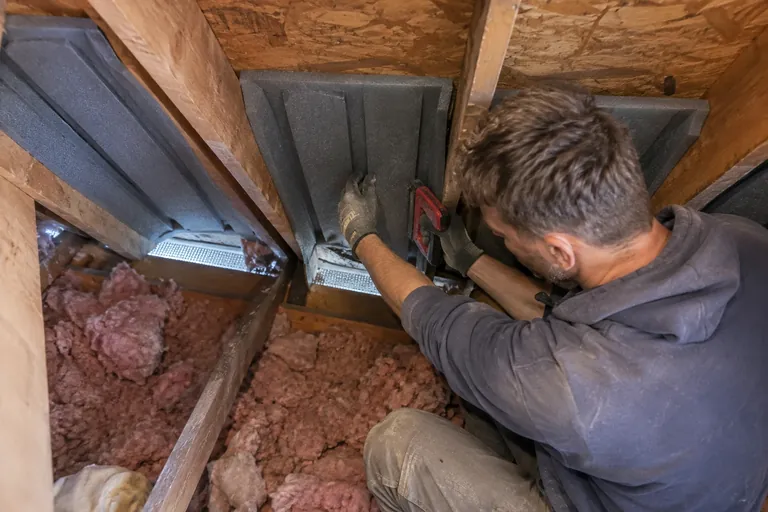
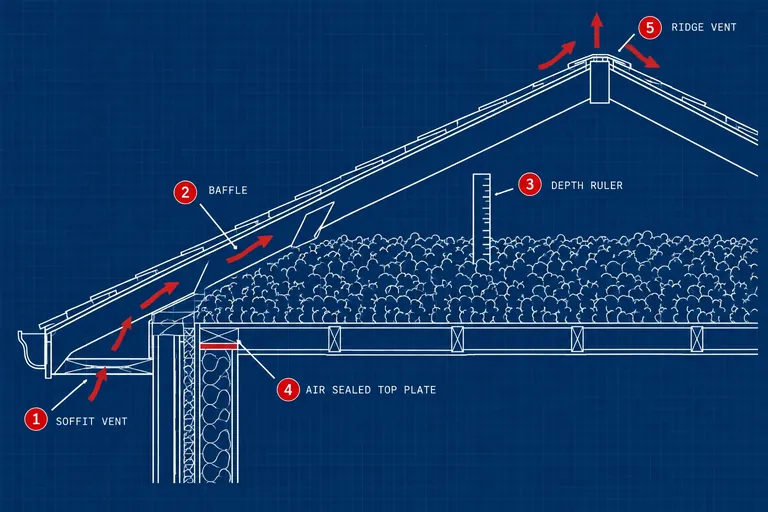
Before new insulation goes down, we seal the gaps that leak air from the house: top plates, plumbing and wiring holes, light fixtures and the hatch. We set baffles at the eaves so soffit vents stay open after the attic is filled.
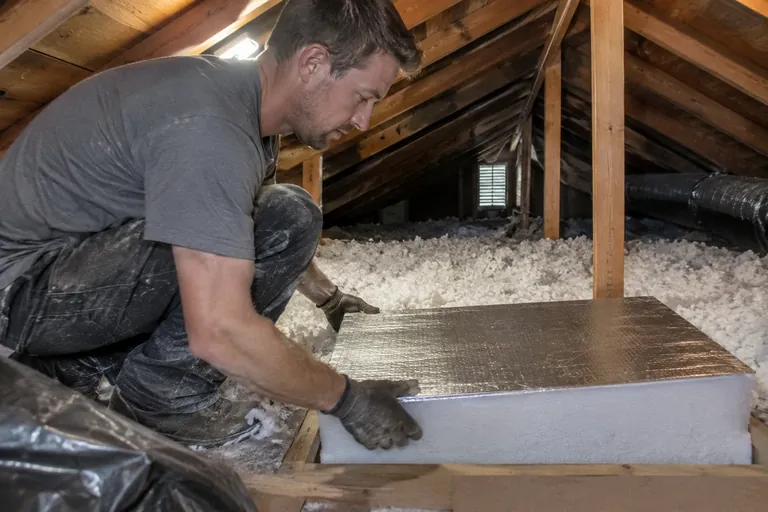
We blow or lay the new insulation to the planned depth across the whole attic floor, including the hard corners over exterior walls. Hatch covers get insulated too. We keep proper clearance around flues, chimneys and fixtures that need it.
When we finish, we photograph the attic again from the same spots so you can compare before and after without climbing up. We clean the work path through your house, put the hatch back, and go over what was done, what depth we reached and anything else we noticed up there.
What you get
| Inspection | Free, with photos of the attic and any crawl space we check |
|---|---|
| Materials | Blown fiberglass, cellulose, batts, rolls or rockwool (mineral wool) |
| Brands we install | Knauf EcoBatt with ECOSE Technology and CertainTeed |
| Air sealing | Top plates, penetrations, light fixtures and attic hatch |
| Ventilation | Baffles at the eaves to keep soffit vents clear |
| Old insulation | Topped up when sound, removed when wet or contaminated |
| Cleanup | Work path covered and cleaned when we leave |
| Rebates | We check PSE rebates you may qualify for |
Compare
Both work. The right choice depends on how open your attic is and what's already there.
| Factor | Blown-in loose fill | Batts |
|---|---|---|
| Best for | Most attic floors, especially with wiring, blocking and odd joist spacing | Open, even joist bays and spaces you can reach on foot |
| Coverage | Fills around obstacles and settles into corners | Needs careful cutting around every wire and brace |
| Over old insulation | Blows evenly over a sound existing layer | Laid across the joists as a second layer |
| Low-clearance eaves | Can be blown into tight spots from a distance | Hard to place where the roof meets the wall |
| Future attic access | Loose fill shifts if you walk or store things on it | Holds its shape better around storage areas |
Puget Sound homes
Our winters are mild but long. From October to May the house is heating most days, and it's damp outside the whole time. That makes attic insulation pay off steadily rather than in a few deep-freeze weeks. It also means moisture matters. Warm, humid air leaking up from bathrooms and kitchens condenses on cold roof sheathing and feeds mold on the north side of the roof. So we seal before we insulate, and we make sure bath fans vent outside, not into the attic.
The houses vary a lot. Older Seattle bungalows often have a few inches of loose fill, sometimes over knob-and-tube wiring that needs an electrician's eye first. Eastside tract homes in Bellevue, Redmond and Bothell from the 1970s through the 1990s usually have builder-grade blown insulation that has settled over the decades. Newer homes are closer to current Washington targets of R-49 to R-60, but we still find thin spots around hatches, can lights and the low edges over exterior walls.
Pricing
We price after the inspection, once we know what's up there.
Square footage, roof pitch and how easy it is to get in and move around all affect labor time.
A clean layer can be topped up. Wet, moldy or rodent-soiled insulation adds removal and cleanup.
Going from very little to current targets takes more material than a top-up. Material choice changes the total too.
Number of penetrations, can lights needing covers, baffles at the eaves and hatch work.
Rebate amounts and eligibility come from PSE and change over time. We check what you qualify for and handle the paperwork with you.
We had rodent problem in our house. Also our house had bare minimum insulation in some places. Isaac was very helpful, he also took some photos of the attic and crawl space. They gave me a reasonable quote for rodent proofing and insulation. Their crew was on time and finished the job in two days. Really appreciate their hard work.
FAQ
Still unsure? Call (800) 674-4933 and talk it through with us.
Current Washington targets for new construction attics are R-49 to R-60. Many older Puget Sound homes sit far below that. How deep that is depends on the material, because blown fiberglass, cellulose and batts each have a different R-value per inch. At the inspection we measure what you have and tell you how much depth to add with the material we recommend.
For most attic floors we recommend blown-in insulation, either fiberglass or cellulose, because it fills around wiring and framing. Batts and rolls make sense in open, regular joist bays. Rockwool (mineral wool) suits spots near heat sources or where sound matters. We base the recommendation on your attic, not on one product we push for every job.
Often, yes. If the existing layer is dry, free of droppings and not moldy, we air seal and add new insulation over it. If it's wet, matted, smells or has rodent waste in it, adding more just buries the problem. We show you photos of the existing layer so the decision is yours.
Open the hatch with a flashlight and look across the attic floor. If the joist tops are visible, you're under-insulated. Push a ruler down through the layer in a few spots. Look for gray streaks, wet stains, droppings and tunnels. Don't walk between joists; you can step through the ceiling. Or book a free inspection and we'll photograph it for you.
Yes. On a hot afternoon the attic gets far hotter than outside air, and that heat radiates down through the ceiling. A deep insulation layer slows it, so upstairs bedrooms stay cooler and the AC or heat pump runs less. With more heat waves in recent summers, this matters more here than it used to.
We work across Seattle, the Eastside and the Puget Sound region, including King, Snohomish, Pierce, Thurston and Skagit counties. That covers places like Kirkland, Bellevue, Redmond, Everett, Lynnwood, Renton, Kent, Tacoma, Olympia and Mount Vernon, and many towns in between. Call (800) 674-4933 to book a free inspection.
Related services
The install itself: air sealing, eave baffles, flue clearances and an even layer to the planned depth.
Learn more →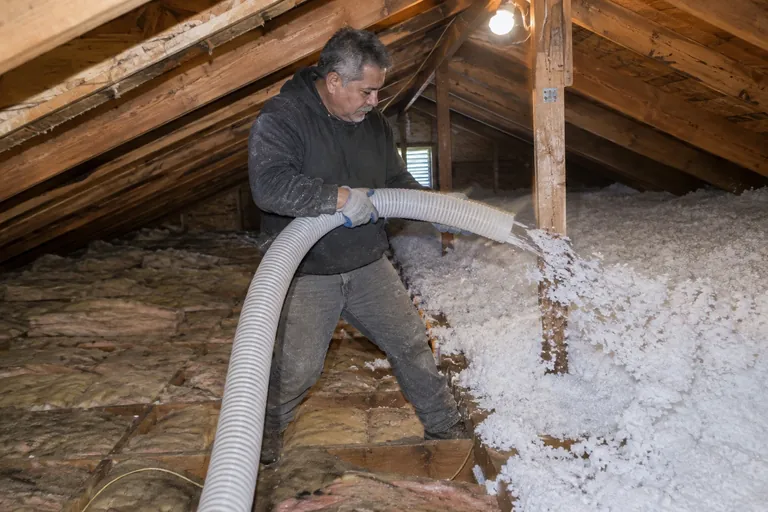
Old insulation out, space cleaned and sealed, new insulation in, as one planned project.
Learn more →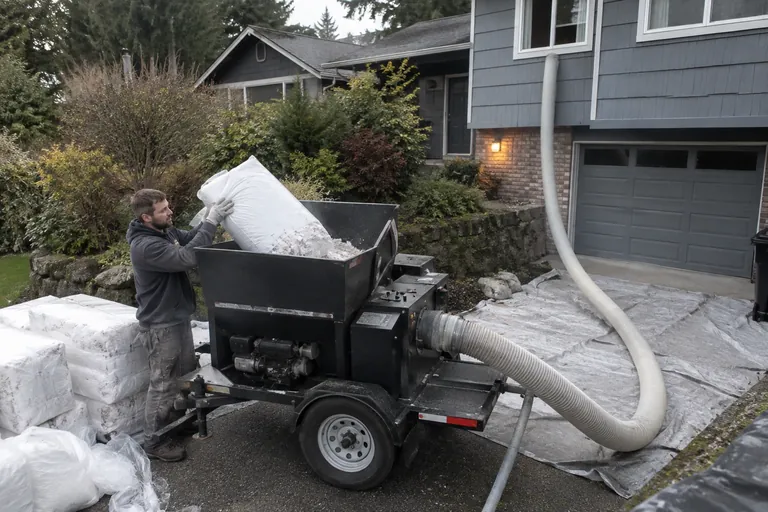
Fiberglass or cellulose loose fill blown to an even depth across the attic floor, corners included.
Learn more →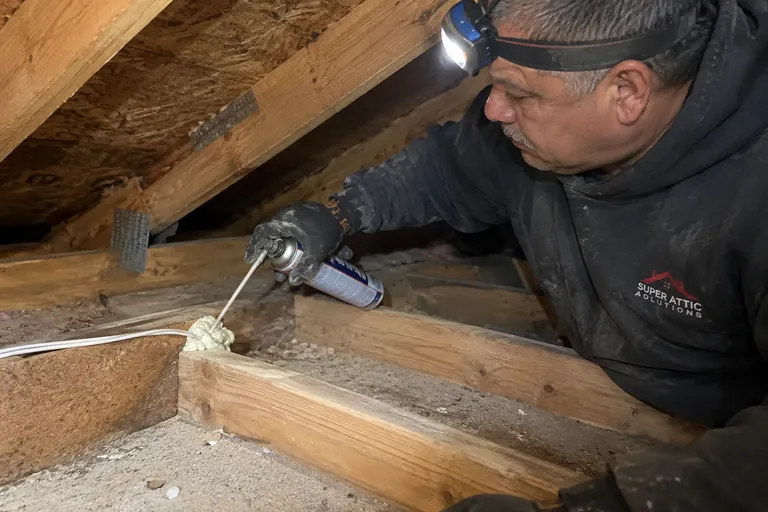
Sealing top plates, can lights, bath fans and chases from the attic side before new insulation goes in.
Learn more →Book a free inspection. We'll photograph your attic and crawl space and walk you through what we find, before you decide anything.