
Insulation
Attic insulation removal
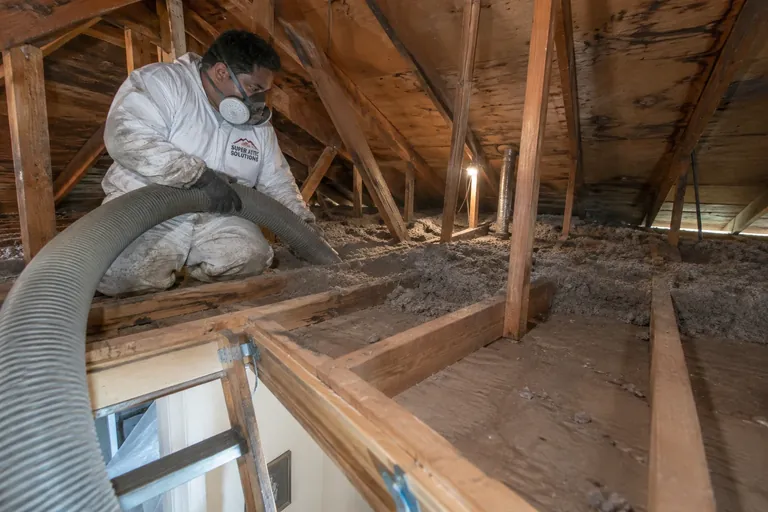
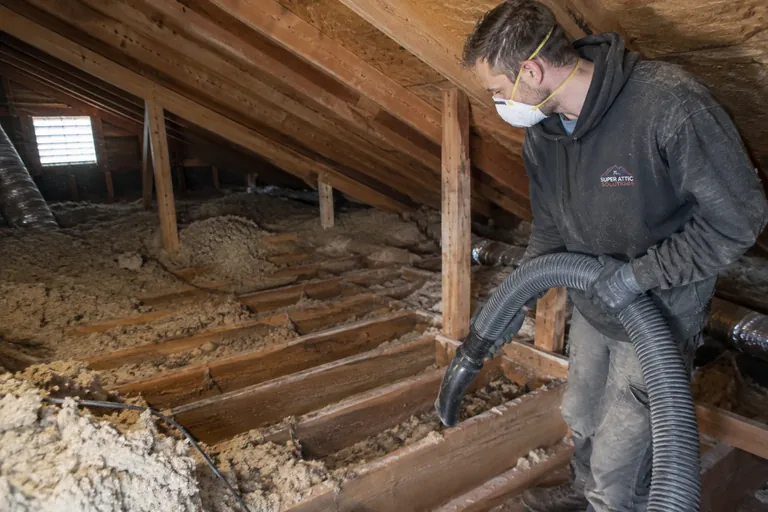
Vacuum removal of old, wet or contaminated attic insulation, bagged outside and hauled away.
Learn more →Insulation replacement · Seattle & Puget Sound
Replacement is one project, not three. We remove the old insulation, clean and seal the attic or crawl space, then install new insulation, with one crew and one schedule.
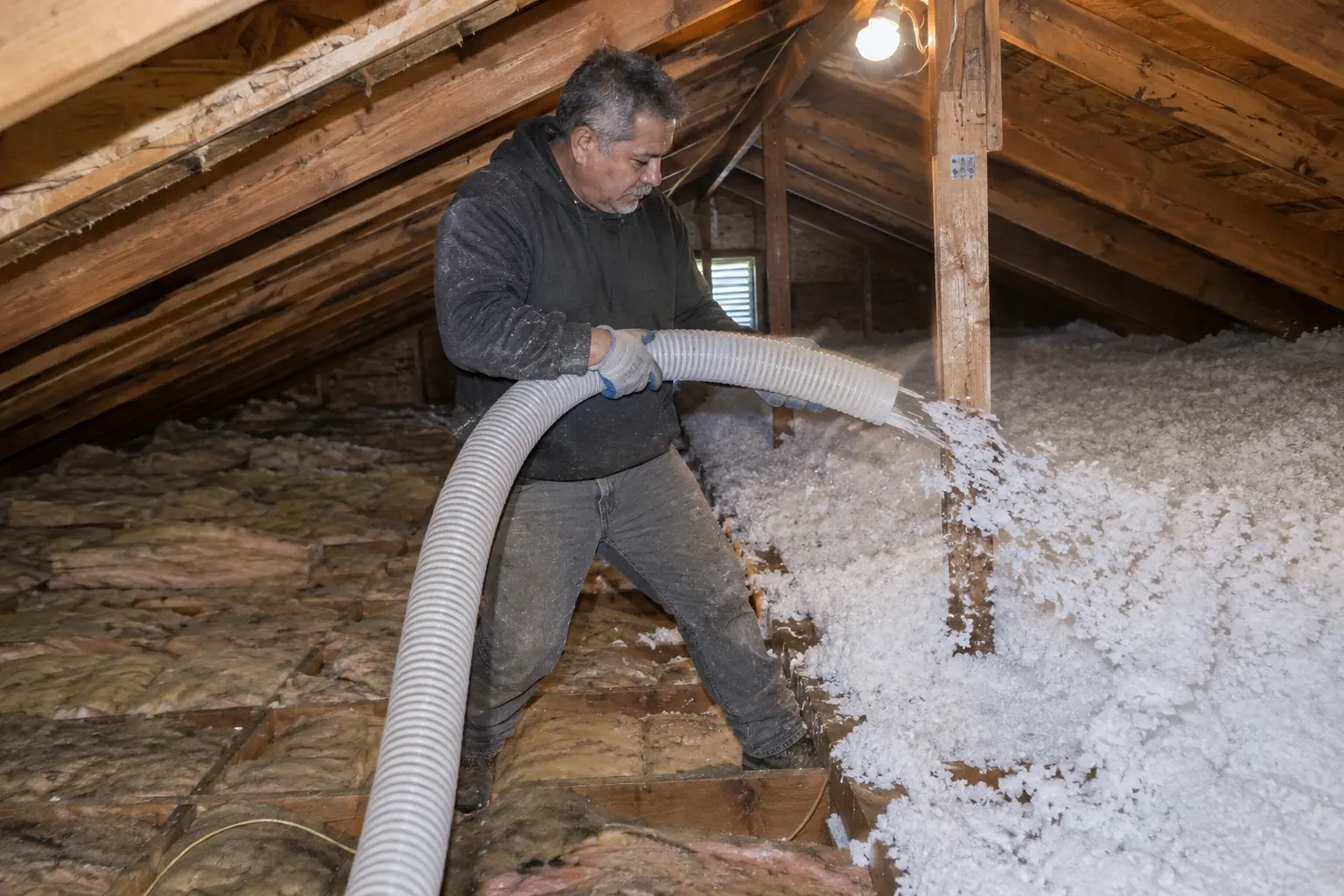 Replacing old attic insulation with new · Burien, WA
The problem
Adding insulation over an old layer works when the old layer is clean and dry. Plenty of attics and crawl spaces aren't. Insulation that's been lived in by rats, soaked by a leak, or packed down by decades of foot traffic and settling has lost most of its value, and putting new material over it traps whatever is in it. The smell stays, the moisture stays, and you've paid to insulate on top of a problem.
Replacement starts from zero. We take the old material out, clean the space, close the holes that caused the damage, and then put in new insulation to current levels. Doing it as one project matters because the order matters. If the rodent holes aren't sealed before the new insulation goes in, the new layer gets ruined the same way the old one did. One crew handling every step keeps that order intact.
Warning signs
If any of these describe your attic or crawl space, start over.
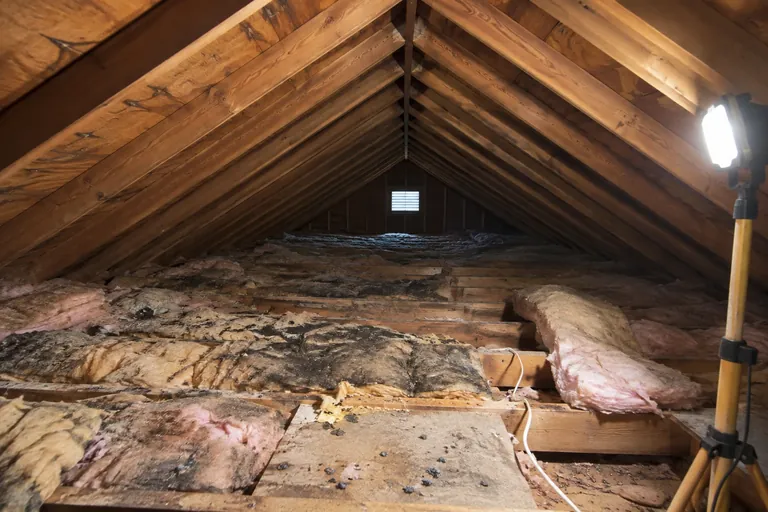
Tunnels, nests, droppings and urine soak into insulation. It can't be cleaned in place and should be removed.
Under-floor batts sag, drop to the ground and soak up moisture. Fallen batts are a common find under Puget Sound homes.
A slow roof leak or condensation from a bath fan leaves insulation dense, stained and slow to dry out.
Layers from different decades, some crushed and some loose, make it impossible to know what you actually have.
Floors that feel cold in winter often sit over missing, sagging or soaked crawl space insulation.
Musty or ammonia odors in upper rooms and closets often trace to soiled insulation right above the ceiling.
Proof of work
Drag the slider to compare. Illustrations of typical results on homes like yours.

 BeforeAfter
 STEP 01
 STEP 02
 STEP 03
 STEP 04
How we do it
Five stages, done in order, so the new insulation stays clean.
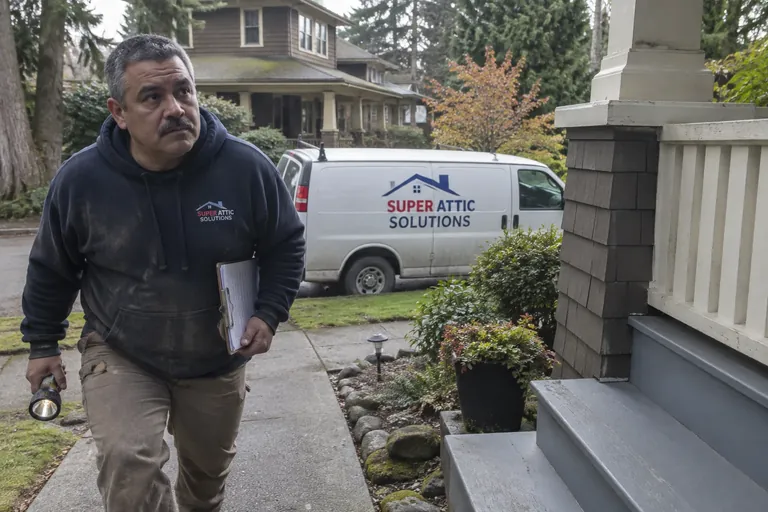
We go into the attic, the crawl space or both, photograph what's there, and show you. We note the material, its condition, rodent signs, moisture, ductwork and ventilation. You get a plan that lists each stage, what it covers and why it's needed, before any work is scheduled.
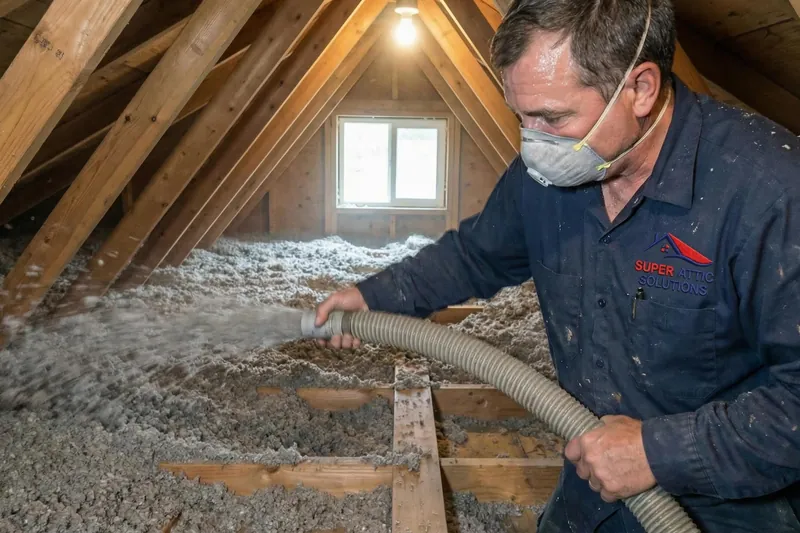
We vacuum loose fill out through a sealed hose to bags outside, and pull and bag old batts. Droppings and nesting material come out with it. The crew wears respirators and suits, and the path through your house is covered from the door to the hatch.
With the space bare, we clean up remaining debris and treat areas where rodents nested or left waste. In crawl spaces we look at the vapor barrier on the ground and tell you if it's torn, missing or needs replacing before new insulation goes in above.
We close the gaps rodents used to get in, at vents, roof edges, pipe openings and foundation gaps. In the attic we seal air leaks around plumbing, wiring and fixtures. This is the step that keeps the new insulation from going the same way.
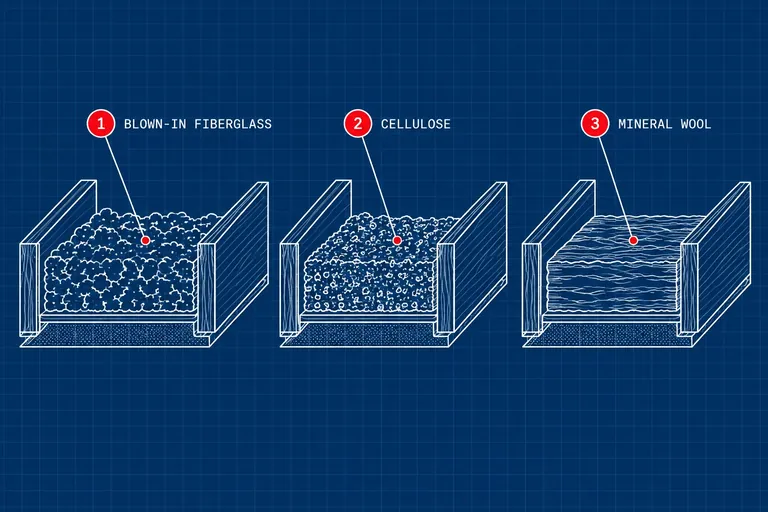
We install new insulation to the planned depth. In attics that's usually blown fiberglass or cellulose with baffles at the eaves. Under floors it's usually batts held tight to the subfloor. Then we take after photos from the same spots and walk you through them.
What you get
| Areas | Attics, crawl spaces, or both in one project |
|---|---|
| Removal | Vacuum removal of loose fill; old batts pulled and bagged |
| Cleanup | Debris removed, nesting areas cleaned and sanitized |
| Rodent work | Entry points sealed before the new layer goes in |
| Air sealing | Attic penetrations, top plates and hatch |
| New insulation | Blown fiberglass, cellulose, Knauf EcoBatt, CertainTeed or rockwool |
| Crawl space | Vapor barrier checked; batts secured tight to the subfloor |
| Photos | Before, bare and finished, from the same spots |
Compare
We recommend a top-up whenever the old layer allows it. Here's how we decide.
| Factor | Top-up over existing | Full replacement |
|---|---|---|
| Old layer condition | Dry, clean, no droppings or mold | Wet, soiled, moldy, crushed or smelly |
| What you get | More depth added over what's there | Clean space, sealed holes, all-new insulation |
| Hidden problems | Stay covered if any exist | Found and fixed while the space is bare |
| Rodent history | Not a fit if rodents lived in it | The right choice after an infestation |
| Project size | Usually a single visit | Several stages, often over a few days |
Puget Sound homes
Many Seattle-area homes sit on vented crawl spaces, and those spaces stay damp most of the year. Under-floor batts in older homes were often stapled in loosely or held with nothing at all. After a few wet winters they sag, slip off the joists and lie on the ground, soaking up moisture. Rats use the gaps to move around. Replacing them means pulling down what's left, fixing the vapor barrier if needed, and installing new batts held firmly against the subfloor.
Up in the attic, roof rats and our long rainy season do the damage. We often find attics in Shoreline, Renton, Kent and across the Eastside where rodents have tunneled through every bay, or where a slow roof leak at a valley or a moss-lifted shingle left a soaked, stained patch. Replacing both spaces in one project often makes sense, because rodents moving between them use the same wall cavities and pipe chases. Sealing both ends at once closes the whole route.
Pricing
Replacement is quoted stage by stage so you can see where the cost sits.
Area and depth of the old layer, and whether it's loose fill, batts or a mix of both.
Heavy droppings, mold or a soaked layer add care, protective gear and cleanup time.
The number and type of rodent entry points and attic air leaks we need to close.
Doing both in one project shares setup time, but each space is quoted on its own.
The insulation you choose and the depth we install. PSE rebates may apply; we check what you qualify for.
We had rodent problem in our house. Also our house had bare minimum insulation in some places. Isaac was very helpful, he also took some photos of the attic and crawl space. They gave me a reasonable quote for rodent proofing and insulation. Their crew was on time and finished the job in two days. Really appreciate their hard work.
FAQ
Still unsure? Call (800) 674-4933 and talk it through with us.
Replace it when it's been contaminated by rodents, soaked by water, grown mold, or absorbed smoke. Also when it's so crushed or patchy that you can't tell what's there. If the old layer is dry and clean, a top-up is usually the better value, and we'll tell you that.
A single attic replacement often takes a day or two from removal to final photos. Adding the crawl space, heavy contamination or extensive rodent sealing can stretch it to a few days. We give you a timeline with the quote and keep you posted as each stage of the project is finished.
Yes. We pull down old under-floor batts, clean up the crawl space, check the vapor barrier on the ground and install new batts held tight against the subfloor. Many homes need both the attic and crawl space done, especially after rodents have been moving between the two.
That depends on your policy and what caused the damage, and only your insurer can answer it. What we can do is give you clear photos of the damage, a written description of what we found and an itemized quote. Many homeowners use that documentation when they talk to their insurance company.
For attic floors we usually recommend blown fiberglass or cellulose. For crawl spaces and open joist bays we use batts, including Knauf EcoBatt with ECOSE Technology and CertainTeed products. Rockwool (mineral wool) is an option where fire resistance or sound matters. We explain the tradeoffs and you pick.
Yes, and we build that into the project. We trap the rodents and seal every entry point we find before the new insulation goes in. Otherwise the new layer gets tunneled and soiled the same way. We tell you exactly what we use and where.
Related services
Vacuum removal of old, wet or contaminated attic insulation, bagged outside and hauled away.
Learn more →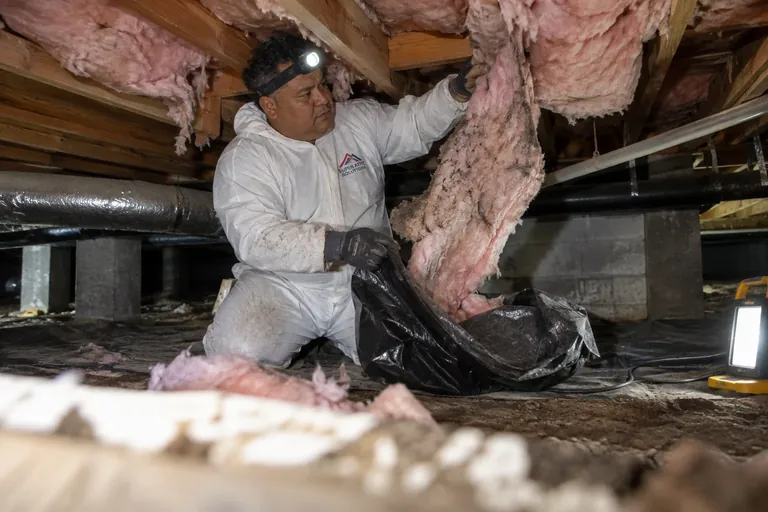
Wet, sagging or rodent-soiled batts pulled from the floor joists, bagged and hauled away.
Learn more →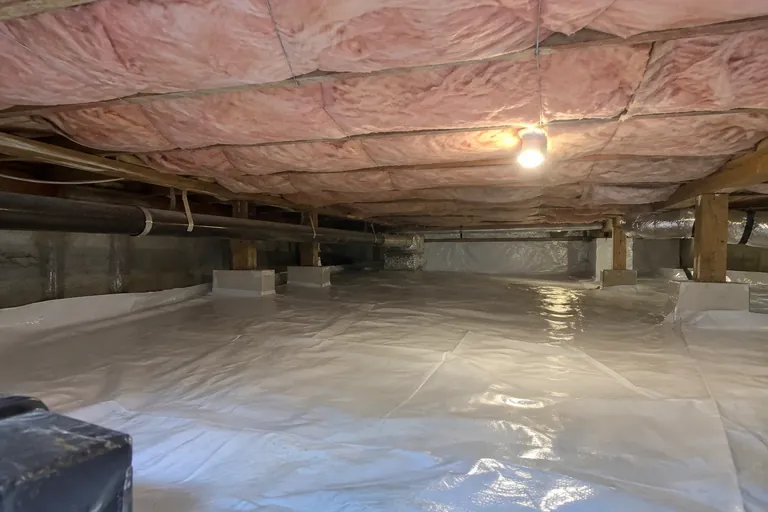
New underfloor batts, fitted tight to the subfloor and supported so they stay up.
Learn more →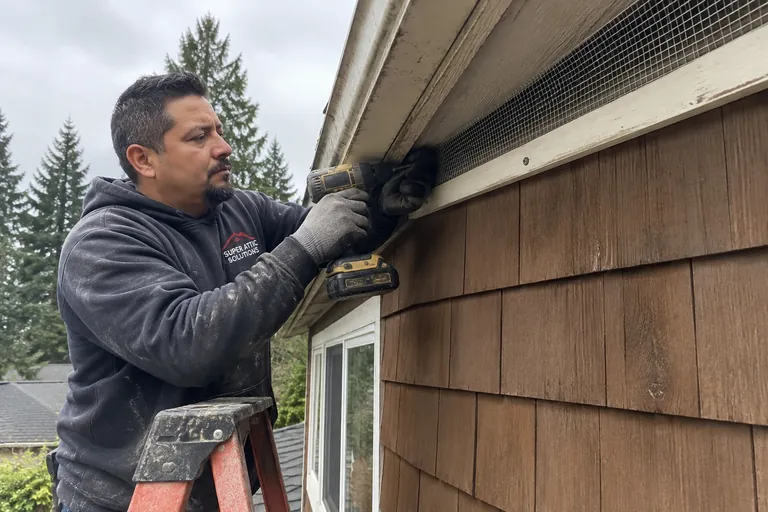
We find every gap rats and mice use, from roof vents to crawl space, and seal it with metal.
Learn more →Book a free inspection. We'll photograph your attic and crawl space and walk you through what we find, before you decide anything.