
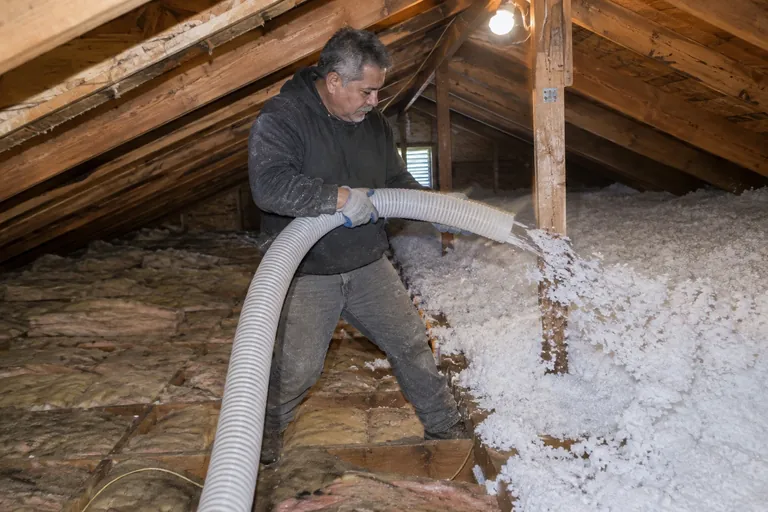
Insulation
Insulation replacement
Old insulation out, space cleaned and sealed, new insulation in, as one planned project.
Learn more →Attic insulation removal · Seattle & Puget Sound
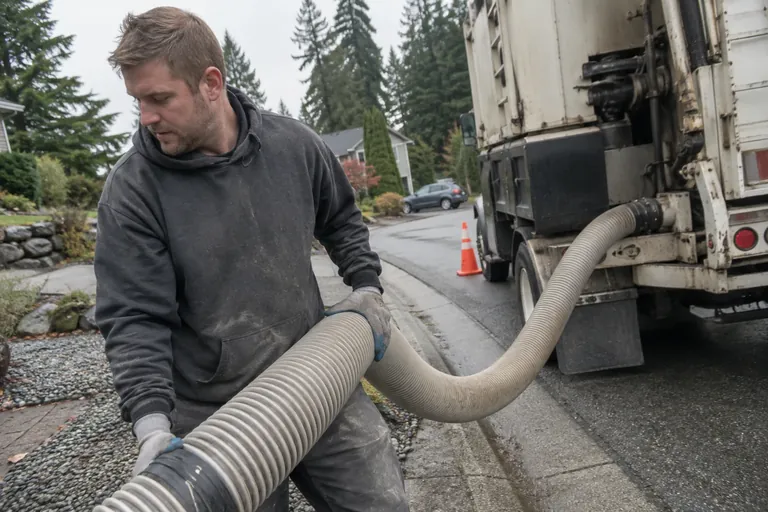
We vacuum old, wet and rodent-soiled insulation out of your attic through a sealed hose to collection bags outside. It never gets carried through your house.
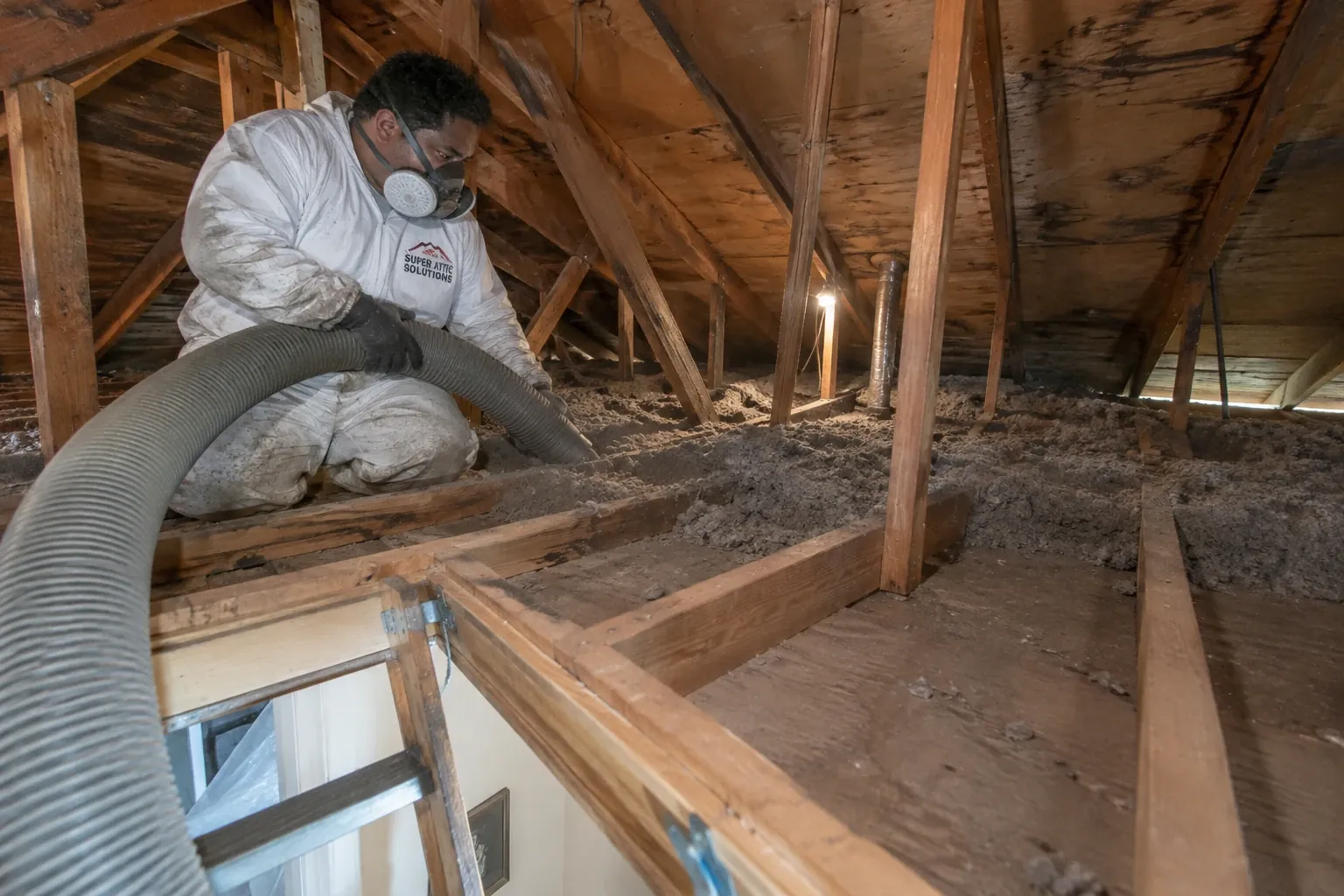 Removing old attic insulation with a high-power vacuum · Seattle, WA
The problem
Insulation doesn't wear out the way a roof does, but it does get ruined. A roof leak soaks it and it dries flat. Rats and mice tunnel through it, nest in it and leave droppings and urine throughout. Smoke from a fire, mold from a bath fan venting into the attic, or decades of dust from air leaks can all leave a layer that is doing more harm than good. Burying it under new material keeps the smell and the mess in your attic.
Removal gets the attic back to bare joists and drywall. Once it's clear, you can see what's been hiding: entry holes rodents used, water stains on the ceiling drywall, disconnected ducts, gaps around pipes and wires. We fix what we find or tell you plainly who should. Then the attic is ready for clean insulation, installed right from the start.
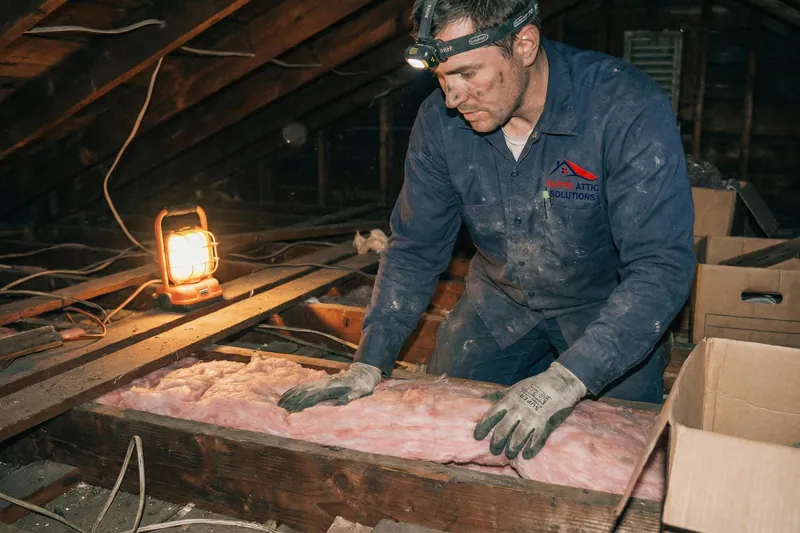
Warning signs
If you see any of these in the attic, adding more on top isn't the answer.
Rodent trails through the layer, shredded nesting spots and droppings mean the insulation is soiled and should come out.
A sharp smell at the hatch or in upstairs closets usually points to rodent urine or moisture trapped in the insulation.
Insulation that got wet from a roof leak or condensation dries flat and dense. It holds moisture and insulates poorly.
Dark staining on the sheathing over damp insulation means the moisture problem has to be fixed and the soaked material cleared.
Insulation that took on smoke keeps the odor. It has to go before the attic can be cleaned and reinsulated.
Some projects need a bare attic floor for new wiring, ducts, lighting or framing work. Removal comes first.
Proof of work
Drag the slider to compare. Illustrations of typical results on homes like yours.
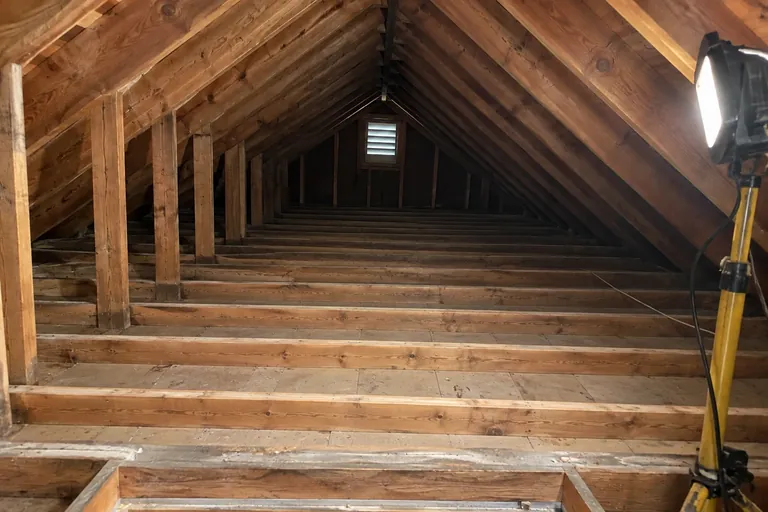
 BeforeAfter
 STEP 01
 STEP 02
 STEP 03
 STEP 04
How we do it
Removal is a containment job as much as a hauling job.
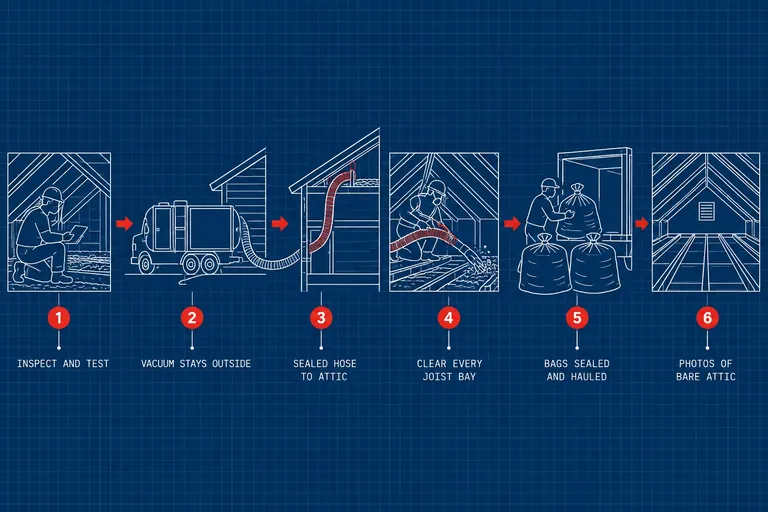
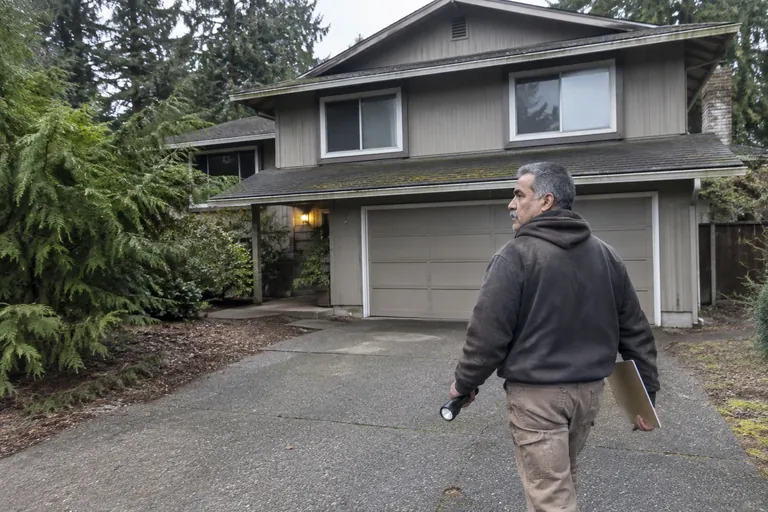
We photograph the attic and check what type of insulation is there. If we see vermiculite, the gray-brown pebbly fill found in some older homes, we stop. It may contain asbestos and has to be tested by a lab before anyone disturbs it. We tell you what the next steps are.
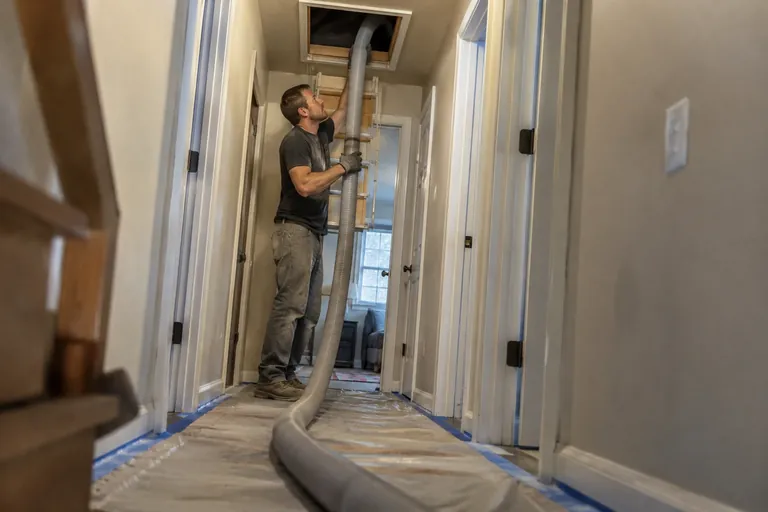
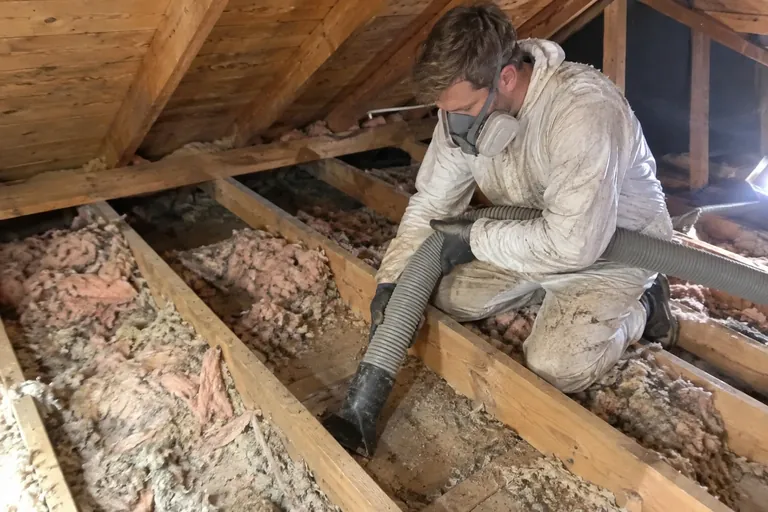
The vacuum stays outside on the truck. A sealed hose runs to the attic, usually through a window or the hatch, and we cover the path inside the house. The crew wears respirators and protective suits, especially where there are droppings.
We work the hose across every joist bay, pulling out the old insulation along with droppings, nesting material and loose debris. Material goes straight into large collection bags outside. Nothing gets carried down your stairs in armloads or swept dry.
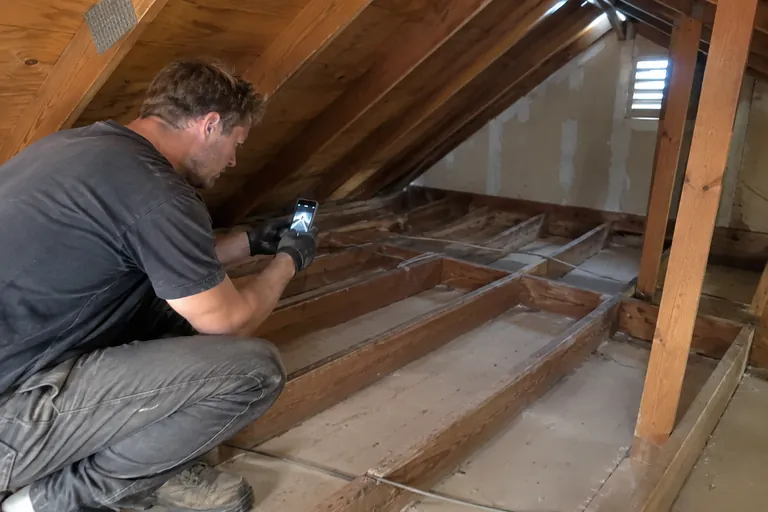
The low eaves and tight corners are where rodents nest most, so we spend time there. Once the floor is bare, we photograph it and point out entry holes, leaks, duct problems and stains we found underneath the old layer.
We seal the bags and haul them away. From there the attic can be cleaned and sanitized, sealed against rodents and reinsulated. If you're doing the full job with us, we move straight on to those steps; if not, you get the photos and a clear list.
What you get
| Method | Commercial insulation vacuum with a sealed hose to outside |
|---|---|
| Materials removed | Loose fill fiberglass, cellulose, batts and rolls |
| Debris | Droppings, nesting material and loose attic debris |
| Crew protection | Respirators and protective suits on every removal |
| House protection | Covered path, vacuum and bags kept outside |
| Vermiculite | Stop and test first; not disturbed until results are back |
| Disposal | Sealed bags hauled away from your property |
| Photos | Before, during and of the bare attic floor |
Compare
Both get the insulation out. Only one keeps it out of your hallways.
| Factor | Vacuum removal | Hand bagging |
|---|---|---|
| Dust in the house | Material travels through a sealed hose to outside | Bags carried down through living space |
| Droppings | Pulled out with the insulation, not swept dry | Disturbed and stirred up while bagging |
| Tight eaves | Hose reaches into low corners | Hard to reach by hand and often left behind |
| Speed | Faster on most full-attic jobs | Slow and labor-heavy |
| Best for | Loose fill and full-attic removal | Small areas or a few batts |
Puget Sound homes
Two things put a lot of attic insulation in the trash around here: rats and rain. Roof rats are common across King, Snohomish and Pierce counties and like to climb trees and wires up to the roofline, then live in the attic. Norway rats come up from crawl spaces. Either way, the insulation ends up full of tunnels and droppings. Our long wet season adds roof leaks, condensation from bath fans that vent into the attic, and moss-lifted shingles that let water in slowly.
Older Seattle homes, from Ballard to Beacon Hill, add a third reason. Some have layers from several eras: an early loose fill, a later batt layer and a top-up from the 1980s, each one holding its own dust and debris. Others have vermiculite, which we never vacuum until it's tested. Clearing the attic down to bare joists lets us see the framing, the wiring, any knob-and-tube that needs an electrician and the ceiling drywall, and start the new insulation from a clean, known base.
Pricing
We quote removal after we've seen the attic and the material.
Attic size and the depth of the old layer set how much material comes out and how many bags we fill.
Dry loose fill vacuums easily. Wet, matted or packed batts take longer and need more handling.
Heavy droppings, nests or mold mean more protective gear, more care at the corners and usually a cleanup step after.
Hatch location, attic height and how far the hose runs from the truck all affect setup and labor time.
Removal alone, or removal plus sanitizing, rodent sealing and new insulation as one project.
We had rodent problem in our house. Also our house had bare minimum insulation in some places. Isaac was very helpful, he also took some photos of the attic and crawl space. They gave me a reasonable quote for rodent proofing and insulation. Their crew was on time and finished the job in two days. Really appreciate their hard work.
FAQ
Still unsure? Call (800) 674-4933 and talk it through with us.
You can, but it's a hard, dirty job. Without a commercial vacuum you end up bagging by hand and carrying it through the house. If there are droppings, you risk breathing contaminated dust. Hantavirus is carried by deer mice and some other rodents, so droppings should never be swept or vacuumed dry with a shop vac.
Most attics take a day to clear, sometimes less. Very large attics, deep layers from several eras, or heavy contamination can take longer. If removal is followed by cleaning, sealing and new insulation, the whole project usually runs a few days. We give you a timeline with the quote.
Vermiculite looks like small, lightweight pebbles, usually gray-brown or gold with a shiny, layered look. It was used in some homes built before the 1990s. Some vermiculite contains asbestos. Don't disturb it. We stop work if we see it, and it needs to be tested by a lab before any removal plan is made.
Removal takes out the insulation and most loose debris. If rodents were living up there, the attic usually needs cleaning and sanitizing as a next step, and the entry points need to be sealed so they don't come back. We can do all of it as one project or quote each step separately.
Yes. The vacuum and bags stay outside, the hose is sealed, and the path through your house is covered. Most people stay home and go about their day. We ask you to keep children and pets away from the hatch and the hose path while we work.
No. It removes the contaminated material, but rats and mice will move right back in if the holes they used are still open. We trap the rodents, seal every entry point we find, and then remove and replace the insulation. Doing it in that order keeps the new insulation clean.
Related services
Old insulation out, space cleaned and sealed, new insulation in, as one planned project.
Learn more →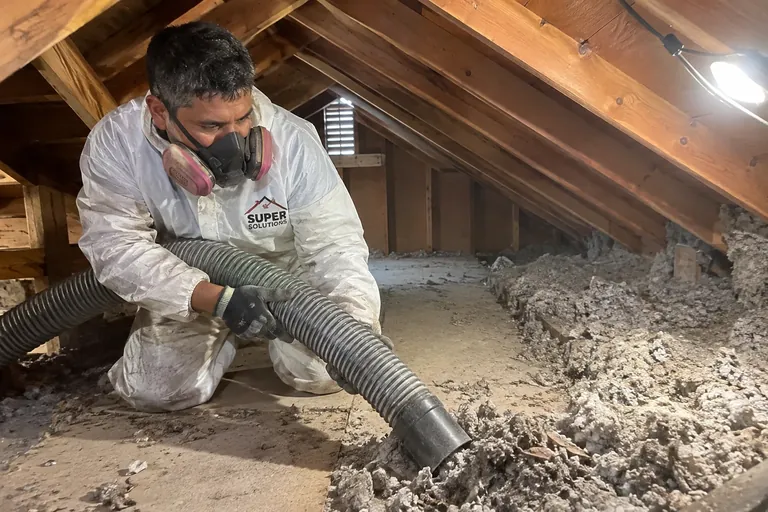
Removal of rodent droppings, nesting, old debris and soiled insulation, hauled out in sealed bags.
Learn more →
Biohazard cleanup after rodents and animals: waste removed, framing disinfected, odor treated at the source.
Learn more →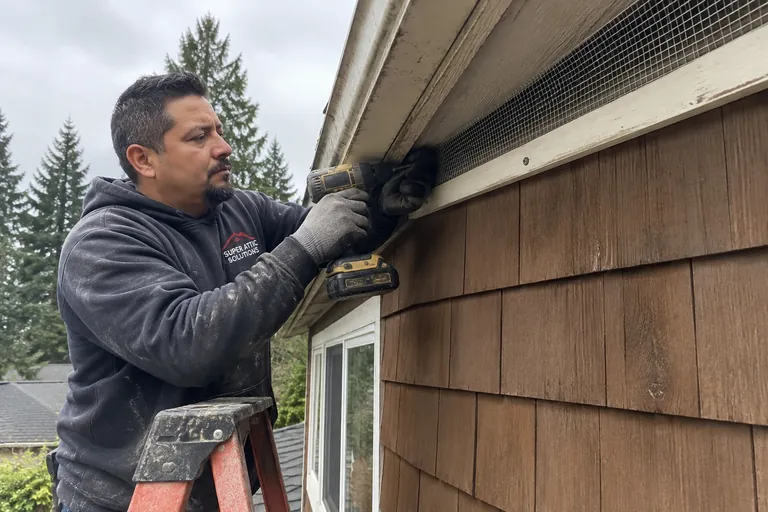
We find every gap rats and mice use, from roof vents to crawl space, and seal it with metal.
Learn more →Book a free inspection. We'll photograph your attic and crawl space and walk you through what we find, before you decide anything.