
Heating, cooling & ducts
Air duct replacement
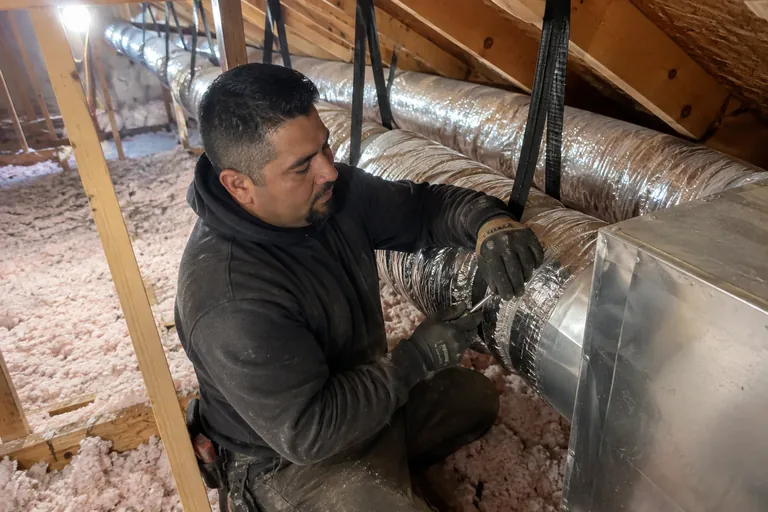
Damaged, leaky and rodent-fouled duct runs pulled and replaced, with sealed joints and photos of the work.
Learn more →Air duct cleaning · Seattle & Puget Sound
We clean your supply and return ducts from register to furnace, photograph what comes out, and tell you plainly when a run is too far gone to clean.
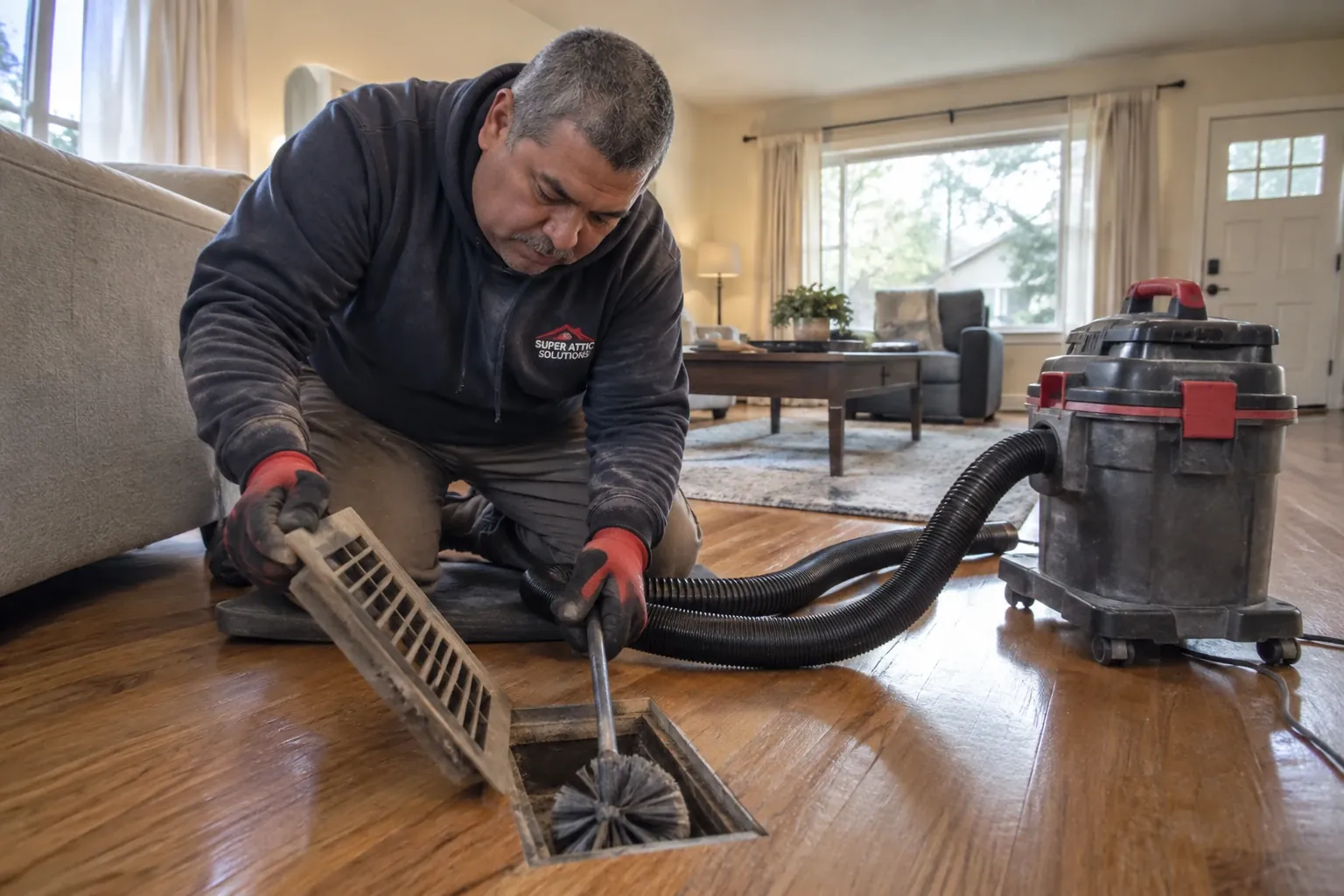 Cleaning floor air ducts with a rotary brush · Seattle, WA
The problem
Every time your furnace or heat pump runs, it pulls air from the house through the return ducts and pushes it back out through the supply runs. Dust, pet hair, drywall dust from an old remodel and the occasional lost toy settle along the way. Return ducts collect the most because they sit upstream of the filter. In a house with ducts in the attic or crawl space, the ducts also pick up what comes in through loose joints: insulation fibers, dirt and, in the worst cases, rodent droppings.
Cleaning makes sense when there's real buildup you can see, after construction dust, or when you move into a house and have no idea what the last owner left behind. It doesn't make sense when the duct itself is the problem. Flex duct that's crushed, torn or full of nesting material can't be cleaned back to good. We'll tell you which runs are worth cleaning and which ones should be replaced, and show you the photos so you can see why.

Warning signs
These are the things that tell us cleaning is worth doing. If you see two or more, a look inside the ducts is the next step.
Gray fuzz builds up on supply and return grilles within days of wiping them down.
Pull a register cover and shine a flashlight in. Clumps, hair or drywall dust on the duct floor means buildup.
Sanding dust gets pulled into the returns during any remodel, especially if the system ran while the work was going on.
Nobody knows how long it's been. A first cleaning gives you a clean baseline and a look at the condition of every run.
A smell that shows up with the blower can point to damp crawl space ducts. We look for the source, not just the smell.
If a new filter turns gray in a few weeks, a lot of dust is moving through the system, often from leaky return ducts.
Proof of work
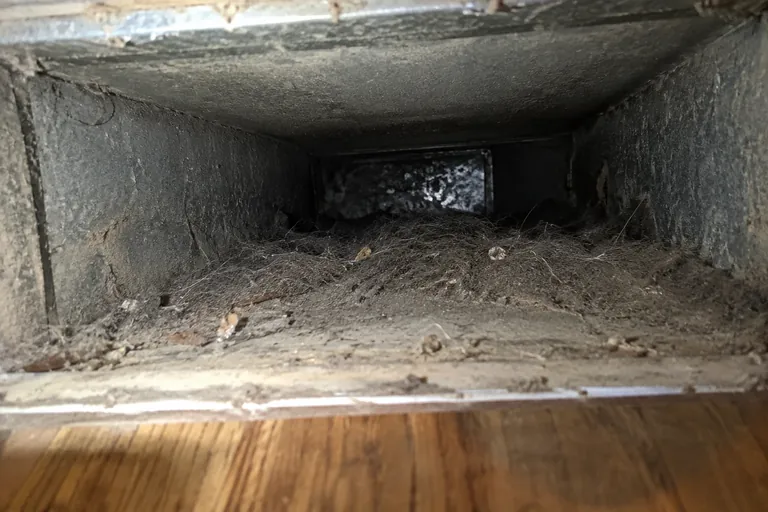
Drag the slider to compare. Illustrations of typical results on homes like yours.

 BeforeAfter
How we do it
We work from the registers back to the furnace, and we keep the house clean while we do it.
We pull register covers, look into the supply and return runs with a camera, and check the ducts in the attic or crawl space from the outside. You get photos of what we find before any cleaning starts, plus a note on any runs that are damaged rather than dirty.
We lay floor protection on the path to the furnace, cover registers in rooms we aren't working in, and set up the vacuum so the dust leaves the house instead of landing on your furniture. The furnace or heat pump is switched off before we open anything.
Each supply run gets brushed and air-whipped toward a collection point under negative pressure, then we do the returns. Flex duct gets a gentler tool so we don't tear the inner liner. Metal trunk lines and boots get a stiffer brush.
We wash the register covers and return grilles, clean the boots where the duct meets the floor or ceiling, and vacuum the return plenum at the furnace. If the filter slot has gaps that let dust slip past the filter, we point them out.
We take after photos from the same spots, put in a new filter and run the system to check airflow at each register. Any runs that need repair or replacement go on a written list with photos, so you can decide what to do next.
What you get
| Supply ducts | Every supply run cleaned from the register boot back to the trunk line |
|---|---|
| Return ducts | Return runs, return grilles and the return plenum at the furnace |
| Registers | Covers removed, washed and reinstalled |
| Dust control | Negative-pressure vacuum, floor protection and covered registers |
| Flex duct | Soft tooling sized for flex, so the inner liner isn't torn |
| Photos | Before and after photos of the ductwork from the same spots |
| Condition report | Written list of crushed, disconnected or damaged runs |
| Airflow check | System restarted and airflow checked at each register |
Compare
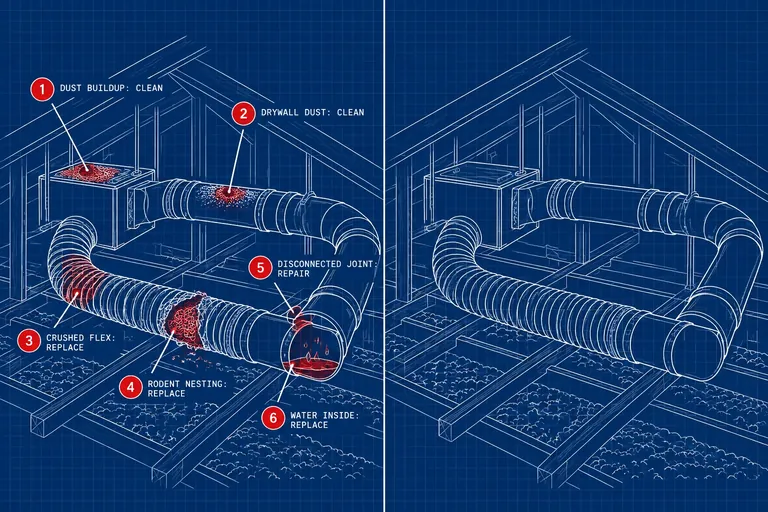
Most homes need a mix. This is how we decide, run by run.
| Factor | Clean it | Replace it |
|---|---|---|
| Duct condition | Intact, just dirty inside | Crushed, torn, kinked or disconnected |
| Rodent activity | No droppings or nesting in the run | Droppings, urine or nesting inside flex duct |
| Duct type | Metal trunk lines and sound flex | Old flex with a brittle jacket or exposed insulation |
| Moisture | Dry duct, dust only | Water inside, rust-through or visible mold growth |
| What you end up with | Same ducts, clean inside | New run, sealed joints, fresh insulation |
Puget Sound homes
A lot of houses around Seattle don't keep their ductwork in a basement. Eastside homes built in the 1970s through the 1990s often run flex duct through the crawl space or the attic, and older Seattle homes that added forced air later tend to have ducts snaking through crawl spaces that were never meant to hold them. Those ducts sit in damp air for the whole wet season, October to May. Loose joints pull in crawl space air, and with it dirt and the musty smell many homeowners notice when the heat first comes on in fall.
That's why we look at the ducts from both sides. Cleaning the inside does little if the run is pulling crawl space air through a split seam. Because we work in attics and crawl spaces every day, we can see where a duct is disconnected, sagging into the insulation or chewed by rats, and we'll tell you if sealing or replacing that section should come before cleaning. Many homeowners have both done in one visit: the damaged runs replaced, the rest cleaned, and the crawl space checked while we're under there.
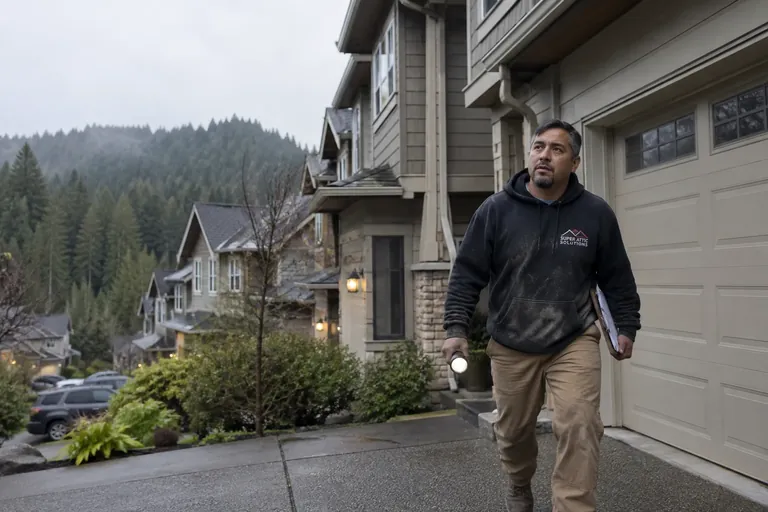
Pricing
We quote after we've looked inside. These are the things that move the number.
More registers means more runs to clean. A two-story house with a separate upstairs system is effectively two jobs.
Ducts in a tight crawl space or a low attic take longer to reach and check than ducts in an open basement.
Light dust cleans quickly. Heavy construction dust or years of pet hair takes more passes per run.
Metal ducts take aggressive cleaning. Flex duct needs slower, gentler work to avoid tearing the liner.
Disconnected joints or crushed runs are quoted separately, so you can decide what to fix now.
Great service. I highly recommend this company. Wish I would have found them years ago... Isaac, Kareem and Irving were professional, courteous, and friendly. Pricing was clear and there were no surprises. Very happy with our experience.
FAQ
Still unsure? Call (800) 674-4933 and talk it through with us.
It's worth it when there's something to clean: visible buildup, drywall dust after a remodel, or a house you just moved into. If your ducts look clean when we pull a register, we'll say so, and you won't pay for a cleaning you don't need. The photos we take make the call easy to check for yourself.
There's no fixed schedule that fits every house. A home with pets, recent construction or leaky crawl space returns builds up faster than a tight, newer house. Most homeowners don't need it often. The better habit is changing your filter on time and having us check the ducts when you notice dust on the grilles or a smell when the blower starts.
Yes, if it's in good shape. We use soft tooling made for flex so the inner liner doesn't tear. What we won't do is try to clean flex duct that's crushed, split or full of rodent nesting. That material holds contamination in the insulation and the folds of the liner, and replacing the run is the honest fix.
Sometimes. If the smell comes from dust and debris in the ducts, cleaning helps. In many Puget Sound homes, though, the smell comes from damp crawl space air being pulled into leaky return ducts. Cleaning won't stop that. Sealing the duct joints and fixing the crawl space moisture will, and we'll show you which one you're dealing with.
We stop and show you. Droppings inside a duct mean rodents had a way in, usually through a torn or disconnected run in the attic or crawl space. Contaminated flex duct gets replaced rather than cleaned, and the entry points get sealed so it doesn't happen again. Droppings can carry hantavirus, so they're never swept or blown out dry.
Most single-system homes take part of a day. Larger homes, two-system houses and ducts that are hard to reach in a crawl space take longer. We'll give you a time estimate after the inspection. You can stay home and use the house while we work; the only change is that the furnace stays off until we're done.
Related services
Damaged, leaky and rodent-fouled duct runs pulled and replaced, with sealed joints and photos of the work.
Learn more →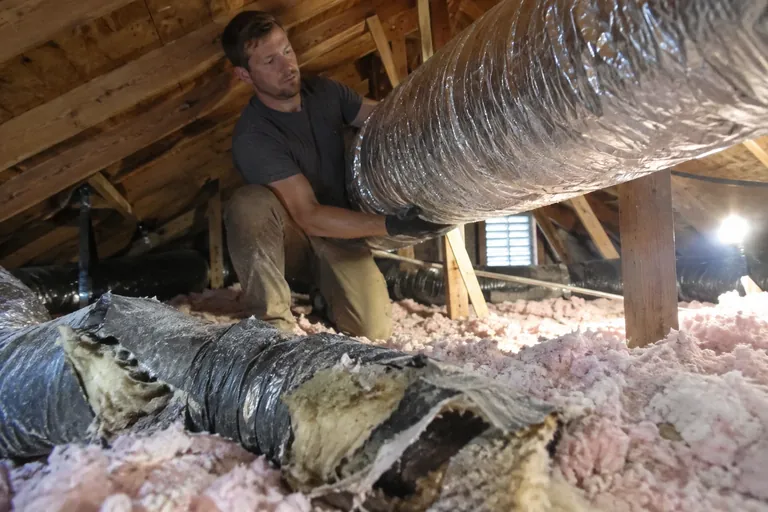
Crushed, chewed and leaky attic flex duct replaced with insulated duct, sealed and supported properly.
Learn more →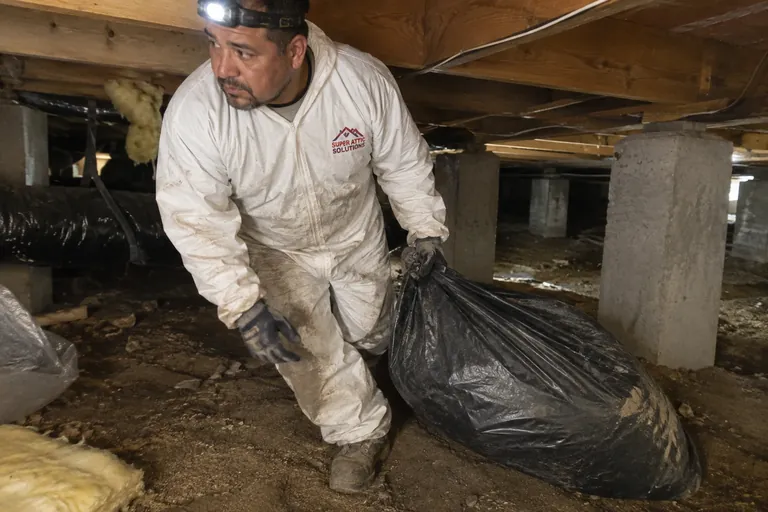
Droppings, fallen insulation, torn plastic and debris bagged and hauled out from under your house.
Learn more →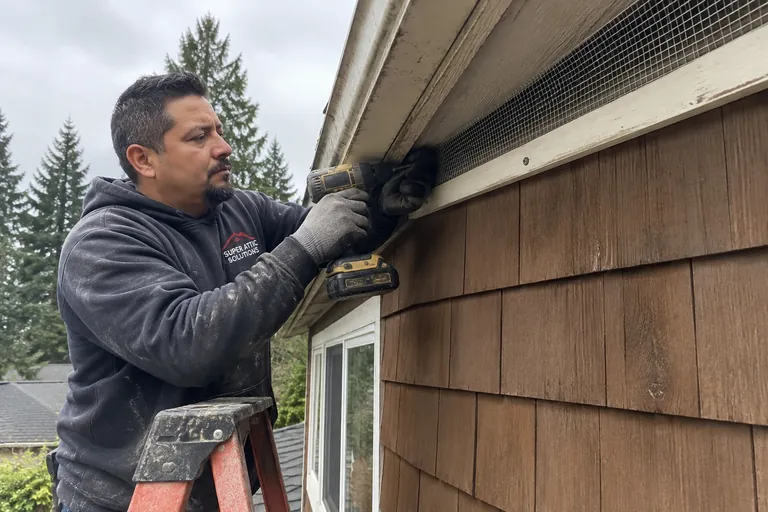
We find every gap rats and mice use, from roof vents to crawl space, and seal it with metal.
Learn more →Book a free inspection. We'll photograph your attic and crawl space and walk you through what we find, before you decide anything.