
Heating, cooling & ducts
Attic air duct replacement
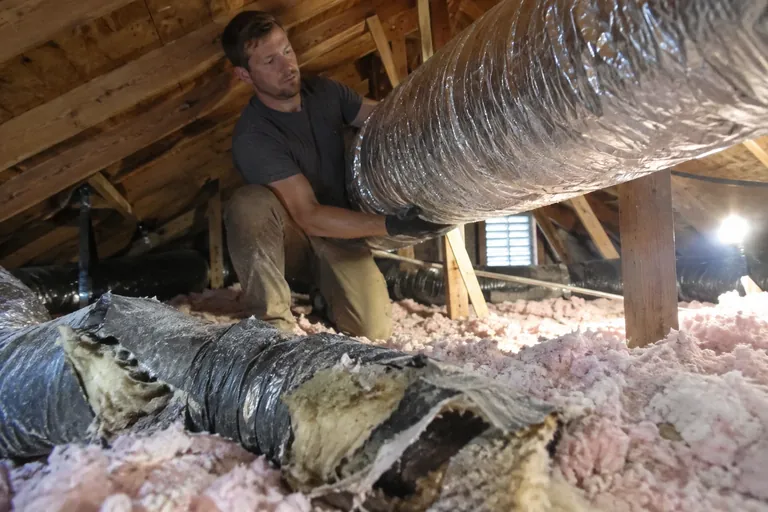
Crushed, chewed and leaky attic flex duct replaced with insulated duct, sealed and supported properly.
Learn more →Air duct replacement · Seattle & Puget Sound
When a duct is crushed, torn, disconnected or full of nesting, we pull it out and run new duct sized to the room, with every joint fastened and sealed.
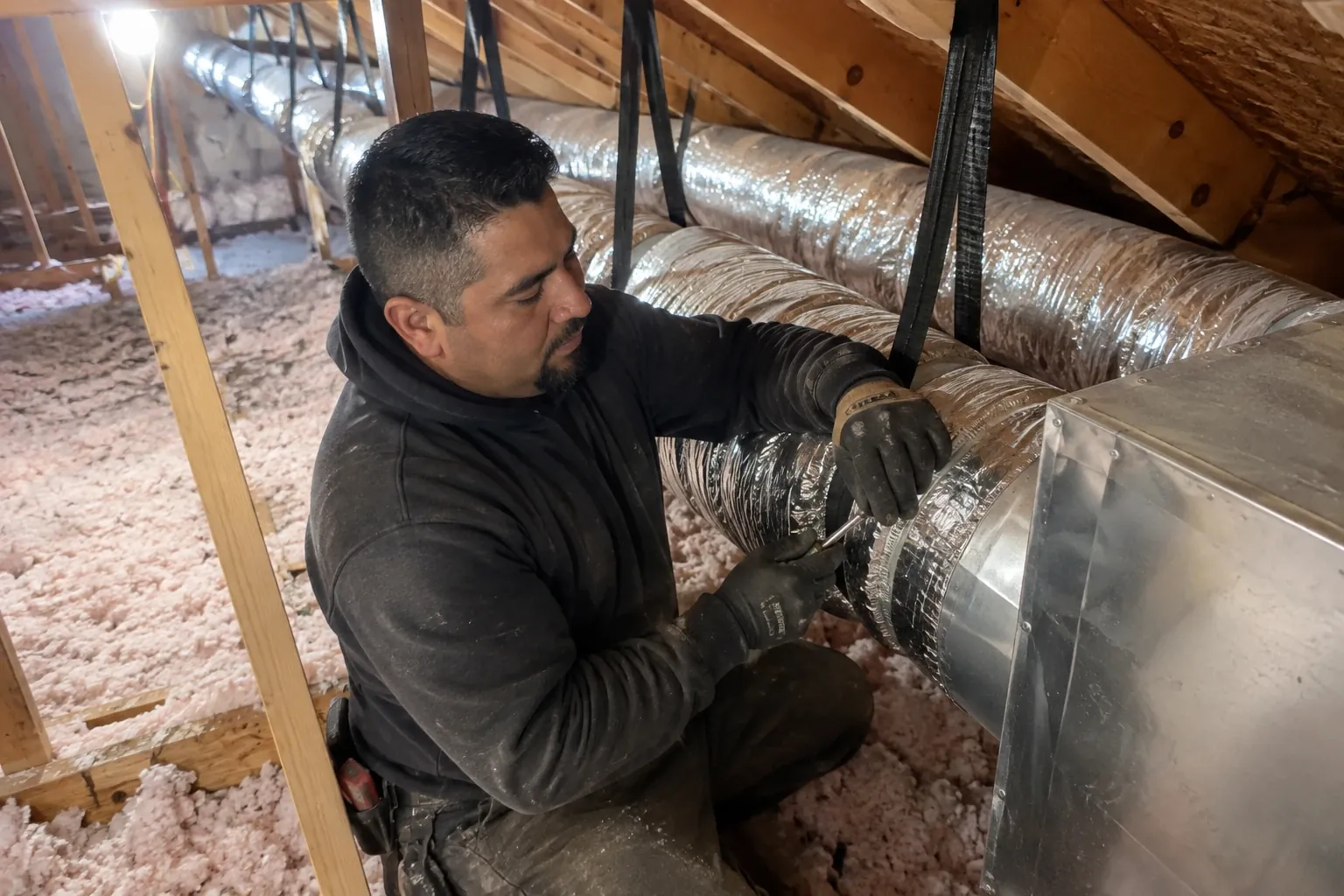 New insulated ducts hung in an attic · Seattle, WA
The problem
Your furnace or heat pump can only deliver what the ducts carry. A supply run that has come apart at the boot dumps heated air into the crawl space. A flex duct stepped on by a cable installer or flattened under a pile of insulation chokes the airflow to one bedroom. Rats tear into the outer jacket for nesting material and leave droppings inside. The system keeps running, but the far rooms stay cold in winter and warm in summer.
Replacement means taking out the damaged runs and putting in new duct that's the right size, routed with gentle bends, hung on proper supports and sealed at every connection. Sometimes that's two or three runs. Sometimes the whole system is past saving and it's cleaner to replace it all at once. We look at every run, photograph it and give you a list so you can see which is which.

Warning signs
Damaged ducts usually show up as comfort problems first. These are the patterns we see.
A room that lags while the rest of the house is warm often traces back to a crushed or disconnected supply run.
Good airflow near the furnace and a trickle at the far end of the house points to leaks or kinks along the way.
Heated air leaking into an attic or crawl space makes the system run longer to keep up.
Flex duct with a ripped jacket, exposed insulation or a section squashed flat can't carry air the way it should.
Rats and mice nest in duct insulation. Droppings on or inside the duct mean the run is contaminated.
Old sheet-metal duct in a damp crawl space rusts at the seams and pulls apart at the joints over time.
Proof of work
Drag the slider to compare. Illustrations of typical results on homes like yours.
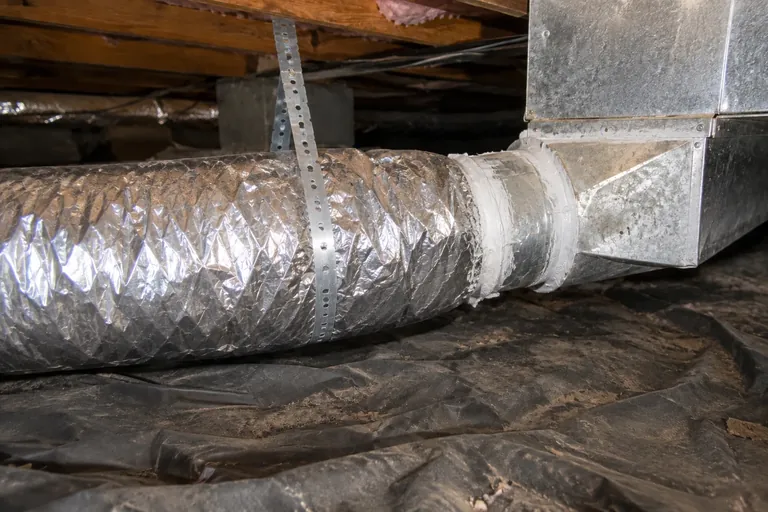
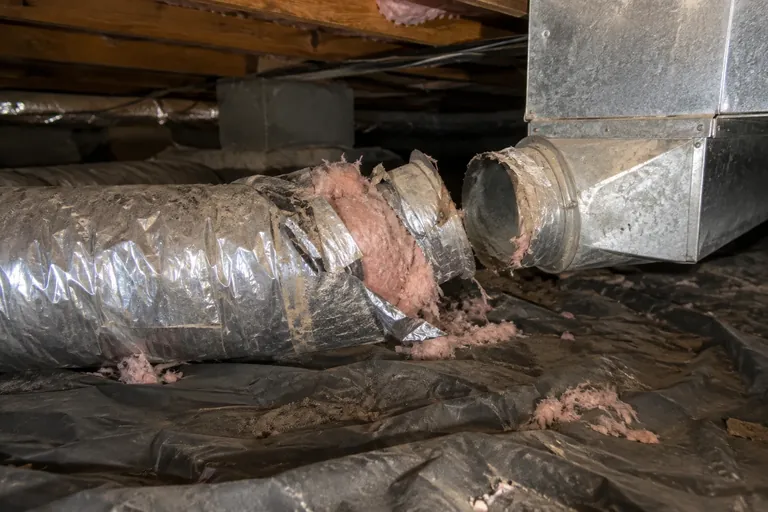 BeforeAfter
 STEP 01
 STEP 02
 STEP 03
 STEP 04
How we do it
One crew handles the access, the duct work and the cleanup. This is the order we work in.
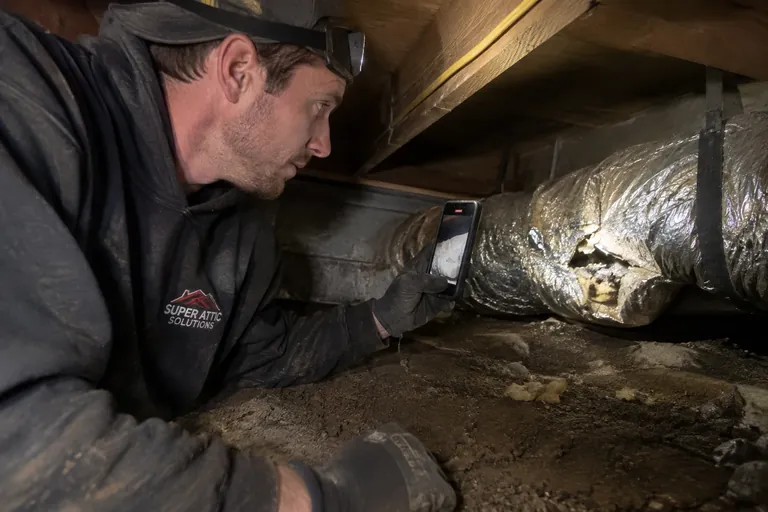
We trace each supply and return from the furnace to its register, in the attic, the crawl space or both. Every problem gets a photo and a note: crushed, disconnected, torn, contaminated or undersized. You see the full picture before we quote, and you choose whether to replace a few runs or the whole system.
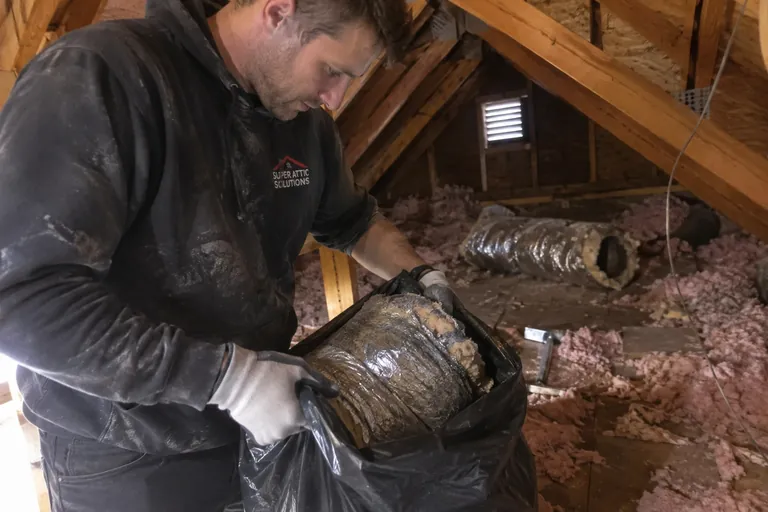
Old runs are cut free, bagged and carried out of the house. If rodents have been in the ducts, we wear protective gear, bag the contaminated material where it lies and clean up the droppings around the runs, so nothing is tracked through your home on the way out.
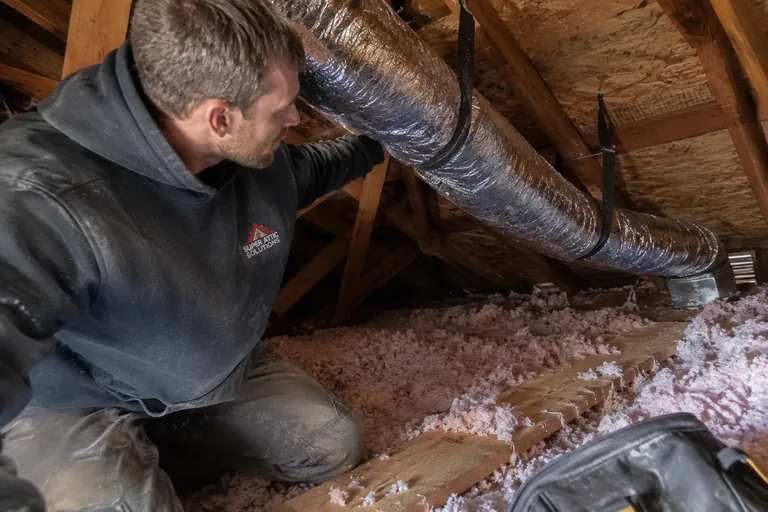
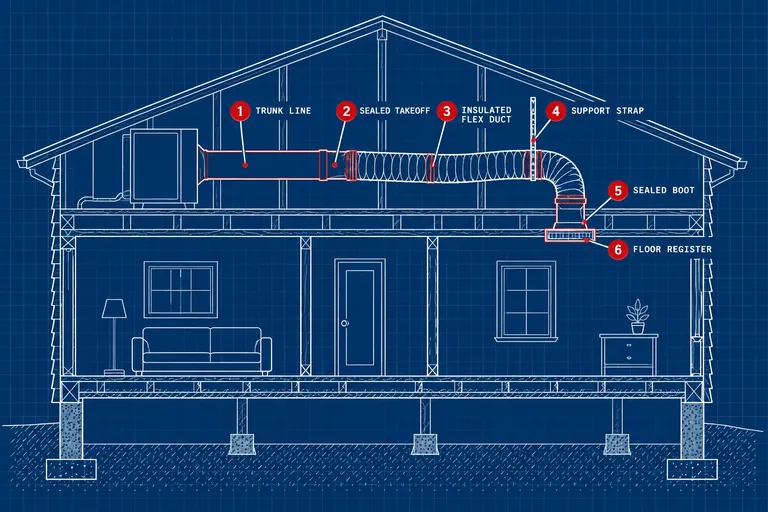
New duct goes in at the size each room needs, routed with long, gentle bends instead of tight kinks. Runs are hung on straps at proper spacing so they don't sag, and kept up off the crawl space floor and clear of the insulation pile.
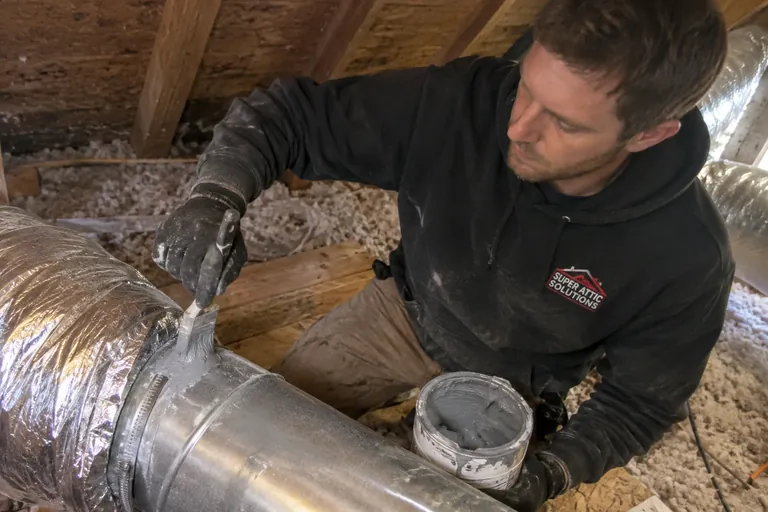
Each connection is fastened with a clamp or screws, then sealed with mastic or foil tape rated for duct work. Boots are sealed where they meet the subfloor or ceiling, so the duct pulls air only from the house, not from the attic or crawl space.
We run the system and check airflow at each register, compare it with what we found before, and take after photos of every new run. You get the photos and a list of what was replaced, along with anything we noticed nearby, like gaps rodents could use.
What you get
| Inspection | Every supply and return traced and photographed before the quote |
|---|---|
| Removal | Damaged duct cut out, bagged and hauled away |
| New duct | Insulated flex or metal duct, sized to each room |
| Connections | Joints fastened, then sealed with mastic or rated foil tape |
| Support | Strapped at proper spacing, kept off the ground and out of insulation |
| Boots and registers | Boots sealed to the floor or ceiling; registers reinstalled |
| Rodent cleanup | Contaminated material bagged; droppings cleaned before new duct goes in |
| Photos | Before and after photos of every replaced run |
Compare
Partial replacement is often the right call. Sometimes it isn't. This is how we help you choose.
| Factor | Replace damaged runs | Replace the whole system |
|---|---|---|
| Best when | A few runs are crushed, torn or disconnected | Most runs are failing, or the layout never worked |
| Rodent damage | Contained to one or two runs | Nesting or droppings spread across the system |
| Rest of the ducts | Sound, well hung and sealed | Brittle, rusted or poorly supported throughout |
| Comfort | Fixes specific cold or hot rooms | Rebalances airflow to the whole house |
| Disruption | Shorter job, fewer areas opened | Longer job, whole attic or crawl space worked |
Puget Sound homes
Ductwork around here lives a hard life. A crawl space in Seattle or Everett stays damp through the long wet season, and metal ducts down there rust at the seams while the tape on older joints dries out and lets go. In Eastside tract homes from the 1980s and 1990s, the original flex duct is often lying directly on the vapor barrier, sagging between joists or pinched where someone crawled over it. Roof rats in the attic and Norway rats in the crawl space both treat duct insulation as nesting material.
Because we spend our days in attics and crawl spaces, we see the ducts the way they actually are, not just the registers. If rodents are getting in, we'll show you the entry points and can seal them so the new ducts stay clean. If the crawl space vapor barrier is torn or missing, we'll show you that too. You decide what to tackle, and you get one crew for the whole job instead of three different trades working around each other.

Pricing
We price duct work run by run, after we've seen every one. These are the main factors.
A single crushed bedroom run is a small job. A full system involves every supply, every return and the trunk.
Low clearance, tight hatches and deep insulation slow the work and can add steps to reach each run.
Insulated flex, rigid metal trunk lines and larger return ducts each have different material and labor needs.
Runs with droppings or nesting need protective gear, bagging and cleanup before new duct goes in.
Sealing rodent entry points, a new vapor barrier or added insulation are quoted separately so you can choose.
Great service. I highly recommend this company. Wish I would have found them years ago... Isaac, Kareem and Irving were professional, courteous, and friendly. Pricing was clear and there were no surprises. Very happy with our experience.
FAQ
Still unsure? Call (800) 674-4933 and talk it through with us.
A single disconnected joint can be reconnected and sealed. A run that's crushed, torn along its length or full of nesting needs to be replaced. When most of the runs share the same problem, like old flex with a crumbling jacket, replacing the system is usually the better use of your money. We photograph each run so you can see the difference.
Yes. Most of our duct jobs replace only the runs that are failing. We tie new duct into the sound trunk lines, seal the connections and check airflow at every register afterward. If we think the rest of the system is close behind, we'll tell you, but we won't push a full replacement you don't need.
Replacing a few runs is often a one-day job. A full system in an attic or crawl space takes longer, depending on the size of the house, how many registers there are and how easy the space is to work in. We give you a schedule with the quote, and the heat is off only while we're connecting new duct.
Not always. If the existing ducts are sound, sized right and sealed, they can serve a new system. If they're leaky, undersized or damaged, a new furnace or heat pump will be held back by them. A new system is a good time to look, since the work overlaps. We inspect the ducts as part of any equipment quote.
Contaminated duct is never cleaned and reused. We wear protective gear, cut out the affected runs, bag them on site and carry them out. The droppings around the runs get cleaned up, since they can carry hantavirus. Then we find and seal the entry points so the new ducts don't become the next nest.
Ducts that leak into an attic or crawl space waste heat you've already paid for, so sealing that up generally helps. How much depends on how bad the old ducts were and what system you have. We won't promise a number. What you will notice is more even temperatures and stronger airflow in the rooms that used to lag.
Related services
Crushed, chewed and leaky attic flex duct replaced with insulated duct, sealed and supported properly.
Learn more →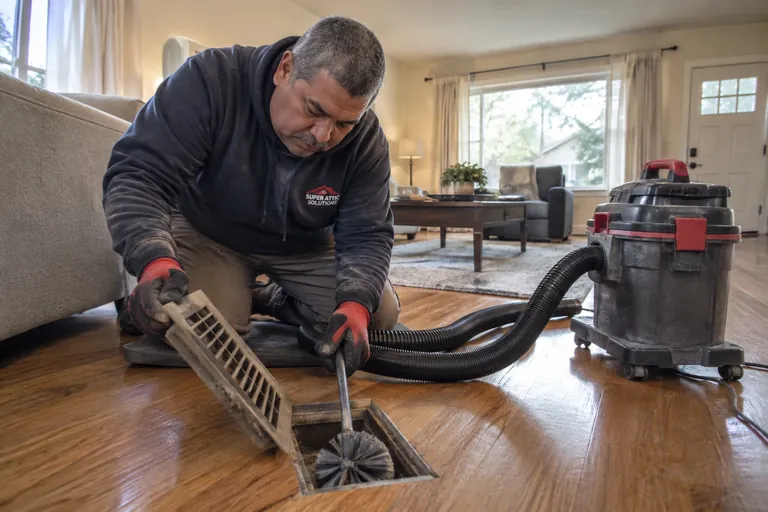
Supply and return ducts cleaned register to furnace, with photos and a straight call on what to replace.
Learn more →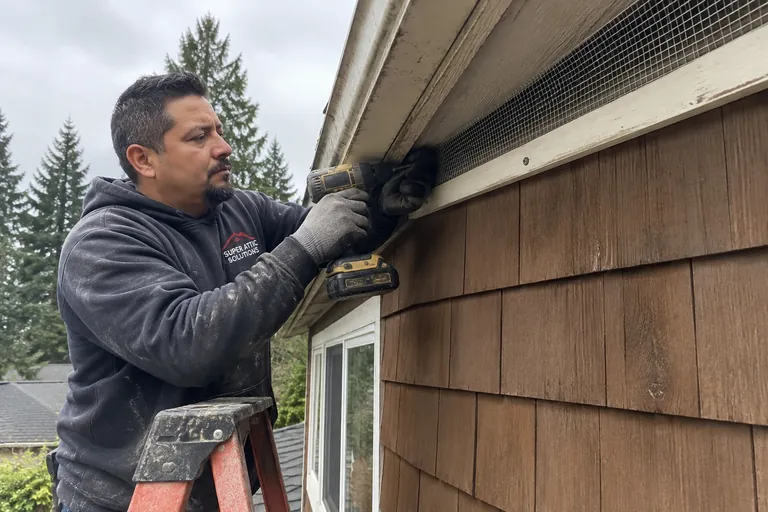
We find every gap rats and mice use, from roof vents to crawl space, and seal it with metal.
Learn more →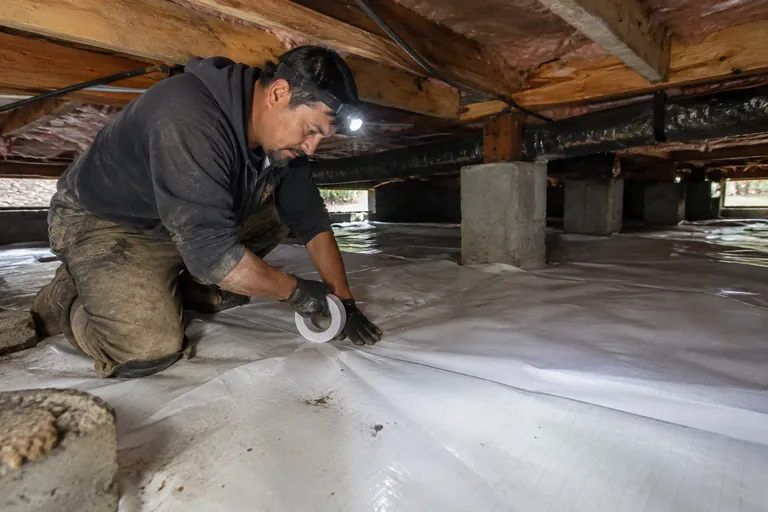
New crawl space ground cover, 6-mil or reinforced, lapped at the seams and run to the foundation walls.
Learn more →Book a free inspection. We'll photograph your attic and crawl space and walk you through what we find, before you decide anything.