
Crawl space & moisture
Crawl space vapor barrier installation
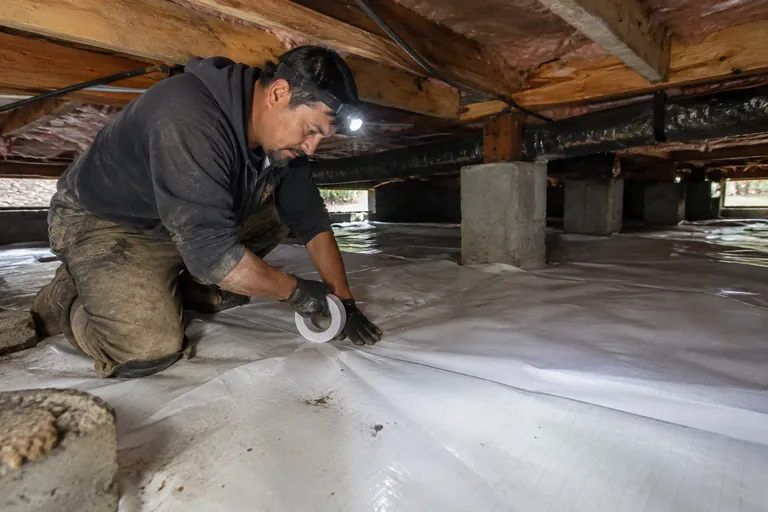
New crawl space ground cover, 6-mil or reinforced, lapped at the seams and run to the foundation walls.
Learn more →Moisture barrier installation · Puget Sound
A moisture barrier is one tool. We look at the whole path water takes into your crawl space, from gutters and downspouts to vents and bare soil, and fix the parts that are failing.
 Moisture barrier fastened up the foundation wall · Kent, WA
The problem
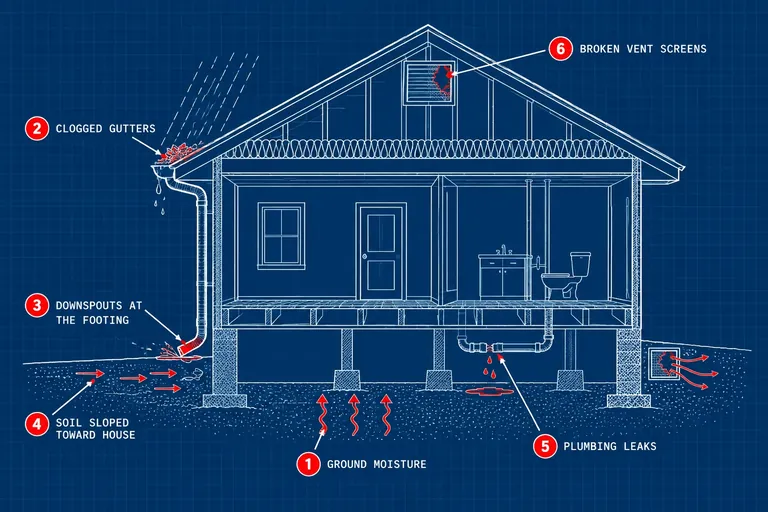
Water gets under a house in a few ways. Vapor rises from the soil all year. Rain runs off the roof, overflows clogged gutters and soaks the ground next to the foundation. Downspouts that end at the footing send that water straight toward the crawl space. Soil graded toward the house does the same. Underneath, a slow drain leak or a dryer vent that came apart under the floor adds more. A moisture barrier handles the first one well. The others need their own fixes.
This page covers the full picture. We inspect the crawl space and the outside of the house together, then recommend the smallest set of fixes that will keep the space dry. Sometimes that's a new ground cover and nothing else. Sometimes it's extending a downspout and replacing a vent screen. In a few homes it's full encapsulation. You get photos of what we found and a plain explanation of how each fix stops a specific source of water.
Warning signs
Moisture leaves clues above and below the floor. These are the ones we take seriously.
A smell that gets stronger after a week of rain points to water entering the crawl space, not just damp soil.
Dried mud trails or tide marks on the ground cover show where water runs in during storms.
Chalky white residue on concrete, called efflorescence, means water is moving through the wall and leaving minerals behind.
Downspouts that end at the footing, or missing splash blocks, put roof water right where you don't want it.
Rusty fasteners, duct straps and metal hangers under the floor point to long periods of high humidity.
Hardwood boards that cup at the edges over the crawl space often have moisture coming up from below.
Proof of work
Drag the slider to compare. Illustrations of typical results on homes like yours.

 BeforeAfter
 STEP 01
 STEP 02
 STEP 03
 STEP 04
How we do it
We look at the inside and outside of the house together before recommending anything.
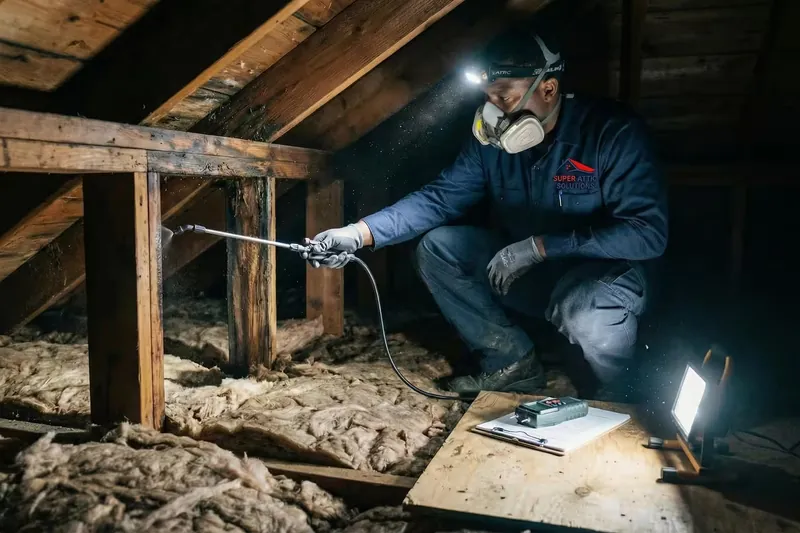
We start outside: gutters, downspouts, splash blocks, grading next to the foundation and the condition of the foundation vents. Then we go under the house with a camera and moisture meter, checking the ground cover, wood moisture, insulation, pipes and any signs of standing water. You see the photos, and we connect the outside clues to what we found below.
Every moisture problem has sources, and most homes have more than one. We sort them out: soil vapor, roof runoff, surface water from grading, plumbing leaks and humid air. For each, we explain where it comes in and what would stop it. Some fixes are yours to handle, like regrading a flower bed. Others we take on directly.
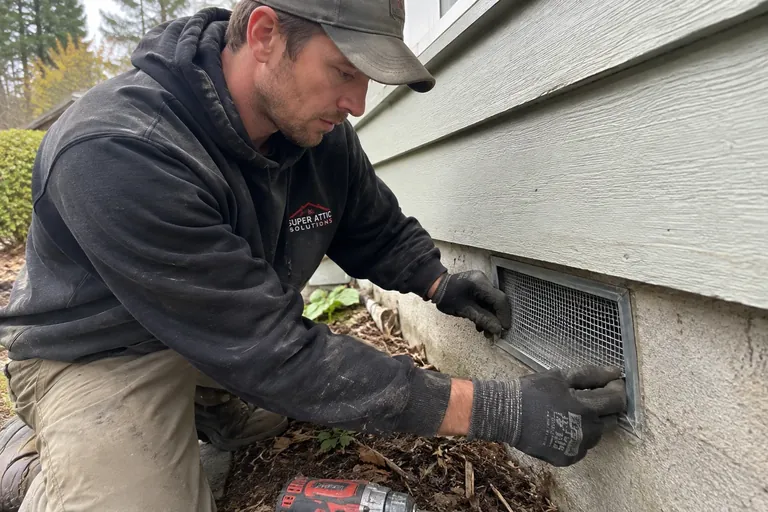
Inside the crawl space, we replace torn or missing ground cover with new polyethylene, lapped at every seam and run to the walls. Damaged vent screens are replaced so the space stays ventilated without letting rodents in. Wet or fallen insulation comes out. In homes where humidity stays high anyway, we discuss sealing the crawl space with a liner and dehumidifier.
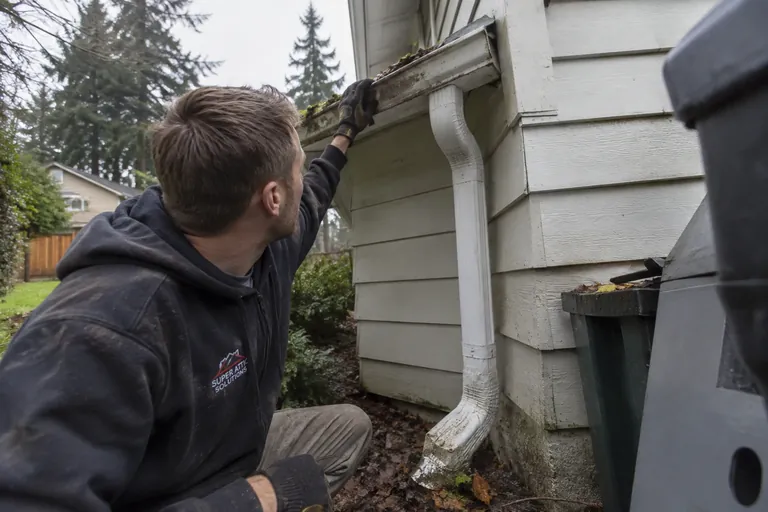
Clogged gutters and downspouts that end at the foundation are the most common outside cause of a wet crawl space here. We show you where downspouts need extensions or splash blocks to carry water away from the footing, and where gutters are overflowing. Getting roof water away from the foundation often matters as much as anything we do inside.
After the work, you get photos of the finished crawl space and notes on what to watch. We suggest a look under the house after the first big storms of the season, when problems tend to show up first. If anything looks off, call us and we'll take another look.
What you get
| Inspection | Free inspection of the crawl space and exterior, with photos |
|---|---|
| Moisture readings | Wood moisture checks on joists, sill plates and subfloor |
| Ground cover | New polyethylene vapor barrier, lapped and run to the walls |
| Vents | Damaged screens replaced; vents kept open in vented crawl spaces |
| Roof water | Gutter overflow and downspout discharge points identified |
| Insulation | Wet or fallen underfloor batts flagged or removed |
| Upgrade option | Full encapsulation with liner and dehumidifier where warranted |
| Report | Photos and a plain list of each moisture source and its fix |
Puget Sound homes
Most of the year's rain falls here between October and May, and it comes as long, steady drizzle more than short storms. That means the soil around and under a house stays saturated for months. Add moss-covered roofs that clog gutters every fall, downspouts that were never extended, and lots on hillsides or near Lake Washington and Lake Sammamish, and you get crawl spaces that see water every winter. The fix is rarely dramatic. It is usually a handful of small corrections made in the right order.
Older Seattle homes often have shallow crawl spaces, concrete foundations with small vents, and no ground cover at all. Eastside homes from the 1970s through the 1990s tend to have taller crawl spaces with ducts and plumbing below, where moisture affects more equipment. In both, we start with the basics: cover the soil, keep the vents working and screened, and get roof water away from the foundation. Only then does it make sense to talk about bigger upgrades like encapsulation.

Pricing
Moisture work varies more than most jobs, because every house has its own mix of water sources.
One torn barrier is a small job. A crawl space with soil vapor, runoff and a leak needs several fixes.
Larger footprints and low clearance add time to any barrier, insulation or vent work.
A new ground cover with open vents costs far less than a sealed liner with a dehumidifier.
Old plastic, debris, droppings and wet insulation have to come out before new materials go in.
Rusted or broken vent screens and damaged vent openings add parts and labor.
The company was quick to respond and send out Ron. Ron was great in communicating the issues we were having in our crawlspace. Had showed us the pictures of the crawl space and was able to get us booked the very next day. The crew was fantastic and worked throughout the day. The bonus was they were also able to take a handful of containers to the dump to assist saving us a dump run.
FAQ
Still unsure? Call (800) 674-4933 and talk it through with us.
People use the terms loosely. A vapor barrier, or vapor retarder, slows water vapor moving through a material, like the polyethylene ground cover in a crawl space. Moisture barrier is the broader term homeowners use for anything that keeps water out. On this page we mean the whole moisture plan: ground cover, vents, gutters, downspouts and, where needed, encapsulation.
Soil gives off moisture year-round, so a crawl space with bare dirt can be damp even in a dry spell. Other causes include a slow plumbing leak, a disconnected dryer vent or bath fan duct blowing into the crawl space, or groundwater on a hillside lot. We check each of these during the inspection, since the fix depends on which one it is.
Yes, a lot. A clogged or overflowing gutter dumps roof water along the foundation, and a downspout that ends at the footing sends it straight into the soil beside the crawl space. Around here, moss and fir needles clog gutters every fall. Keeping gutters clear and extending downspouts away from the house is often the cheapest moisture fix there is.
It's common, but it isn't something to live with. A crawl space should not collect water. A damp patch at one low corner after a big storm usually traces back to a single downspout or a low spot in the yard. Water that sits for days, or shows up after every storm, means roof runoff or grading is sending water under the house, and the plastic and framing will suffer for it.
Yes. Washington's residential code requires a ground cover over the exposed soil in crawl spaces, typically 6-mil black polyethylene or an approved equal, lapped at the joints and carried to the foundation walls. Many older homes predate that rule or have plastic that tore long ago. Replacing it is usually the first step in any crawl space moisture plan.
Crawl space moisture mostly causes problems in the crawl space itself: mold on joists and subfloor, rot at the sill, wet insulation, and musty odors that drift upstairs. Mold in living areas usually has its own local cause, like a bathroom without a working fan or a window that sweats. Tell us what you're seeing during the inspection and we'll look at how the two connect.
Related services
New crawl space ground cover, 6-mil or reinforced, lapped at the seams and run to the foundation walls.
Learn more →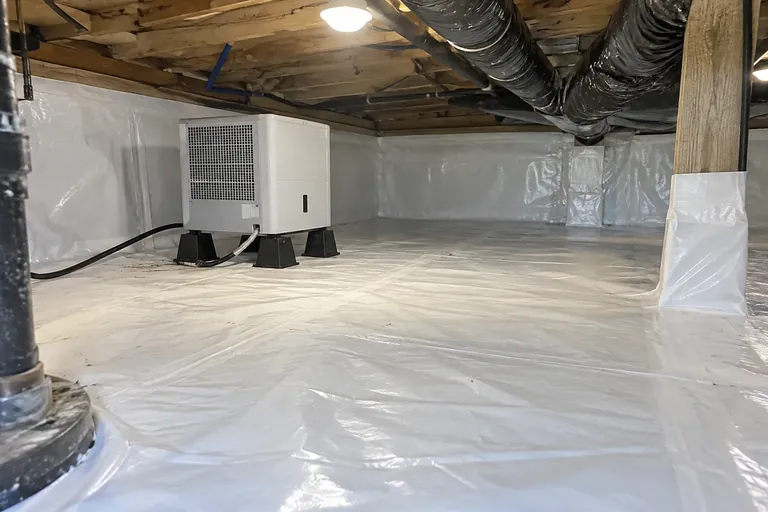
A sealed liner on floor and walls, vents closed, a dehumidifier running. Recommended only where it pays off.
Learn more →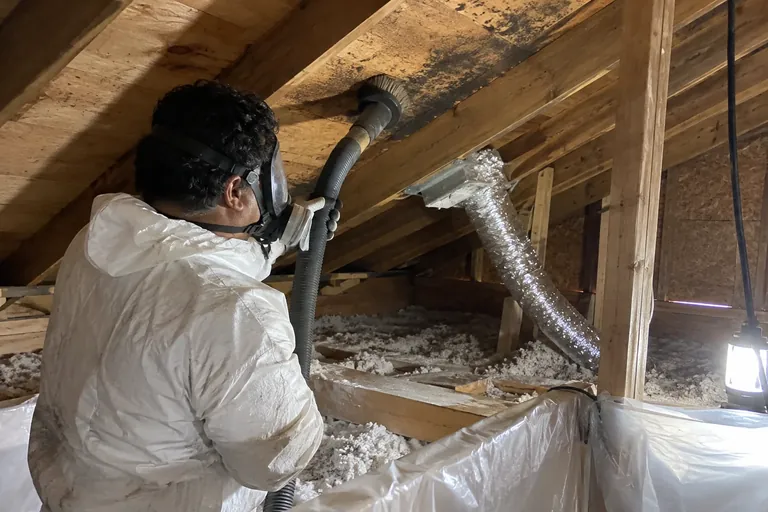
Attic and crawl space mold removed under containment, with the moisture source found and fixed.
Learn more →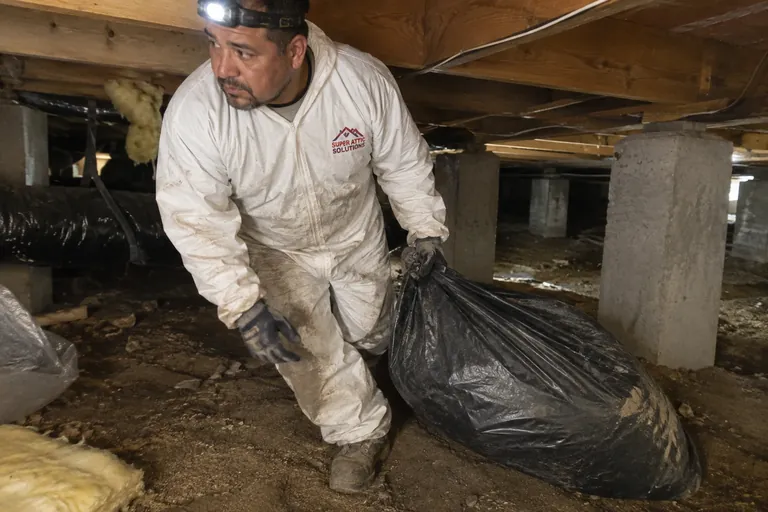
Droppings, fallen insulation, torn plastic and debris bagged and hauled out from under your house.
Learn more →Book a free inspection. We'll photograph your attic and crawl space and walk you through what we find, before you decide anything.