Moisture barriers · Lakewood, WA
Lakewood moisture barriers for low crawl spaces
Gravelly soil drains water, but it still breathes moisture into the crawl space. A sealed barrier keeps that vapor away from your floor framing.
- Cover the full floor, including shallow corners
- Replace scraps of original plastic in old ramblers
- Check drainage first on lake and creek lots

 Moisture barriers for Lakewood homes
Lakewood homes
Moisture barriers built around Lakewood houses
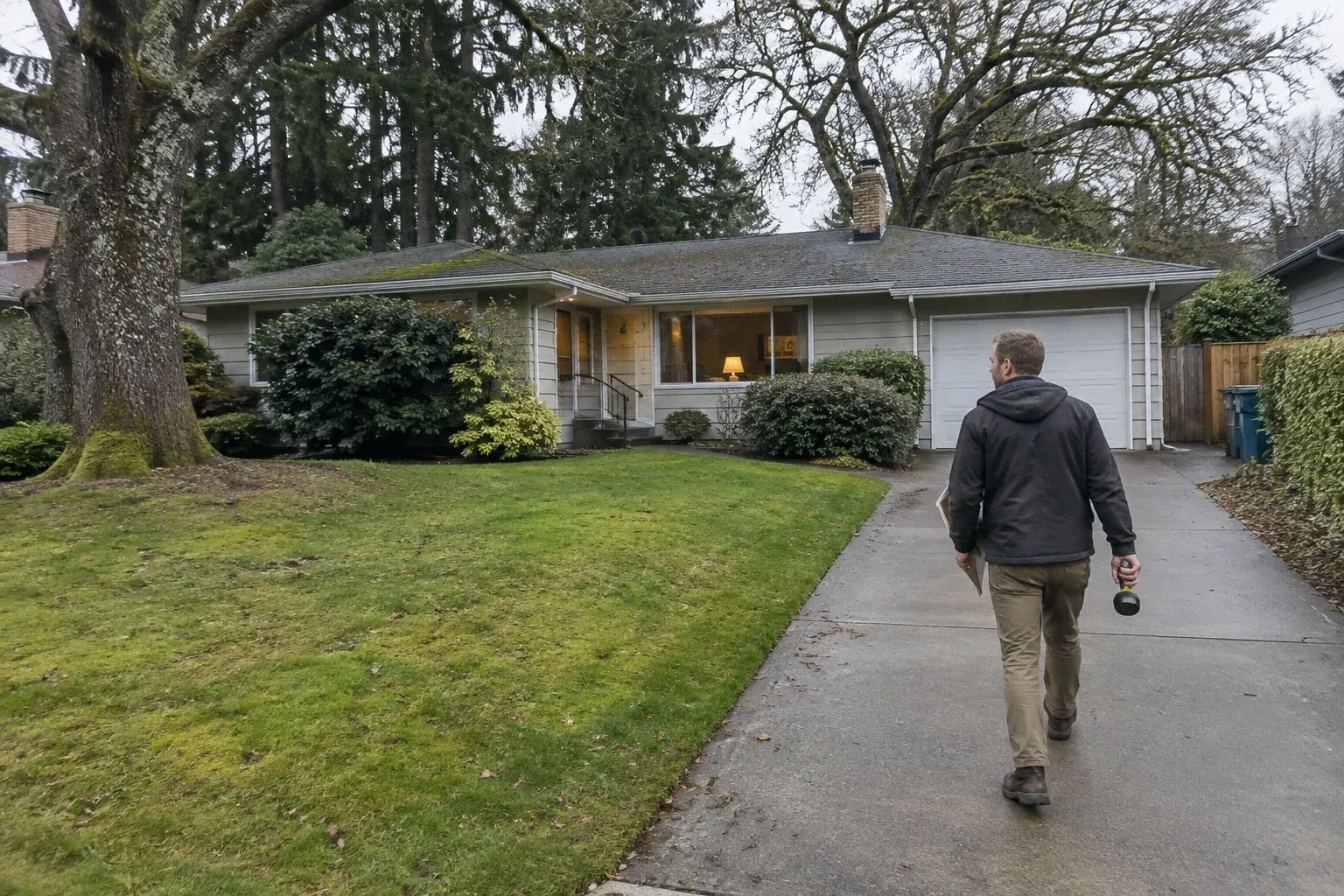
Homeowners sometimes assume Lakewood's gravelly ground means a dry crawl space. It does help. Water that lands on the prairie soils tends to drain away instead of pooling against the foundation. But soil releases water vapor even when it drains well, and through the long wet season that vapor rises into the joists and subfloor of a crawl space with no cover. Lakefront homes on American Lake and Gravelly Lake, and houses near Clover Creek, have even more moisture underneath. A continuous ground cover is required by Washington code, and many older Lakewood ramblers have only scraps of the original one left.
In a low crawl space, installation takes care. We clear out debris and old plastic, then lay heavy polyethylene across the full floor, working into the shallow corners where clearance is tight. Every seam overlaps and is taped. The edges run up the foundation walls and are fastened, and every pier is wrapped. On lakefront lots we look at drainage and the foundation walls first, since a barrier cannot stop liquid water. Once it is in, the crawl space is cleaner and easier to inspect, and the floor insulation above it stays dry. You get photos of the finished barrier from end to end.
- Cover the full floor, including shallow corners
- Replace scraps of original plastic in old ramblers
- Check drainage first on lake and creek lots
- Fasten edges to walls and wrap every pier
Local conditions
What Lakewood throws at attics and crawl spaces
The houses
Lakewood's housing follows its history. Around American Lake, Gravelly Lake and Lake Steilacoom are older lakefront estates and cottages, some dating to the early 1900s, with plenty of later remodels. Growth around the military bases after World War II filled Lake City, Tillicum and Custer with 1950s and 1960s ramblers, most on low crawl spaces with shallow, low-slope attics. Oakbrook added 1970s split-levels and two-stories around the golf course. Lakewood also has a large share of rentals and duplexes, many of them on their original insulation, ducts and heating.
The weather
Lakewood sits on the glacial outwash prairie south of Tacoma, where gravelly soil drains faster than in much of the region. The lakes, Clover Creek and Chambers Creek still keep low lots and lakefront homes damp through the October to May rainy season. Garry oaks and Douglas firs shade many yards, and fallen leaves and needles clog gutters every fall.
The wildlife
The lakes, Clover Creek and the woods of Fort Steilacoom Park give rodents water and cover close to homes. Norway rats burrow along creek banks and lakefront bulkheads. Roof rats and squirrels use oak and fir canopies to reach rooflines, and acorns are a reliable food source. Raccoons are common around the lakes, and vacant rentals between tenants can quietly attract nesting rodents.
Typical results
What moisture barriers looks like

 BeforeAfter
How it works
Same crew, same standard, in Lakewood
- 01
Inspect inside and out
- 02
Trace each water source
- 03
Fix the barrier and the vents
- 04
Get roof water away
- 05
Recheck and photos
FAQ
Moisture barriers in Lakewood: FAQ
Still unsure? Call (800) 674-4933 and talk it through with us.
My Lakewood crawl space never floods. Do I still need a barrier?
Yes. Flooding is liquid water, but soil also gives off moisture as vapor all the time. Even in well-drained gravelly ground, that vapor rises into the floor framing during the wet season. A sealed moisture barrier stops it at the soil and helps keep joists and insulation dry.
How long does a crawl space moisture barrier last?
A well-installed heavy polyethylene barrier can last many years if it is not torn by foot traffic or rodents. Sealing the crawl space against rodents and keeping access careful helps it last. We use materials suited to how often the space is entered.
More in Lakewood
Other services here
Other cities
Moisture barriers nearby
Free moisture barriers inspection in Lakewood.
Book a free inspection. We'll photograph your attic and crawl space and walk you through what we find, before you decide anything.