Moisture barriers · Mount Vernon, WA
Mount Vernon moisture barriers for a high water table
Valley-floor homes sit close to winter groundwater. A sealed moisture barrier, laid after drainage is sorted, keeps that moisture out of your floor framing.
- Assess drainage and sump needs before installing
- Replace patchy or missing plastic on low lots
- Tape seams and fasten edges to foundation walls

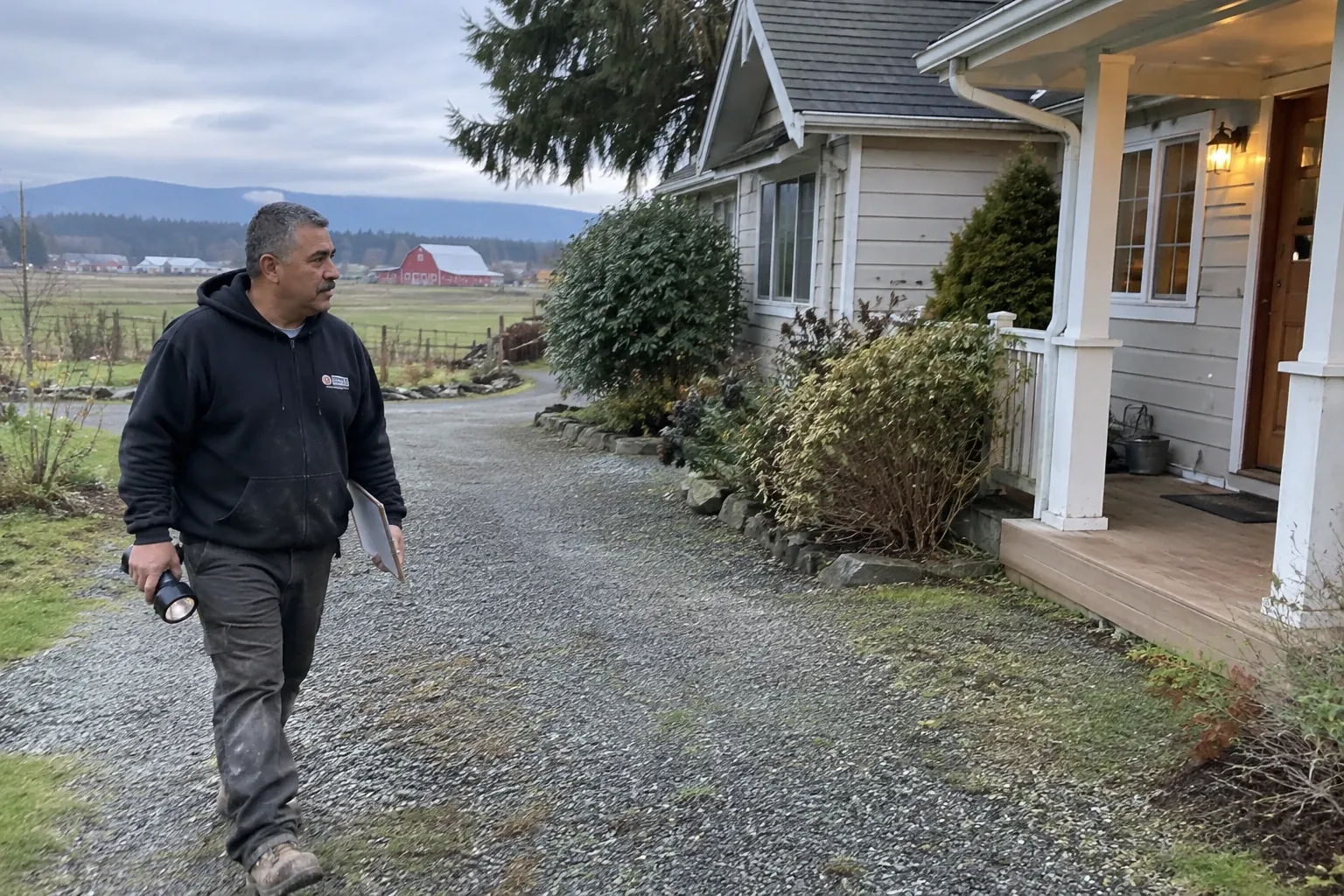 Moisture barriers for Mount Vernon homes
Mount Vernon homes
Moisture barriers built around Mount Vernon houses
On Mount Vernon's valley floor, the ground under a house is rarely dry for long in winter. The water table rises with the rains and the river, and crawl space soil gives off a steady stream of water vapor into the joists and subfloor. In West Mount Vernon and the lower parts of town, that can mean damp insulation, rusty nails, mold spotting on joists and floors that feel cold and clammy. Many older homes have only patchy plastic or none at all. Washington code calls for a ground cover in crawl spaces, and here it does a lot of work.
Because groundwater is a bigger factor here than in many places, we look at drainage before we install. If water pools or flows in, we show you where and recommend fixing it first, often with a sump pump, better downspouts or grading. A barrier stops vapor, not flowing water. Then we clear the space, rake the soil, and lay heavy polyethylene across the full floor. Seams overlap and are taped, edges are fastened up the foundation walls and piers are wrapped. On hillside lots in Hillcrest and Skagit Highlands, the focus shifts to the uphill wall, where rain runoff tends to collect.
- Assess drainage and sump needs before installing
- Replace patchy or missing plastic on low lots
- Tape seams and fasten edges to foundation walls
- Check uphill walls on hillside homes
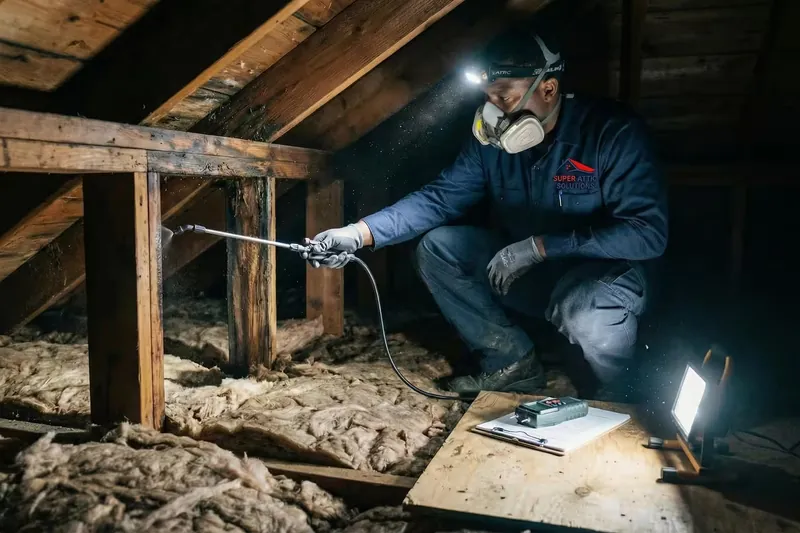
Local conditions
What Mount Vernon throws at attics and crawl spaces
The houses
Mount Vernon's older homes climb the hill east of downtown: early 1900s Craftsman houses, cottages and farmhouse-style homes, many with low crawl spaces, partial basements and small attics. West Mount Vernon, across the Skagit River, and the flatter parts of town have post-war ramblers and 1960s and 1970s homes, mostly on crawl spaces built close to the valley floor. Growth since the 1990s moved up the eastern hills, where Eaglemont and Skagit Highlands have newer two-stories with truss attics, vaulted rooms and blown-in insulation. Farmhouses on the valley edges add their own mix of additions and old outbuildings.
The weather
Mount Vernon sits on the Skagit River where the valley opens onto the delta farmland. The low ground along the river has a high water table in winter, and fog settles over the fields on calm mornings. Cold northeast winds can blow down from the Fraser River valley during winter outbreaks, and the rainy season runs from fall into spring. Homes on the eastern hills get more wind and tree cover.
The wildlife
Farmland surrounds Mount Vernon, and mice and Norway rats live in the fields, barns and ditches. When fields are harvested and plowed in fall, rodents move toward buildings for shelter. River dikes and drainage sloughs give Norway rats burrowing ground. Roof rats and squirrels are more common in the wooded hill neighborhoods, and raccoons travel the river corridor.
Typical results
What moisture barriers looks like

 BeforeAfter
How it works
Same crew, same standard, in Mount Vernon
- 01
Inspect inside and out
- 02
Trace each water source
- 03
Fix the barrier and the vents
- 04
Get roof water away
- 05
Recheck and photos
FAQ
Moisture barriers in Mount Vernon: FAQ
Still unsure? Call (800) 674-4933 and talk it through with us.
Will a moisture barrier protect my home from river flooding?
No. A moisture barrier stops water vapor rising from the soil. It is not flood protection, and it cannot stop water flowing in from outside. For homes on low ground near the Skagit, we focus on drainage and vapor control under normal winter conditions and photograph the crawl space so you know where water collects.
Do hillside homes in Mount Vernon need moisture barriers too?
Yes. Even on better-drained ground in Hillcrest, Eaglemont or Skagit Highlands, the soil gives off moisture through the wet season. Hillside lots can also send rain toward the uphill foundation wall. A sealed barrier and good drainage keep the floor framing dry.
More in Mount Vernon
Other services here
Other cities
Moisture barriers nearby
Free moisture barriers inspection in Mount Vernon.
Book a free inspection. We'll photograph your attic and crawl space and walk you through what we find, before you decide anything.