
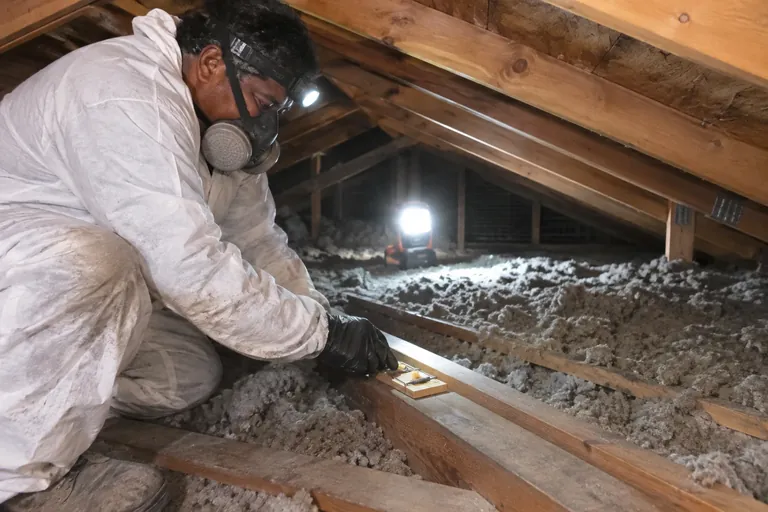
Rodents & pests
Rodent removal services
We trap the rats and mice living in your home, remove nests and droppings, then seal the way in.
Learn more →Dead animal removal · Seattle & Puget Sound
A dead rat in the attic, wall or crawl space won't wait politely. We track the smell to its source, remove the animal, clean and disinfect the spot and close the gap it came through.
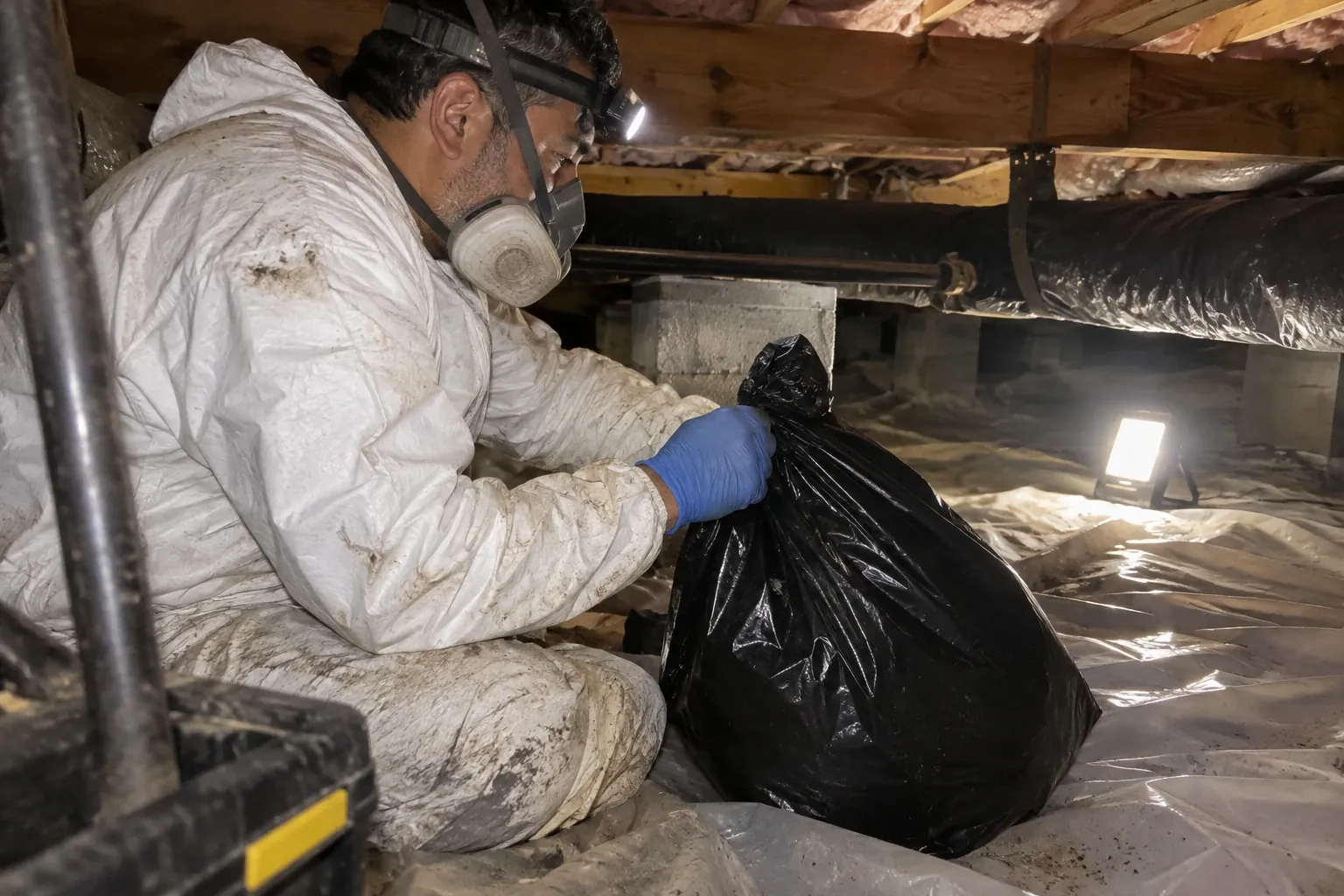 Technician bagging a dead animal for removal from a crawl space · Seattle, WA
The problem
A dead rodent in a wall, attic or crawl space gives off a heavy, sweet, rotten smell that seeps into the rooms around it. It's often worst near a heat vent, a bathroom fan or a closet ceiling, because air carries it there. A rat can smell for weeks. A larger animal, like a squirrel or a possum under the house, can smell longer. Flies and beetles find it before you do, and fluids can stain drywall or soak into insulation.
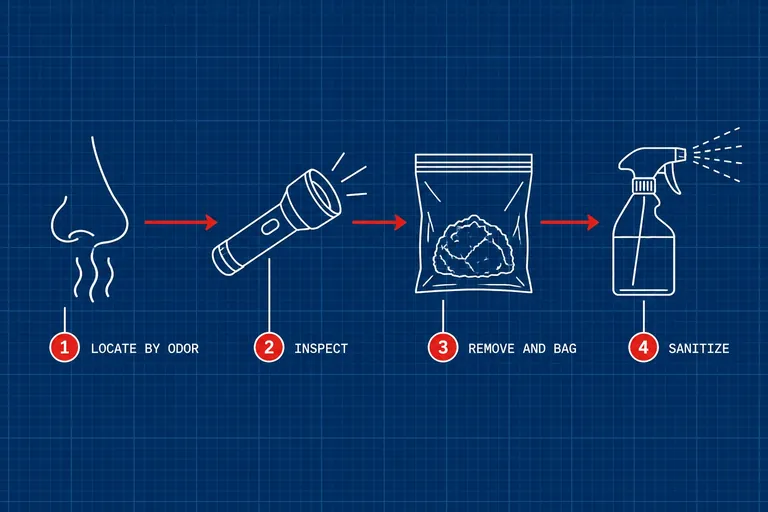
Removing it is a three-part job. First, find it, which is harder than it sounds because the smell moves with air currents. Second, take it out along with anything it has soaked into, like a patch of insulation or a section of vapor barrier. Third, clean and disinfect the spot so the odor is gone with the animal. Then we look at how it got in, because where there's one rodent, there's usually a route that others use.
Warning signs
Smell is the first clue. These others help pin down where it is.
The smell is distinct from mustiness or urine. It's heavy and sickly, and it gets stronger over the first several days.
Warm air and furnace ducts spread the smell. If it peaks when the heat kicks on, the source may be near the ductwork or in the attic.
A cluster of flies at a window or light fixture, especially in winter, often means they're hatching from a carcass nearby.
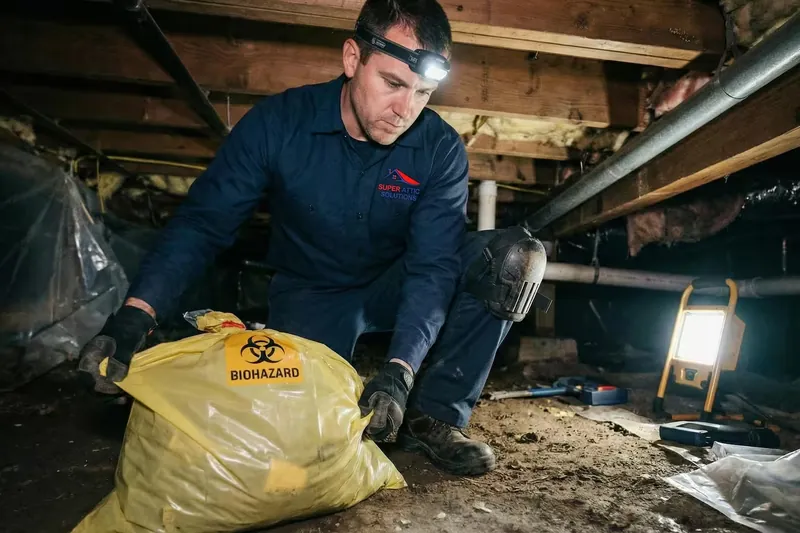
A new damp or dark spot on drywall can be fluids from an animal decaying on the other side, often in the attic above.
If the scratching in the ceiling stopped and a smell started a few days later, a rodent likely died in the space it was using.
Dogs and cats can smell a carcass long before you can and will sniff or paw at the wall, floor vent or closet nearest it.
Proof of work
Drag the slider to compare. Illustrations of typical results on homes like yours.

 BeforeAfter
 STEP 01
 STEP 02
 STEP 03
 STEP 04
How we do it
Finding the source is the hard part. Here is how we do it and what happens after.
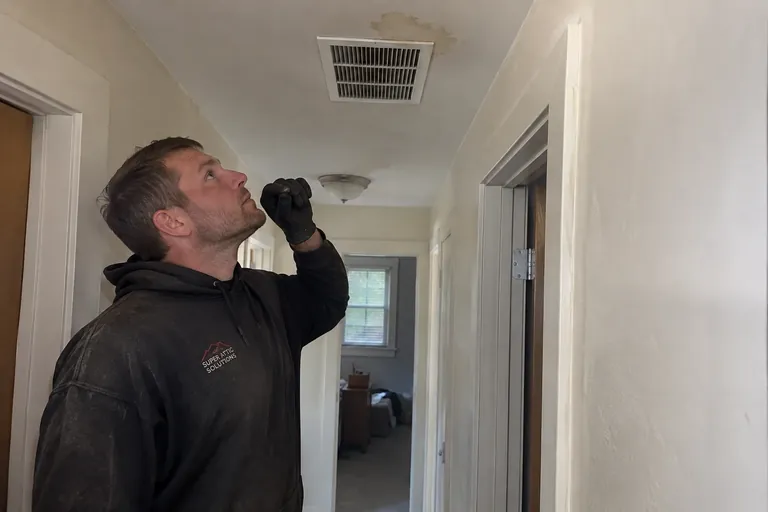
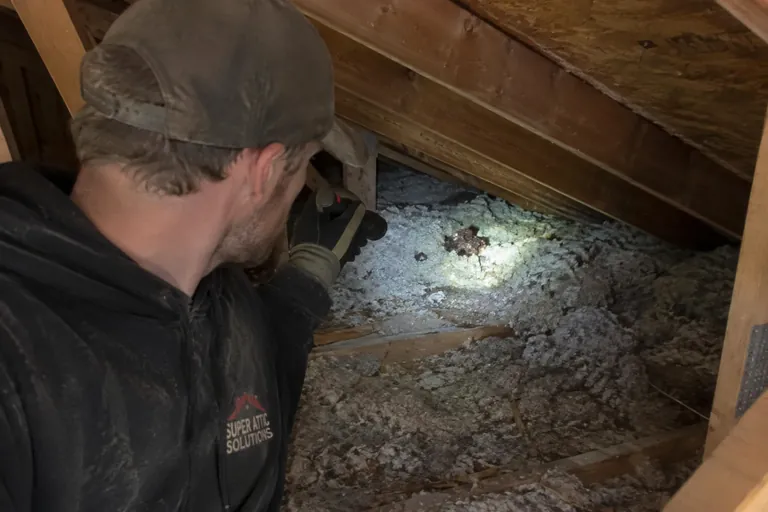
We start where the smell is strongest and work toward it, checking the attic and crawl space above and below that room. Flies, stains, fluids on the vapor barrier and rodent runways all narrow it down. Most dead rodents are in the attic insulation, the crawl space or the bottom of a wall cavity near a runway.
If the animal is in the attic or crawl space, we reach it directly. If it's inside a finished wall or ceiling, we talk to you before cutting anything and make the smallest opening that works, usually in a closet or other low-visibility spot, so the patch is easy.
Wearing gloves and a respirator, we remove the animal and anything it soaked into, like a patch of insulation, a piece of vapor barrier or nesting material. Everything is double-bagged and hauled out of your home. You can see photos of what we removed and where.
We clean the spot, spray it with disinfectant and treat it for odor. Removing the soaked material is what actually ends the smell; spraying on top of it doesn't. A faint smell may linger for a short time as the air clears, then it fades.
A dead rat in the attic means rats are getting into the attic. We find the entry point and seal it with metal, or quote a full rodent proofing if there are several. If other rodents are still active, we set traps so the next one doesn't die in the wall too.
What you get
| Animals | Rats, mice, birds, squirrels and other small animals in attics and crawl spaces |
|---|---|
| Locating | Attic, crawl space and wall check from the room where the smell is worst |
| Access | Direct in attics and crawl spaces; any drywall cut agreed with you first |
| Removal | Carcass and soaked insulation or vapor barrier bagged and hauled out |
| Sanitizing | Area cleaned, disinfected and treated for odor |
| Safety | Gloves, respirators and sealed bags for everything removed |
| Photos | What we found, where it was and the cleaned area afterward |
| Prevention | Entry point sealed or a rodent proofing quote if there are several |
Compare
Some people try to wait for the smell to fade. Here's why removal usually wins.
| Factor | Waiting it out | Having it removed |
|---|---|---|
| How long it smells | Weeks, longer for larger animals | Fades once the source is out |
| Flies and beetles | Breed on the carcass | Gone with the carcass |
| Stains and fluids | Soak into drywall and insulation | Soaked material removed |
| Why it happened | Unknown; may happen again | Entry point found and sealed |
| Other rodents | Still active | Checked, and trapped if needed |
Puget Sound homes
Our long wet season drives rats and mice into attics and crawl spaces from October on, and many of them die there, from age, from a trap set by a previous owner or from bait put out by a neighbor. In older Seattle homes with plaster walls and balloon framing, open wall cavities run from the crawl space all the way to the attic, so a rodent can die almost anywhere along that path. That's why we check above and below the room, not just the wall itself.
Crawl spaces here are often damp, which speeds up decay and spreads smell faster through floor registers. Rodent traffic tears up vapor barriers in crawl spaces from Tacoma to Everett, and once the plastic is torn, fluids soak into the soil underneath. In those cases replacing that section of barrier is part of ending the smell. Summer brings its own problem in attics: on a warm day the space under the roof heats up fast, and a carcass that was faint in March becomes impossible to ignore in July. Acting early keeps the cleanup small.
Pricing
The price depends mostly on how hard the animal is to find and reach.
Open attic or crawl space floors are the simplest. Inside a finished wall or between floors takes more work.
A mouse leaves less mess than a squirrel, raccoon or possum, which means more material to remove and clean.
Older remains soak further into insulation, drywall and vapor barrier, which adds to removal and cleanup.
If we need to cut an opening, the cut and any patch are part of the conversation before we start.
Closing one gap is small. A house with several entry points or active rodents gets a fuller quote.
We had a pretty bad rat problem in our attic. We heard noises every night. Guys from Super Attic Solutions came out and they trapped the rats and blocked all the holes that allowed the rats to get in. They were on time, professional and fairly priced.
FAQ
Still unsure? Call (800) 674-4933 and talk it through with us.
It varies with temperature, the size of the animal and where it is. A single mouse in a cool crawl space may fade in a week or two. A rat in a warm attic or inside a wall near a heat duct can smell for several weeks. Removing it and the material it soaked into is the fastest way to end it.
Usually, yes. We work from the strongest point of the smell, then check the attic and crawl space above and below that wall, where rodents enter and exit wall cavities. Flies, stains and runways narrow it down. If the animal is inside the wall, we agree on an access point with you before we cut.
Only if the animal is inside a finished wall or ceiling and can't be reached from the attic or crawl space. When we do need access, we talk with you first, choose a low-visibility spot like a closet when we can, and make the smallest opening that works.
Those cover the smell for a while, but the source keeps breaking down. Once the product wears off, the odor comes back, and flies keep breeding. Removing the animal and the material it soaked into is what actually ends the problem. After removal, we disinfect and treat the spot for odor.
If you can reach it easily, wear gloves, spray it and the area with disinfectant, and seal it in a plastic bag. Don't sweep or vacuum droppings nearby, since dried droppings can carry hantavirus. If it's in the attic, crawl space or wall, or you can't find it, call us.
Rodents die of age, illness, a trap or bait set by a previous owner or a neighbor, or after getting stuck. The bigger point is that it was inside at all. A dead rat in the attic means rats have a way in, so we look for the entry point and other activity while we're there.
Related services
We trap the rats and mice living in your home, remove nests and droppings, then seal the way in.
Learn more →
Biohazard cleanup after rodents and animals: waste removed, framing disinfected, odor treated at the source.
Learn more →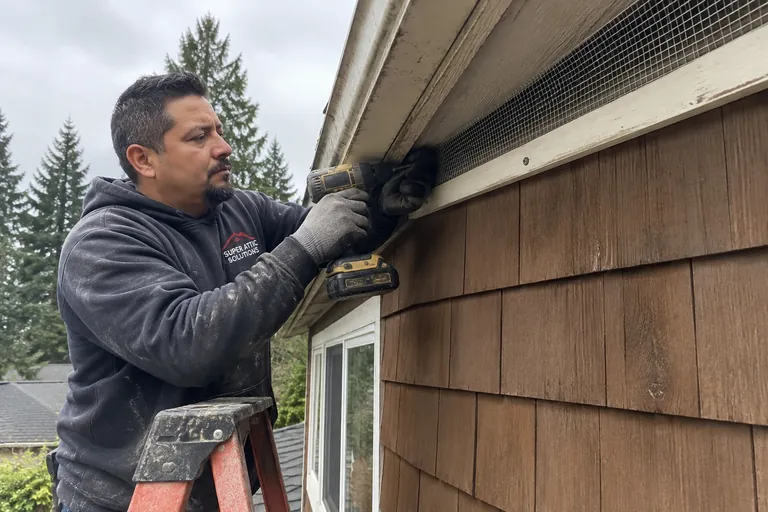
We find every gap rats and mice use, from roof vents to crawl space, and seal it with metal.
Learn more →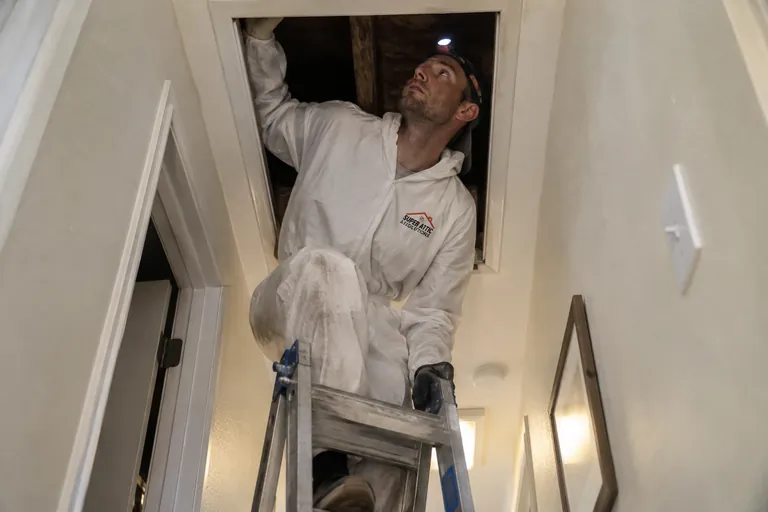
Rat removal built for the two spaces they live in: the attic above and the crawl space below.
Learn more →Book a free inspection. We'll photograph your attic and crawl space and walk you through what we find, before you decide anything.