
Insulation
Cellulose insulation installation
Recycled-paper loose fill for attic floors: dense, effective, and best in an attic that stays dry.
Learn more →Blown-in insulation · Seattle & Puget Sound
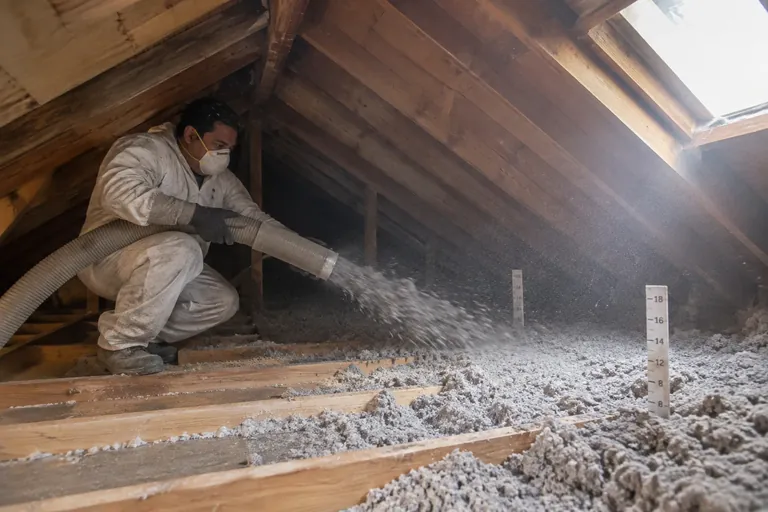
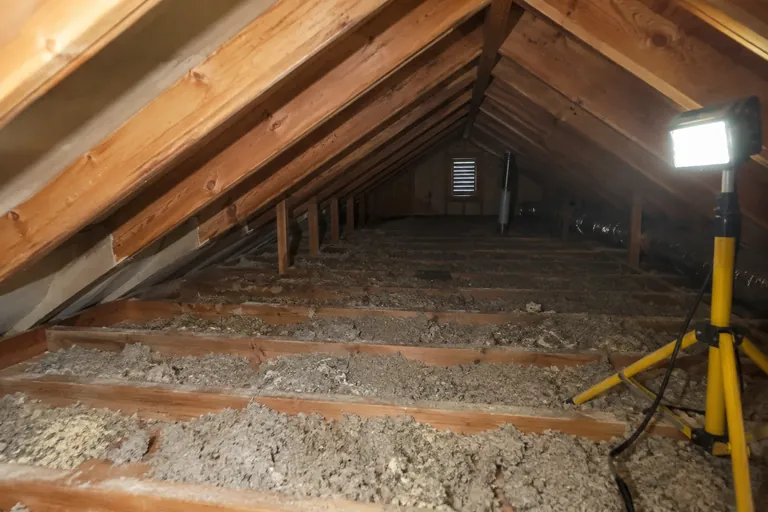
Loose-fill insulation flows around wiring, braces and odd joist spacing that batts can't handle. We blow it to an even depth across the attic floor, right out to the low eaves.
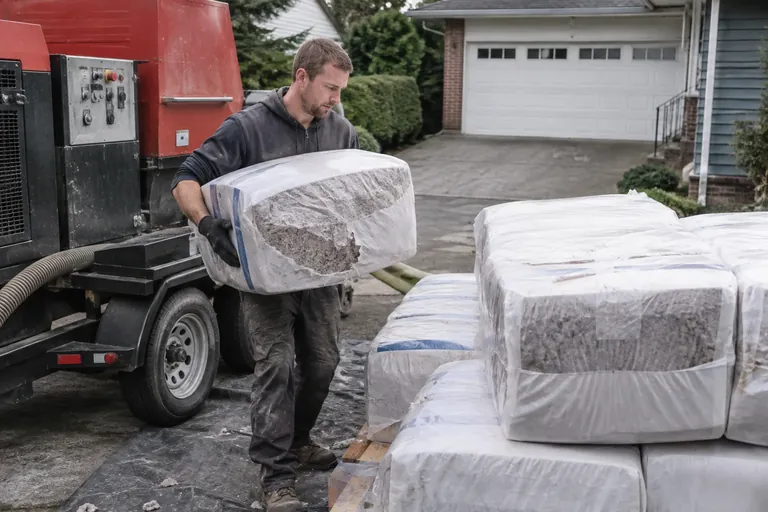
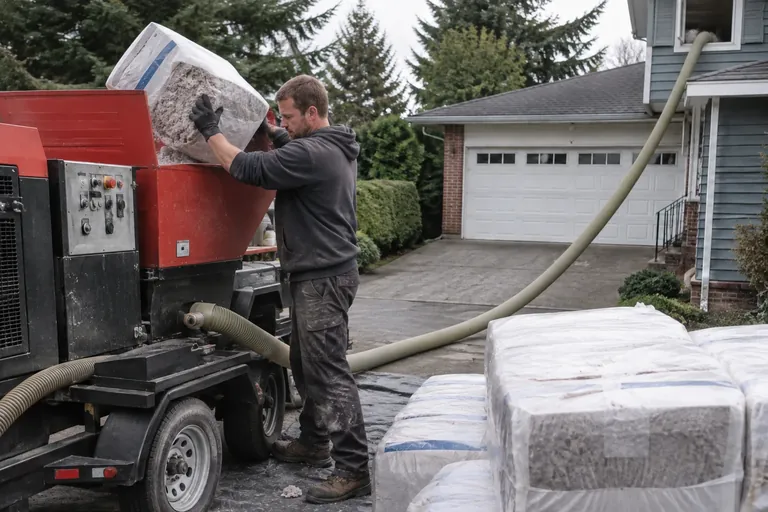
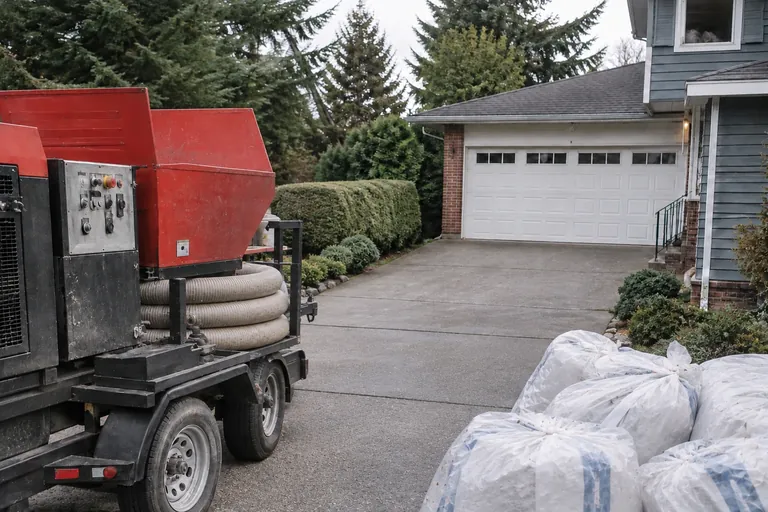
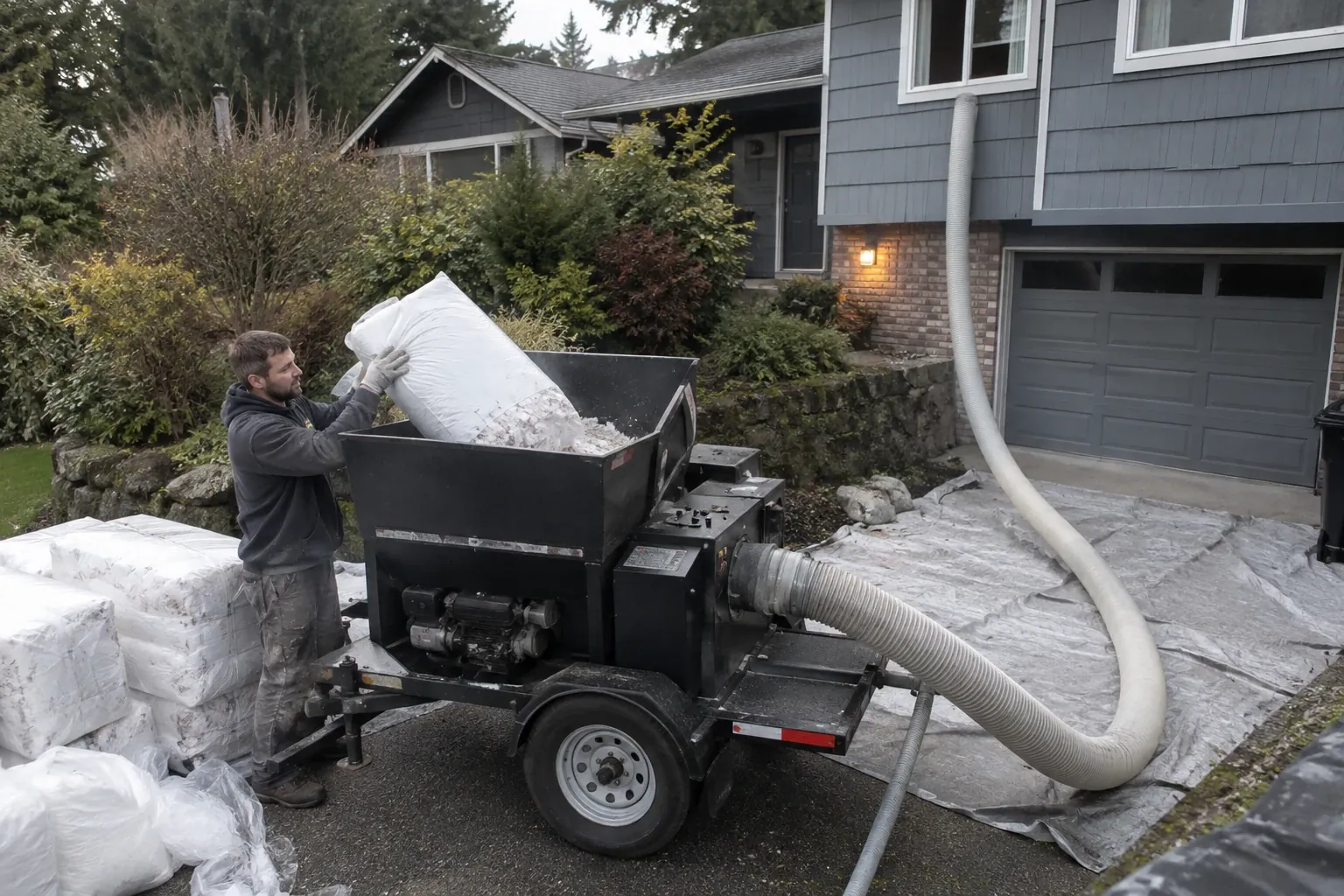 Loading the insulation blowing machine · Seattle, WA
The problem
Walk into almost any attic and the floor is a mess of obstacles: electrical cables running across the joists, bracing, blocking, duct runs, plumbing vents and bays of every width. Fitting batts into that takes endless cutting, and every cut is a chance for a gap. Loose fill solves it. A machine on the truck breaks up the material and blows it through a hose, and it settles around everything into one continuous blanket.
The catch is that blown-in only works if it's blown to the right depth and density everywhere. A crew in a hurry leaves it deep near the hatch and thin at the far eaves, where it's hardest to reach and where it matters most. Each bag has a coverage chart that ties bag count and depth to a target R-value. We follow it, and we check the depth across the whole floor before we call the job done.
Warning signs
Loose fill is our usual pick for attic floors. These situations make it a clear choice.
Cables, braces, blocking and ducts on the attic floor are easy to cover with loose fill and hard to work around with batts.
Blown-in goes right over a dry, clean old layer and brings the whole attic up to the target depth in one pass.
The hose reaches into low roof edges where a person can't crawl, so the areas over exterior walls get covered.
Builder-grade loose fill in older tract homes has often settled well below where it started and needs topping up.
Older homes and additions have bays of odd widths. Loose fill doesn't care how far apart the joists are.
Once an attic is cleared and sealed, blowing in new insulation is the fastest way to get a full, even layer back.
Proof of work
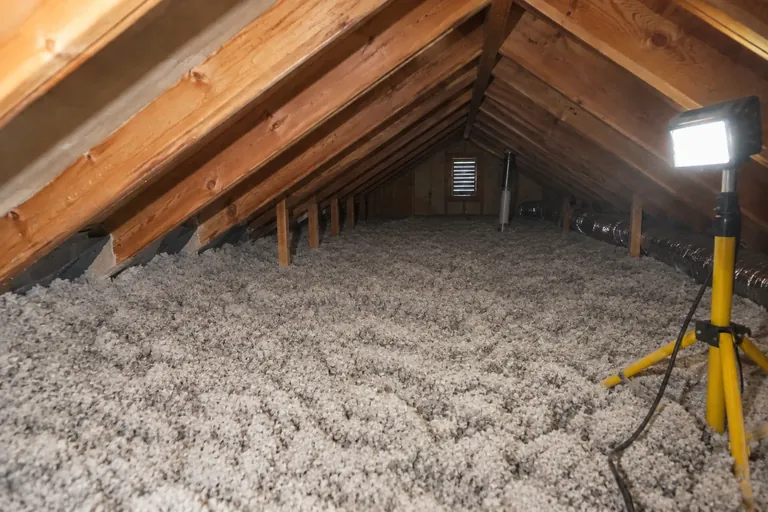
Drag the slider to compare. Illustrations of typical results on homes like yours.
 BeforeAfter
 STEP 01
 STEP 02
 STEP 03
 STEP 04
How we do it
Most attics take a day. The prep is what makes it last.
We measure the attic area and the depth and condition of what's there, then work out bag count and installed depth from the manufacturer's coverage chart for the target R-value. You see the plan and the numbers in the quote before we schedule the work.
We seal air leaks around plumbing, wiring, fixtures and top plates, set baffles at the eaves so the soffit vents stay open, and build dams around the hatch, chimneys and flues. Depth markers go on the joists across the attic so the finished level is easy to check.
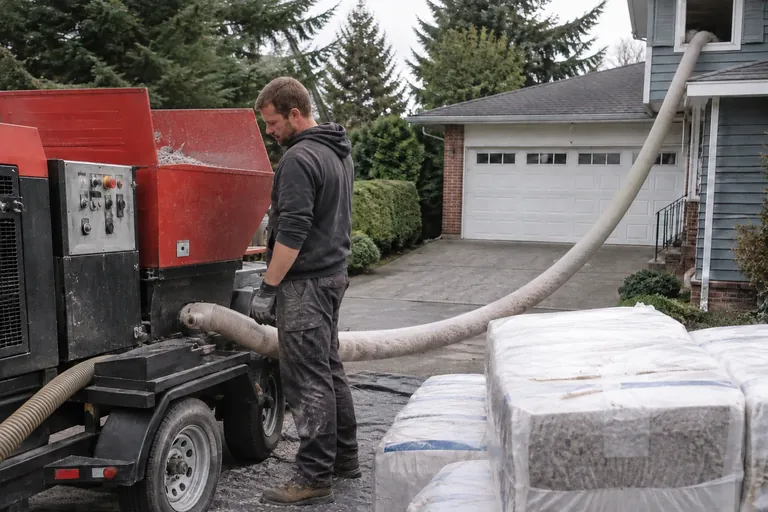
The blowing machine stays on the truck outside. The hose runs into the house along a covered path and up to the attic. One person feeds the machine while the other works the hose, and they stay in contact so the flow stays steady.
We start at the farthest, lowest corners and work back toward the hatch, so nobody walks through finished areas. The installer holds the hose low and level to get an even, fluffy layer, without blowing the material into the eave vents or packing it down.
We check depth against the markers across the attic, fill any thin spots, insulate and weatherstrip the hatch, then photograph the finished floor. The path is cleaned, the hose comes out, and you get the photos along with the material and depth we installed.
What you get
| Materials | Loose-fill fiberglass or cellulose |
|---|---|
| Typical area | Attic floors over ceiling joists |
| Coverage | Bag count and depth set by the manufacturer's coverage chart |
| Prep | Air sealing, eave baffles, hatch and flue dams |
| Depth check | Depth markers on the joists, checked across the floor |
| Equipment | Blowing machine on the truck, hose to the attic |
| Over old insulation | Yes, when the existing layer is dry and clean |
| Photos | Before and after from the same spots |
Compare
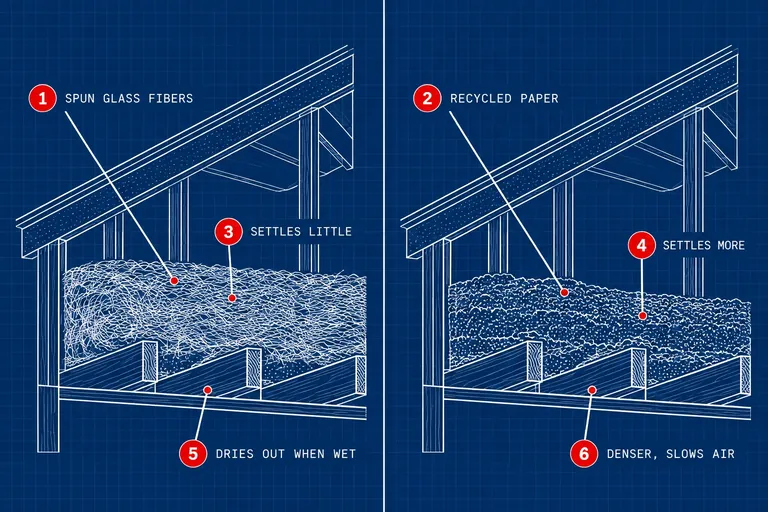
We install both. Here's how they differ in an attic.
| Factor | Blown fiberglass | Blown cellulose |
|---|---|---|
| Made from | Spun glass fibers | Recycled paper treated with borates |
| Depth for same R-value | Needs a bit more depth | Reaches it with less depth |
| Settling | Settles little after install | Settles more; extra is blown to allow for it |
| If it gets wet | Fibers don't absorb water; dries out | Absorbs water and can mat down |
| Weight on ceilings | Light | Heavier; worth checking on old plaster ceilings |
| Air movement | More air can pass through it | Denser; slows air movement more |
Puget Sound homes
A lot of Eastside and South Sound homes built from the 1970s through the 1990s were insulated with loose fill on the day they were built. Decades later, that layer has settled, been walked on during cable and alarm installs, and pushed around by rodents. We often find it thick in the middle and nearly gone at the eaves. Blowing a fresh layer over it, after sealing the leaks below, is usually the most direct way to bring those attics up toward today's R-49 to R-60 targets.
Our wet season matters for how it's installed. From October to May the attic depends on steady airflow to dry out between storms. Loose fill blown into soffit vents blocks that airflow, which leads to condensation, rusty nail tips and mold on the roof deck. Baffles at every rafter bay over a vent keep the path open. We also keep the hose away from bath fan housings and make sure those fans actually vent outside instead of dumping shower steam into the new insulation.
Pricing
Blown-in is quoted from your attic's measurements and the coverage chart.
The square footage of the attic floor sets the base amount of material and labor.
Topping up a decent layer takes fewer bags than building from a few inches to current targets.
The two materials are priced differently and need different bag counts for the same R-value.
Number of air leaks to seal, rafter bays needing baffles, can lights and hatch work.
Low-pitch roofs, small hatches and long hose runs from the street add time.
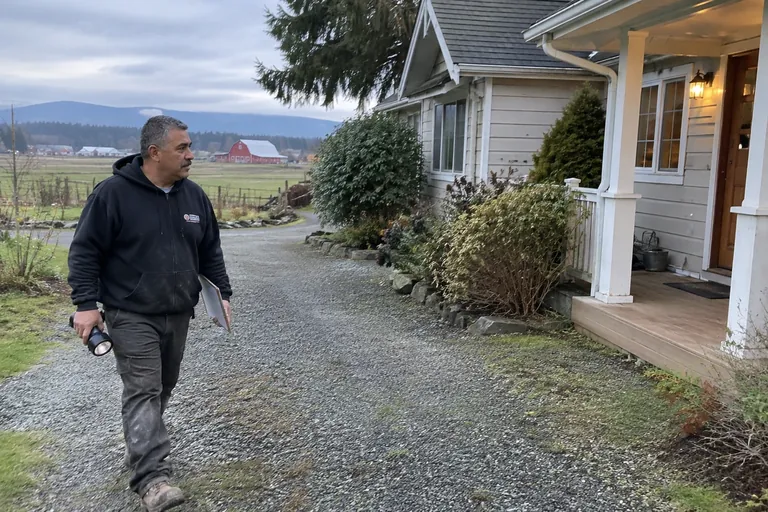
We had rodent problem in our house. Also our house had bare minimum insulation in some places. Isaac was very helpful, he also took some photos of the attic and crawl space. They gave me a reasonable quote for rodent proofing and insulation. Their crew was on time and finished the job in two days. Really appreciate their hard work.
FAQ
Still unsure? Call (800) 674-4933 and talk it through with us.
Yes, if the existing layer is dry, clean and free of droppings or mold. We seal air leaks first, then blow the new layer over the old one to reach the target depth. If the old layer is contaminated, it should come out first so you're not burying the problem.
The blowing itself often takes just a few hours. With air sealing, baffles and cleanup, most attics are a one-day job. Larger attics or homes with a lot of sealing work can take longer. We tell you what to expect when we quote.
All loose fill settles some. Cellulose settles more than fiberglass, so installers blow it a little deeper to land at the right depth after settling. The manufacturer's coverage chart accounts for this. What causes real loss is being walked on, packed by rodents or flattened by water, not normal settling.
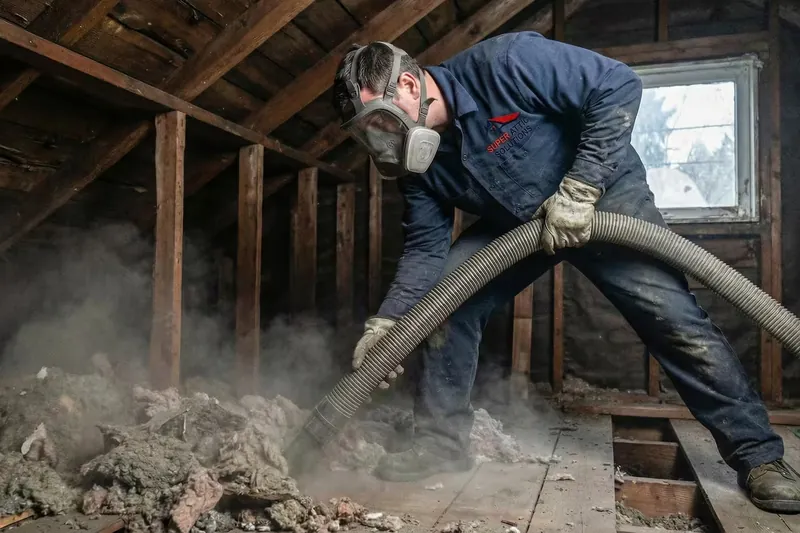
In the attic it's dusty while it's being blown, which is why the crew wears respirators. In your living space it should barely show. The machine stays outside, the hose runs along a covered path, and we keep the hatch area closed off and clean it before we leave.
Loose fill doesn't hold up under boxes or foot traffic. If you need storage, we can plan a raised platform so the insulation stays at full depth underneath and you have a solid surface above. Storing directly on blown-in crushes it and cuts its value in that area.
Our blown-in work is mainly attic floors, where it does the most good in most homes. Closed walls are a different job with different tradeoffs. If walls are a concern, we'll look at them during the inspection and tell you honestly what makes sense for your house.
Related services
Recycled-paper loose fill for attic floors: dense, effective, and best in an attic that stays dry.
Learn more →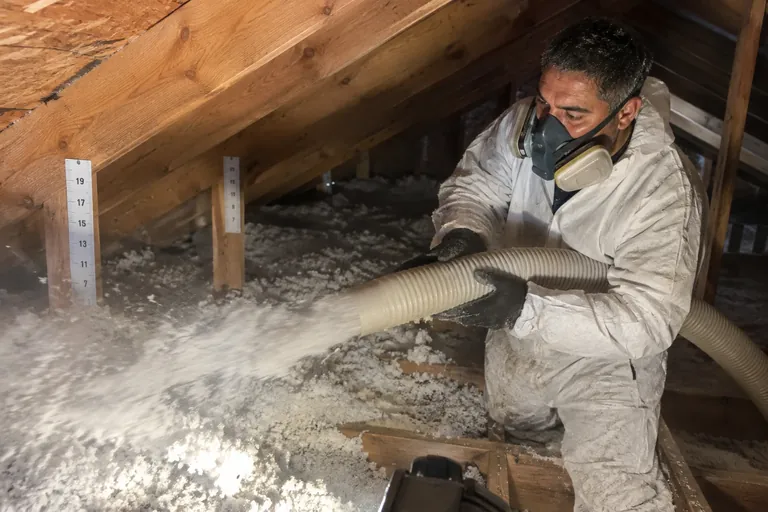
How much insulation your attic needs, which material fits, and what it takes to get there.
Learn more →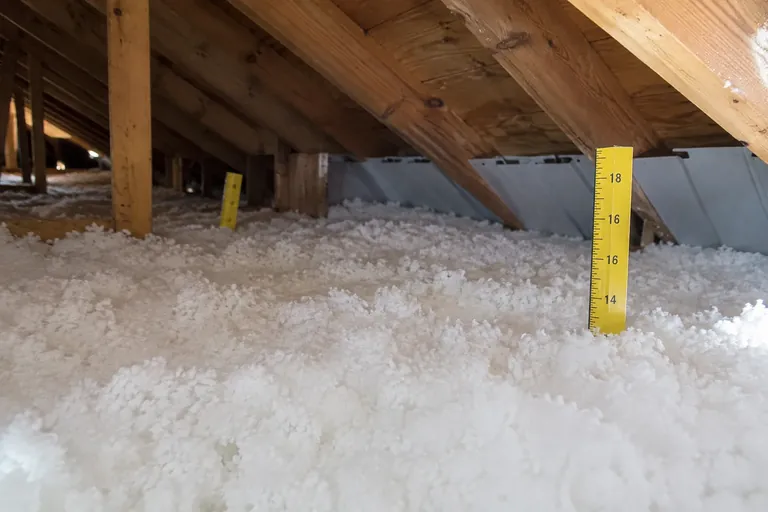
The install itself: air sealing, eave baffles, flue clearances and an even layer to the planned depth.
Learn more →
Fiberglass and mineral wool batts for crawl space floors, knee walls and open walls, fitted bay by bay.
Learn more →Book a free inspection. We'll photograph your attic and crawl space and walk you through what we find, before you decide anything.