

Heating, cooling & ducts
Furnace replacement
Straight advice on when to replace, then a furnace sized to your house, with venting and ducts done properly.
Learn more →Furnace repair · Seattle & Puget Sound
Most furnace breakdowns come down to a handful of parts: igniters, flame sensors, blowers, switches and clogged filters. We find which one, explain it and fix it.
 Diagnosing a gas furnace control board · Seattle, WA
The problem
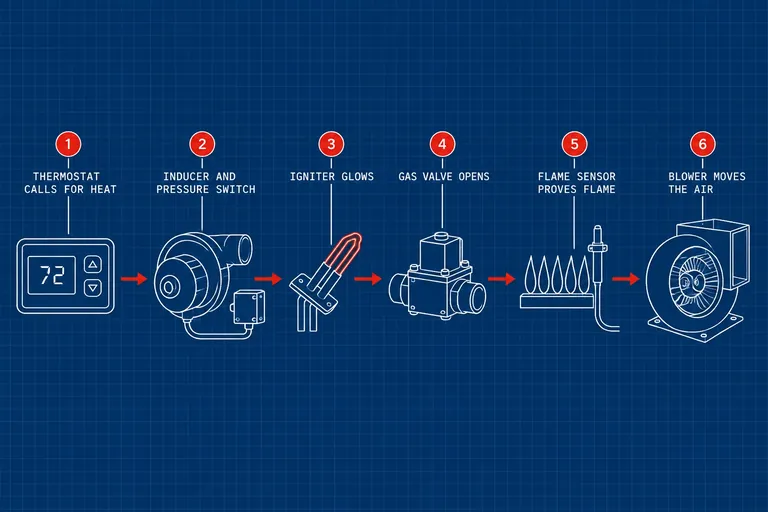
A gas furnace starts in a set sequence. The thermostat calls for heat, the inducer fan clears the vent, a pressure switch confirms the draft, the igniter glows, the gas valve opens and a flame sensor proves there's a flame. Then the blower pushes warm air through the ducts. If any step fails, the control board shuts things down and often blinks an error code. That's why a furnace can click, hum and try to start, then quit.
The usual suspects are a cracked hot surface igniter, a flame sensor coated with residue, a weak blower motor or capacitor, a stuck pressure switch, or a clogged condensate drain on a high-efficiency furnace. A dirty filter causes more trouble than people expect: it chokes airflow, overheats the furnace and trips the high-limit switch. We trace the fault through that sequence instead of guessing, so you pay for the part that actually failed.
Warning signs
Some of these are minor. Some mean you should turn the furnace off and call.
A furnace that lights and quits within seconds often has a dirty flame sensor, a common and simple fix.
Repeated clicking, or an igniter glow with no ignition, points to the igniter, gas valve or pressure switch.
Cold air from the registers can mean the burners aren't lighting, or the furnace is overheating and shutting the flame off.
A bang at start-up, a squealing blower or a rattling panel each point to a different part that's wearing out.
Running a few minutes, stopping, then starting again often traces back to a clogged filter or an overheating furnace.
If your carbon monoxide alarm sounds, get out and call 911 or your gas utility from outside. Don't restart the furnace.
Proof of work
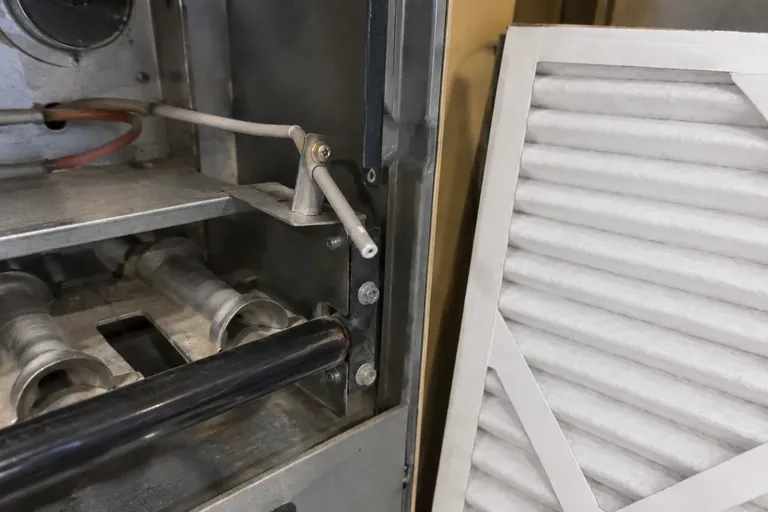
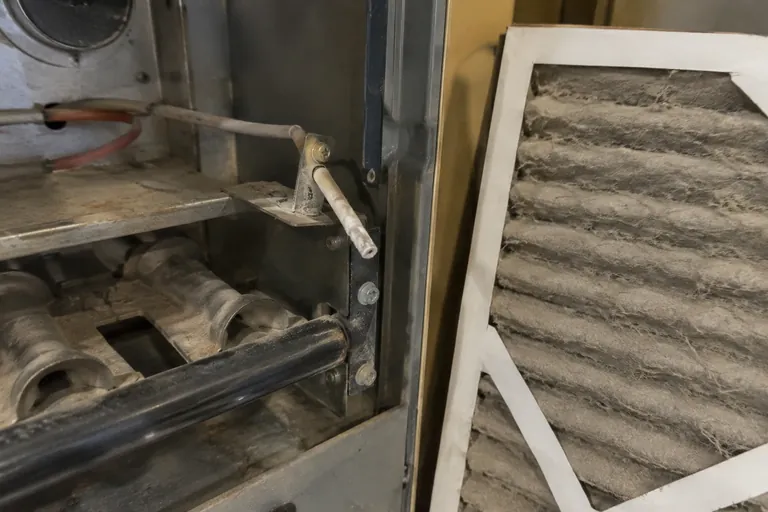
Drag the slider to compare. Illustrations of typical results on homes like yours.
 BeforeAfter
 STEP 01
 STEP 02
 STEP 03
 STEP 04
How we do it
Diagnosis comes first. No part is replaced until we know it's the one that failed.
We start with what you've noticed: when the problem started, what the furnace does when it tries to run, any smells or noises, and when the filter was last changed. Then we read the error code on the control board, which often narrows the search before a single panel comes off.
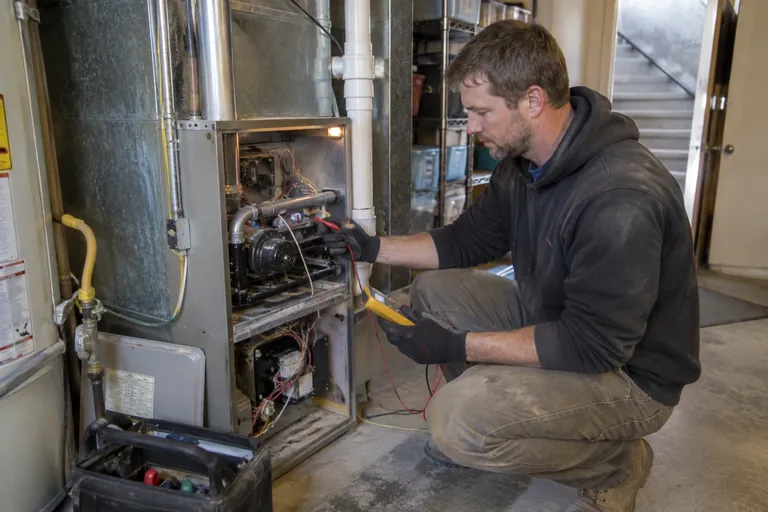
We run the furnace and watch each step: inducer, pressure switch, igniter, gas valve, flame sensor and blower. Meters and a close look tell us where the sequence breaks. We also check the filter, the return air path and the condensate drain on high-efficiency units.
You get a plain explanation of what failed, what it takes to fix it and whether anything else is close to failing. If the furnace is old and the repair is a major one, we'll tell you how repair compares with replacement, without pressure either way.
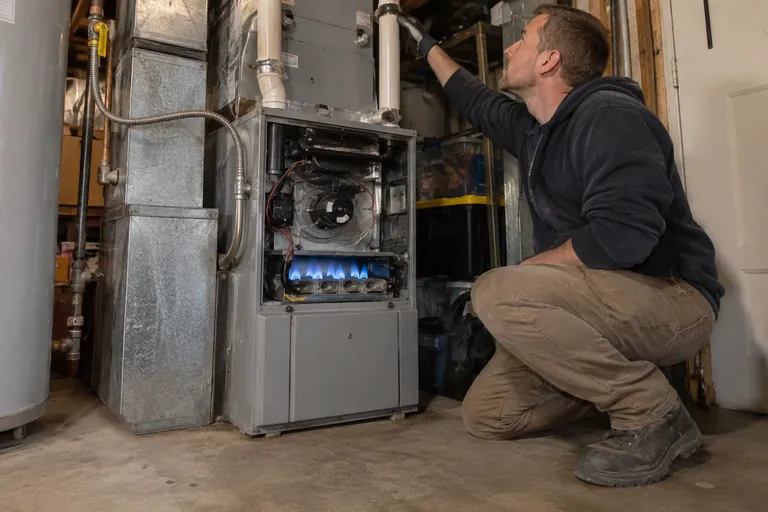
We replace or clean the failed part, then run the furnace through several full cycles. We check the venting, look over the heat exchanger area for visible cracks or rust, and confirm the burners and flame look right before we call it done.
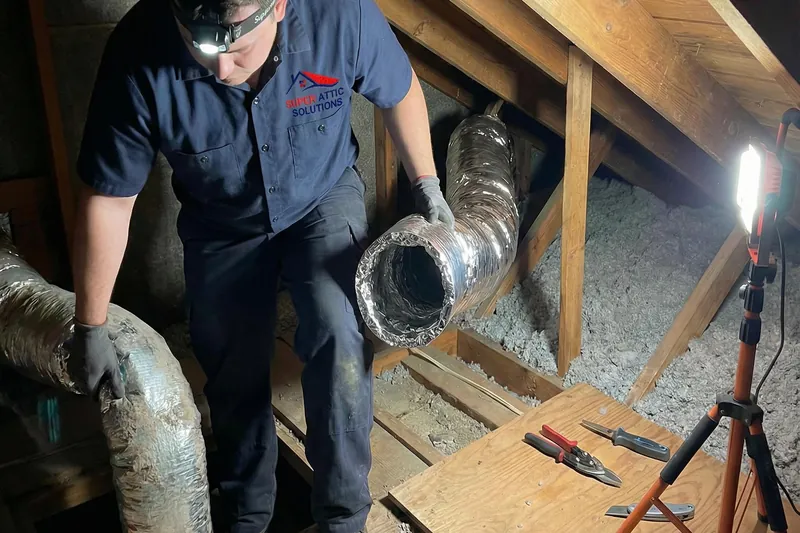
Many furnace problems start with poor airflow. We check the filter, the return and the supply ducts we can reach, and if there's a crushed or disconnected run in the attic or crawl space, we'll show you. Fixing the cause keeps the same part from failing again.
What you get
| Diagnosis | Error codes read; start-up sequence tested step by step |
|---|---|
| Ignition | Hot surface igniter and flame sensor tested, cleaned or replaced |
| Blower | Motor, capacitor and wheel checked for wear and buildup |
| Controls | Pressure switch, limit switch and control board checked |
| Airflow | Filter, return air path and reachable ducts checked |
| Condensate | Drain and trap cleared on high-efficiency furnaces |
| Safety | Venting, burners and visible heat exchanger condition checked |
| Explanation | What failed, what we fixed, and anything to watch |
Compare
A repair is usually the right first call. These are the factors that tip it toward replacement.
| Factor | Repair it | Consider replacing |
|---|---|---|
| Age | Furnace is mid-way through its working life | Furnace is old and original to the house |
| Repair history | First significant repair in a long while | Something new fails every season |
| Type of failure | Igniter, flame sensor, capacitor or switch | Cracked heat exchanger, or several major parts at once |
| Comfort | House heats evenly when it runs | Rooms are uneven even when it runs well |
| Your plans | Staying with your current system | Adding cooling or switching to a heat pump soon |
Puget Sound homes
Around Seattle, a furnace doesn't face extreme cold. It faces a long season. From October into May, a furnace here may run most days for months, which steadily wears igniters, blower motors and bearings. The first cold snap of fall is when a lot of them give up, often after sitting idle all summer with a filter nobody changed. Many furnaces in Eastside homes are tucked into garages, and in older Seattle houses they're often in a basement or squeezed into a crawl space.
Location matters for repairs. A furnace in a damp crawl space sees more rust on its cabinet, burners and connections. A garage furnace can pull in dust from the workbench. And because so many furnaces here feed ducts in the attic or crawl space, we often find that the cause of an overheating furnace is a crushed return or a disconnected supply run, not the furnace itself. We check both, since attics and crawl spaces are where we work every day.
Pricing
We explain the repair and its price before we do the work. These are the factors.
Cleaning a flame sensor is a small job. A blower motor or control board is a bigger part and more time.
High-efficiency furnaces have more parts. Older furnaces can have parts that are harder to find.
A furnace in an open garage is quicker to work on than one wedged into a crawl space or a tight closet.
If a crushed duct or blocked return is behind the failure, fixing it is quoted separately.
Great service. I highly recommend this company. Wish I would have found them years ago... Isaac, Kareem and Irving were professional, courteous, and friendly. Pricing was clear and there were no surprises. Very happy with our experience.
FAQ
Still unsure? Call (800) 674-4933 and talk it through with us.
The most common cause is a dirty flame sensor. The furnace lights, the sensor can't confirm the flame through the residue, and the control board shuts the gas off for safety. Cleaning or replacing the sensor usually fixes it. A clogged filter or a blocked vent can cause similar short cycling, so we check those at the same time.
Get everyone out of the house, pets included, and call 911 or your gas utility from outside. Don't go back in to open windows or restart the furnace. Once responders have cleared the house, the furnace needs a full inspection before it runs again. Every home with gas appliances should have working CO alarms on each level.
Yes. A clogged filter starves the furnace of air, the heat exchanger overheats and the high-limit switch shuts the burners off. The blower keeps running, so you get cool air and short cycles. Over time, repeated overheating stresses the heat exchanger. Check your filter monthly during the heating season and change it when it looks gray.
Often it is, especially for a single part like an igniter, sensor or capacitor. It's less worth it when the furnace is old, the repair is a major one and other parts are wearing out too. We'll lay out both paths, repair and replacement, so you can compare them on your own terms.
Most modern furnaces have a small LED on the control board that blinks a code when something goes wrong. The code chart is usually printed on the inside of the furnace door. It points to the part of the start-up sequence that failed, like the pressure switch or the flame sensor. Note the pattern before you reset the power, since resetting clears it.
Check the thermostat first. If the fan is set to on instead of auto, the blower runs even when the burners are off. If that's not it, the furnace may not be lighting, or it may be overheating and shutting the flame off while the blower keeps going. A leaking or disconnected duct in the attic or crawl space can also make warm air feel cool by the time it arrives.
Related services
Straight advice on when to replace, then a furnace sized to your house, with venting and ducts done properly.
Learn more →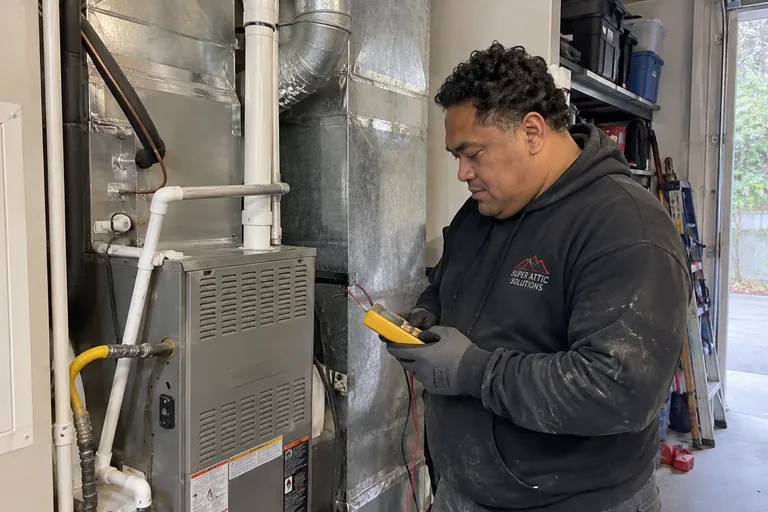
Furnaces, heat pumps, AC, mini-splits and the attic and crawl space ducts they depend on.
Learn more →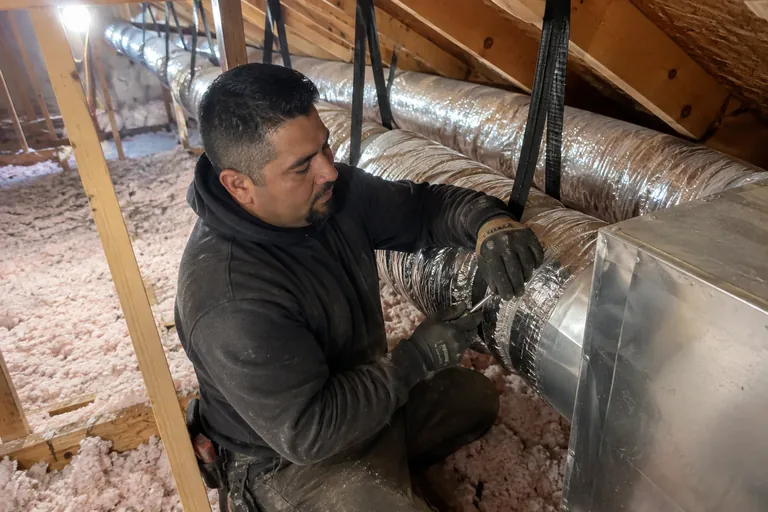
Damaged, leaky and rodent-fouled duct runs pulled and replaced, with sealed joints and photos of the work.
Learn more →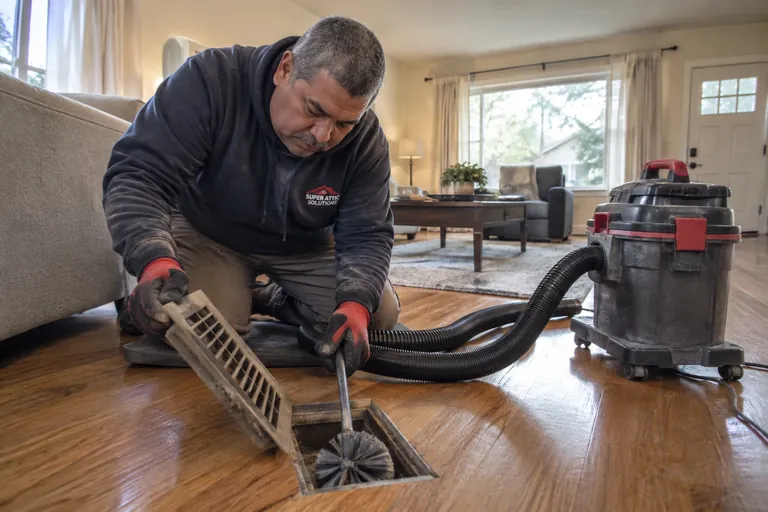
Supply and return ducts cleaned register to furnace, with photos and a straight call on what to replace.
Learn more →Book a free inspection. We'll photograph your attic and crawl space and walk you through what we find, before you decide anything.