
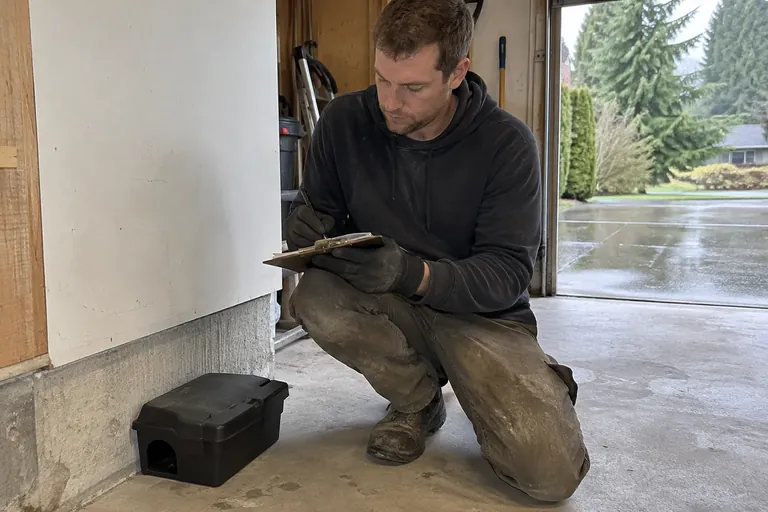
Rodents & pests
Rodent control
A trapping, monitoring and sealing program that runs until rodent activity in your home stops.
Learn more →Pest control · Attics & crawl spaces
Rats and mice get most of the attention, but birds, squirrels, raccoons and wasps also move into attics and crawl spaces. We get them out, close the openings and clean up what they left.
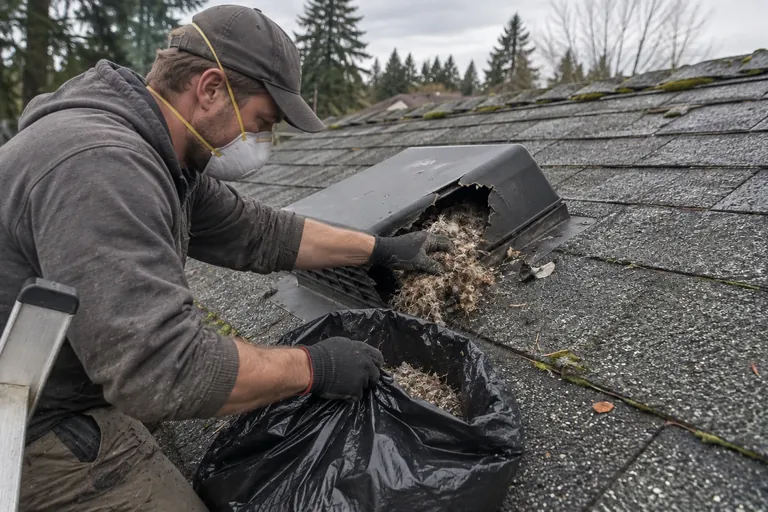
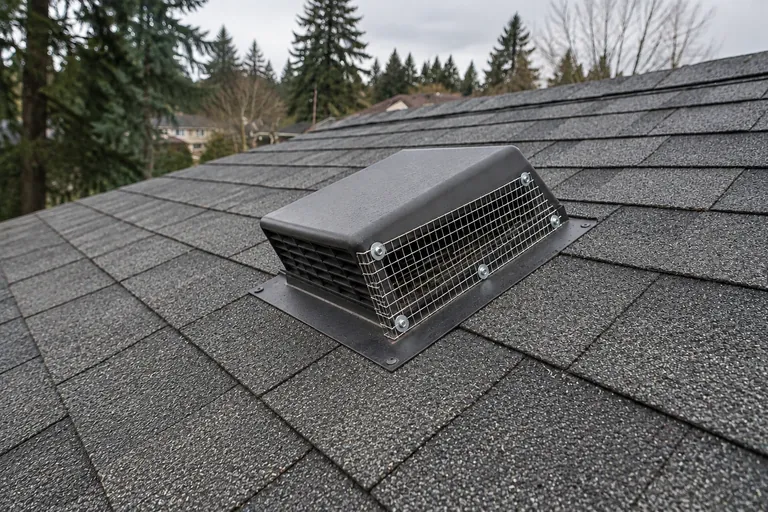
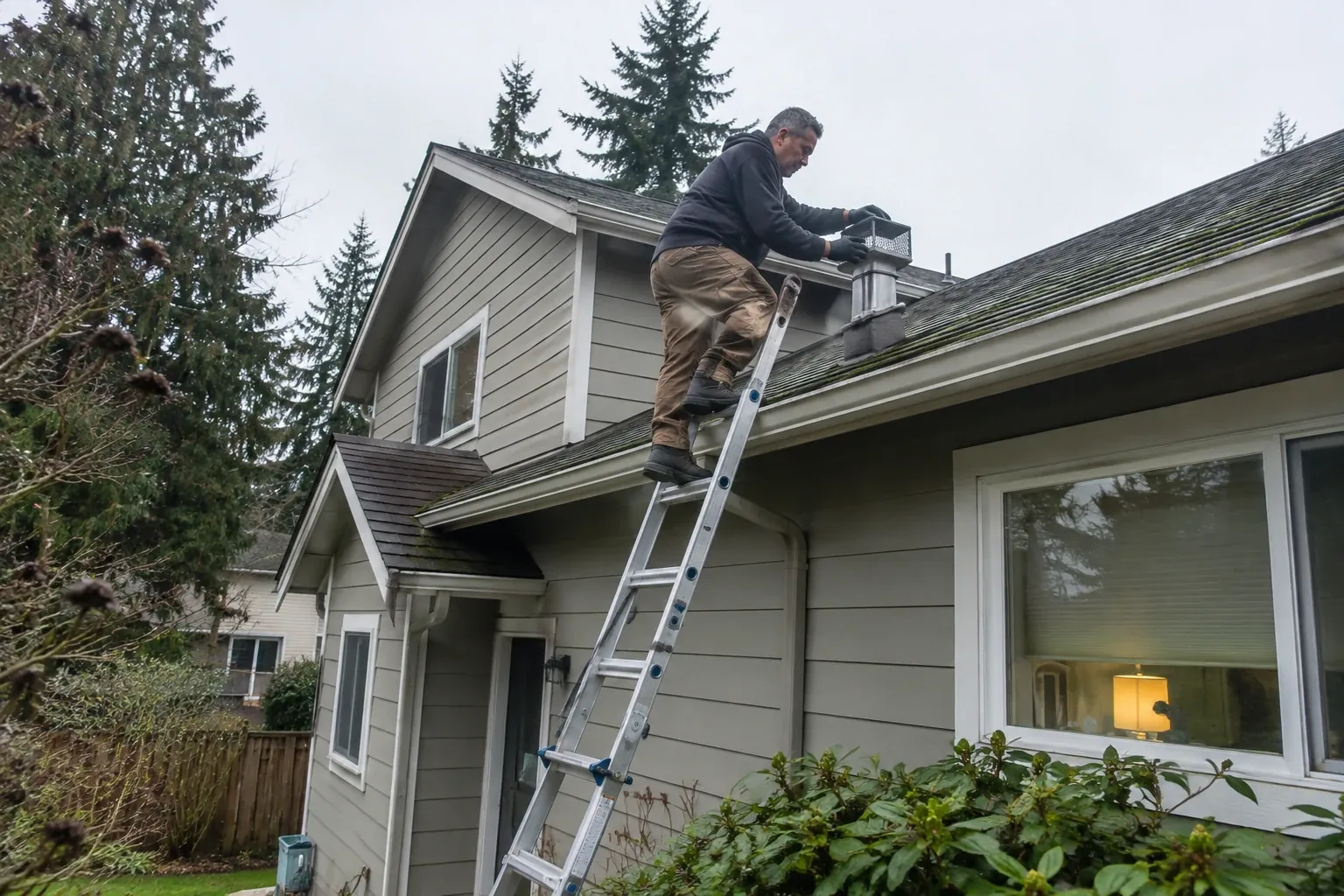 Fitting a mesh cap over a roof vent to keep animals out · Maple Valley, WA
The problem
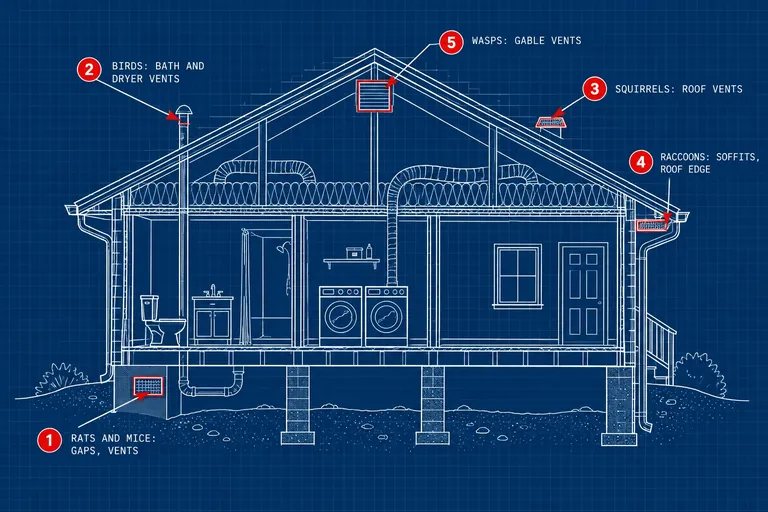
We're an attic and crawl space company, so our pest control is built around those spaces. That means rats and mice, first and most often. It also means the other animals that find their way into a roof or under a floor: starlings and sparrows nesting in a bath fan vent, squirrels chewing through a roof vent, raccoons tearing into a soffit, wasps building inside a gable vent. Each one leaves a hole, a nest and a mess.
We don't do routine spraying for ants, spiders or roaches, and we don't treat lawns. What we do is the structural side of pest control: find how the animal got in, make sure it's out, repair and seal the opening with metal so it stays closed, and clean out the nests, droppings and soiled insulation. That's the part that stops the same pest from coming back next season.

Warning signs
Different animals leave different clues. Here's what to look and listen for.
Birds nest in bath fan, kitchen and dryer vent hoods. Chirping in spring and twigs or grass sticking out of the vent are the giveaway.
Rats are mostly active at night. Scampering in the attic in the morning or late afternoon is more often squirrels.
Loud thuds and dragging sounds are bigger than a rat. Raccoons often move into attics, especially in spring when they have young.
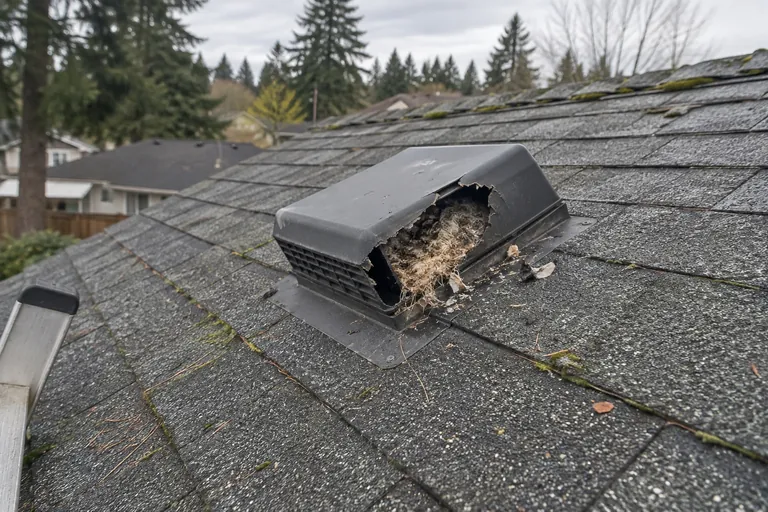
A ripped soffit panel, a bent roof vent or a hole chewed at the roof edge points to raccoons or squirrels forcing their way in.
Steady wasp traffic in and out of a vent, soffit gap or siding crack in summer means a nest inside the wall or attic.
Raccoons leave large latrine piles in one corner. Bird droppings collect below vent openings. Both soil insulation fast.
Proof of work
Drag the slider to compare. Illustrations of typical results on homes like yours.

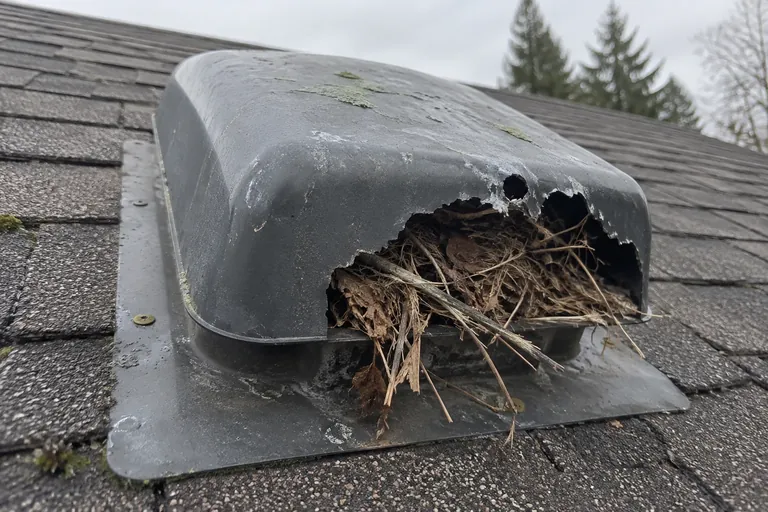 BeforeAfter
 STEP 01
 STEP 02
 STEP 03
 STEP 04
How we do it
Every animal is different, but the job always follows the same order.
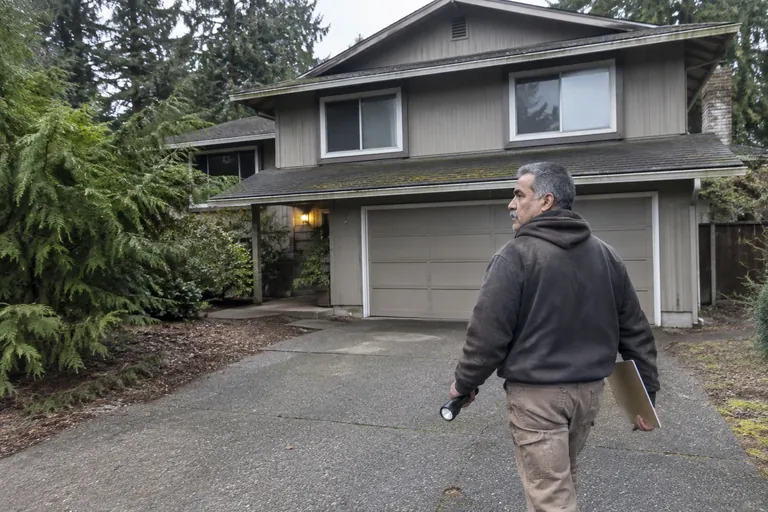
We inspect the attic, crawl space and outside of the house to find out what's living there and how it got in. Droppings, nest material, tracks and the shape of the damage tell us whether it's rodents, birds, squirrels, raccoons or wasps. We photograph each entry point and show you before quoting.
We don't seal an animal inside your house. For rodents, that means trapping first. For birds and squirrels, it means confirming the nest is empty. For wasps, we tell you before we work near an active nest and plan the timing around it. Sealing happens only once the space is clear.
Bird nests get pulled out of vent ducts. Squirrel and rodent nests come out of the insulation. Raccoon latrines are bagged with respirators and gloves. Old wasp nests are removed once they're inactive. If an animal died inside, we remove it and disinfect the spot.
Chewed roof vents get metal screening or replacement. Torn soffits are patched and backed with metal. Bath fan, kitchen and dryer vent hoods get guards that let air out but keep birds out. Gable vents and foundation vents get new mesh. Rodent gaps get metal mesh and sheet metal.
Where droppings and nesting have soiled the insulation, we quote removal and reinsulation. In the crawl space, damaged vapor barrier is replaced. Ducts torn by animals can be replaced too, and a clogged bath fan or dryer duct can be cleared. You get before and after photos of every repair.
What you get
| Rodents | Rats and mice: trapping, sealing and cleanup |
|---|---|
| Birds | Nests removed from vents; vent guards and screens installed |
| Squirrels | Entry confirmed empty, chewed openings repaired and sealed |
| Raccoons | Entry confirmed empty, soffit or roof damage sealed, latrines cleaned |
| Wasp nests | Openings screened and sealed; inactive nests removed from attics |
| Cleanup | Droppings, nests and soiled insulation removed with protective gear |
| Not included | Routine indoor bug spraying, ant and spider treatments, lawn care |
| Photos | Every entry point and repair, before and after |
Puget Sound homes
The Puget Sound region is full of wildlife that adapts well to houses. Eastern gray squirrels are everywhere in Seattle's parks and tree-lined streets, and they chew through roof vents and soffit corners to reach a dry attic. Raccoons live in every greenbelt from Shoreline to Federal Way and can tear open a soft spot in a soffit or roof edge. Starlings nest in bath fan and dryer vents each spring, which can block airflow and push moisture back into the house.
Our long, wet season also means attics and crawl spaces stay damp, so droppings and nests break down into a mess quickly and soak into insulation. Paper wasps and yellowjackets build in gable vents and wall voids in summer, often on homes with gaps at the trim. Cedar shake roofs and older wood soffits soften with age and moss, which makes them easier for squirrels and raccoons to chew or pry open. Homes backing onto wooded lots in Sammamish, Issaquah and Maple Valley see more of this than homes in the city core. Fixing the openings, not just the pest, is what holds up through the next year.
Pricing
Pest work varies with the animal and the damage. We quote after the inspection.
A bird nest in a vent is a small job. A raccoon den in the attic with a torn soffit and latrine is a large one.
One chewed vent or several gaps around the roofline and foundation changes the sealing work a lot.
Torn soffits, damaged roof vents and broken vent hoods may need replacement parts, not just a screen.
Two-story rooflines, steep pitches and low crawl spaces take more time and setup to reach safely.
Heavy droppings, latrines or soaked insulation are quoted for removal and replacement once we see the extent.
We had a pretty bad rat problem in our attic. We heard noises every night. Guys from Super Attic Solutions came out and they trapped the rats and blocked all the holes that allowed the rats to get in. They were on time, professional and fairly priced.
FAQ
Still unsure? Call (800) 674-4933 and talk it through with us.
No. We don't offer routine indoor or outdoor spraying for ants, spiders, roaches or other insects. Our pest control is about animals that get into attics and crawl spaces: rodents, birds, squirrels and raccoons, plus sealing up openings wasps use. We find the way in, make sure it's clear, seal it and clean up after.
Yes. Birds often nest in bath fan, kitchen and dryer vent hoods, which blocks airflow and can push moisture back into the house. Once the nest is empty, we pull the nest material out of the vent and duct and install a guard that lets air out but keeps birds from getting back in.
We can close the opening they're using and remove old nests from the attic. If the nest is active, we'll tell you how we plan to time the work so the opening can be sealed safely. We screen gable vents and seal soffit gaps with metal so wasps and other pests can't use them again.
Timing is the best clue. Squirrels are active in the day, especially early morning and late afternoon. Rats are active at night. Squirrel droppings are larger and rounder than rat droppings. Squirrels also chew bigger, rougher holes at the roof edge. Our inspection photos will show you which one it is.
We confirm the raccoon is out before we close anything, so an animal isn't trapped inside. Then we repair and seal the torn soffit, roof vent or roof edge it used, often with sheet metal backing. Raccoon latrines are cleaned out with respirators and gloves, and soiled insulation is quoted for replacement.
Sealing closes the openings animals use now and the ones we find that could be used next. It won't stop a determined raccoon from tearing into a new weak spot, or a tree branch from giving squirrels a new route. We tell you what to watch for, like branches over the roof, and you'll have photos of every repair.
Related services
A trapping, monitoring and sealing program that runs until rodent activity in your home stops.
Learn more →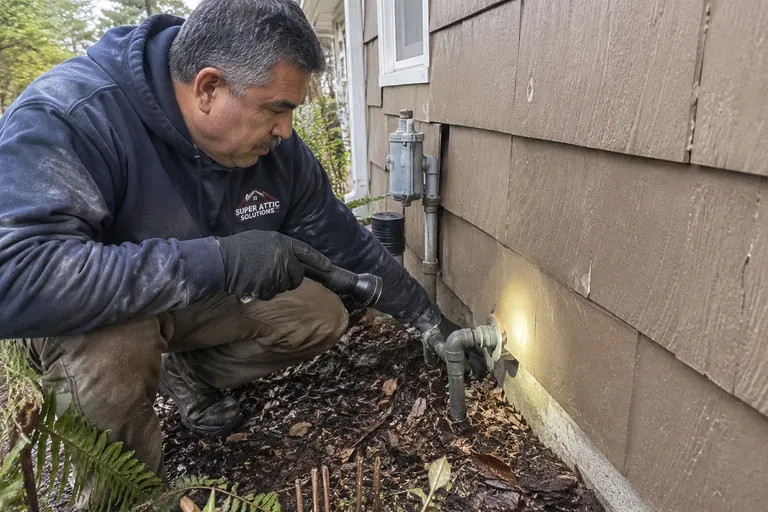
What happens when our rodent exterminator arrives: inspection, photos, trapping and a sealing plan.
Learn more →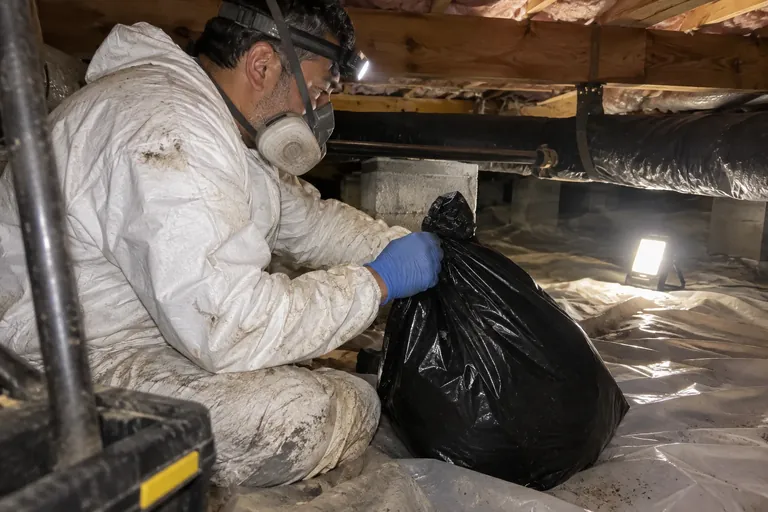
We locate the dead rodent or animal behind the smell, remove it, disinfect the area and seal the way in.
Learn more →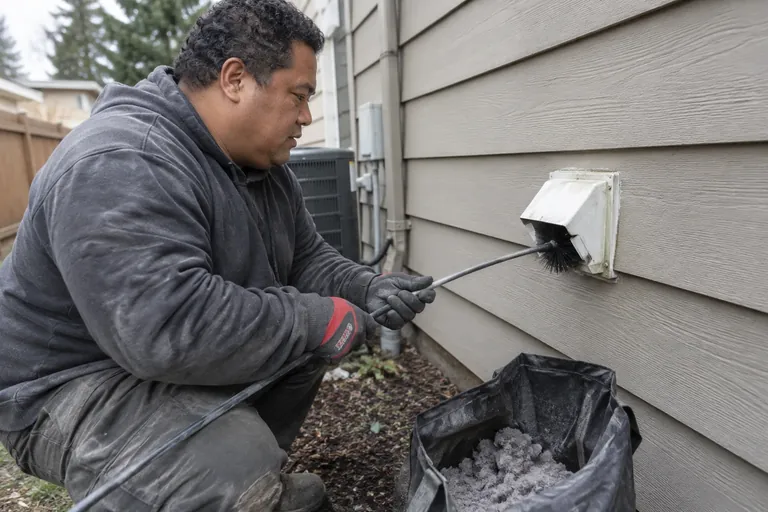
Lint cleared end to end, and crushed or disconnected dryer ducts in attics and crawl spaces replaced.
Learn more →Book a free inspection. We'll photograph your attic and crawl space and walk you through what we find, before you decide anything.