
Home remodeling
Backyard construction
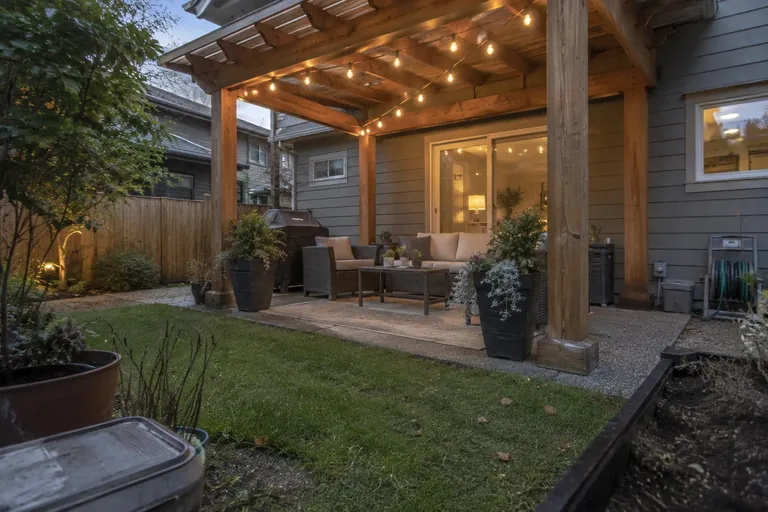
Decks, patios, pergolas and covers built to shed rain away from the house and keep rodents out from under.
Learn more →Fire pits & outdoor fireplaces · Seattle area
Gas or wood fire pits, fire tables and built-in outdoor fireplaces, placed clear of eaves, fences and trees, built on a base that drains through a Puget Sound winter.
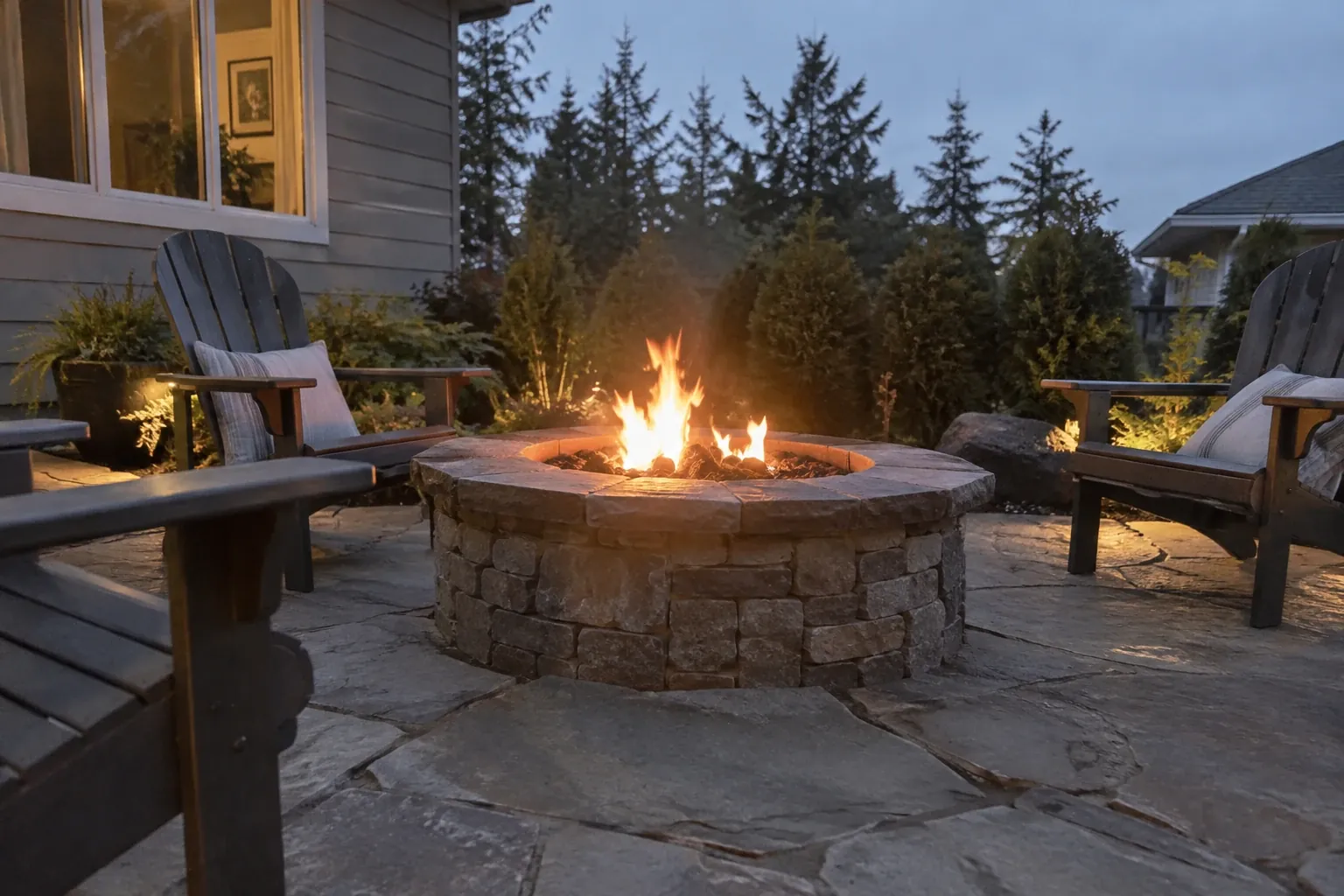 Stone fire pit on a flagstone patio · Seattle, WA
The problem
A fire pit too close to the house sends sparks toward the eaves, the soffit vents and any cedar siding or shakes. One under a fir or next to a wood fence puts embers where they can catch. And one built on bare soil fills with rainwater every winter, cracks in the first hard freeze and turns into a muddy bowl nobody uses.
We start with placement. We look at where the wind usually comes from, how far the pit sits from walls, overhangs and trees, and how water drains on that part of the yard. Then we build on a compacted, drained base. Gas pits get a properly run and tested gas line. Wood pits and outdoor fireplaces get a lined firebox and a chimney tall enough to carry smoke above the seating.

Warning signs
These are the questions we help people sort out before they build.
A fire feature, especially under or near a covered patio, makes cool fall and spring evenings comfortable outside.
A portable or sunken pit that floods every rain needs a drained base or a new location.
A gas pit, or an outdoor fireplace with a chimney, controls smoke far better than an open wood pit.
Tight lots and overhanging branches limit placement. A gas fire table can work where a wood pit can't.
How we do it
Placement first, then the base, then the fire.
We walk the yard with you and look at clearances to the house, eaves, fences and trees, plus wind, drainage and how the seating will work. We go over gas versus wood and which feature fits the space. We handle any permits and tell you how local burn rules affect a wood fire.
We excavate and build a compacted gravel base so water drains away instead of pooling in or under the fire feature. For built-in outdoor fireplaces, we pour or prepare a footing sized for the weight of the masonry or stone.
Fire pits get a steel or refractory-lined fire ring inside the stone or block walls. Outdoor fireplaces get a lined firebox and chimney. For gas features, the gas line is trenched, connected and pressure tested, with a shutoff you can reach. Burner, media and ignition go in last.
We light the feature, check the flame and draft, and confirm the gas connections are tight. Then we show you how to start it, shut it off and care for it through the wet season, including covers and keeping the drain path clear of leaves.
What you get
| Fire pits | Gas or wood-burning, round or square, stone or block |
|---|---|
| Fire tables | Gas fire tables for patios and covered areas where allowed |
| Outdoor fireplaces | Built-in fireplaces with lined firebox and chimney |
| Base | Compacted, drained gravel base or footing |
| Gas line | Trenched, connected and pressure tested, with a shutoff |
| Clearances | Placed clear of walls, eaves, fences and overhanging trees |
| Finish | Stone, block or masonry finish to match the yard |
| Walkthrough | Lighting, shutoff and wet-season care explained |
Compare
Both work. They suit different yards and habits.
| Factor | Gas | Wood-burning |
|---|---|---|
| Starting the fire | Switch or key, on in seconds | Kindling and dry wood, takes time |
| Smoke and sparks | Little smoke, no flying embers | Smoke and sparks, more clearance needed |
| Burn restrictions | Often fewer limits, check local rules | Limited during burn bans and fire restrictions |
| Installation | Needs a gas line run and tested | Needs a lined fire ring and good drainage |
| Feel | Clean, steady flame | Crackle, real wood smell and more heat |
Puget Sound homes
A fire pit here gets rained on far more than it gets used, so drainage decides whether it lasts. Standing water inside a fire pit cracks block and mortar when it freezes, and soaked wood won't light anyway. Many Seattle and Eastside yards also sit under firs and cedars that drop needles into everything, and plenty of homes still have cedar shakes or cedar siding. Burn bans for air quality and dry-summer fire restrictions in the region can limit wood fires, so many homeowners choose gas. Paired with a covered patio, a gas fire pit is one of the simplest ways to use a backyard outside of July and August.
Pricing
These are the factors that set the cost of a fire feature.
A fire pit is the simplest. A built-in outdoor fireplace with a chimney is a larger masonry project.
The farther the feature sits from your gas meter or line, the more trenching and pipe it needs.
Slopes, roots and poor drainage add excavation and gravel work.
Natural stone, manufactured stone, block and brick vary in cost and labor.
Built-in seat walls or a new patio around the feature add to the project.
Great service. I highly recommend this company. Wish I would have found them years ago... Isaac, Kareem and Irving were professional, courteous, and friendly. Pricing was clear and there were no surprises. Very happy with our experience.
FAQ
Still unsure? Call (800) 674-4933 and talk it through with us.
Far enough that sparks and heat can't reach siding, eaves, decks, fences or overhanging branches. Local fire codes and your city set minimum distances, and gas units have manufacturer clearances too. We measure clearances during the site walk and place the feature where it's safe, not just where it looks good.
Usually not. Air-quality burn bans and summer fire-danger restrictions in the Puget Sound region can prohibit outdoor wood fires, and the rules differ by county and city. Gas features are treated differently in many places. Check the current rules for your area before lighting a fire, and we'll go over this when you choose between gas and wood.
A wood fire pit should not. A gas fire table may be allowed under a cover if the manufacturer lists it for that use and the ceiling clearance is met. We check the unit's listing and the cover height before recommending it. For covered spaces, an outdoor fireplace with a chimney is often the better choice.
Because it was built without a drain path. Water collects inside the ring and in the soil below it, and in our wet season it never dries out. We build fire pits on a compacted gravel base with a way for water to leave, and we recommend a cover for gas pits between uses.
Often, especially for gas lines and larger masonry fireplaces. A simple wood fire pit may not need one, but placement rules still apply. Requirements differ across Seattle, the Eastside cities and the counties we serve. We check what your project needs during the estimate and handle the permits.
Related services
Decks, patios, pergolas and covers built to shed rain away from the house and keep rodents out from under.
Learn more →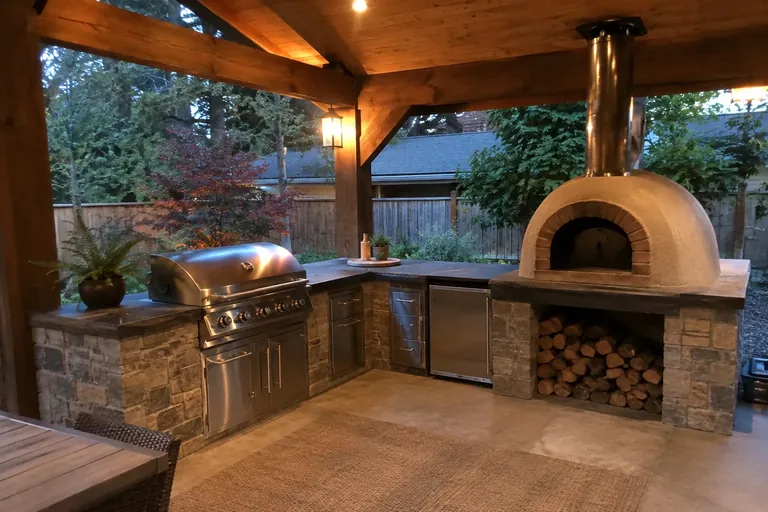
Pizza ovens and built-in grills with closed, vented island bases that keep rodents out and stand up to rain.
Learn more →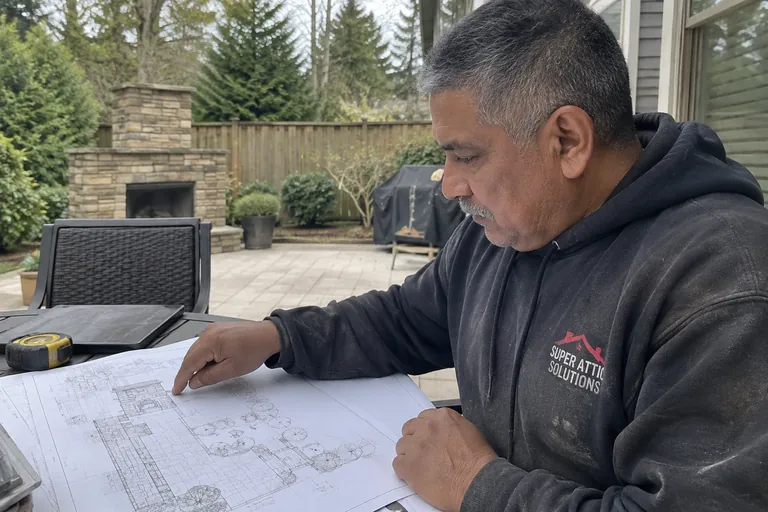
Fireplace and outdoor living projects planned with you for placement, venting and gas, then built by our crew.
Learn more →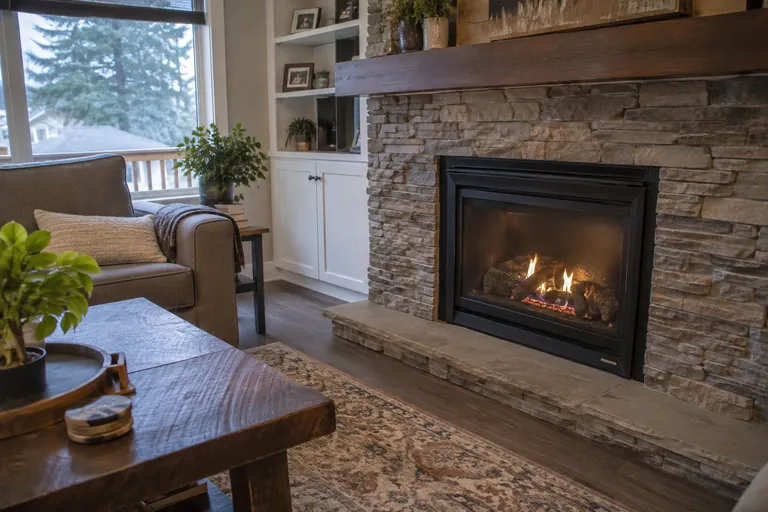
New fireplaces and inserts, yearly service, and insulation for the cold, drafty chase behind them.
Learn more →Book a free inspection. We'll photograph your attic and crawl space and walk you through what we find, before you decide anything.