

Attic services
Attic decontamination
Biohazard cleanup after rodents and animals: waste removed, framing disinfected, odor treated at the source.
Learn more →Attic & crawl space mold remediation · Seattle
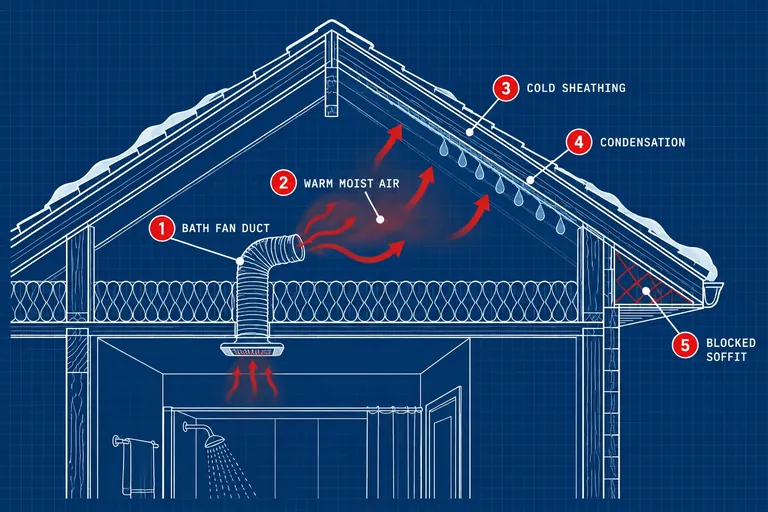
We remove mold from attic sheathing and crawl space framing under containment, treat the wood, and fix what caused it: bath fans venting into the attic, blocked soffit vents or a wet crawl space.
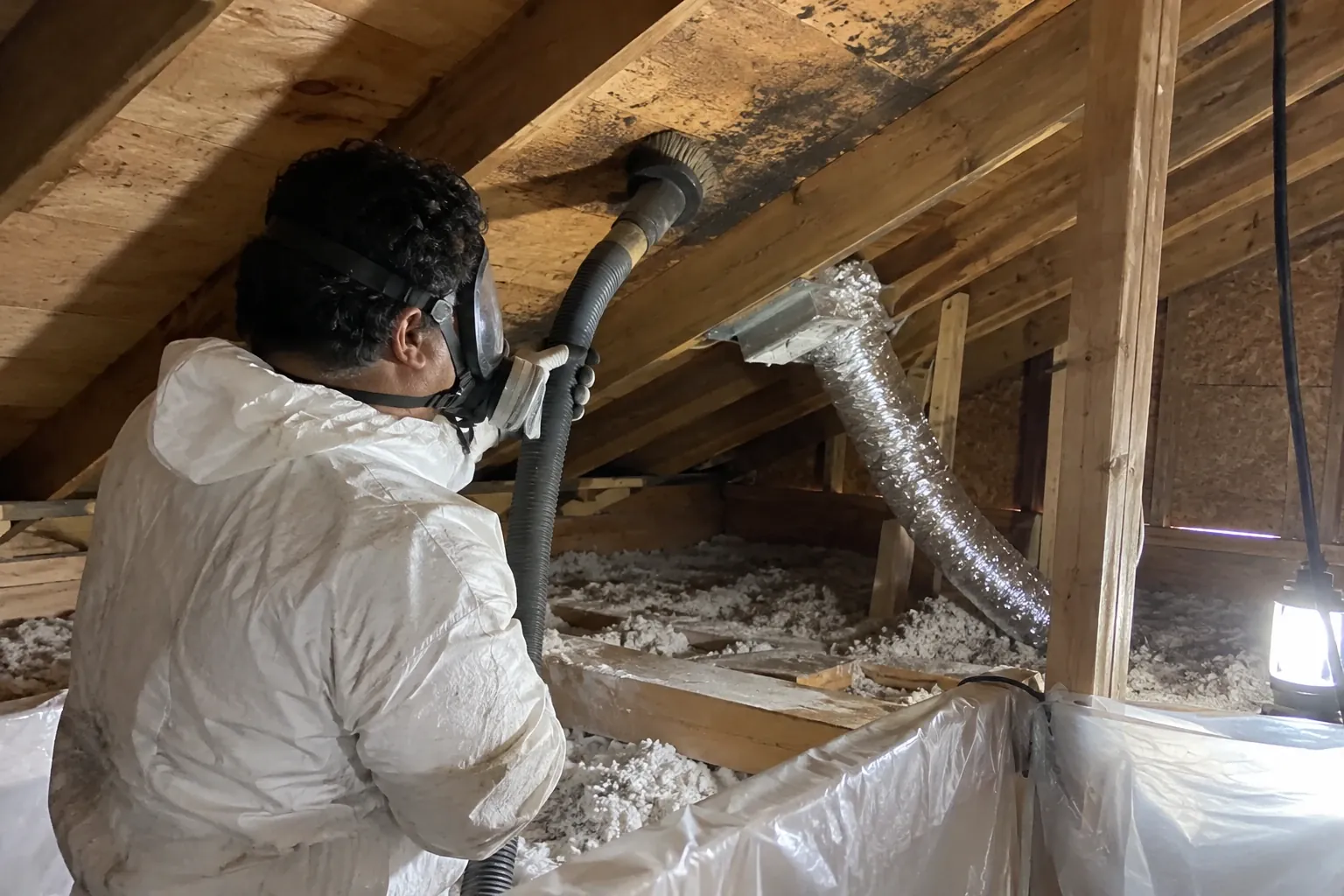 Removing mold from attic roof sheathing · Federal Way, WA
The problem
Mold on wood needs moisture for a long stretch. In an attic, that usually comes from warm, damp air from the house reaching cold roof sheathing in winter and condensing. Bathroom fans that blow into the attic instead of outside are the most common culprit we find. Others are soffit vents buried under insulation, gaps around ceiling lights and the attic hatch, and a dryer vent that came loose. The result is gray or black spotting on the underside of the roof deck, often worst on the north side.
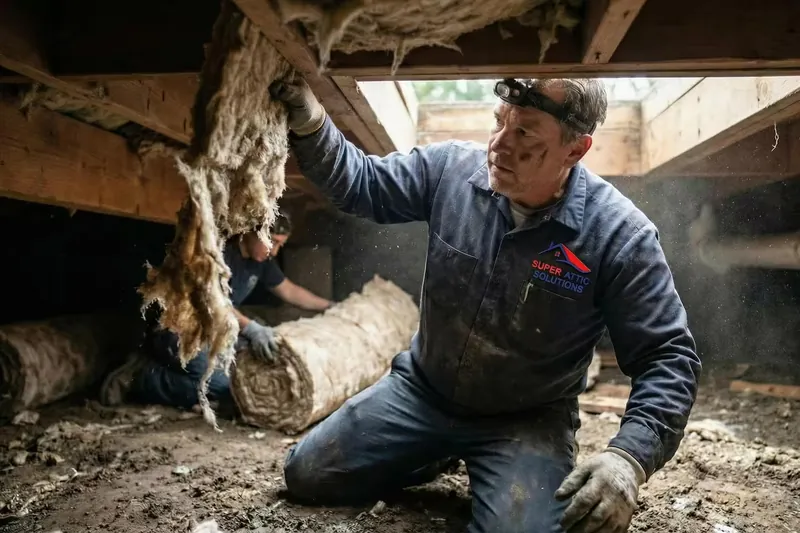
In crawl spaces, mold grows on joists, subfloor and sill plates when ground moisture or a leak keeps the wood damp. Torn ground cover, wet batts and poor ventilation are the usual setup. Either way, cleaning the mold without fixing the moisture means it comes back. Our remediation always has two halves: remove and treat the growth under containment, then correct the moisture source so the wood can stay dry from here on.
Warning signs
Some of these you'll spot from the attic hatch. Others show up in an inspection or a home sale.
Gray or black staining on the underside of the roof deck, often worst on the north slope, is the classic attic mold pattern.
Frost on the sheathing, or rusty, dripping nail tips on cold mornings, means warm house air is condensing in the attic.
If a bath fan duct ends in the insulation or near a vent, its moist air has been going straight into the attic.
White or dark growth on joists and subfloor points to high humidity or a leak under the house.
An earthy odor when you open the attic hatch or crawl space access often comes before visible growth.
Attic and crawl space mold is often first called out in a pre-sale inspection report, and buyers will ask about it.
Proof of work
Drag the slider to compare. Illustrations of typical results on homes like yours.
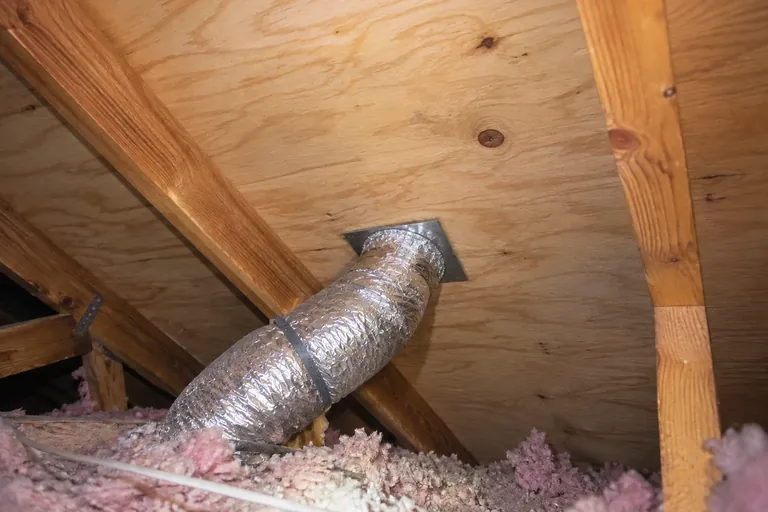
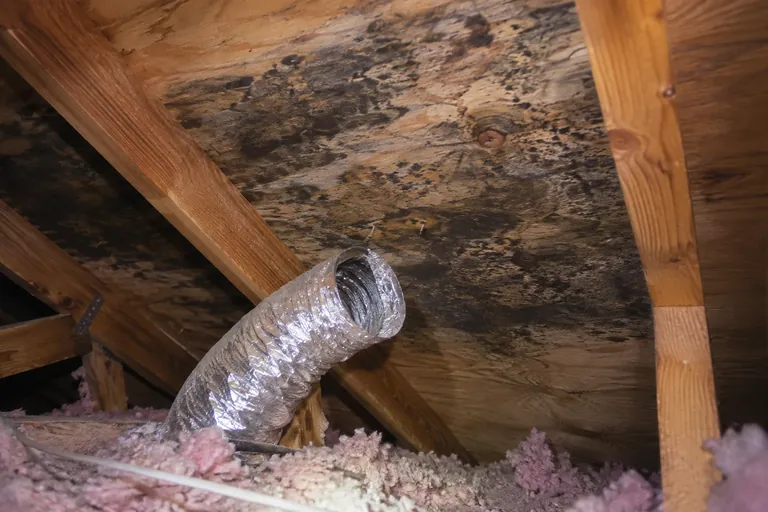 BeforeAfter
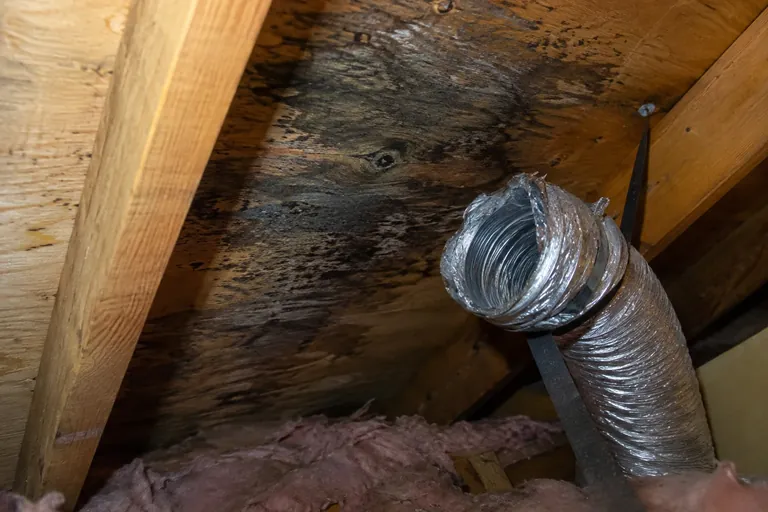 STEP 01
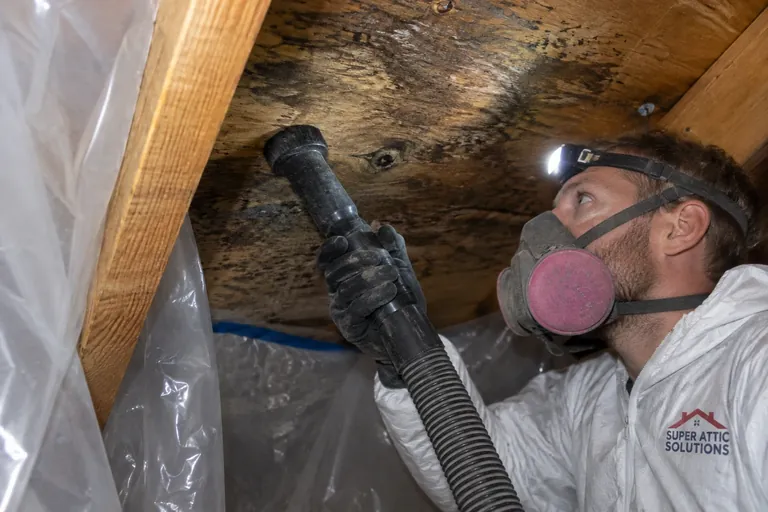 STEP 02
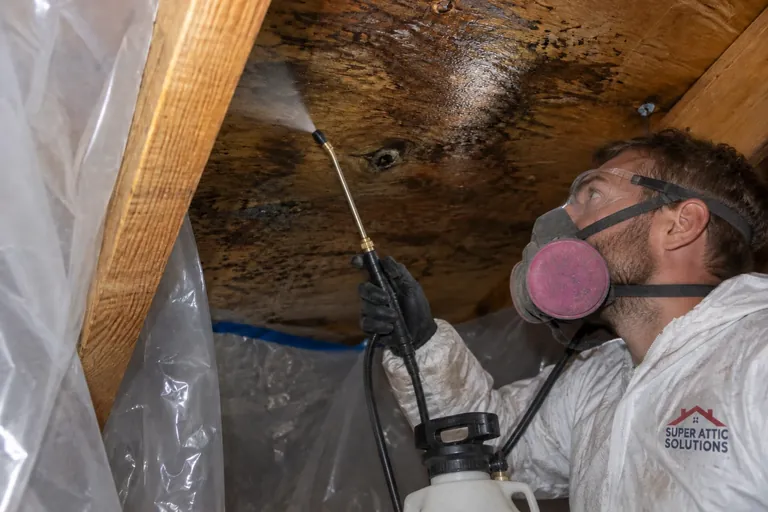 STEP 03
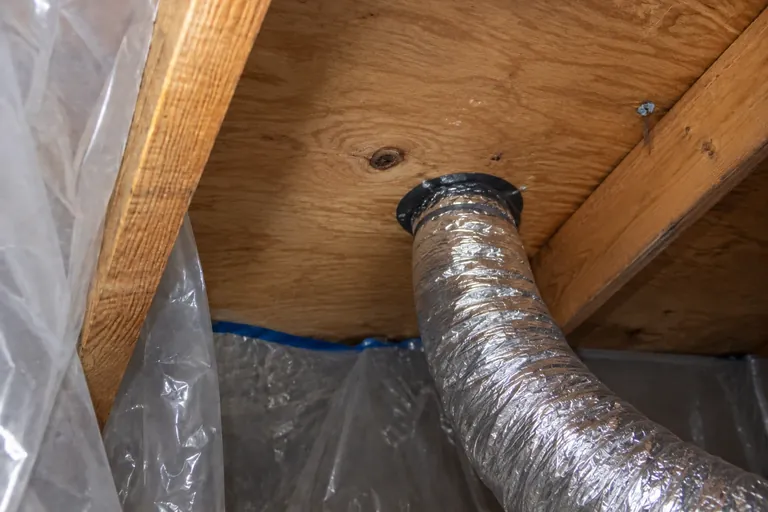 STEP 04
How we do it
Containment first, removal second, and the moisture fix before we call it done.
We go into the attic and crawl space and photograph every affected area. We look for the moisture source: bath fan ducts, blocked soffit vents, air leaks from the house, roof leaks, crawl space ground cover and plumbing. You get photos and a plain explanation of what's causing the growth, along with a scope that covers both the cleanup and the fix.
Before any cleaning, we isolate the work area. The attic hatch or crawl space access is sealed off with plastic sheeting, and an air filtration machine runs during the work to keep dust contained. Our crew wears protective suits and respirators. Hallways and paths are covered so nothing gets tracked through your living space.
Mold-damaged insulation is bagged and removed. Affected wood is cleaned by HEPA vacuuming, scrubbing or sanding, depending on how deep the growth goes. Badly damaged sheathing or framing gets flagged for replacement. Every surface we clean is vacuumed again so loose material doesn't settle back onto clean wood or new insulation.
Cleaned wood is treated with an antimicrobial product, and we tell you exactly what we use and where. Old staining can remain after cleaning, so where it helps, we coat the treated area with a mold-resistant sealant that covers the stain and protects the wood surface. You see photos of the treated surfaces before anything covers them.
This is the step that keeps the mold from returning. We reroute bath fan ducts to a proper exterior vent, clear and baffle blocked soffit vents, air seal gaps around lights and hatches, and replace insulation. In crawl spaces, that means a new ground cover, wet batts removed and vents screened. You get after photos of every fix.
What you get
| Inspection | Free attic and crawl space inspection with photos of all growth |
|---|---|
| Containment | Access sealed with plastic sheeting; air filtration during the work |
| Insulation | Mold-damaged insulation bagged and removed |
| Wood cleaning | HEPA vacuuming, scrubbing or sanding, based on the growth |
| Treatment | Antimicrobial applied to cleaned wood; product named for you |
| Sealant | Mold-resistant coating over stained areas where it helps |
| Moisture fix | Bath fan ducts, soffit vents, air sealing or crawl space barrier |
| Photos | Before, during and after photos of every treated area |
Compare
Spraying a product on moldy sheathing changes how it looks for a while. It doesn't change why it grew.
| Factor | Spray-only treatment | Full remediation |
|---|---|---|
| Growth removed | No, sprayed in place | Cleaned off the wood, then treated |
| Containment | Often none | Access sealed and air filtered |
| Damaged insulation | Left in place | Bagged and removed |
| Moisture source | Not addressed | Found and fixed |
| Likely result | Growth can return the next winter | Wood can stay dry once the cause is fixed |
Puget Sound homes
Mild, wet winters are the setup. For months, outdoor air is cool and damp, roof sheathing stays cold, and the house inside is warm and full of moisture from showers, cooking and drying laundry. When that indoor air leaks into the attic through bath fans, recessed lights, top plates and the attic hatch, it condenses on the underside of the roof deck. On cold clear nights it frosts, then melts in the morning and soaks the wood. North-facing slopes that never see sun stay wet longest, which is why mold often shows up there first.
We see it across the region: older Seattle homes where insulation was blown over the soffit vents, Eastside houses from the 1970s through the 1990s with bath fans ducted into the attic floor, and homes under tall firs where moss and shade keep the roof cold and damp. Crawl spaces have their own version, driven by bare soil and long wet seasons. In every case, the moisture fix is what makes the cleanup last, and it gets as much of our attention as the mold itself.

Pricing
We price mold work after seeing it. These factors set the scope.
A few sheets of spotted sheathing is a smaller job than a full roof deck or a whole crawl space of joists.
Surface spotting cleans up faster than growth that needs scrubbing or sanding to remove.
Attic insulation over the work area may need to come out and be replaced to reach the sheathing and fix vents.
Rerouting bath fans, opening soffit vents, air sealing or a new ground cover are part of the scope and vary by home.
Low-slope attics, tight crawl spaces and small hatches take more time to set up and work in.
The company was quick to respond and send out Ron. Ron was great in communicating the issues we were having in our crawlspace. Had showed us the pictures of the crawl space and was able to get us booked the very next day. The crew was fantastic and worked throughout the day. The bonus was they were also able to take a handful of containers to the dump to assist saving us a dump run.
FAQ
Still unsure? Call (800) 674-4933 and talk it through with us.
Almost always because warm, moist air from the house is reaching the cold roof deck and condensing. The usual paths are bath fans that vent into the attic, gaps around recessed lights and the attic hatch, and soffit vents blocked by insulation, which cut off the airflow that would dry things out. A roof leak can do it too, but that usually leaves a localized stain rather than spotting across the deck.
We don't recommend it. Bleach does little on raw wood, it adds moisture, and it does nothing about the reason the mold grew. Spraying chemicals in a cramped attic without protection is also unpleasant and risky for the person doing it. The growth needs to be cleaned off the wood, the area treated, and the moisture source fixed.
It shouldn't, once the moisture source is fixed. Mold on wood needs moisture over a long period to grow, so once bath fans vent outside, soffit vents breathe and air leaks are sealed, the sheathing can dry out and stay dry. That's why our remediation always includes the moisture fix. Skipping it is the main reason mold returns, often the very next winter.
Usually not. Most attic mold is surface growth that can be cleaned and treated in place. Sheathing only needs replacing when the wood itself is soft, delaminated or rotted, which tends to happen after long-term leaks. We check for that during the inspection and tell you which sections, if any, need replacing. If the roof is being redone anyway, that's the time to swap damaged sheets.
It often comes up. Home inspectors routinely look in attics and crawl spaces, and visible mold on sheathing tends to make it into the report. Having it remediated, with the cause fixed and before-and-after photos on hand, gives you clear answers when buyers ask. If you're preparing to list, call us early so the work doesn't crowd your timeline.
Yes. Crawl space mold on joists, subfloor and sill plates is handled the same way: containment at the access, removal of moldy insulation, then cleaning and treating the wood. The moisture fix is different. Under the house, it usually means a new ground cover, screened vents and getting roof water away from the foundation. In some homes, encapsulation is the right long-term answer.
Related services
Biohazard cleanup after rodents and animals: waste removed, framing disinfected, odor treated at the source.
Learn more →
A full moisture plan for your crawl space: barriers, vents, gutters, downspouts and drainage clues.
Learn more →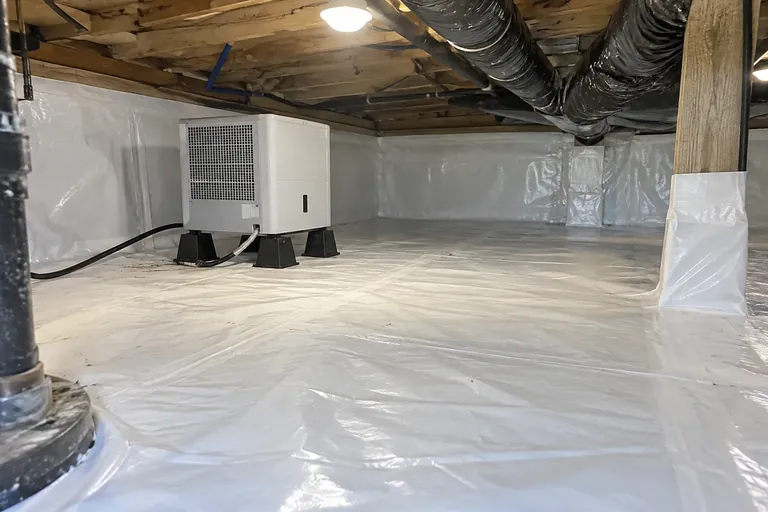
A sealed liner on floor and walls, vents closed, a dehumidifier running. Recommended only where it pays off.
Learn more →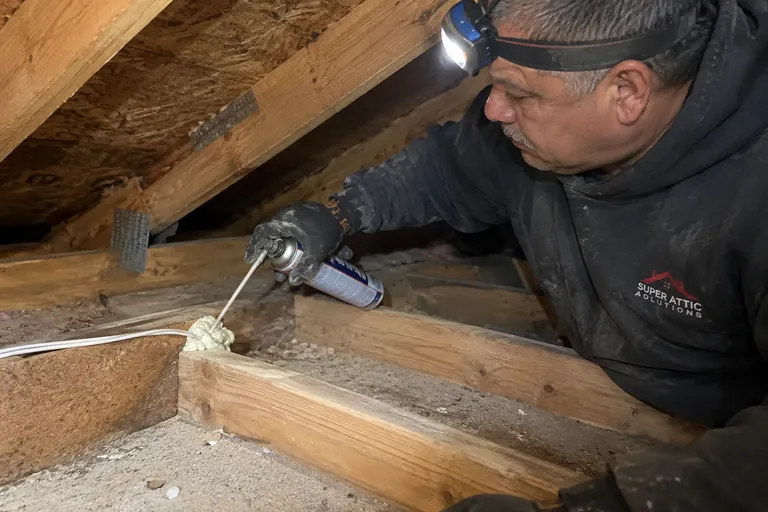
Sealing top plates, can lights, bath fans and chases from the attic side before new insulation goes in.
Learn more →Book a free inspection. We'll photograph your attic and crawl space and walk you through what we find, before you decide anything.