
Rodents & pests
Rodent proofing
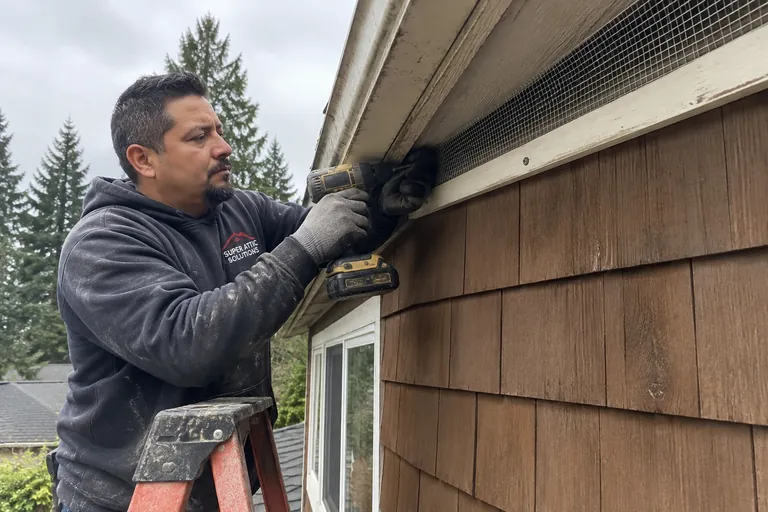
We find every gap rats and mice use, from roof vents to crawl space, and seal it with metal.
Learn more →Multi-family rodent control · Seattle & Puget Sound
Rats in one unit usually means rats in the shared attic, the crawl space and the walls between. We trap, seal every entry point across the building and give you a photo report for the owner or board.
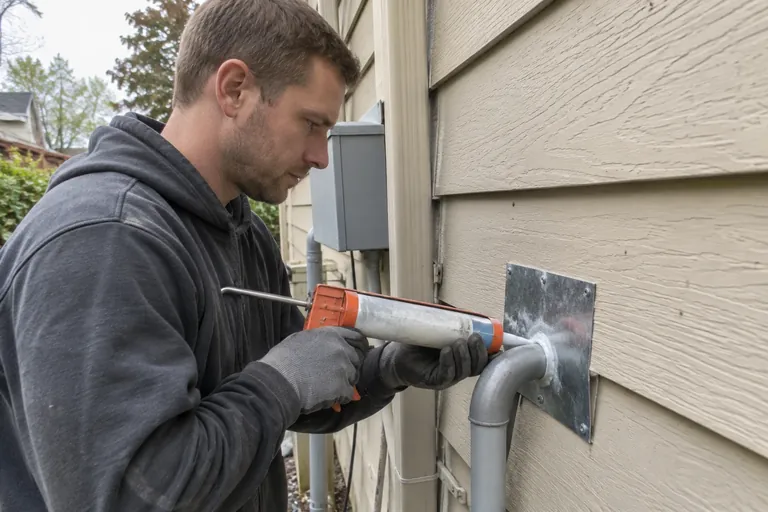
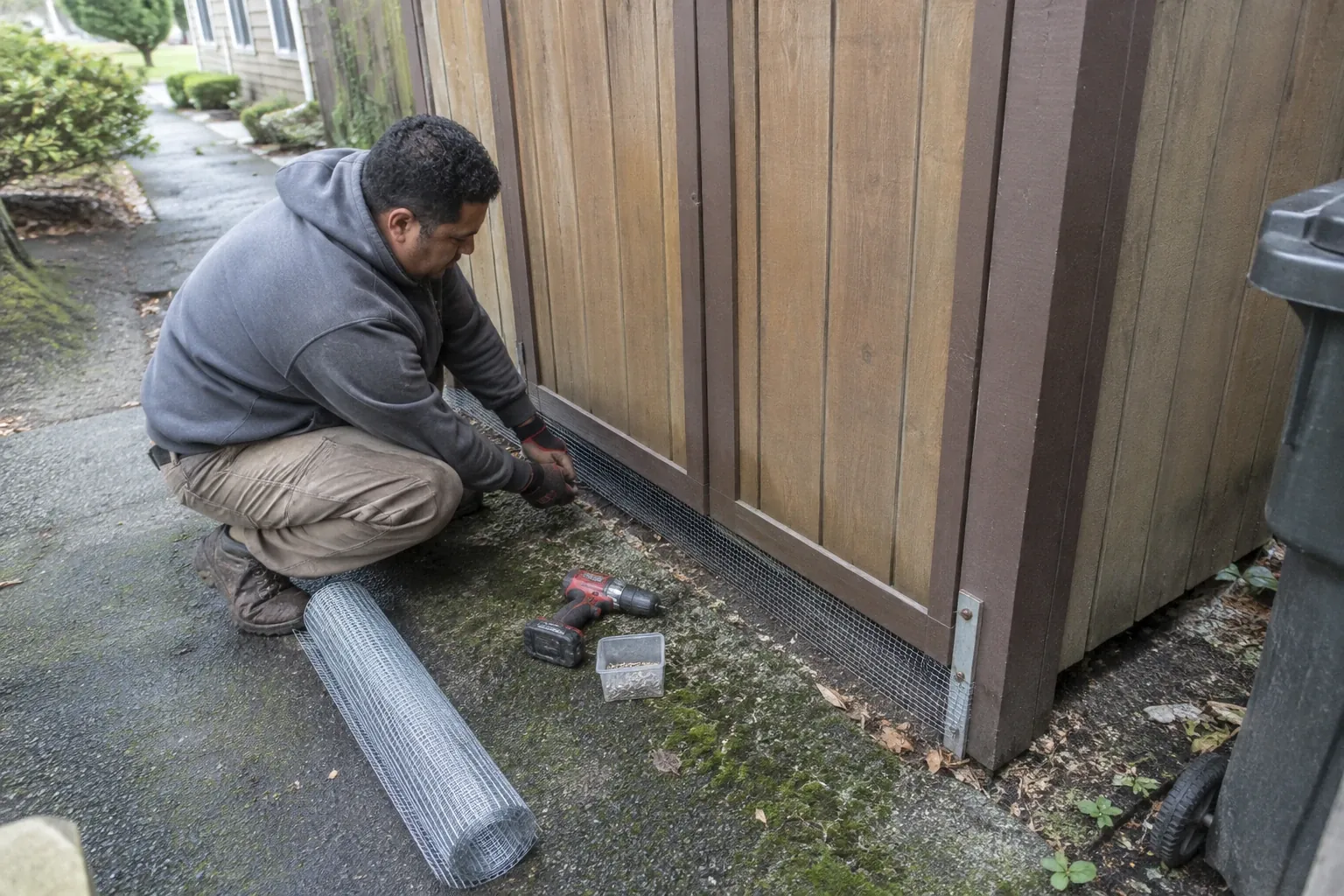 Sealing rodent entry at an apartment building trash enclosure · Lake Stevens, WA
The problem
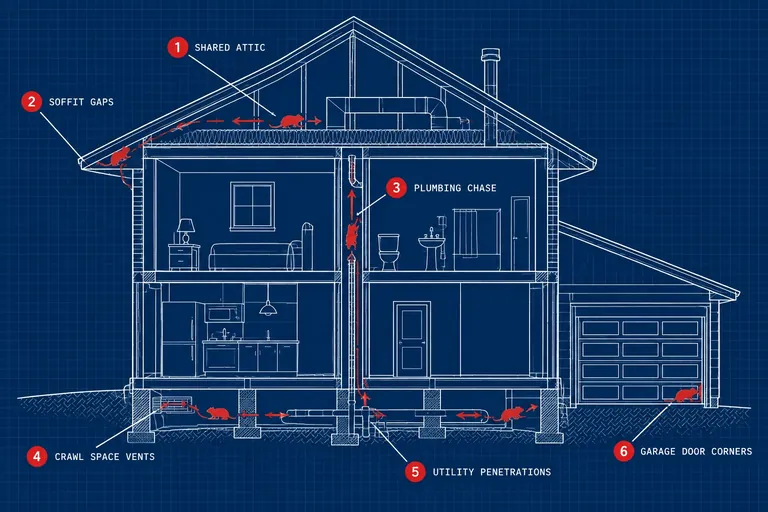
Rats and mice don't respect unit lines. A roof rat that gets in at a soffit gap above unit 4 can nest in the shared attic, drop down a plumbing chase and turn up in the kitchen of unit 2. Treat only the unit that called, and the activity moves next door. Then the next tenant calls, and you end up paying for the same problem twice.
We work the whole structure. That means the shared attic, the crawl space, the garage line, the utility penetrations and the exterior envelope, mapped against the units that reported noise or droppings. You get one plan that covers trapping, sealing and cleanup, scheduled around your tenants, with photos of what we found, where it was and every gap we closed.
Warning signs
Tenant reports are your early warning. These patterns point to a building-wide rodent issue.
Noise or droppings in two or more units, especially stacked or side-by-side ones, usually means rodents are traveling through shared framing.
Night noise from top-floor tenants points to the shared attic. Roof rats are climbers and favor high nesting spots.
Common storage, laundry rooms and carports give rodents food, cover and a path into the building.
Chewed cable, wire sheathing or foam pipe wrap in a crawl space or utility closet is a sign of steady activity.
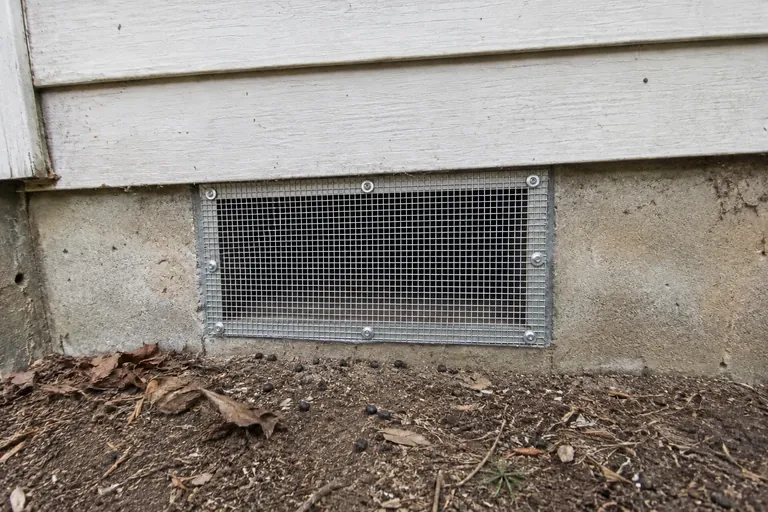
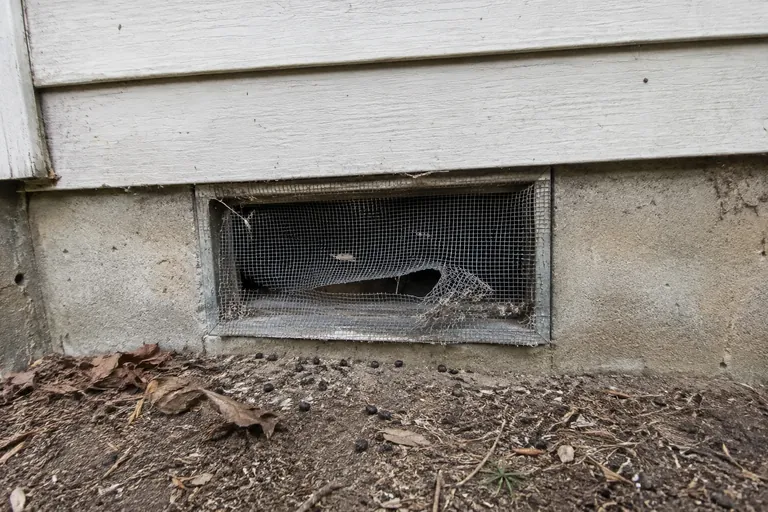
Torn vent screens, open soffit gaps and gaps where siding meets the foundation are open doors on older buildings.
If units keep reporting rodents after an earlier treatment, the entry points were likely never sealed.
Proof of work
Drag the slider to compare. Illustrations of typical results on homes like yours.
 BeforeAfter
 STEP 01
 STEP 02
 STEP 03
 STEP 04
How we do it
The same method we use on houses, scaled to a building with tenants living in it.
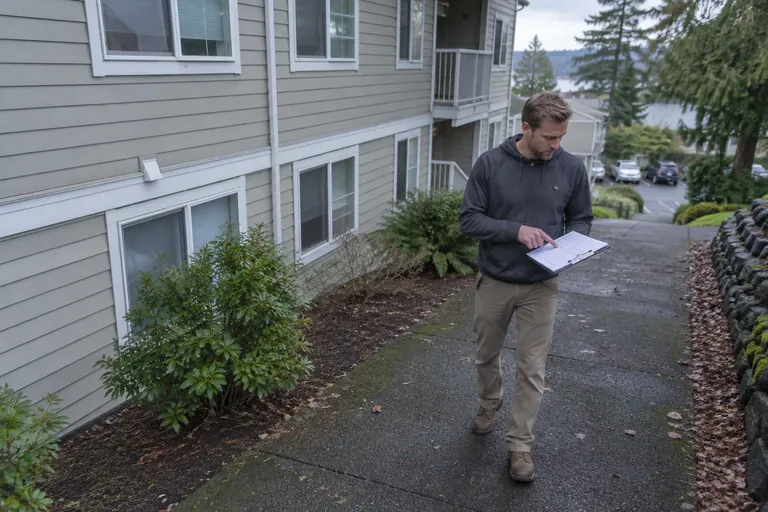
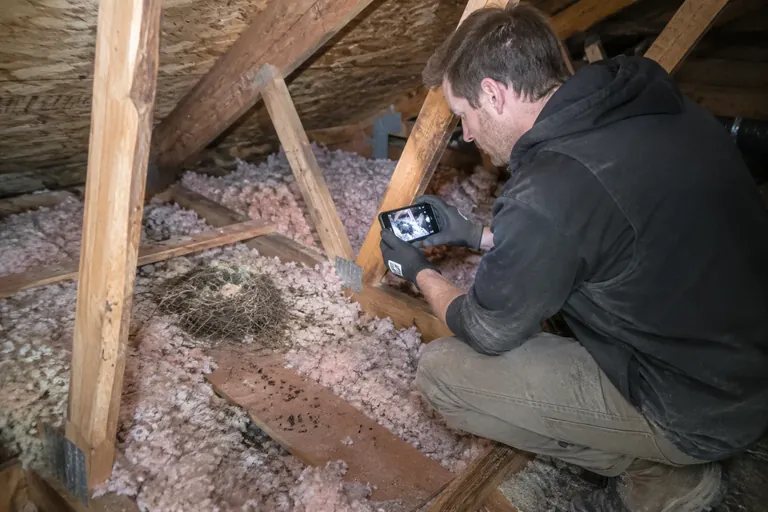
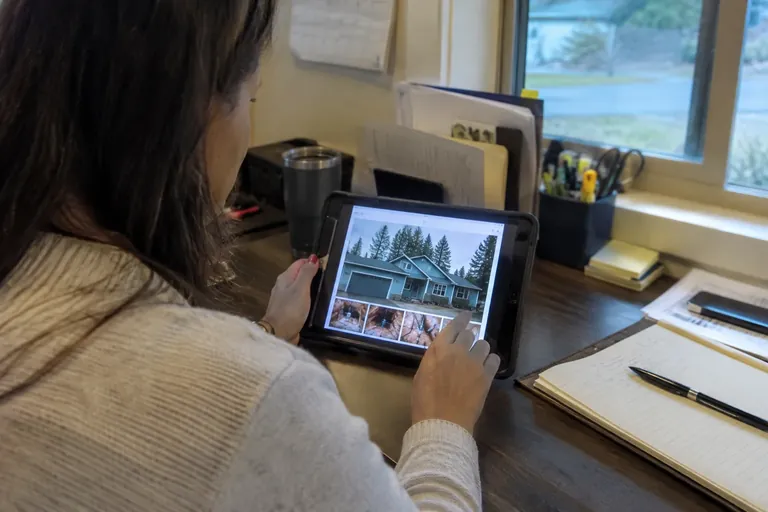
We start with the exterior, the roofline, the crawl space and any shared attic, then the units with reports. You or your maintenance lead can walk with us. We photograph droppings, runways, nests and every gap we find, and mark each one on a site plan so you can see where the problem lives.
Before work starts we agree on which units we need to enter, in what order and on which days. You get the dates, unit list and time windows you need for written tenant notices, so tenants know when the crew is coming and what to expect. Much of the work happens in attics, crawl spaces and outside.
We set traps in the shared attic, the crawl space and along runways, and check them on a schedule we set with you. Removed rodents are bagged and taken off site. We tell you exactly what we use and where it goes, so you can answer tenant questions with facts instead of guesses.
As activity drops, we close the gaps: vent screens, soffit and fascia gaps, utility and pipe penetrations, garage door corners, foundation vents and roof returns. Materials are chosen for each spot, such as hardware cloth, sheet metal and sealant. Each sealed point is photographed for your records.
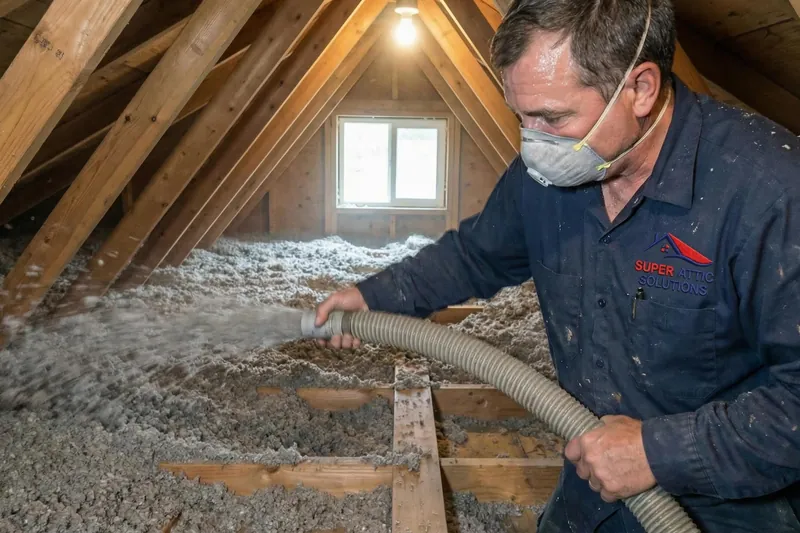
Where droppings and nesting have soiled insulation, we remove and dispose of it and can replace it. You get a written summary with photos, a list of sealed entry points and any building issues we noticed along the way, ready to pass to the owner or the HOA board.
What you get
| Areas covered | Exterior envelope, shared attics, crawl spaces, garages, utility chases, reported units |
|---|---|
| Inspection | Full walk of the building with photos of activity and every entry point |
| Removal | Trapping in attics, crawl spaces and runways, with follow-up checks |
| Exclusion | Vents, penetrations, soffit and foundation gaps sealed with materials suited to each spot |
| Tenant coordination | Unit list, schedule and access details for your tenant notices |
| Cleanup | Droppings, nesting and soiled insulation removed where needed |
| Reporting | Photo report and sealed-point list for owners, managers or HOA boards |
| Phasing | Work can be split by building, wing or stack to fit occupancy |
Compare
Both have a place. Here is how they differ on a multi-family property.
| Factor | Unit-by-unit | Whole-building |
|---|---|---|
| Best for | A detached unit or an isolated mouse issue | Shared attics, crawl spaces or reports from several units |
| Entry points | Only those near the reported unit | Every gap across the exterior, roof and foundation |
| Tenant disruption | Repeat visits as activity moves | One planned schedule with notices up front |
| Records | Separate notes for each call | One photo report covering the whole property |
| Recurrence | Activity often shifts to the next unit | Entry points closed across the building at once |
Puget Sound homes
Roof rats and Norway rats are the two common rats here, and multi-family buildings give both what they want. Roof rats climb ivy, laurel hedges and utility lines to reach soffits and shared attics. Norway rats work at ground level, through crawl space vents, garages and dumpster enclosures. Our wet season, from October to May, pushes both indoors looking for dry nesting. Older Seattle walk-ups on vented crawl spaces and Eastside condo complexes from the 1970s through the 1990s, with long shared attics, are typical examples.
Landscaping matters on these properties. Dense shrubs against the siding, branches hanging over the roof and blackberry along a back fence give rodents cover right up to the building. Dumpster areas with loose lids and gaps under enclosure gates feed them. We note those conditions in the report, building by building, so your landscaping crew and maintenance staff can deal with them alongside our sealing work. Closing the gaps matters most, but taking away the cover and food makes the whole property less inviting.
Pricing
We price each property after the inspection. These are the factors that move the number.
Number of units, buildings and separate attic or crawl space sections all change how much ground we cover.
Older buildings with many vents, penetrations and siding gaps take more sealing work than newer, tighter ones.
Units we must enter, tenant schedules and tight crawl space access affect crew time and phasing.
Heavy droppings and soiled insulation in shared attics add removal, disposal and possibly new insulation.
Larger infestations need more trap checks before sealing is complete.
Great service. I highly recommend this company. Wish I would have found them years ago... Isaac, Kareem and Irving were professional, courteous, and friendly. Pricing was clear and there were no surprises. Very happy with our experience.
FAQ
Still unsure? Call (800) 674-4933 and talk it through with us.
Yes. Multi-family jobs are usually set up through a property manager, an HOA board or the owner. We meet whoever has authority over the building, walk it together and send the estimate and report to that person. If tenants have questions during the work, the crew can answer them on site, but scheduling and scope decisions stay with you.
Not usually. Much of the work happens in shared attics, crawl spaces and outside. We enter units where tenants reported activity, where an attic hatch sits inside a unit, or where an entry point can only be reached from indoors. We list those units in advance so you can send notices and arrange keys.
You send the notices, since you hold the lease relationship. We give you the dates, the units involved, the time window and a short plain-language description of the work. Washington law requires landlords to give tenants written notice before entering a unit, so we set the schedule with enough lead time for that.
Yes. Phasing by building, wing or stack is common on larger properties. We usually recommend starting where reports are heaviest and inspecting neighboring buildings at the same time, because rats move between structures along fences, carports and landscaping. The report shows what we found in each building so you can budget the next phase.
A written summary with photos of droppings, nesting and damage, a list of entry points we sealed with a photo of each, and notes on conditions outside our scope, such as landscaping against the siding or roof repairs. It is written so a board member who never goes into the attic can follow it.
Trapping and sealing are the core of the work. We set traps in attics, crawl spaces and runways, then close every entry point so new rodents can't get in. Before work starts we tell you exactly what we use and where it goes, so you can answer tenant questions and keep a record on file.
Related services
We find every gap rats and mice use, from roof vents to crawl space, and seal it with metal.
Learn more →
Rat removal built for the two spaces they live in: the attic above and the crawl space below.
Learn more →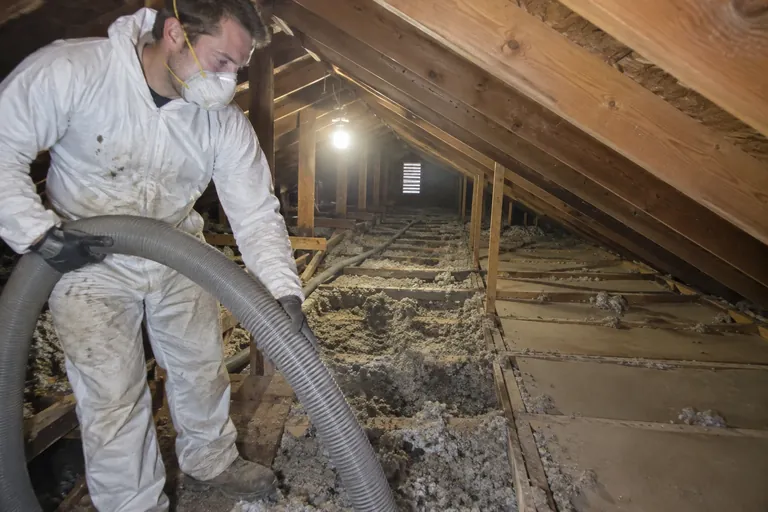
Removal of droppings, soiled insulation and debris from shared attics over apartments, condos and townhomes.
Learn more →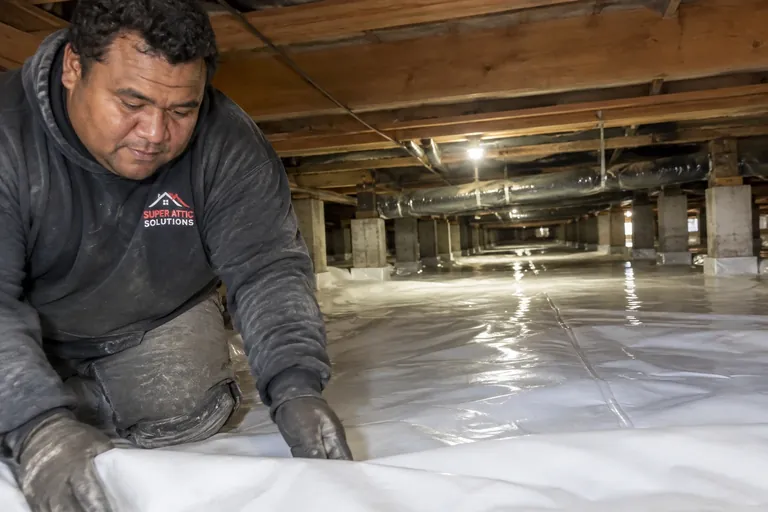
Cleanup, insulation, vapor barriers and encapsulation for crawl spaces under apartments, condos and townhomes.
Learn more →Book a free inspection. We'll photograph your attic and crawl space and walk you through what we find, before you decide anything.