
Crawl space & moisture
Crawl space cleaning
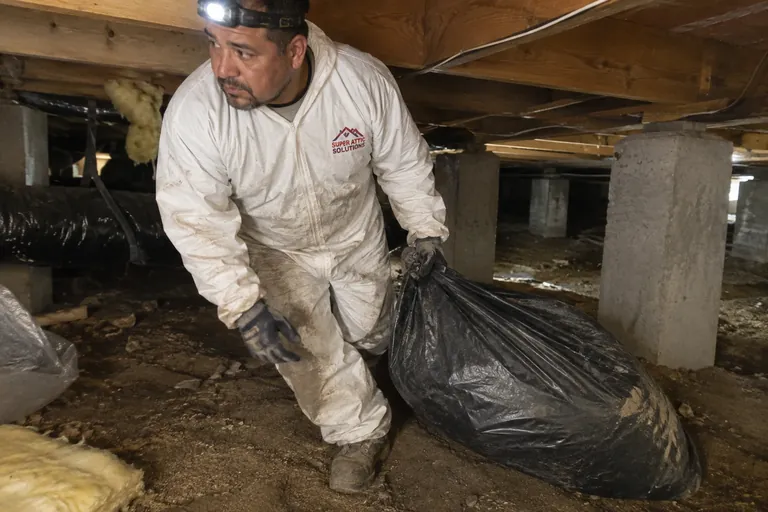
Droppings, fallen insulation, torn plastic and debris bagged and hauled out from under your house.
Learn more →Multi-family crawl space services · Seattle & Puget Sound
Damp soil, torn vapor barrier, fallen insulation and rodent waste under a building reach the units as cold floors, odors and complaints. We clean out, insulate and seal the crawl space, section by section.
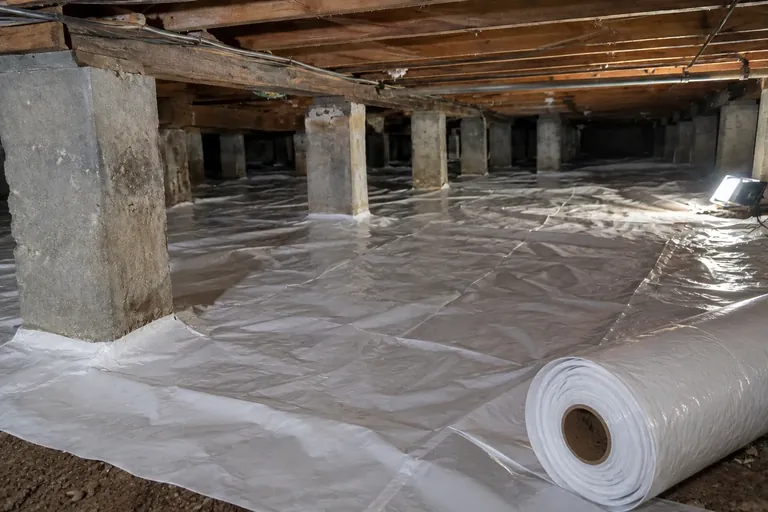
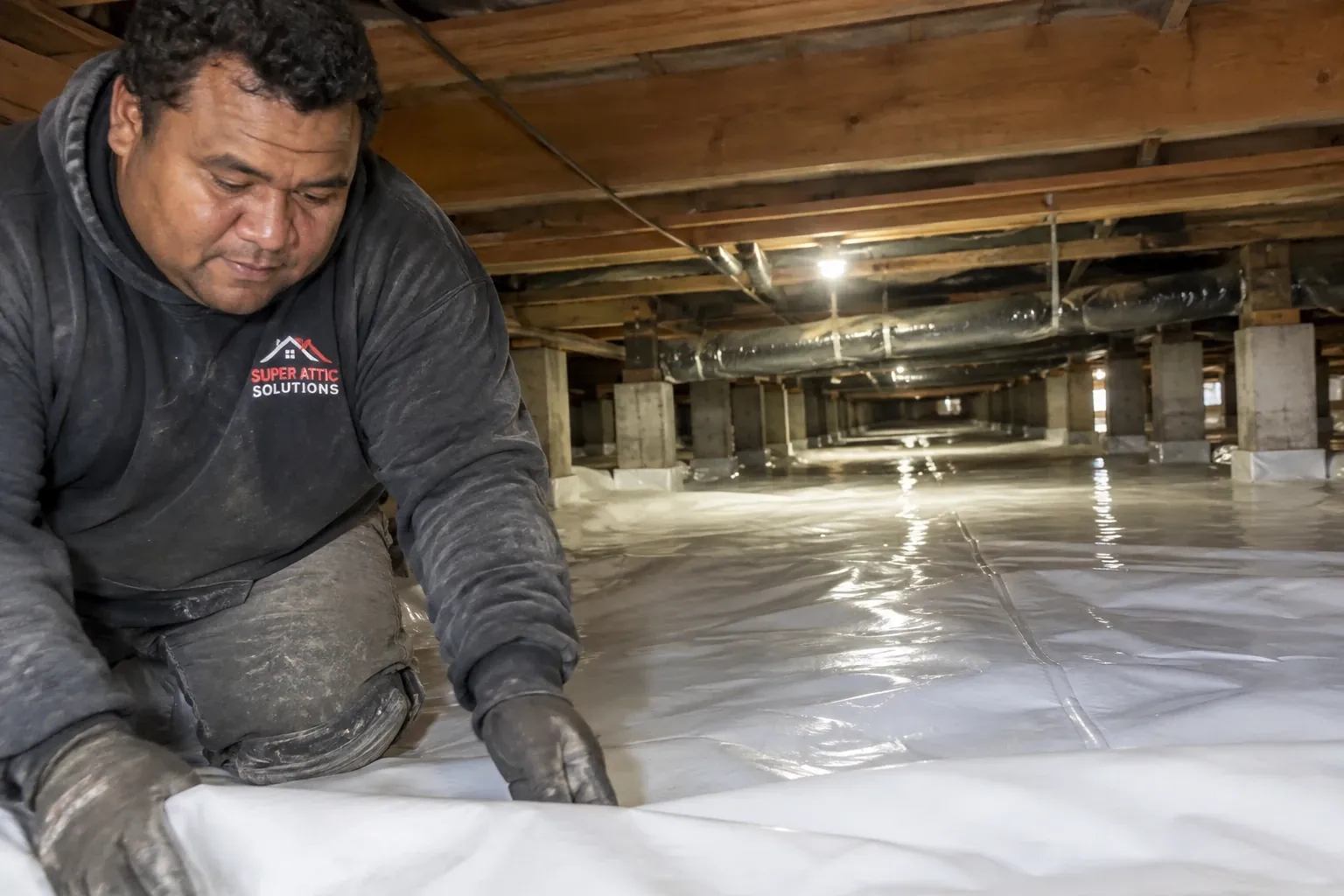 Laying vapor barrier in a condo building crawl space · Olympia, WA
The problem
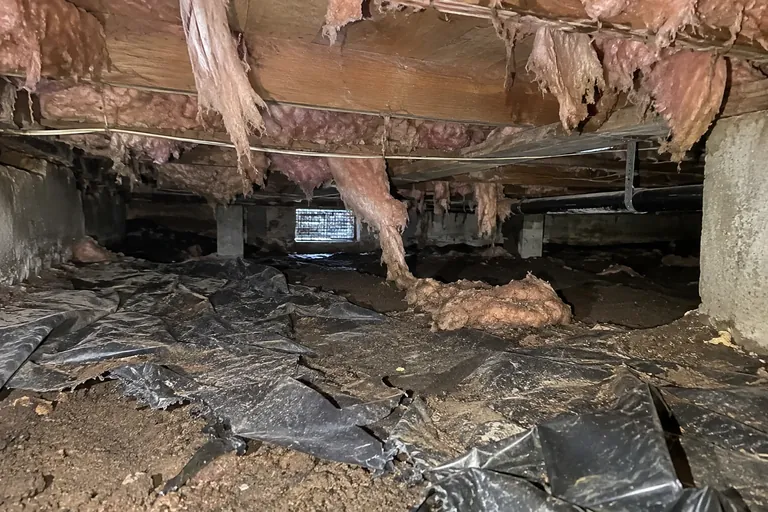
The crawl space under a multi-family building is shared ground. Moisture from the soil, a leaking drain line under one unit, or a rat run along the foundation affects every unit above it. Ground-floor tenants feel it first: cold floors, musty smells in closets, the sharp odor after a rodent dies under the floor. By the time those complaints come in, the vapor barrier is often torn and the insulation is hanging.
We treat the crawl space as one system. We inspect the whole footprint, then lay out a plan that can include cleanup, dead animal removal, rodent sealing, new insulation, a vapor barrier or full encapsulation. You choose the scope and the phasing, and every section is photographed so the owner or board can see the condition under the building without going down there.
Warning signs
Ground-floor complaints and maintenance tickets usually point here first.
Fallen or missing floor insulation leaves the subfloor exposed to cold crawl space air.
Damp soil and wet insulation produce a musty smell that rises into closets and cabinets.
A sharp, lingering smell in one or two units often means a rodent died in the crawl space below.
Exposed soil adds moisture to the crawl space every day of the wet season.
Water after heavy rain points to drainage issues that should be fixed before new barrier goes down.
Droppings, burrows and chewed pipe insulation mean rodents are using the crawl space as a route into the walls.
Proof of work
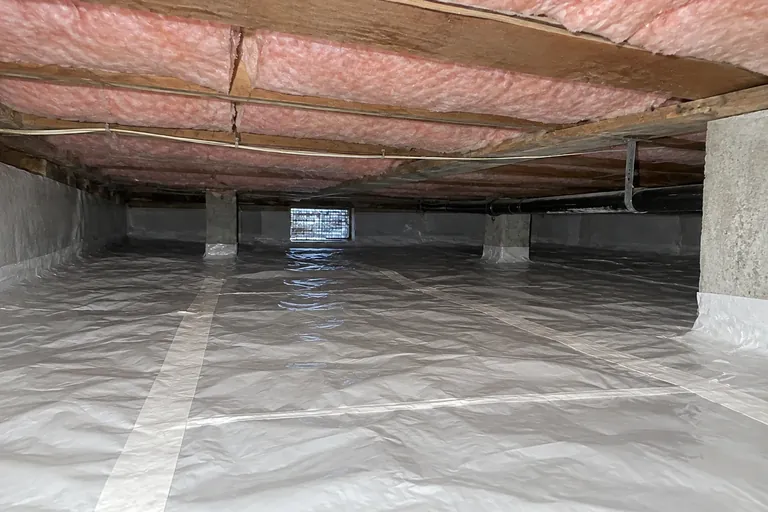
Drag the slider to compare. Illustrations of typical results on homes like yours.
 BeforeAfter
 STEP 01
 STEP 02
 STEP 03
 STEP 04
How we do it
Inspect, clean, deal with moisture, then insulate and seal.
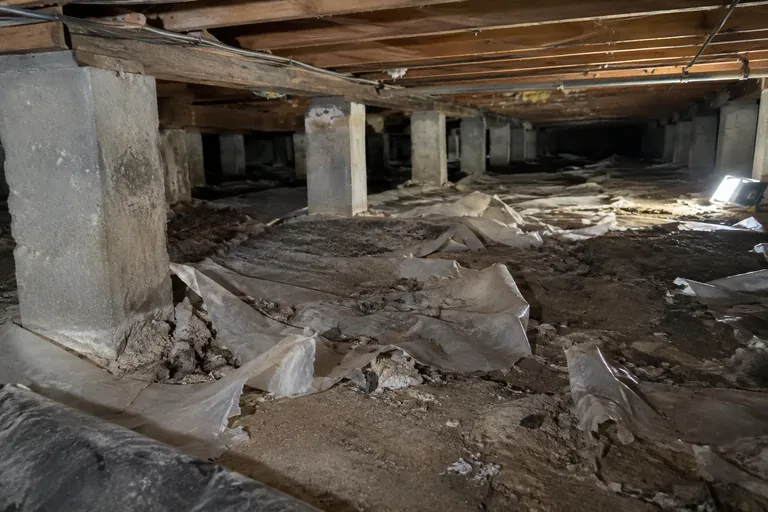
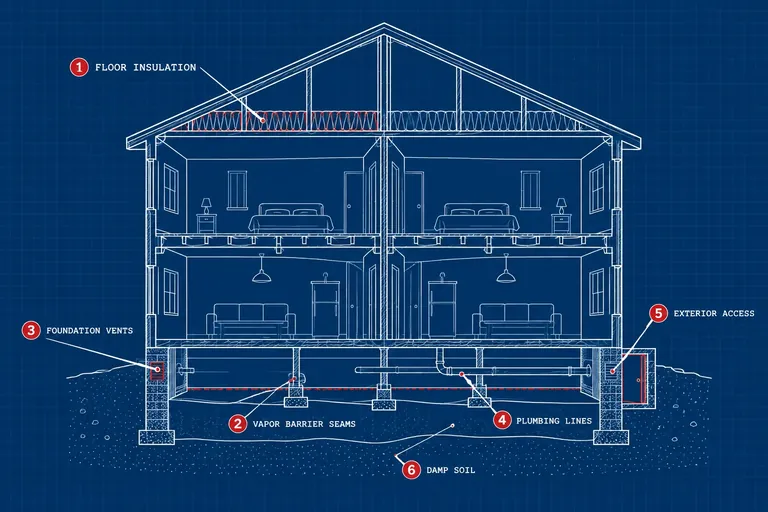
We go through the whole crawl space, not just the section under the complaint. We note soil moisture, standing water, the vapor barrier, insulation, rodent signs, dead animals, plumbing leaks and the condition of foundation vents, and photograph each area against a building plan.
You get a scope broken into options and phases. Most crawl spaces are reached from exterior access points, but some buildings only have hatches inside units or closets. We list those units and the dates we need them, so you can send tenant notices and arrange entry.
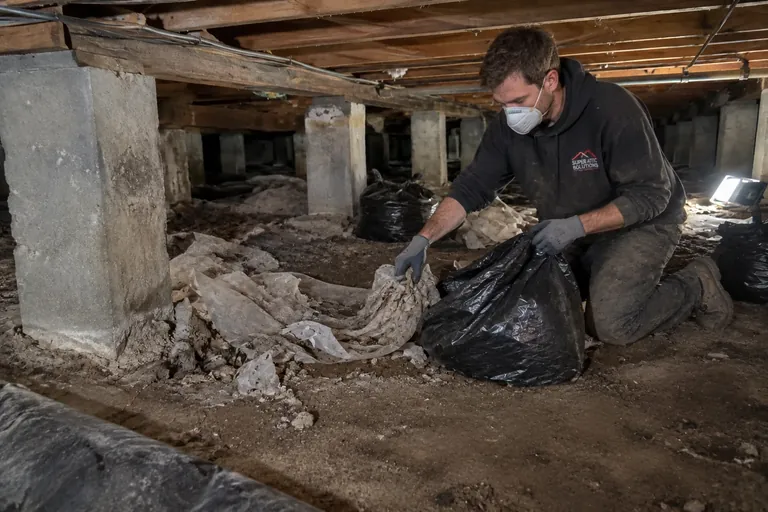
Crew members in protective suits and respirators remove droppings, dead animals, debris, fallen insulation and torn vapor barrier. Material is bagged under the building and carried out through the access. Nothing is swept dry, because rodent droppings can carry hantavirus.
We flag drainage and plumbing issues that need a plumber or landscaper, and handle what's in our scope: sealing foundation vent screens and gaps against rodents, and preparing the soil surface so the new barrier lies flat and stays in place.
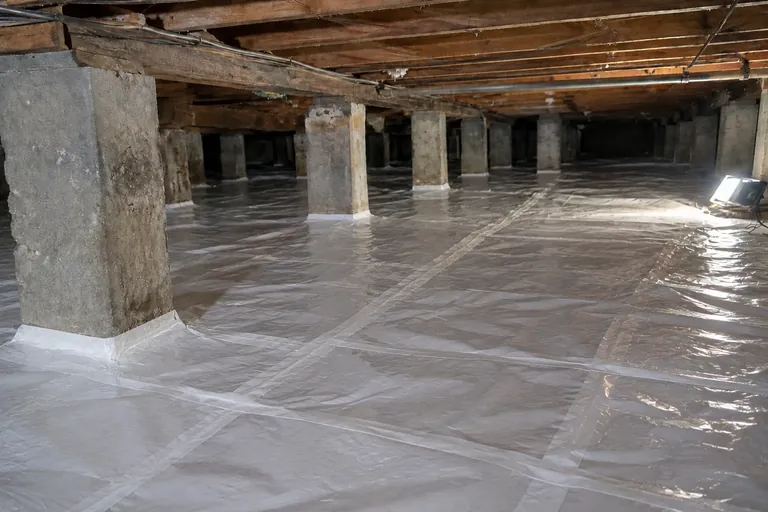
We install new floor insulation between the joists, held firmly in place, then lay a vapor barrier with overlapped, taped seams, or a full encapsulation where that is the chosen scope. Each section is photographed when done, and you get a report for the owner or board.
What you get
| Areas covered | Full crawl space footprint under one or more buildings |
|---|---|
| Cleanup | Droppings, nests, dead animals, debris, fallen insulation, old barrier |
| Rodent exclusion | Foundation vent screens, pipe penetrations and foundation gaps sealed |
| Insulation | Floor insulation between joists, batts or rockwool, held in place |
| Vapor barrier | New ground cover with overlapped, taped seams |
| Encapsulation | Sealed liner up the foundation walls where chosen as the scope |
| Moisture notes | Drainage and plumbing issues flagged for the right trade |
| Reporting | Before-and-after photos of each section, by building |
Compare
Both control ground moisture. Encapsulation goes further.
| Factor | Vapor barrier | Full encapsulation |
|---|---|---|
| What it covers | Ground surface, seams overlapped and taped | Ground and foundation walls, sealed liner |
| Foundation vents | Stay open | Usually closed as part of the system |
| Moisture control | Slows moisture coming up from the soil | Controls ground moisture and humid outside air |
| Best for | Fairly dry crawl spaces with sound framing | Damp crawl spaces or buildings with ongoing odor |
| Scope | Simpler and faster per section | More materials and planning per section |
Puget Sound homes
The Puget Sound is wet from October to May, and crawl spaces feel it. Soil stays damp for months and vented crawl spaces pull in humid outdoor air. Washington code requires a vapor retarder over crawl space soil, and many older apartment buildings and condo complexes have one that is decades old, torn by service techs or missing in sections. Without it, moisture moves into the floor framing and insulation, and the insulation gets heavy, sags and falls onto the soil.
Older Seattle neighborhoods have walk-up apartments and duplex conversions on vented crawl spaces with tight clearance, and many Snohomish and Pierce County townhome communities sit on long, connected crawl spaces. Both share one feature: problems spread under every unit. Doing the whole footprint at once, or in a planned sequence, avoids patching one section while the next one fails. We also look at gutters and downspouts emptying next to the foundation, a common and easily fixed source of crawl space water.
Pricing
Crawl space jobs vary a lot. These factors set the price.
Larger areas and low clearance mean more crew time and slower work per section.
Heavy droppings, dead animals and fallen insulation add removal and disposal.
A new vapor barrier is a smaller job than full encapsulation with sealed walls and vents.
Replacing floor insulation across the footprint adds material and labor.
Exterior access is fastest; hatches inside units add scheduling and floor protection.
Great service. I highly recommend this company. Wish I would have found them years ago... Isaac, Kareem and Irving were professional, courteous, and friendly. Pricing was clear and there were no surprises. Very happy with our experience.
FAQ
Still unsure? Call (800) 674-4933 and talk it through with us.
Usually not. Most multi-family crawl spaces have exterior access points or hatches in common areas. If the only access is inside a unit or closet, we tell you which ones in advance and protect the route. Tenants upstairs may hear the crew below the floor during work hours.
Washington code requires a vapor retarder over the soil in crawl spaces. On older buildings it is often torn, partial or missing. We check the existing barrier across the whole footprint during the inspection and recommend replacement wherever it no longer covers the ground.
It depends on how wet the crawl space is and what you are trying to solve. A new vapor barrier with sealed seams handles ground moisture for many buildings. Encapsulation adds a sealed liner on the walls and controls humid outside air too, which helps damp crawl spaces with ongoing odor. We show you photos and explain the tradeoff.
Yes. Phasing by building is common. We inspect all the crawl spaces you want covered, rank them by condition and write the scope so you can approve one building at a time. The report shows each building separately, so the board can plan and budget the next phases.
Usually a rat or mouse that died in the crawl space or in a wall cavity near the floor. We locate and remove the animal, take out the soiled insulation around it, treat the spot and seal the entry point it used. If more than one unit smells it, we check for activity across the crawl space.
We offer mold remediation, and we look for growth on joists and subfloor during the inspection. Mold under a building is a sign of a moisture problem, so the fix includes the barrier, ventilation or encapsulation, not just cleaning the wood. If we find it, it goes into the scope with photos.
Related services
Droppings, fallen insulation, torn plastic and debris bagged and hauled out from under your house.
Learn more →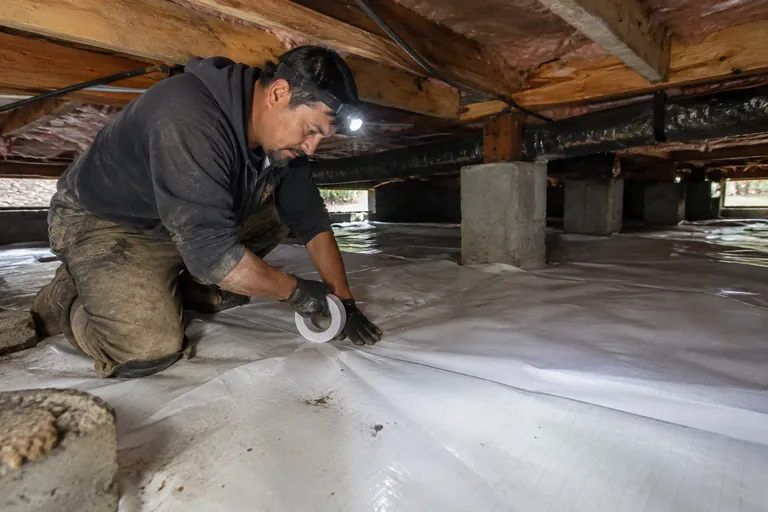
New crawl space ground cover, 6-mil or reinforced, lapped at the seams and run to the foundation walls.
Learn more →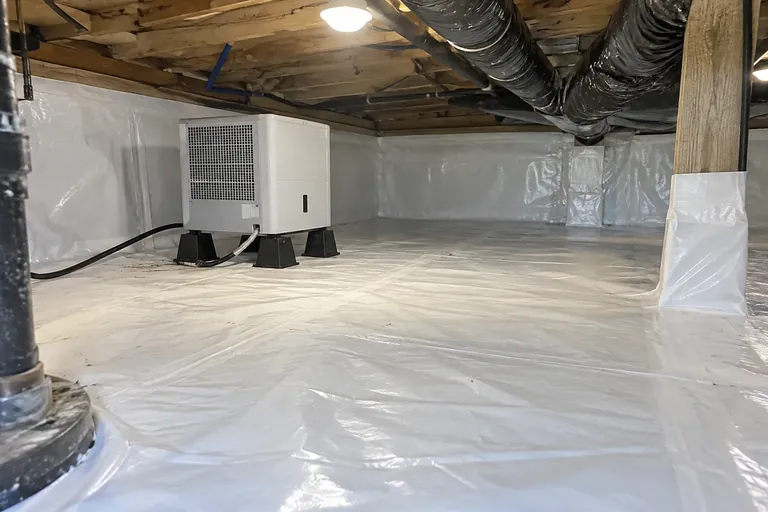
A sealed liner on floor and walls, vents closed, a dehumidifier running. Recommended only where it pays off.
Learn more →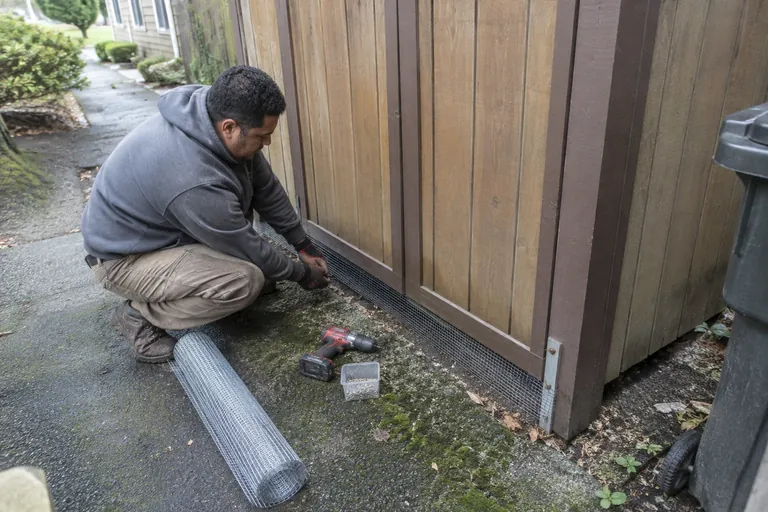
Trapping and sealing across apartments, condos and townhomes, with photo reports for managers and boards.
Learn more →Book a free inspection. We'll photograph your attic and crawl space and walk you through what we find, before you decide anything.