
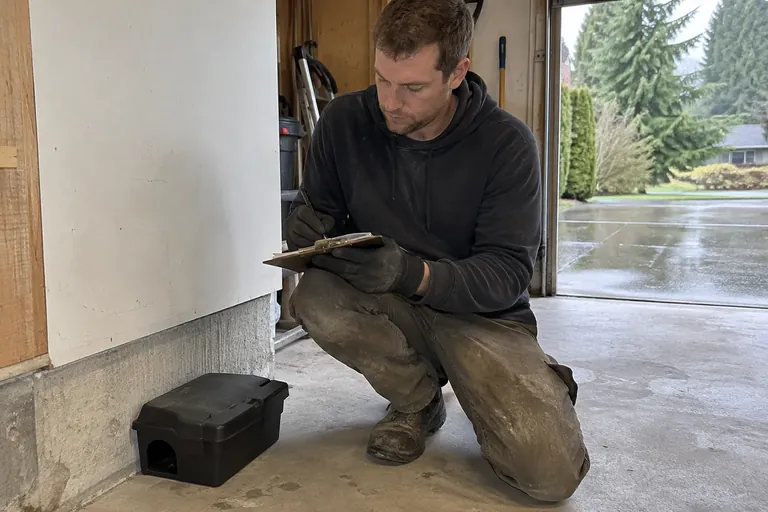
Rodents & pests
Rodent control
A trapping, monitoring and sealing program that runs until rodent activity in your home stops.
Learn more →Rodent removal · Seattle, Eastside & Puget Sound
You hear them at night and you want them gone. We find where they're living, trap them, pull out the nests and droppings, and close the holes they came in through.
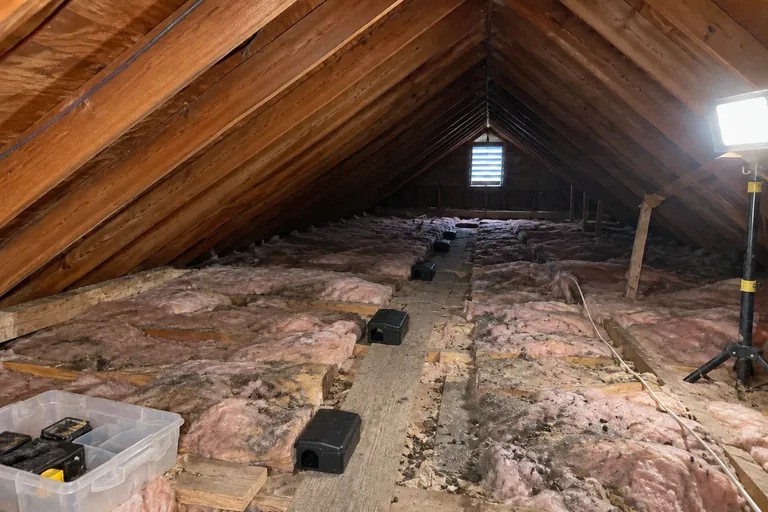
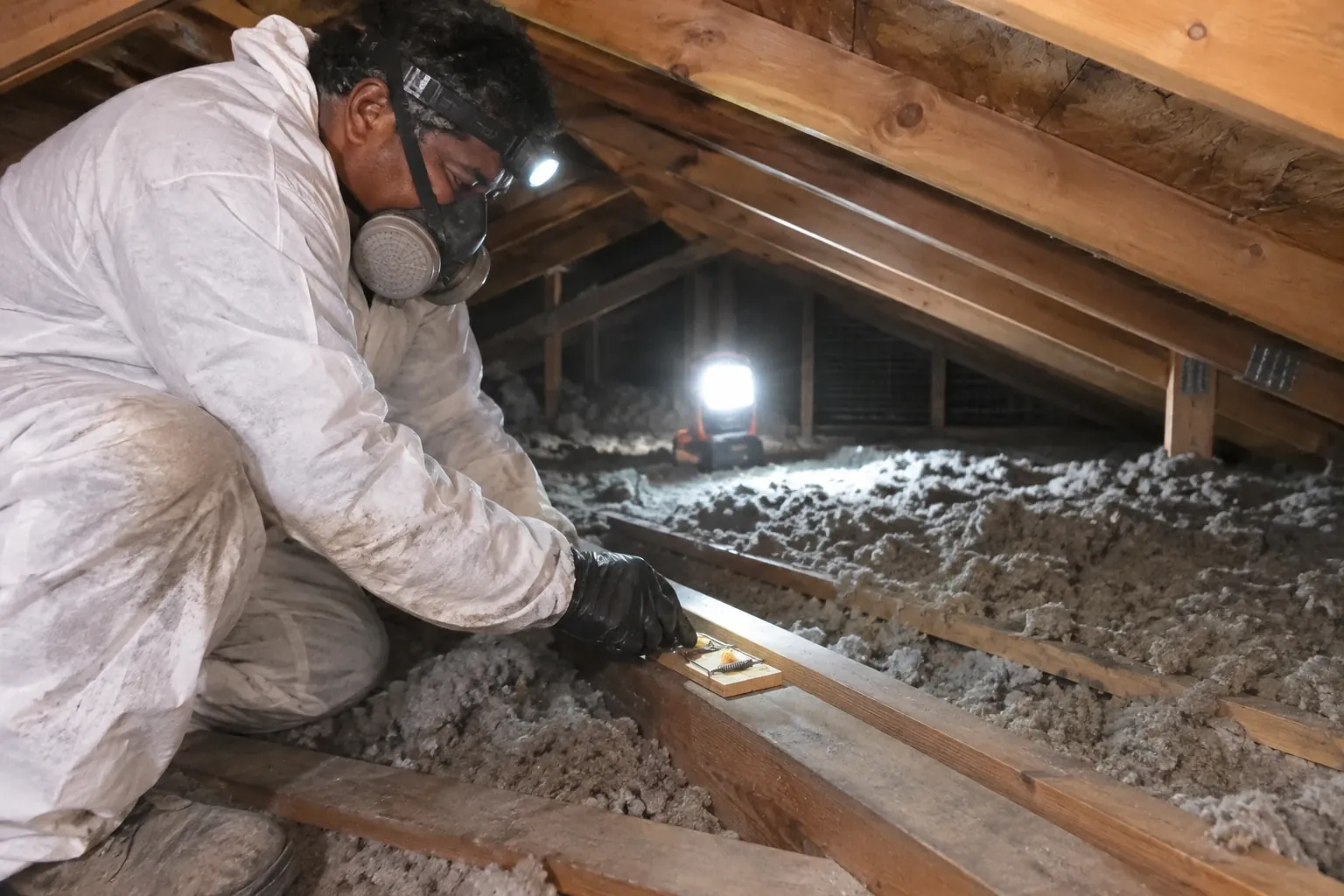 Setting traps along a rafter runway in an attic · Mount Vernon, WA
The problem
Rats and mice are most active after dark. That's when you hear them running along the ceiling joists, chewing inside a wall or rustling in the insulation over your bedroom. By then they have usually found food, water and a warm spot to nest, and they are not leaving on their own. The longer they stay, the more droppings and urine build up, and the more wiring, ductwork and insulation they damage.
Rodent removal is about getting the ones inside out, quickly and completely. That means finding the nest, not just the noise. Rodents move along the same paths every night, so traps placed on those paths work far better than traps set in the middle of the floor. Once the catch slows, we pull out nesting material, bag droppings safely and seal the openings so new rodents don't move into the space they left.

Warning signs
Any one of these is worth a look. Two or more together usually means rodents have moved in.
Rats sound heavier and more like thumping. Mice sound lighter and faster. Both are loudest after dark in ceilings and walls.
Mouse droppings look like dark rice grains. Rat droppings are larger, like a big raisin. Fresh ones are dark and soft.
Torn cereal boxes, nibbled bread bags or scattered pet food in the pantry or garage point to rodents raiding food at night.
Rodents tear up paper, fabric and insulation to build nests. Small piles of shredded material in a hidden corner is a nest site.
Dogs and cats hear rodents before you do. A pet fixed on one spot of wall or ceiling is often tracking movement inside it.
Rodent urine has a strong ammonia smell. It builds up in enclosed spaces like under sinks, in cabinets or near attic hatches.
Proof of work
Drag the slider to compare. Illustrations of typical results on homes like yours.
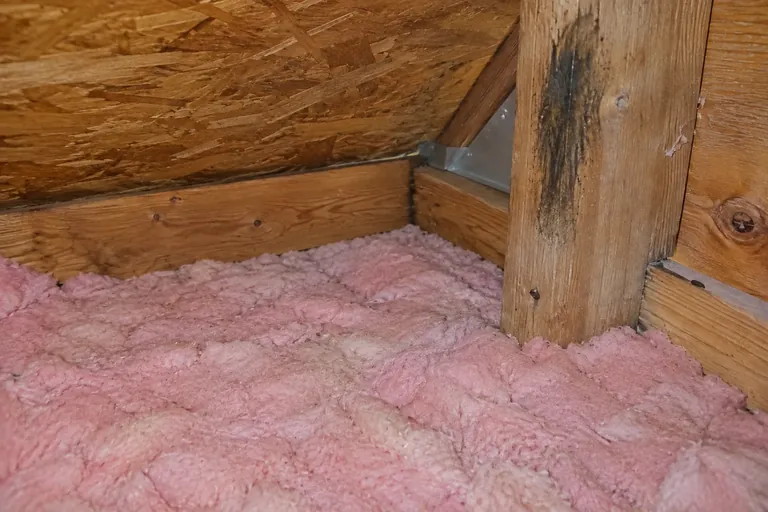
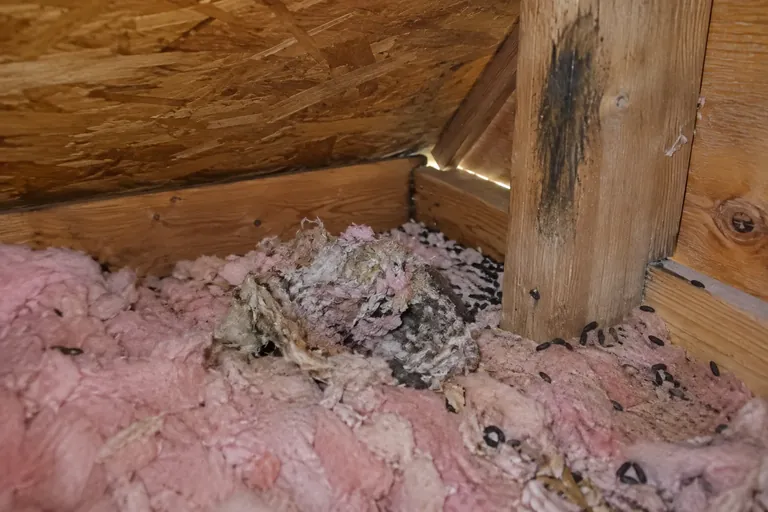 BeforeAfter
 STEP 01
 STEP 02
 STEP 03
 STEP 04
How we do it
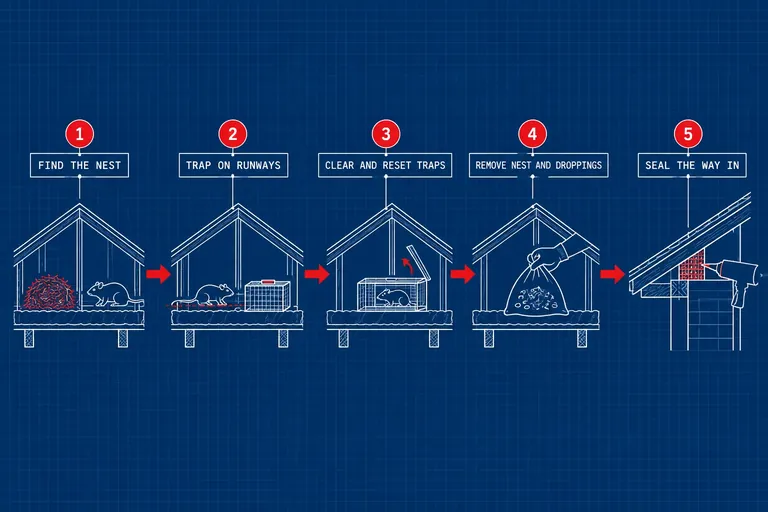
Removal follows the rodents. Here is what happens from the first call to the last trap.
We check the attic, crawl space, garage, under sinks and behind appliances. Droppings, rub marks and chewed material show us the nest and the runways in and out of it. We photograph what we find and walk you through it, so you know what is in your home and where it is.
Traps go along walls, joists and pipe runs where rodents travel every night. We tell you where each trap is and what type it is, so kids and pets stay clear. If bait stations are used anywhere, you'll know what they contain and where they are before they're placed.
We return to remove catches and reset traps. Each visit tells us whether the population is shrinking, and if one spot stays busy, we move traps closer to it. Removal continues until traps stay empty and no fresh droppings appear, which is the only real sign the rodents inside are gone.
We remove nesting material and droppings from the areas where rodents lived, wearing respirators and wetting droppings first so dust doesn't go airborne, then wipe down the hard surfaces they crossed. Contaminated debris is bagged and hauled out. Heavier contamination in insulation gets a separate cleanup quote.
With the rodents out, we close their entry points with metal mesh, hardware cloth and sheet metal. Without this step, new rodents follow the scent trail straight back into the same space, often within the same season. You get photos of each sealed spot.
What you get
| Inspection | Attic, crawl space, garage, kitchen and utility areas, with photos |
|---|---|
| Rodents covered | Rats and mice in attics, crawl spaces, garages, walls and kitchens |
| Trapping | Traps on active runways, with a list of locations for you |
| Return visits | Catches removed and traps reset until activity stops |
| Nest removal | Nesting material and droppings bagged and hauled out |
| Safety | Respirators and wet cleanup so droppings dust stays down |
| Sealing | Entry points closed with metal after rodents are out |
| Follow-on work | Cleanup or insulation replacement quoted if the damage calls for it |
Puget Sound homes
Rodents move indoors once the rain sets in each October, looking for dry nesting space, and they tend to stay through spring. In Seattle neighborhoods like Ballard, West Seattle and Capitol Hill, older homes with crawl spaces and plaster walls give rats hollow spaces to travel between floors. In Bellevue, Kirkland and Bothell, rats often nest in attic insulation above garages, where it's warm and quiet and they can enter through a soffit gap or roof vent. Each layout changes where we set traps first.
Further out, in Snohomish, Maple Valley, Duvall and the Olympia area, homes near fields, farms and second-growth woods tend to see more mice and deer mice, nesting in garages, sheds, pump houses and crawl spaces. Mice can live their whole lives inside a house, so a small problem grows fast once they find a warm spot. Deer mice matter here because they are the main carrier of hantavirus in Washington. Their droppings need careful, wet cleanup, never a broom or a shop vacuum. If you're cleaning a cabin or shed yourself, air it out first, wear gloves and spray droppings before you wipe.
Pricing
You get a quote after we see the house. These are the main factors.
A few mice behind the stove is a smaller job than a rat colony nesting across the attic.
An open attic is easier to work than a low crawl space or the inside of a finished wall.
Heavier activity takes more trap checks before the house is clear.
Light cleanup is part of removal. Heavy contamination in insulation is quoted as a separate cleanup.
The number of openings and how hard they are to reach sets the sealing part of the job.
We had a pretty bad rat problem in our attic. We heard noises every night. Guys from Super Attic Solutions came out and they trapped the rats and blocked all the holes that allowed the rats to get in. They were on time, professional and fairly priced.
FAQ
Still unsure? Call (800) 674-4933 and talk it through with us.
Our work is built on trapping and sealing the house so rodents can't get back in. We don't promise a single method for every house, because the right tool depends on the house and the infestation. In some cases that includes bait stations. What we do promise is that you'll know exactly what we use and where, before anything is placed in your home.
We'd ask you not to. A rodent that eats bait often crawls back into a wall or attic before it dies, and then you have a smell problem that can last for weeks. It can also complicate trapping. Keep food sealed, keep pets away from droppings and let us see the activity as it is.
Yes, for most homes. Keep food sealed, don't sweep or vacuum droppings dry, and keep pets out of the attic or crawl space. If you find droppings in the living area, spray them with a disinfectant and wipe them up with gloves. We'll handle the heavier cleanup in the spaces where rodents nested.
Nests often have young in them, especially in spring. Trapping continues until the whole nest is cleared, which is why we keep checking traps until they stay empty. Then we remove the nest material itself, bag it and take it out, so nothing is left behind to attract new rodents.
Usually we don't need to open the wall. Rodents in walls travel to and from the attic, crawl space or a gap at the floor, so we trap where they come and go. If a rodent dies inside a wall, we locate it by smell and talk to you before cutting any access.
Not if the house is sealed. Rodents follow scent trails to the same openings, so a house that's been cleared but not sealed usually gets new ones. That's why removal ends with closing every entry point we find and showing you photos of each one.
Related services
A trapping, monitoring and sealing program that runs until rodent activity in your home stops.
Learn more →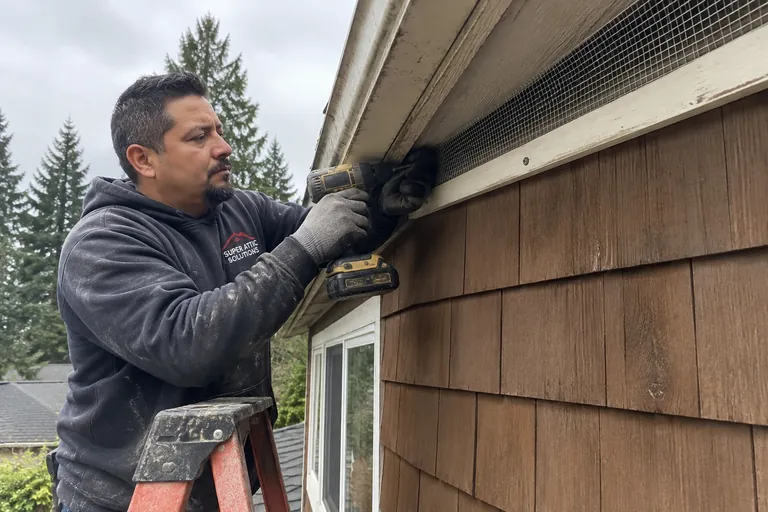
We find every gap rats and mice use, from roof vents to crawl space, and seal it with metal.
Learn more →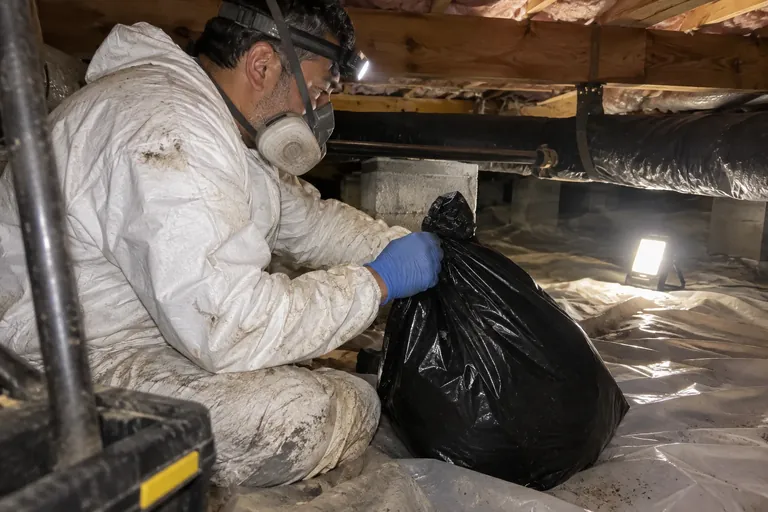
We locate the dead rodent or animal behind the smell, remove it, disinfect the area and seal the way in.
Learn more →
Rat removal built for the two spaces they live in: the attic above and the crawl space below.
Learn more →Book a free inspection. We'll photograph your attic and crawl space and walk you through what we find, before you decide anything.