
Attic services
Attic cleaning
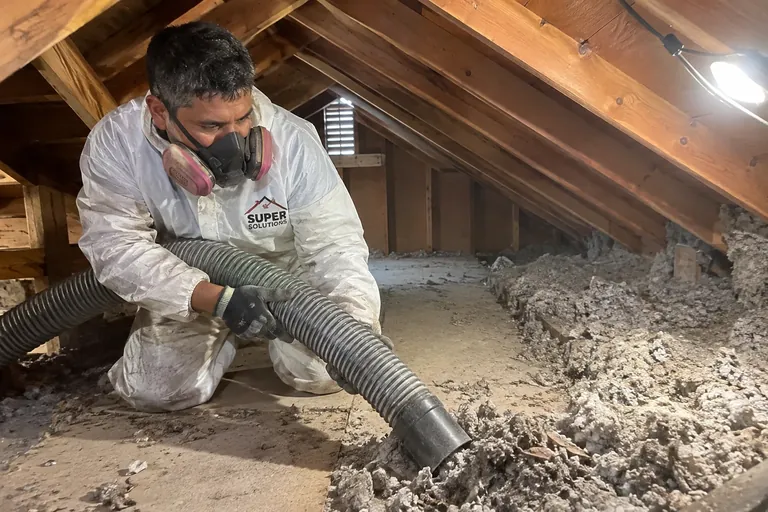
Removal of rodent droppings, nesting, old debris and soiled insulation, hauled out in sealed bags.
Learn more →Multi-family attic cleaning · Seattle & Puget Sound
Droppings, soiled insulation and old debris in a shared attic don't stay up there. We clear it out, sanitize the worst areas and give you photos of every section for the owner or board.
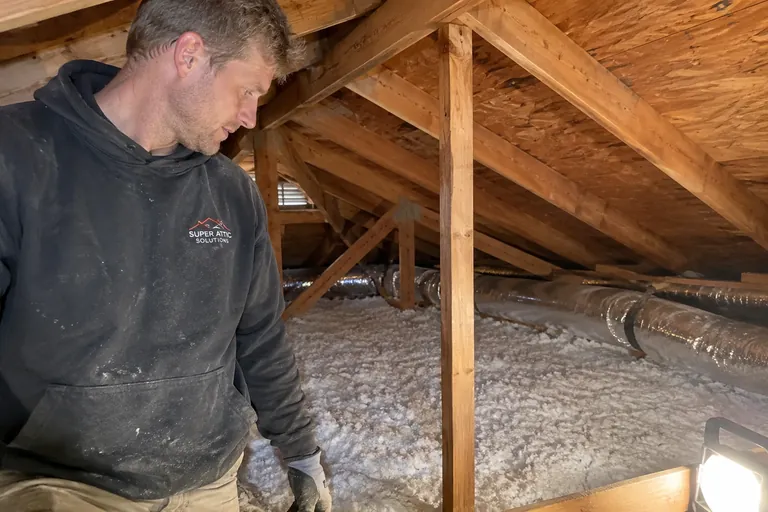
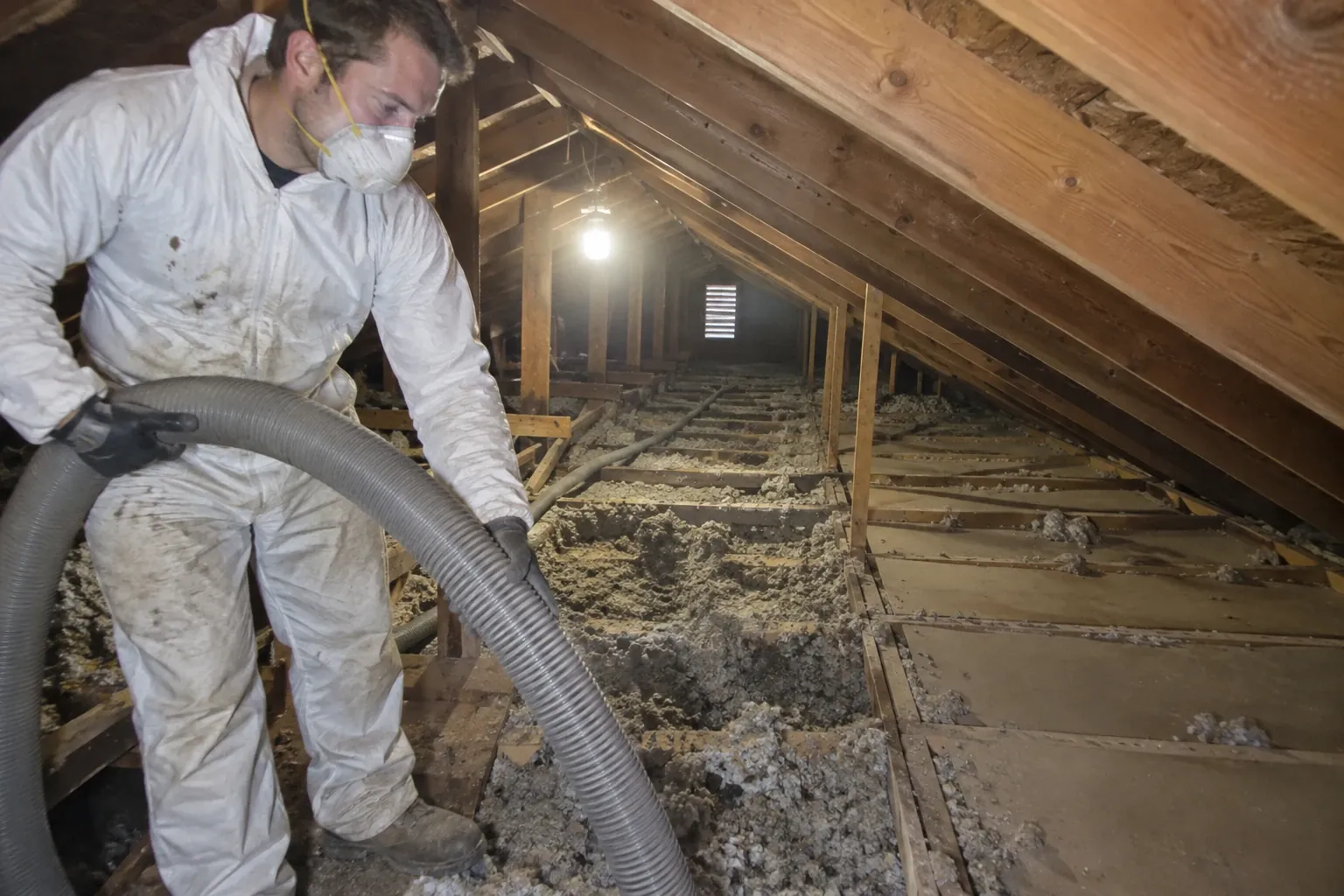 Cleaning the shared attic of an apartment building · Sammamish, WA
The problem
A shared attic over a row of units collects years of problems nobody owns. Rodents nest and leave droppings and urine in the insulation. Cable and satellite installers trample paths and leave scraps. Roof work drops nails, shingle bits and wrappers. Old storage boxes get forgotten above the hatch. Each tenant sees only their own ceiling, so the whole space can go unchecked for a very long time.
Cleaning it is a building job, not a unit job. We work the attic as one space, section by section. Material is vacuumed and bagged in the attic and taken out through the access point, with drop cloths and protection on any route through common areas. The attic ends up clean, ready for sealing and new insulation, and documented in photos you can hand to an owner or board.
Warning signs
Most of these come from tenant calls or a maintenance walk-through.
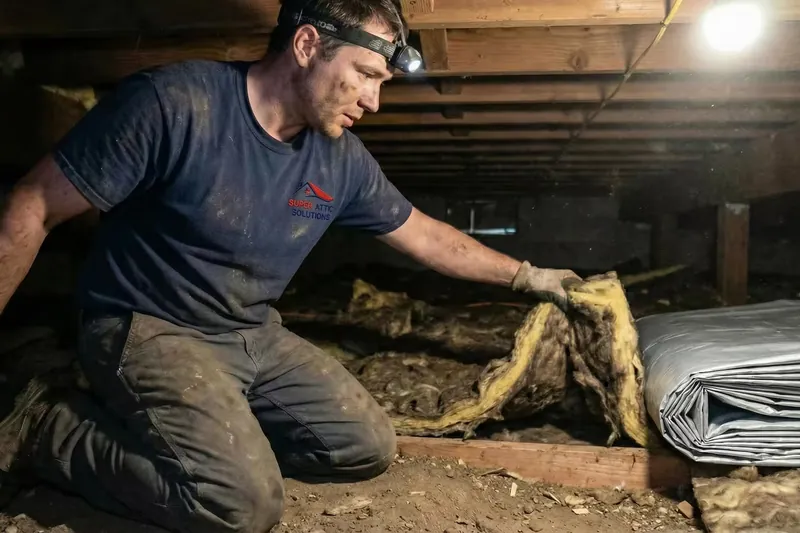
A musty or ammonia smell in upper units, worse on warm days, often comes from rodent urine in the attic insulation.
If droppings are visible when someone opens the attic hatch, there is usually much more across the attic floor.
Trapping and sealing stop new activity, but old droppings and nests stay until someone removes them.
Paths and bare spots left by installers and roofers leave gaps in coverage and hide debris.
Nails, shingle scraps, wire ends and packaging left in the attic are a hazard for whoever goes up next.
New insulation should go on a clean attic floor, not over droppings and debris.
Proof of work
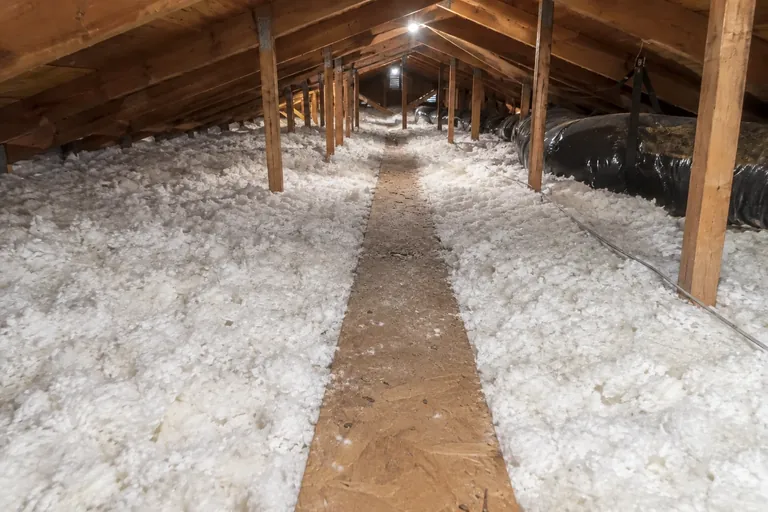
Drag the slider to compare. Illustrations of typical results on homes like yours.
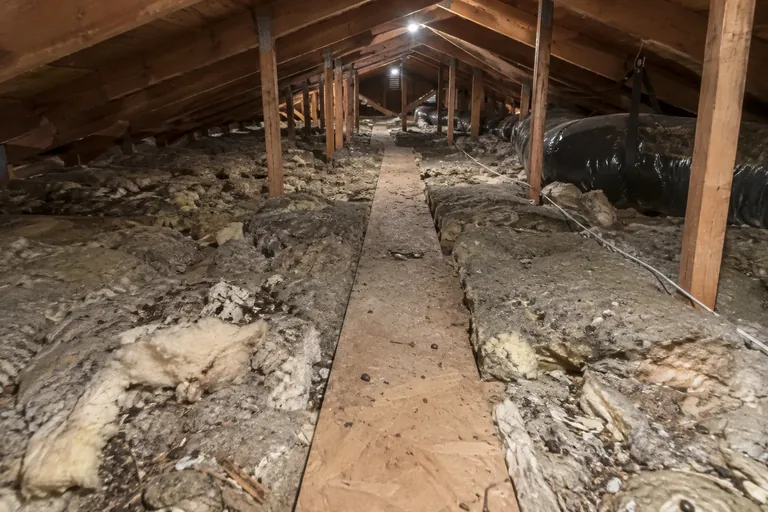 BeforeAfter
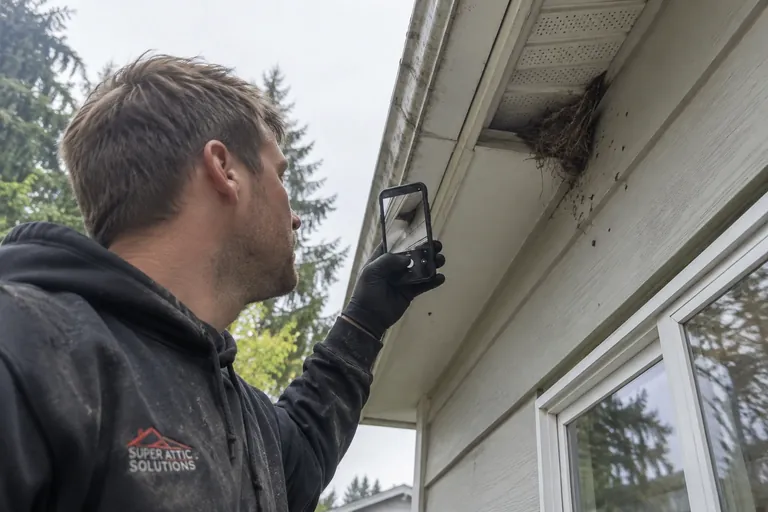 STEP 01
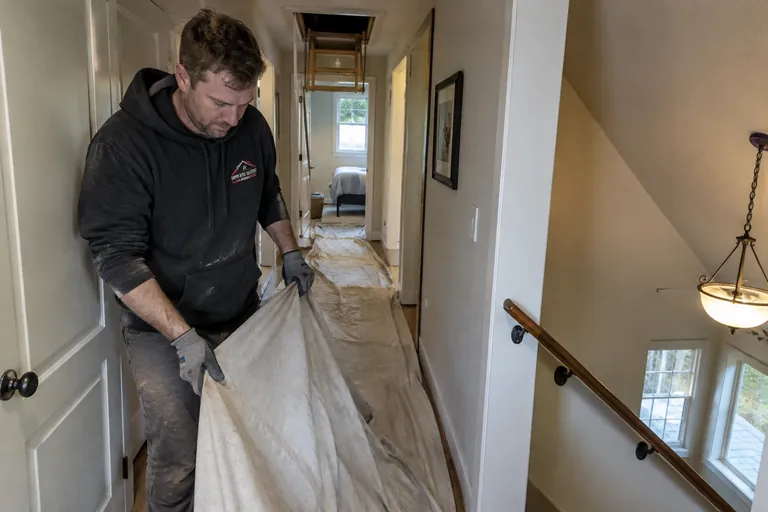 STEP 02
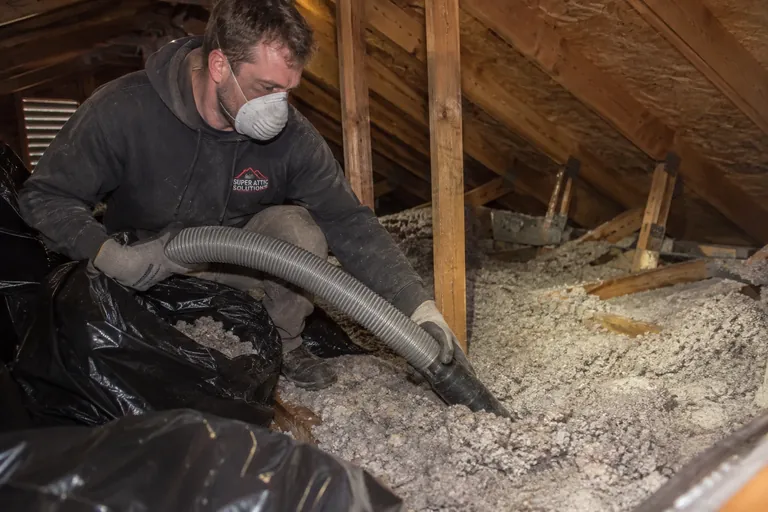 STEP 03
 STEP 04
How we do it
Contained, sectioned and photographed from start to finish.
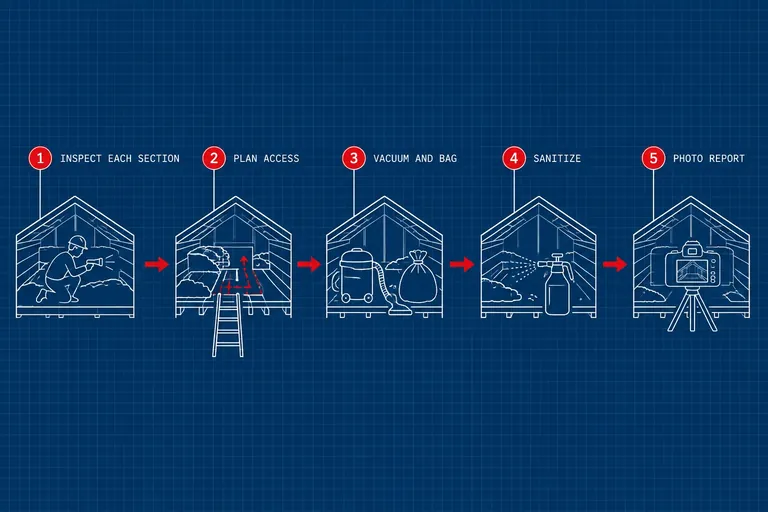
We enter every attic section, note droppings, nests, debris, soiled insulation and any signs of active rodents, and photograph conditions. If there is live activity, we recommend trapping and sealing first, or alongside the cleaning, so the clean attic stays clean once we leave.
We choose the access points, often a hatch in a common hallway or closet, and agree on dates with you. Where a hatch is inside a unit, we give you the unit number and time window for tenant notices. Drop cloths and protection go down along any path through common areas.
Crew members wear respirators and protective suits. Droppings, nests and soiled insulation are vacuumed and bagged, never swept dry, because rodent droppings can carry hantavirus. Debris such as nails, wire scraps and old boxes comes out at the same time, so nothing is left behind.
Once the attic floor is clear, we treat the areas where rodent waste was concentrated with a disinfectant suited to attic framing. We tell you exactly what product we use and where it went, so you can answer tenant questions and keep the information on file.
We photograph each section after cleaning and give you a short report with before-and-after images. At that point the attic is ready for air sealing and new insulation, which we can quote with the cleaning or schedule as the next phase of work.
What you get
| Areas covered | Shared attics, separate attic sections and attics over garages or carports |
|---|---|
| Removal | Droppings, nesting, soiled insulation, construction and roofing debris |
| Method | Vacuum removal and bagging; nothing swept dry |
| Crew protection | Respirators and protective suits in contaminated areas |
| Containment | Drop cloths and protection on routes through common areas and units |
| Sanitizing | Disinfectant on areas of heavy rodent waste, with the product disclosed |
| Reporting | Before-and-after photos for each attic section |
| Next steps | Optional sealing and new insulation as a follow-on phase |
Compare
Cleaning always comes first. What follows depends on what's left.
| Factor | Cleaning only | Cleaning plus new insulation |
|---|---|---|
| When it fits | Insulation is mostly sound with local soiling | Insulation is widely soiled, thin or trampled |
| What's removed | Droppings, nests, debris and soiled patches | All old insulation down to the attic floor |
| Air sealing | Limited to exposed areas | Full attic floor exposed for sealing |
| End result | Clean attic with the existing insulation | Clean attic with a new, even layer |
| Tenant impact | Shorter time per section | Longer project, still worked from the attic |
Puget Sound homes
Our long wet season sends roof rats and mice into attics looking for dry nesting, and multi-family buildings give them a lot of room. A single shared attic over eight or ten townhomes can host activity for years before anyone sees it. Damp air from occupied units adds to the problem. Soiled insulation that stays damp holds odor and breaks down faster, and the smell finds its way into the units below through gaps around light fixtures, fan housings and hatches.
Many Eastside and south King County condo complexes from the 1970s through the 1990s have long attics with tight clearance at the eaves. Those are hard spaces to clean well. We plan the route through each section so the crew reaches the eaves, where nesting is often heaviest, rather than stopping at the easy middle. Along the way we check the soffit vents, since torn or missing vent screens are a common rodent entry point and blocked vents hurt attic airflow.
Pricing
We price after we've seen every section. These are the variables.
Total square footage and how many separate attic sections the crew has to set up in.
Light, local droppings take less time than an attic where most of the insulation is soiled.
Years of roofing scraps, cable leftovers and stored boxes add removal and disposal.
Hatches inside units, low eaves and long carries to the exit slow the work.
Sealing and new insulation can be quoted with the cleaning or as a later phase.
Great service. I highly recommend this company. Wish I would have found them years ago... Isaac, Kareem and Irving were professional, courteous, and friendly. Pricing was clear and there were no surprises. Very happy with our experience.
FAQ
Still unsure? Call (800) 674-4933 and talk it through with us.
Yes. The work happens in the attic and at the access point. We protect any route through common areas or units and keep contaminated material bagged. Tenants directly under the work area may hear the crew moving around, so we give you the work hours to include in your notices.
Rodent droppings and urine can carry disease, including hantavirus, which is why we never sweep them dry and our crew wears respirators. The main risk is to anyone who disturbs the material. Removing it properly, and sealing the gaps where attic air moves into units, cuts down on what reaches living space.
Not always. If soiling is limited to a few areas and the rest is dry and clean, we remove the affected patches and leave the rest. If droppings are spread across the attic, full removal is usually the better choice, because it is the only reliable way to get all of it. We show you photos before you decide.
Yes. If there is active rodent activity, we recommend trapping and sealing entry points before or alongside the cleaning. Cleaning an attic that rodents can still reach means doing it again later. We handle both, so it is one plan, one crew and one report for the owner or board.
A short report with photos of each attic section before and after, a description of what was removed, notes on any entry points or roof issues we saw, and recommended next steps such as insulation. It is written for people who won't be going into the attic themselves.
We use common-area hatches where the building has them. When the only access is through a unit, we lay protection along the route and keep everything bagged, so nothing loose crosses the floor. We plan those units with you ahead of time so tenants get proper notice.
Related services
Removal of rodent droppings, nesting, old debris and soiled insulation, hauled out in sealed bags.
Learn more →
Biohazard cleanup after rodents and animals: waste removed, framing disinfected, odor treated at the source.
Learn more →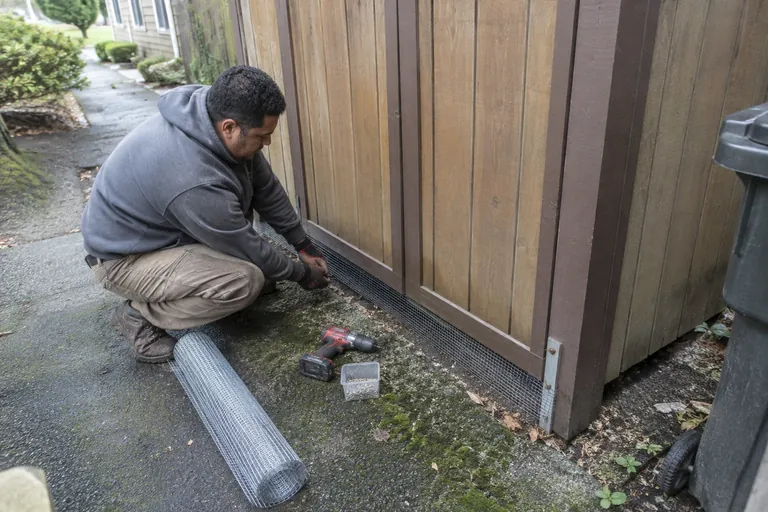
Trapping and sealing across apartments, condos and townhomes, with photo reports for managers and boards.
Learn more →
Removal and new attic and crawl space insulation for apartments, condos and townhomes, phased around tenants.
Learn more →Book a free inspection. We'll photograph your attic and crawl space and walk you through what we find, before you decide anything.