

Roofing
Roof replacement
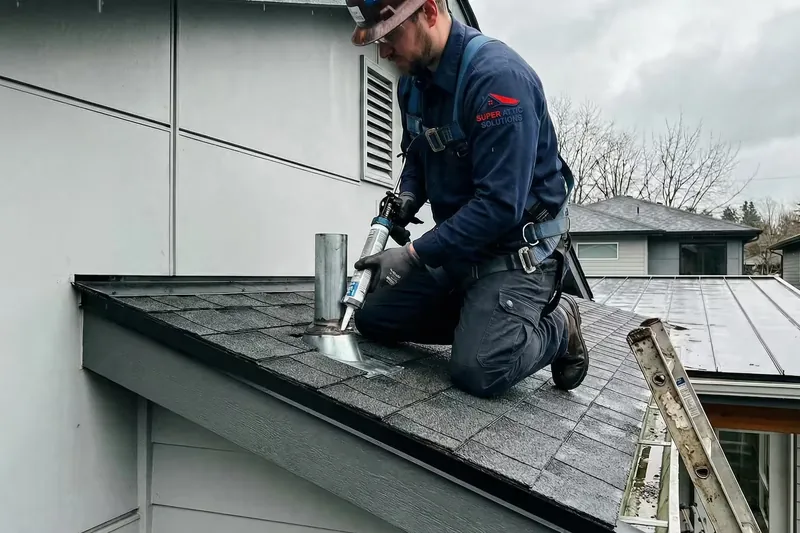
Full tear-off, deck repair, new flashing and attic ventilation fixed while the roof is open.
Learn more →Roof inspection · Seattle & Puget Sound
Most roof inspections stop at the shingles. We also go into the attic and look at the underside of the roof deck, where leaks, condensation and poor ventilation show up first.
 Roof inspection on a mossy shingle roof · Maple Valley, WA
The problem
Shingles tell part of the story. A roof with clean, flat shingles can still have a cracked pipe boot, lifted flashing at the chimney or a valley that holds water every storm. Those small openings let water in slowly, a little with every rain. It soaks the roof deck and the insulation below for months before a stain ever shows on your ceiling.
The other half of the story is in the attic. From there you can see daylight around nail holes, dark water tracks on the sheathing, rusty nail tips from condensation and soffit vents buried under insulation. We spend our working days in attics, so that is where we start looking, and it is where most roof problems leave their first marks.

Warning signs
You don't need to wait for a drip. These are the usual reasons people call us.
Brown rings near exterior walls, around a skylight or under a bathroom often trace back to flashing or a roof penetration above.
Moss holds water against shingles and lifts their edges. Gritty granules in the downspouts mean the shingle surface is wearing off.
Puget Sound windstorms tear off ridge caps and crease shingles. Damage that looks small from the ground can open the roof to the next rain.
A clear report with photos of the roof surface and the attic underside answers questions before they turn into negotiation problems.
How we do it
Four steps. You get photos and a plain-language summary at the end.
We look at the roof surface, ridge, valleys, eaves and gutters. Where the pitch and weather allow, we get on the roof. On steep or slick roofs we work from a ladder at the eaves and take close-up photos. We note moss, lifted or cracked shingles, worn granules and sagging lines.
Chimneys, skylights, plumbing vents, bath fan caps and dormer walls are where most leaks start. We check every flashing joint, pipe boot and sealant line, and we look for gaps where water or rodents can get in under the roofing.
Inside the attic we look at the underside of the roof deck. We check for daylight, water tracks, dark or delaminating sheathing, frost marks around nails, and bath fans or dryer vents that end in the attic instead of outside. We also check that soffit vents and baffles are open.
We show you what we photographed, explain what matters and what can wait, and tell you whether the roof needs a small repair, a replacement or nothing at all. If we find attic problems like wet insulation or blocked ventilation, we tell you those too.
What you get
| Roof surface | Shingles, shakes or metal panels, ridge caps, moss and granule wear |
|---|---|
| Flashing | Chimney, skylights, walls, valleys, pipe boots and roof vents |
| Gutters and eaves | Drainage, fascia rot, drip edge and overflow staining |
| Roof deck, underside | Daylight, water tracks, soft or dark sheathing, rusty nail tips |
| Ventilation | Soffit, ridge and gable vents; baffles; airflow blocked by insulation |
| Exhaust ducts | Bath fan and dryer ducts that should vent outside, not into the attic |
| Photos | Exterior and attic photos you can keep |
| Cost to you | The inspection is free |
Puget Sound homes
Here the roof's main job is shedding rain from fall through spring. Shaded north slopes under Douglas firs grow moss that lifts shingle tabs and feeds rot in the deck. Cedar shake roofs on older Seattle and Eastside homes split and cup as they age. Mild, damp winters also cause a problem many homeowners never see: warm, moist air from the house condenses on the cold underside of the roof deck. In the attic that shows up as black sheathing, rusty nails and damp insulation, even when the shingles are fine. That is why our inspection includes the attic every time.

Pricing
The inspection itself is free. If we find something, these are the things that set the cost of fixing it.
Steep or tall roofs need more safety gear and setup time than a low single-story roof.
Composition shingles, cedar shakes and metal each repair differently and use different parts.
A pipe boot is a quick swap. Chimney flashing or a valley rebuild takes more work and material.
Soft or rotted roof deck has to be cut out and replaced before new roofing goes on.
Wet insulation, blocked vents or a bath fan venting into the attic add work inside, separate from the roof.
Great service. I highly recommend this company. Wish I would have found them years ago... Isaac, Kareem and Irving were professional, courteous, and friendly. Pricing was clear and there were no surprises. Very happy with our experience.
FAQ
Still unsure? Call (800) 674-4933 and talk it through with us.
Once a year is a good habit, and late summer or early fall is the best time, before the wet season starts. Also book one after a major windstorm, before you buy or sell a home, or any time you see a new ceiling stain. Older roofs and roofs under heavy tree cover benefit most from regular checks.
Because many roof problems are easier to see from underneath. Daylight through the deck, water tracks on the sheathing and condensation damage all show up in the attic before they show up on your ceiling. The attic also tells us whether the roof is ventilated properly, which affects how long the roofing lasts.
A light film is mostly cosmetic. Thick mats are a problem. Moss holds water against the shingles, lifts the edges and lets wind-driven rain get underneath. Over time it can rot the roof deck along the eaves. We'll tell you whether it needs cleaning, treatment or repairs to the shingles beneath.
Often, yes. Many leaks come from one spot: a cracked pipe boot, failed chimney flashing or a damaged valley. If the rest of the roof has life left, a repair makes sense. If the shingles are worn out across the whole roof, we'll say so and explain why patching would be throwing money at it.
Usually condensation. Warm, moist air from the house reaches the cold roof deck and condenses there through the winter. Common causes are bath fans that vent into the attic, gaps around light fixtures and attic hatches, and blocked soffit vents. Fixing the air leaks and ventilation usually matters more than fixing the roof itself.
Related services
Full tear-off, deck repair, new flashing and attic ventilation fixed while the roof is open.
Learn more →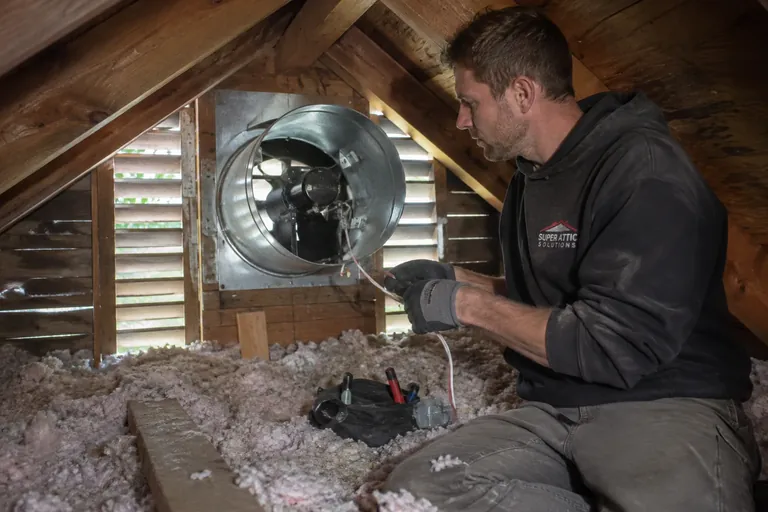
Powered roof and gable fans, sized to the attic, with intake balanced and ceiling leaks sealed first.
Learn more →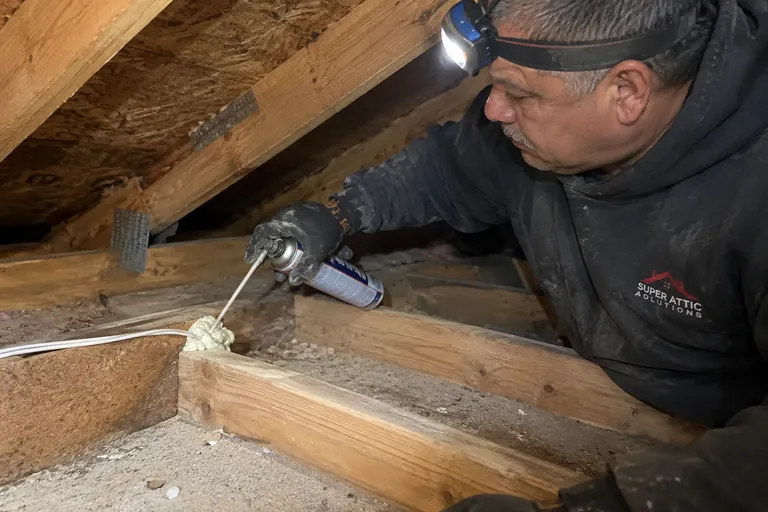
Sealing top plates, can lights, bath fans and chases from the attic side before new insulation goes in.
Learn more →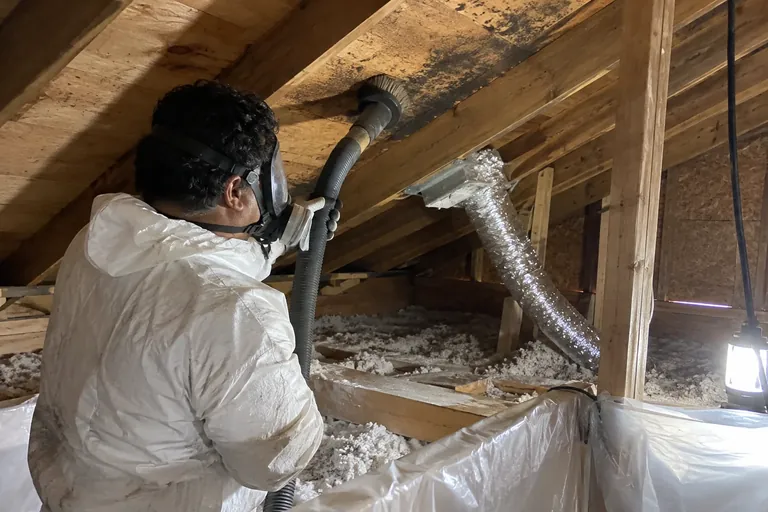
Attic and crawl space mold removed under containment, with the moisture source found and fixed.
Learn more →Book a free inspection. We'll photograph your attic and crawl space and walk you through what we find, before you decide anything.