
Insulation
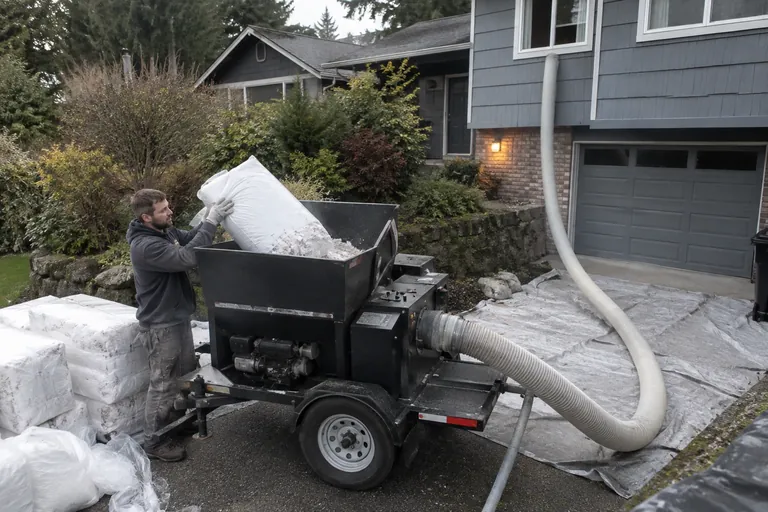
Blown-in insulation installation
Fiberglass or cellulose loose fill blown to an even depth across the attic floor, corners included.
Learn more →Cellulose insulation · Seattle & Puget Sound
Cellulose is recycled paper treated with borates. It packs more R-value into each inch and slows air better than most loose fill, as long as the attic stays dry.
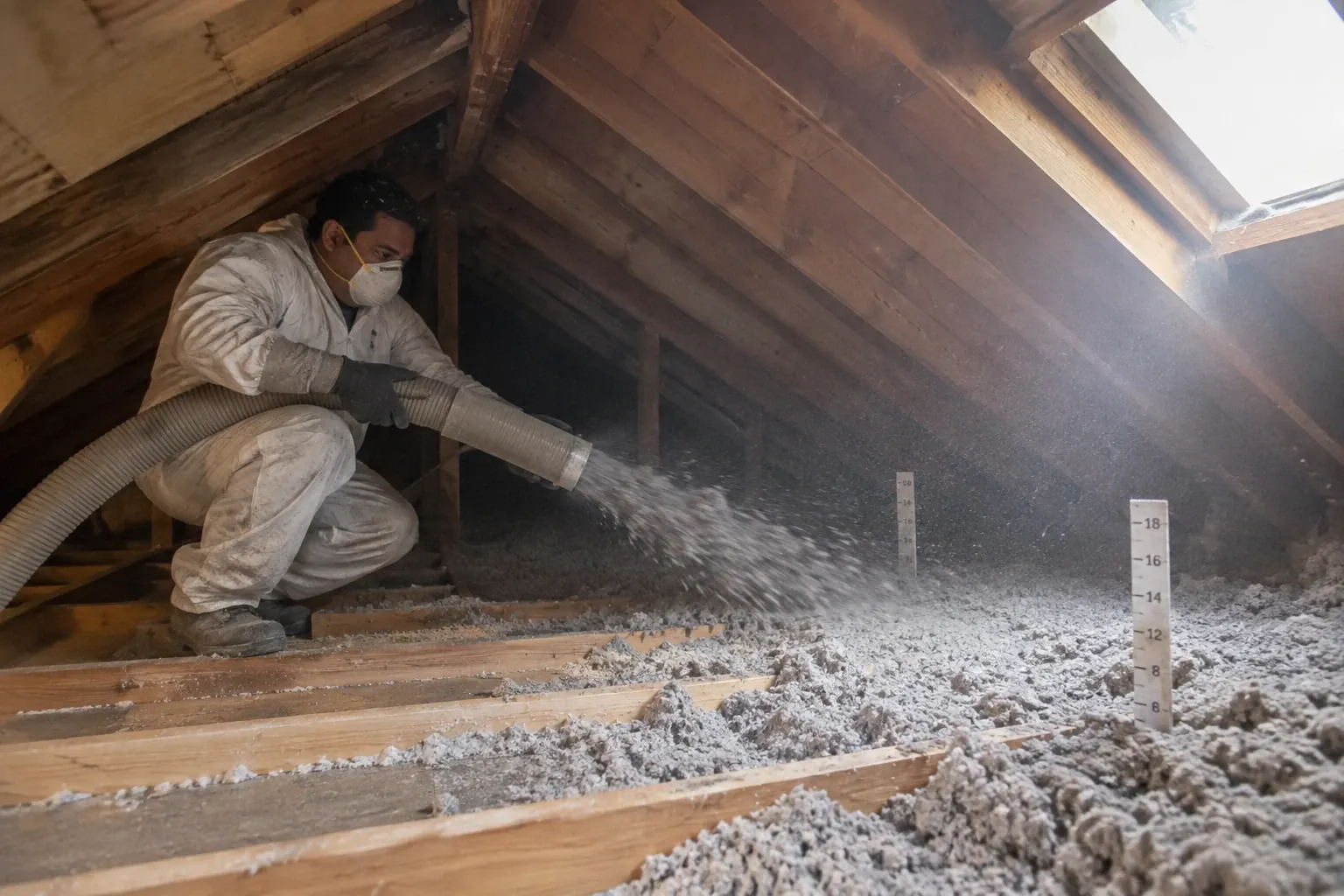 Blowing cellulose insulation across attic joists · Seattle, WA
The problem
Cellulose starts as shredded newsprint and other paper, treated with borate compounds that help it resist fire, insects and mold growth. Blown into an attic, it forms a dense, heavy blanket. That density is its strength. It reaches a given R-value with less depth than loose fiberglass, and it resists air moving through it, so drafts and convection inside the layer are lower.
Its weakness is water. Paper absorbs moisture. If a roof leaks, a bath fan dumps steam into the attic, or condensation drips off cold sheathing, cellulose soaks it up, gets heavy and mats down. In a dry attic it performs well for decades. In a wet one it becomes a problem. So before we recommend it, we look hard at the roof, the venting and the fans. If those aren't right, we fix them first or suggest fiberglass instead.
Warning signs
We recommend cellulose when the attic and the goals line up with what it does best.
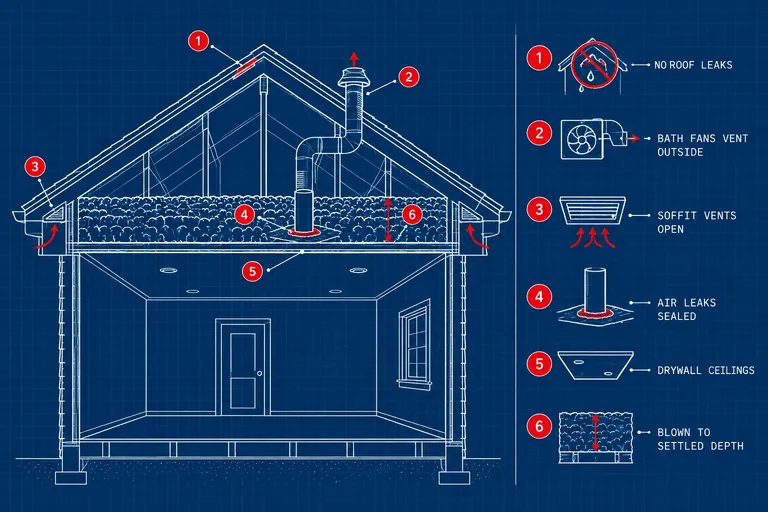
Sound roof, working soffit and roof vents, and bath fans ducted outside. That's the setting where cellulose shines.
Low roof edges over exterior walls leave little room. Cellulose gets more R-value into the space that's there.
Cellulose's density slows air moving through the layer. Paired with air sealing, upstairs rooms feel less drafty.
It's made mostly from recycled paper, which matters to some homeowners when choosing between materials.
If your attic already has dry, clean cellulose, adding more of the same keeps the layer consistent.
Cellulose is heavy. Modern drywall ceilings carry it easily; old plaster ceilings need a closer look first.
Proof of work
Drag the slider to compare. Illustrations of typical results on homes like yours.
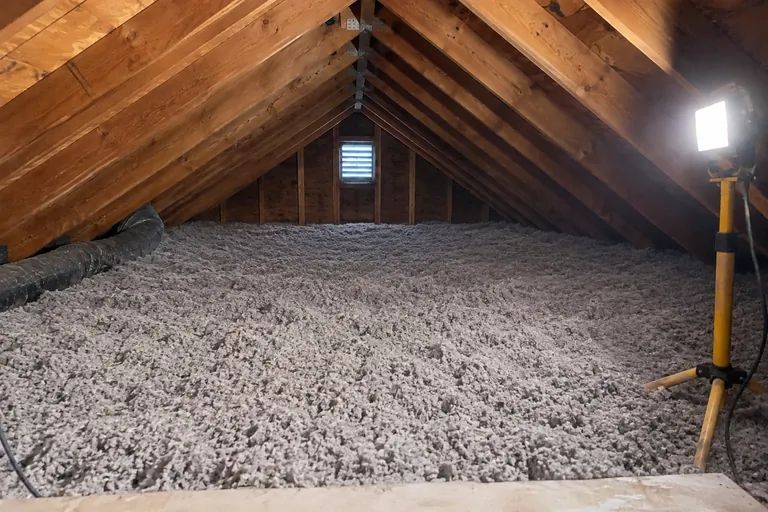
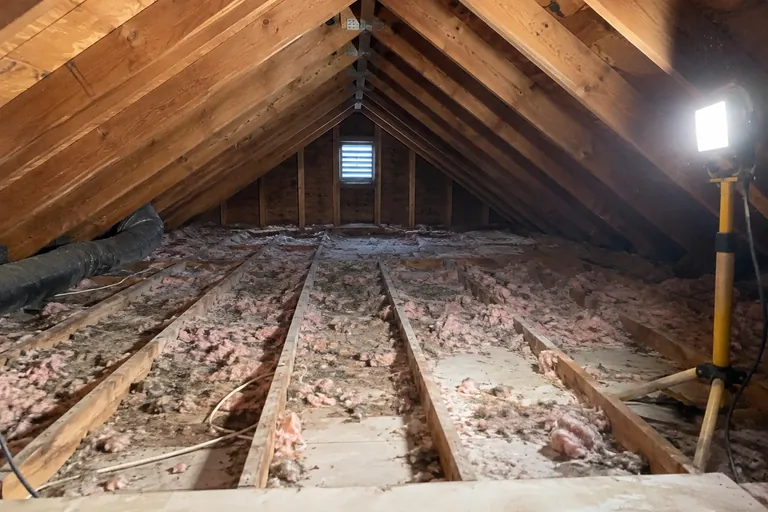 BeforeAfter
How we do it
The moisture check comes first. The blowing comes last.
We look at the underside of the roof deck for stains, rusty nails and mold, check soffit and roof vents, and follow every bath fan and dryer duct to see where it ends. We also check the ceiling type. If anything would put water into the attic, we tell you before we recommend cellulose.
We seal top plates, plumbing and wiring holes, fixtures and the hatch so warm, moist house air stays out of the layer. Baffles go in over each soffit vent, and we build dams and keep clearance around chimneys, flues and non-rated fixtures.
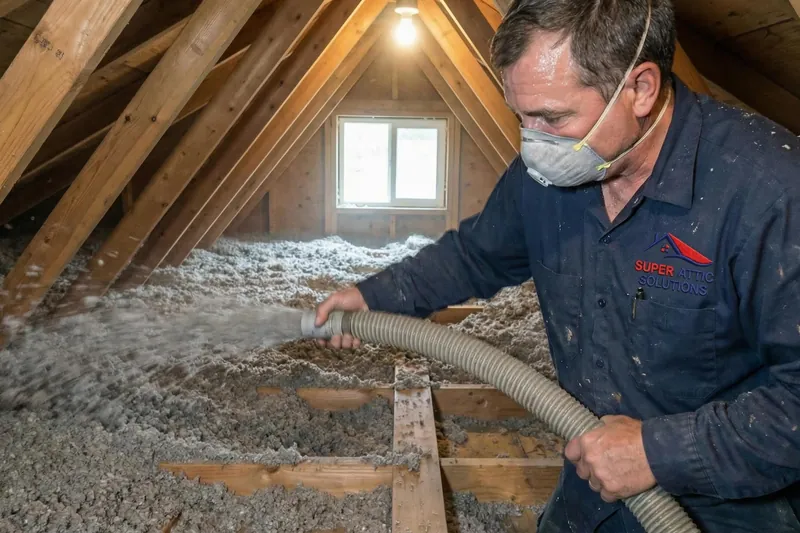
Cellulose settles after install, so the coverage chart calls for blowing it deeper than the final target. We follow that chart for bag count and initial depth, working from the far eaves back to the hatch with the hose held low for an even layer.
We insulate and weatherstrip the hatch cover, check depth against markers across the attic, and fill any light spots. Then we photograph the finished floor, clean the covered path through the house and show you the before and after photos.
What you get
| Material | Loose-fill cellulose: recycled paper with borate treatment |
|---|---|
| Typical area | Attic floors over drywall ceilings |
| Pre-check | Roof deck, vents and bath fan ducts checked for moisture |
| Prep | Air sealing, baffles over soffit vents, dams at hatch and flues |
| Depth | Blown deeper than target to allow for settling |
| Over old insulation | Yes, over a dry, clean layer of fiberglass or cellulose |
| Cleanup | Machine outside, covered path, hatch area cleaned |
| Photos | Before and after, plus any moisture issues found |
Compare
Two common ways to insulate an attic floor, with different strengths.
| Factor | Blown cellulose | Fiberglass batts |
|---|---|---|
| Coverage around obstacles | Flows around wires and framing | Has to be cut around each one |
| Air movement through it | Dense; slows air well | Air moves more easily through gaps and fibers |
| Moisture | Absorbs water; needs a dry attic | Doesn't absorb water, but wet batts sag |
| Settling | Settles; blown deeper to allow for it | Doesn't settle |
| Best fit | Busy attic floors in dry attics | Open, regular bays and crawl space floors |
Puget Sound homes
Cellulose and the Pacific Northwest have a mixed history. It works well here when the attic is dry, and many homes in Seattle, Kirkland and Bothell have had cellulose in the attic for decades with no trouble. Where it goes wrong is the attic with a slow leak at a chimney or skylight, moss-lifted shingles on the north slope, or a bath fan that was never ducted outside. From October to May those small water sources run constantly, and cellulose under them stays damp.
That's why our recommendation depends on the attic, not the material. If your roof is sound and the venting is right, cellulose gives you a dense layer that handles our long heating season well. If the roof is near the end of its life, the shakes are curling or the attic shows moisture signs, we'll suggest fixing that first, or using blown fiberglass, which handles occasional moisture better. Either way, you hear the reasoning and see the photos behind it before you choose.
Pricing
We quote cellulose after the moisture check and measurements.
Square footage and how much depth we're adding set the bag count from the coverage chart.
Rerouting a bath fan duct or fixing vents before insulating adds to the job, and protects the new layer.
The number of penetrations to seal and soffit vents that need baffles.
A clean layer stays. Wet or soiled material has to be removed before cellulose goes in.
Small hatches, low-pitch roofs and long runs from the driveway add setup and labor time.
We had rodent problem in our house. Also our house had bare minimum insulation in some places. Isaac was very helpful, he also took some photos of the attic and crawl space. They gave me a reasonable quote for rodent proofing and insulation. Their crew was on time and finished the job in two days. Really appreciate their hard work.
FAQ
Still unsure? Call (800) 674-4933 and talk it through with us.
It can be, in an attic that stays dry. Our long wet season means any roof leak, condensation or misrouted bath fan keeps feeding water to the insulation for months, and cellulose absorbs it. When the roof is sound and the attic is vented and sealed, cellulose performs well through our long heating season.
No insulation made from paper is fireproof. Cellulose is treated with borates to make it fire resistant, which means it resists ignition and slows flame spread. It still needs the required clearance from chimneys, flues and fixtures that run hot, and we build dams to keep it there.
No. The borate treatment helps resist insects, but rats and mice will still tunnel and nest in cellulose just as they do in fiberglass. The only real fix for rodents is trapping them and sealing every entry point before new insulation goes in, which we do as a separate step.
Cellulose settles more than loose fiberglass in the first months after it's blown in. The manufacturer's coverage chart lists both an installed depth and a settled depth for each R-value. We blow to the installed depth so the attic lands at the target once it settles.
Yes. If the existing fiberglass is dry and clean, cellulose can be blown over it to build up the total R-value. The two work together fine. We still air seal first, because once the new layer is down the gaps underneath are much harder to get to.
On standard drywall ceilings with typical framing, a full attic of cellulose is well within normal loads. Old plaster and lath ceilings, sagging drywall or wide joist spacing deserve a closer look. We check the ceiling during the inspection and recommend fiberglass if weight is a concern.
Related services
Fiberglass or cellulose loose fill blown to an even depth across the attic floor, corners included.
Learn more →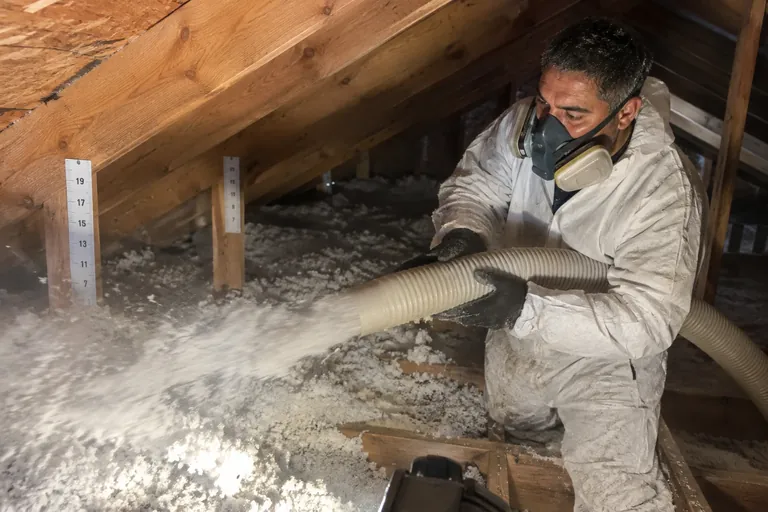
How much insulation your attic needs, which material fits, and what it takes to get there.
Learn more →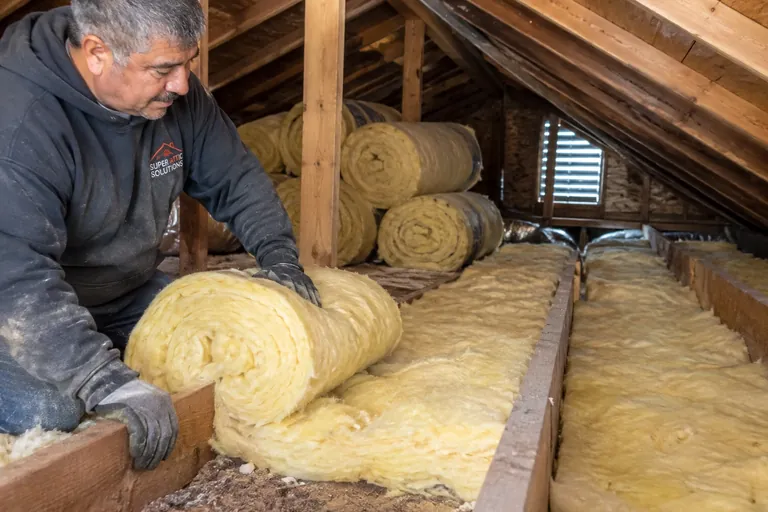
Continuous fiberglass rolls for long attic runs and cross layers over existing insulation.
Learn more →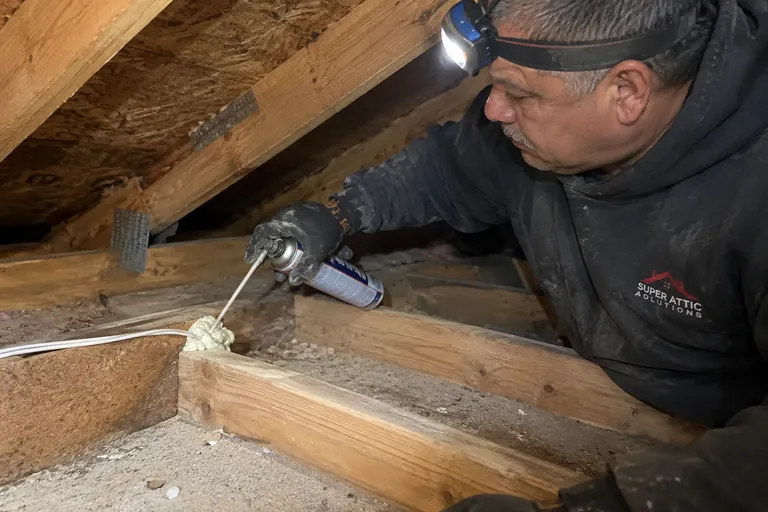
Sealing top plates, can lights, bath fans and chases from the attic side before new insulation goes in.
Learn more →Book a free inspection. We'll photograph your attic and crawl space and walk you through what we find, before you decide anything.