
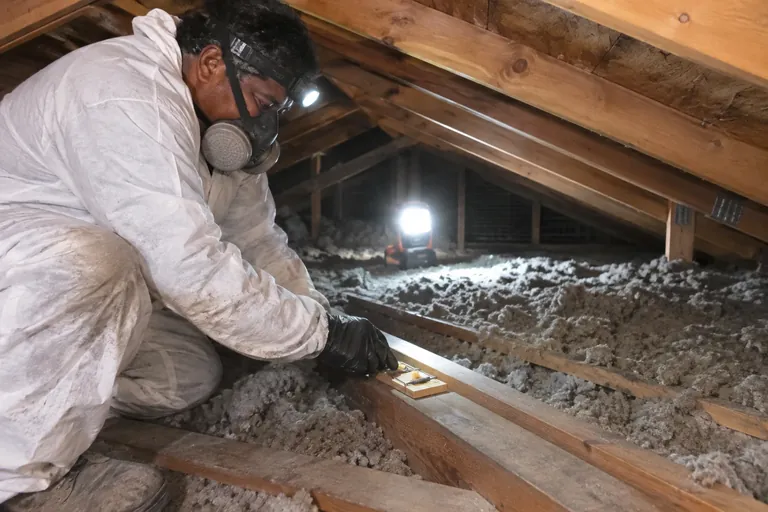
Rodents & pests
Rodent removal services
We trap the rats and mice living in your home, remove nests and droppings, then seal the way in.
Learn more →Rodent exterminator · Seattle & Eastside
You searched for an exterminator. Here is exactly what happens when we show up: who comes, where they look, what they set, and what you have in hand when they leave.
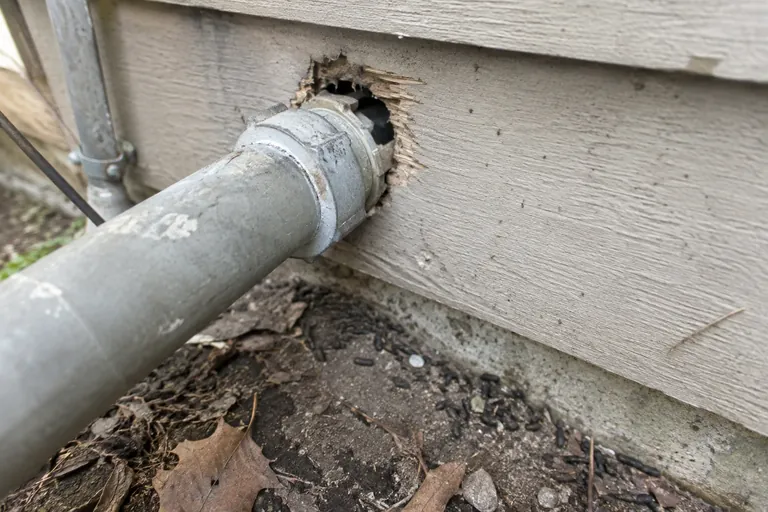
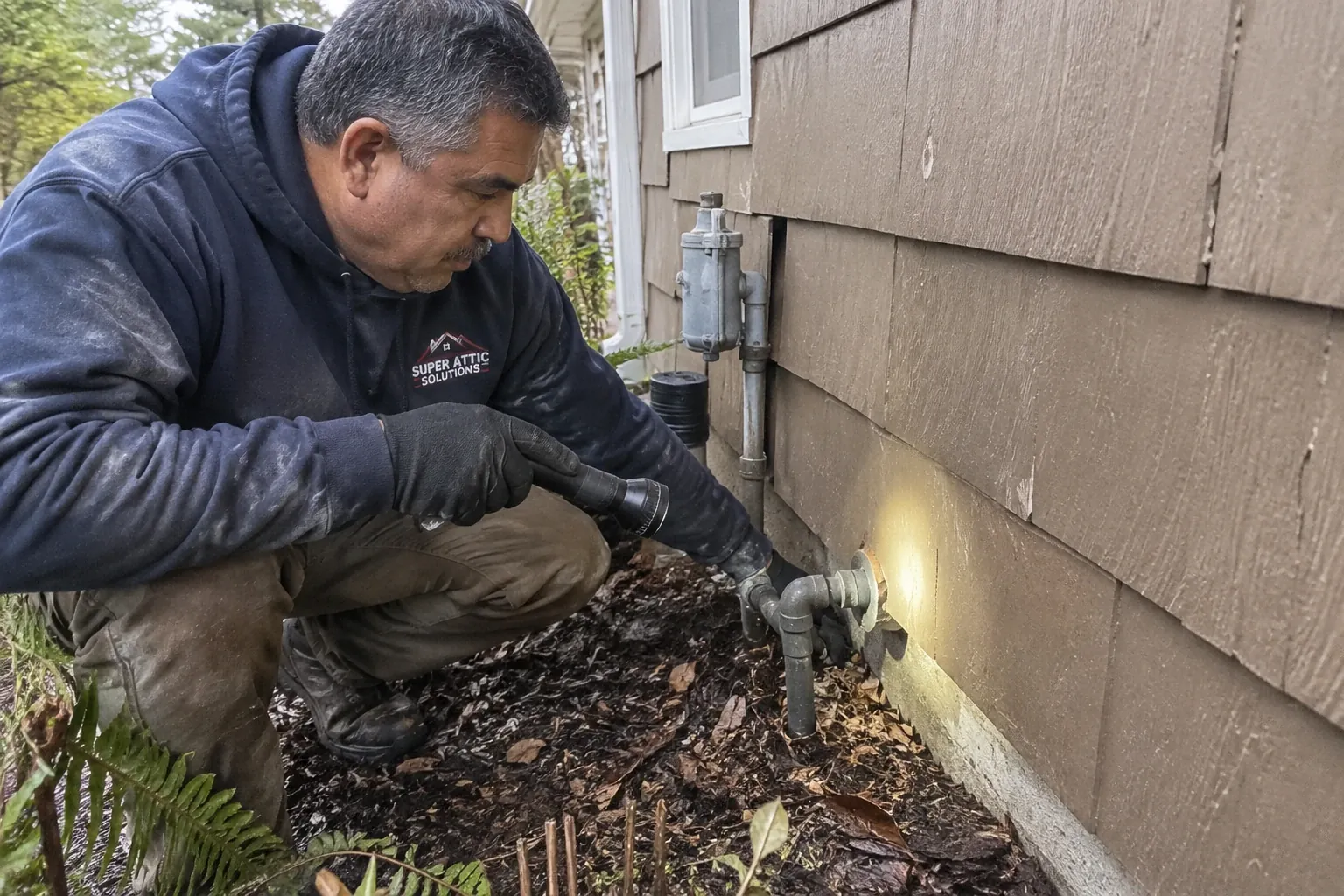 Inspecting a pipe penetration for rodent activity · Lacey, WA
The problem
Rats and mice don't live in your living room. They live in the attic insulation, the crawl space, the wall cavity behind the dishwasher and the space above the garage ceiling. An exterminator who stays in the kitchen and drops a few traps on the floor is treating the symptom. The real work is in the tight, dusty spaces most people never see, and that's where we spend our time.
We're an attic and crawl space company, so those spaces are our daily work. Our techs crawl the whole crawl space, walk the attic on the joists, and look at the roofline and foundation from outside. That full picture is what lets us trap in the right places, find every entry point and tell you honestly how big the problem is. Then we fix it, from the traps to the sealing to the cleanup.
Warning signs
Some homeowners can handle one stray mouse. These are the points where professional help saves time and damage.
Rodents get cautious after a few catches. If activity continues but traps stay empty, they're avoiding them and need a different setup.
Noise overhead means rodents are in the attic, where nests, droppings and chewed wiring are out of sight and out of reach.
Few people want to crawl under the house. Droppings near the access hatch usually mean far more deeper in.
Rodents gnaw wiring insulation and flexible ductwork. Flickering lights or a sudden drop in airflow can trace back to rodent damage.
A sharp ammonia smell from urine, or the sweet, heavy smell of something dead, means activity has gone on for a while.
Buyers' inspectors and new tenants find rodent signs fast. A documented cleanup and sealing job with photos is easier to explain.
Proof of work
Drag the slider to compare. Illustrations of typical results on homes like yours.
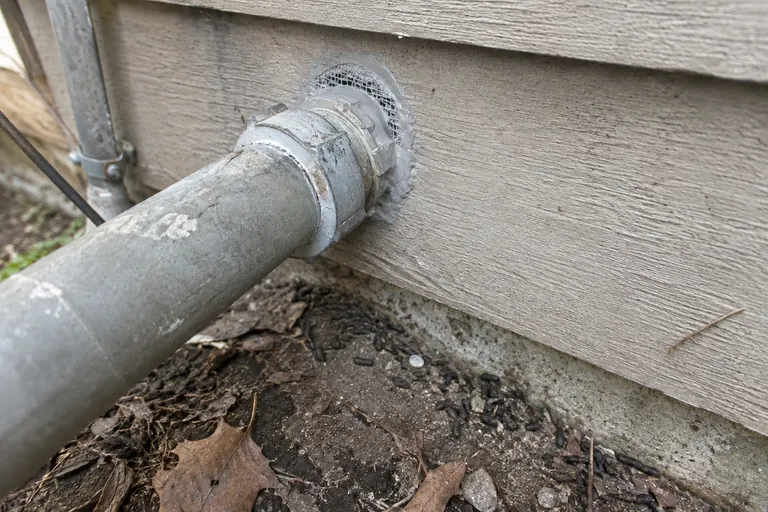
 BeforeAfter
 STEP 01
 STEP 02
 STEP 03
 STEP 04
How we do it
No mystery and no pressure. This is the visit as it happens.
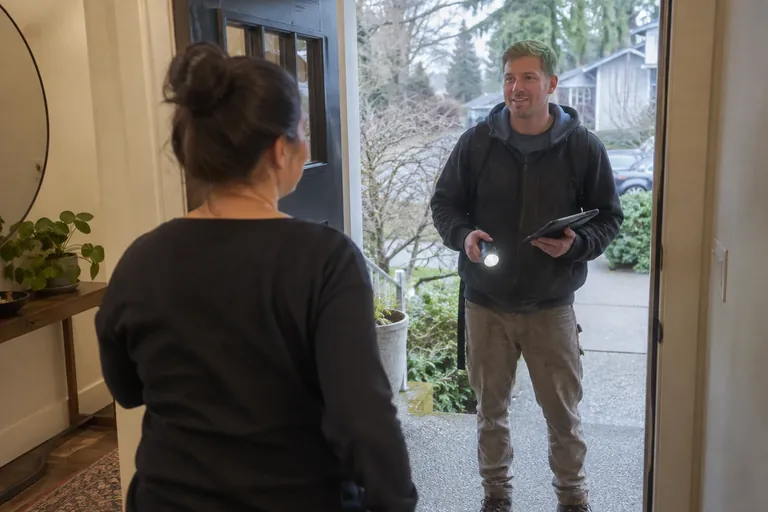
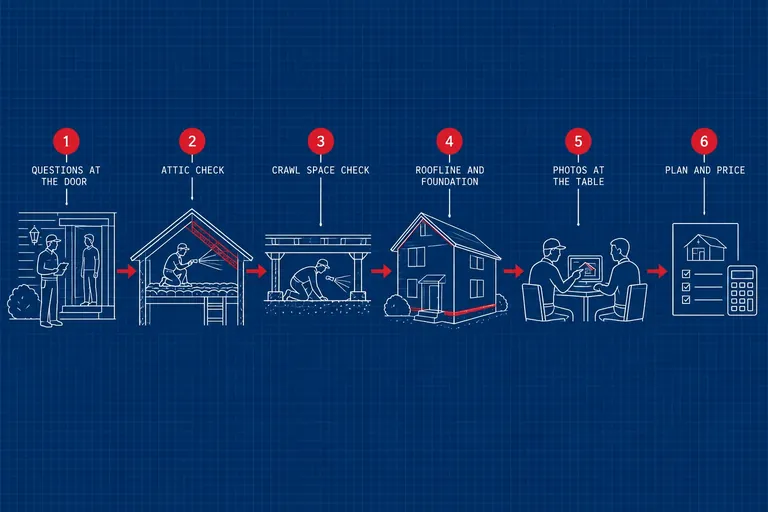
Where do you hear them, and when? Have you seen droppings, and where? Any pets or small children at home? Your answers tell us where to look first. We also ask about past rodent problems and any traps or bait you've already put out, so nothing surprises us in the attic.
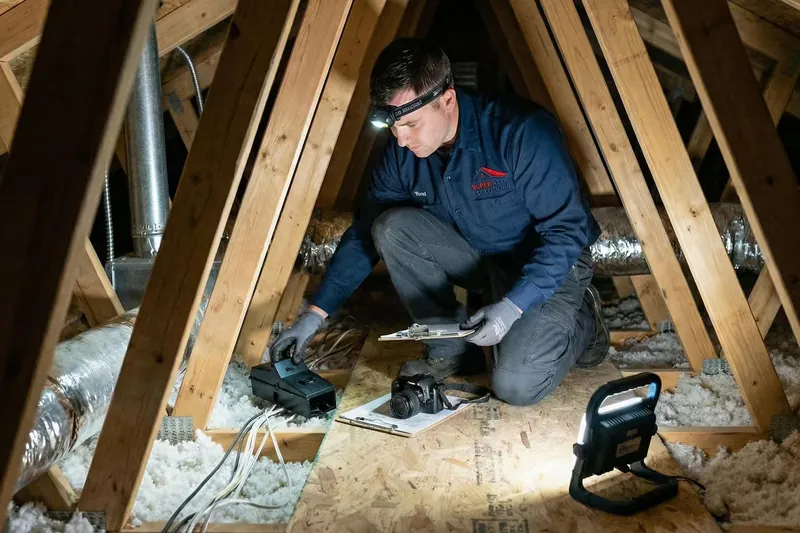
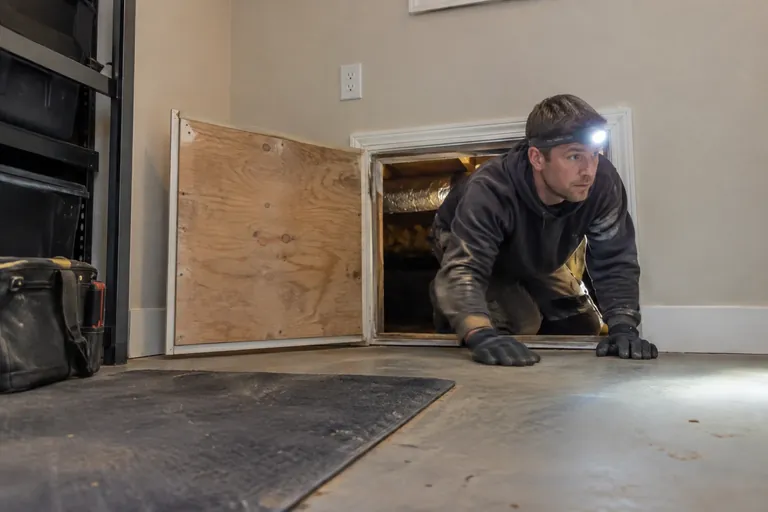
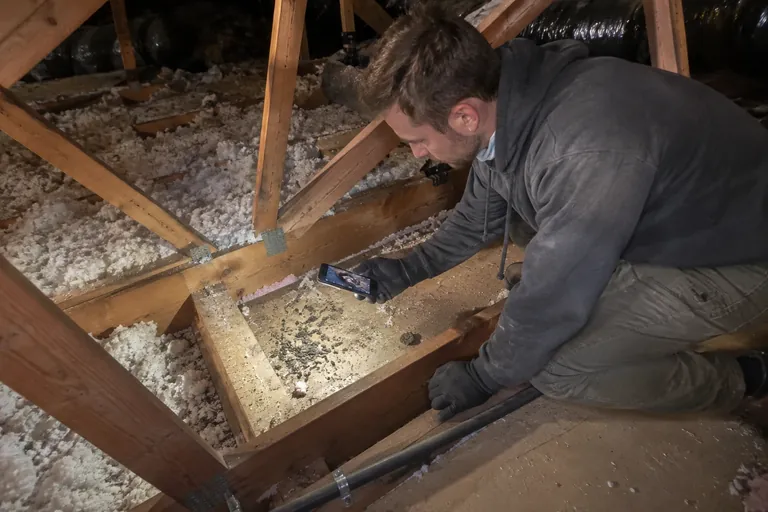
The tech goes up into the attic, under the house into the crawl space, and around the outside from roof to foundation. Droppings, runways, nests, chewed wiring and entry gaps get photographed. Inspecting all three areas is what separates a real diagnosis from a guess.
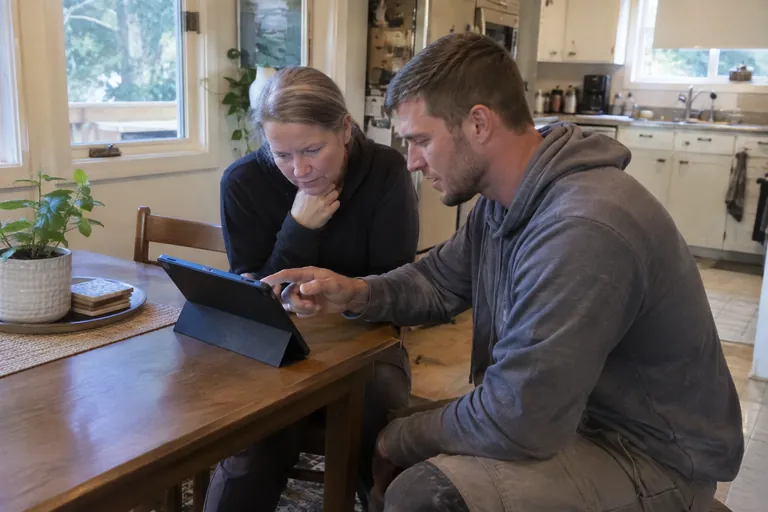
Back at the kitchen table, we go through the photos with you: here's the nest, here's the gap they're using, here's the insulation they've soiled. You see what we saw. Then we explain the plan and the price, and you decide. There's no charge for the inspection.
Once you approve, we set traps on the active runways and tell you where each one is. If bait stations are part of the plan, we explain what they contain and where they go first. We return to clear and reset traps, then seal the entry points with metal once activity stops.
If rodents have soiled the insulation or vapor barrier, we quote cleanup or replacement. Before we close the job, you get before and after photos of the sealed openings and the cleaned spaces, plus notes on anything around the yard worth changing.
What you get
| Who comes | A trained tech who goes into the attic and crawl space |
|---|---|
| Areas checked | Attic, crawl space, garage, exterior walls, roofline and foundation |
| Photos | Droppings, nests, damage and entry points, shown to you on site |
| Plan | Trapping, sealing and any cleanup, with the price, before work starts |
| Methods | Traps first; bait stations only where needed and always disclosed |
| Sealing | Every gap we photographed, closed with metal before the job is signed off |
| Paperwork | Licensed, bonded and insured; WA contractor # ATTICSI795QZ |
Compare
Store-bought traps can handle a single mouse. Here's how the two approaches stack up once rodents have settled in.
| Factor | Doing it yourself | Calling us |
|---|---|---|
| Where traps go | Kitchen floor and garage corners | Attic and crawl space runways |
| Finding the entry point | Hard without a roof and crawl space check | Every gap located and photographed |
| Sealing | Foam or steel wool that fails | Metal mesh, hardware cloth, sheet metal |
| Droppings cleanup | Risky if swept or vacuumed dry | Wet cleanup with respirators |
| Proof it's done | Hoping the noise stays gone | Before and after photos |
Puget Sound homes
A lot of people search for a bug and rodent exterminator. We're upfront: rodents are our work, along with the attic and crawl space damage they leave behind. We don't do routine spraying for ants, spiders or roaches inside the house. What we bring is the part most pest visits skip: a full look at the attic and crawl space, sealing the house shut against rats and mice, and replacing the insulation they ruined. If a nest of wasps or birds is in your attic vents, we can screen and seal those openings too.
Around the Puget Sound, that focus fits the houses. Seattle's older homes with crawl spaces, the Eastside's 1970s to 1990s homes with long soffit runs, and newer homes in Lake Stevens or Lacey all have rodent routes that start outside and end in the attic or under the floor. Roof rats use ivy, laurel hedges and overhanging maples to reach the eaves. Norway rats come up from blackberry thickets and creek banks into foundation vents. An exterminator who only works inside the living space never sees those routes. We follow them from the yard to the nest, which is how we know where the traps should go and which gaps have to be closed.
Pricing
The inspection is free and the quote comes after it. These factors move the number most.
A few mice in a garage is a short job. An attic rat colony with nests in several spots takes more trapping and checks.
Low crawl spaces, tight attics and finished ceilings take more time to work than open, easy-to-reach spaces.
More openings, or openings high on the roofline, add to the sealing portion of the job.
Soiled insulation or vapor barrier is quoted separately once we've seen how far it goes.
We had a pretty bad rat problem in our attic. We heard noises every night. Guys from Super Attic Solutions came out and they trapped the rats and blocked all the holes that allowed the rats to get in. They were on time, professional and fairly priced.
FAQ
Still unsure? Call (800) 674-4933 and talk it through with us.
We handle rodents and the attic and crawl space pests that come with them, like birds and wasps nesting in vents. We don't offer routine indoor bug spraying for ants, spiders or roaches. Our focus is getting rats and mice out, sealing the house so they can't return, and cleaning up the spaces they damaged.
It depends on the size of the house and how easy the attic and crawl space are to get into. We take the time to check all three areas, the attic, crawl space and exterior, because skipping one means missing entry points. We go over the photos with you before we leave.
It helps. We want to show you the photos and talk through the plan in person, and you know where the noises and droppings are. If you can't be there, call us and we'll work out access and the best way to walk you through the photos afterward.
Our main tool is trapping, set on the runways rodents use in the attic and crawl space. In some cases bait stations are part of the plan. Whatever we use, we tell you what it is and where it is before it goes in, so you can keep children and pets away from it.
Yes. We inspect the attic, crawl space and exterior, take photos, show you what we found and give you a quote. There's no charge for that visit and no pressure to book. You can take the quote and think it over.
Trapping keeps catches where we can reach and remove them, which avoids the smell of a rodent dying inside a wall. If an animal has already died somewhere hidden, we locate it, remove it and clean the area. Our dead animal removal page explains how that works.
Related services
We trap the rats and mice living in your home, remove nests and droppings, then seal the way in.
Learn more →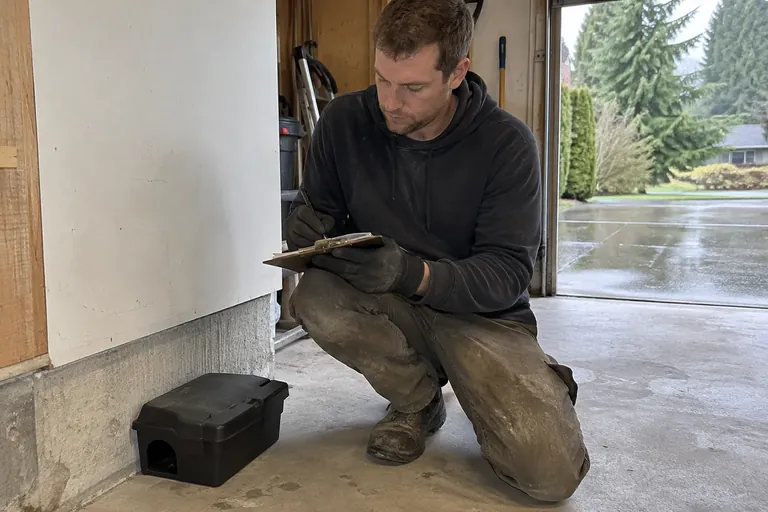
A trapping, monitoring and sealing program that runs until rodent activity in your home stops.
Learn more →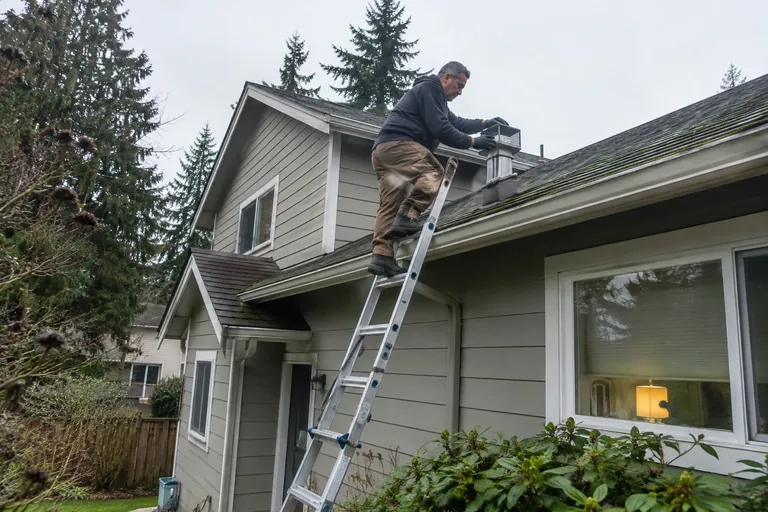
Rodents, birds, squirrels, raccoons and wasp nests in attics and crawl spaces: out, sealed and cleaned up.
Learn more →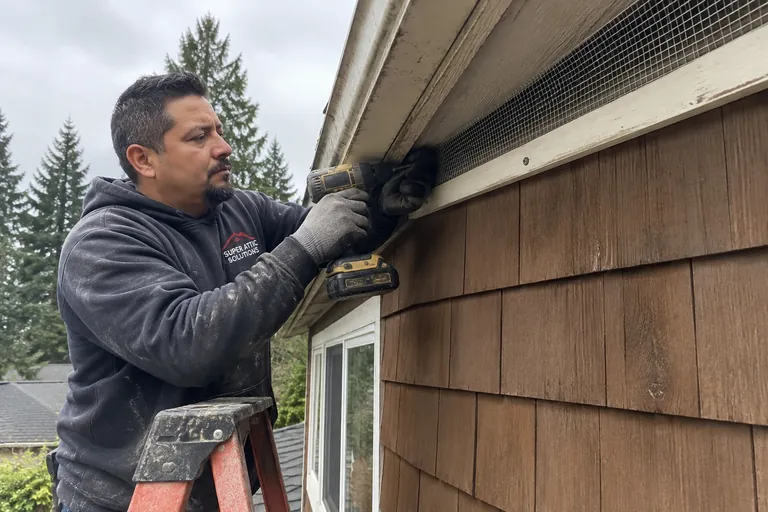
We find every gap rats and mice use, from roof vents to crawl space, and seal it with metal.
Learn more →Book a free inspection. We'll photograph your attic and crawl space and walk you through what we find, before you decide anything.