
Rodents & pests
Rodent removal services
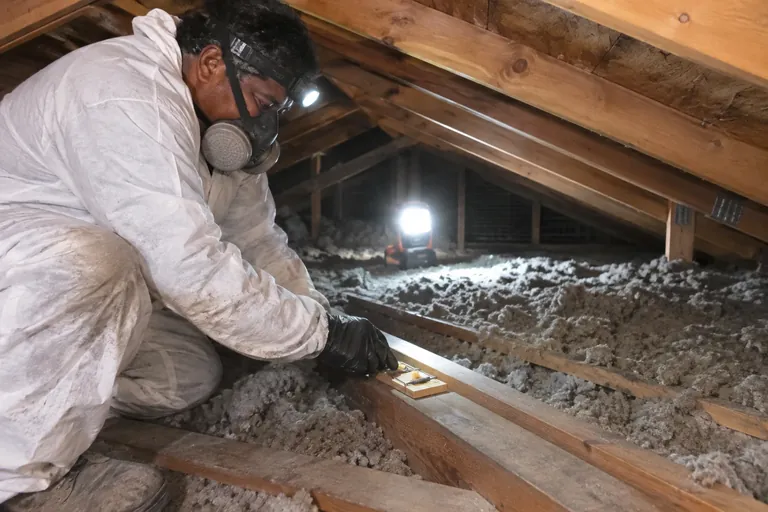
We trap the rats and mice living in your home, remove nests and droppings, then seal the way in.
Learn more →Rodent control · Seattle & Puget Sound
Control is a program, not a single visit. We set traps, check them, track what we catch, seal the house and keep watching until the activity is gone.
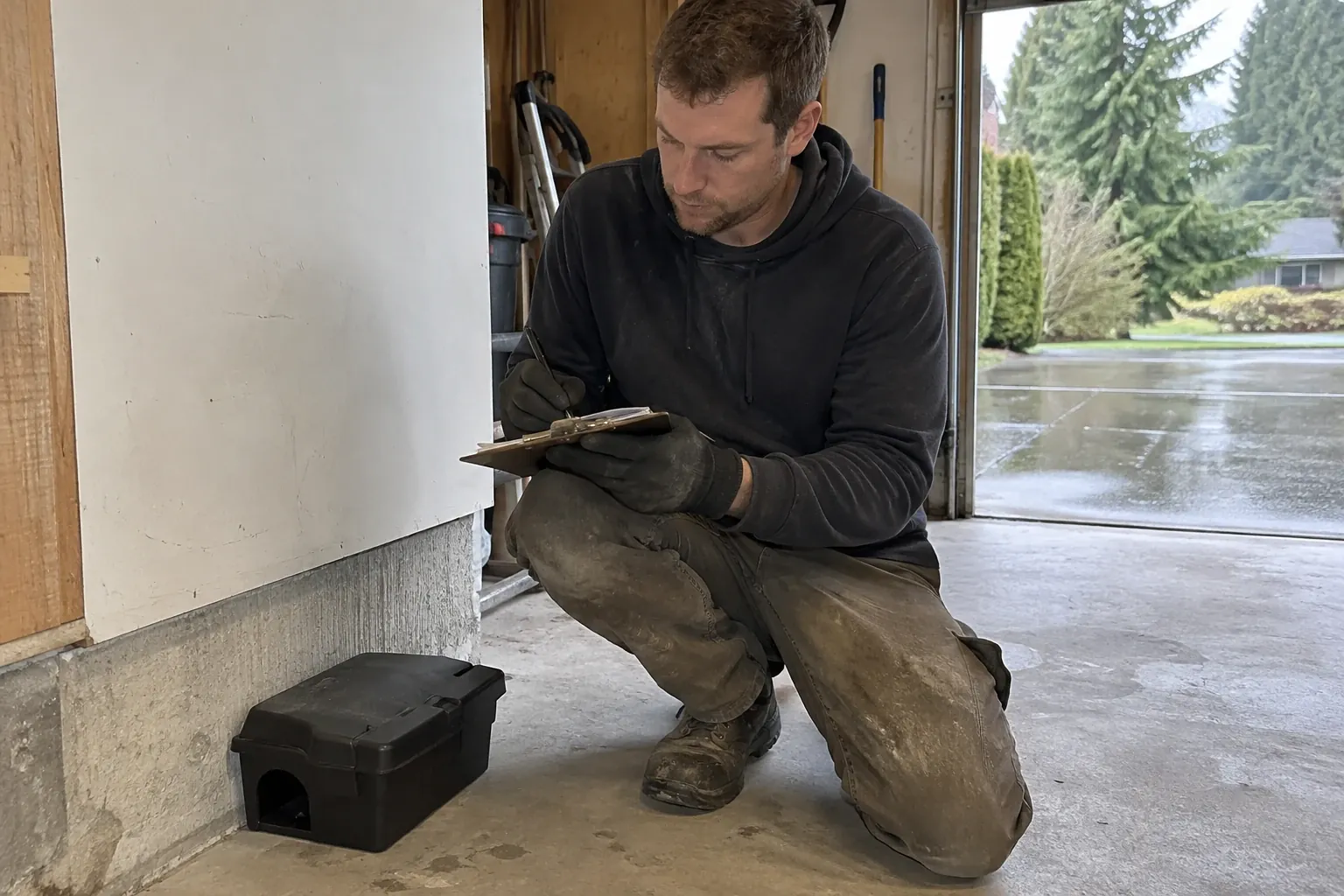 Checking a rodent monitoring station in a garage · Lakewood, WA
The problem
By the time you hear scratching in the ceiling, rodents have usually been in the house for a while. There may be one rat or a family of them. They may be using one entry point or four. A single visit can set traps, but it can't tell you whether the problem is shrinking. That takes repeat checks, a record of what was caught and where, and a clear point where the activity has stopped.
Rodent control is that whole cycle. We inspect, set traps in the runways rodents actually use, come back to check and reset them, and seal the entry points once the catch drops off. Fresh droppings, new chew marks and trap results tell us whether anything is still moving. The job is done when the signs stop, not when a set number of visits is used up.
Warning signs
Some rodent problems are a single mouse. These signs point to something bigger that needs a plan and follow-up.
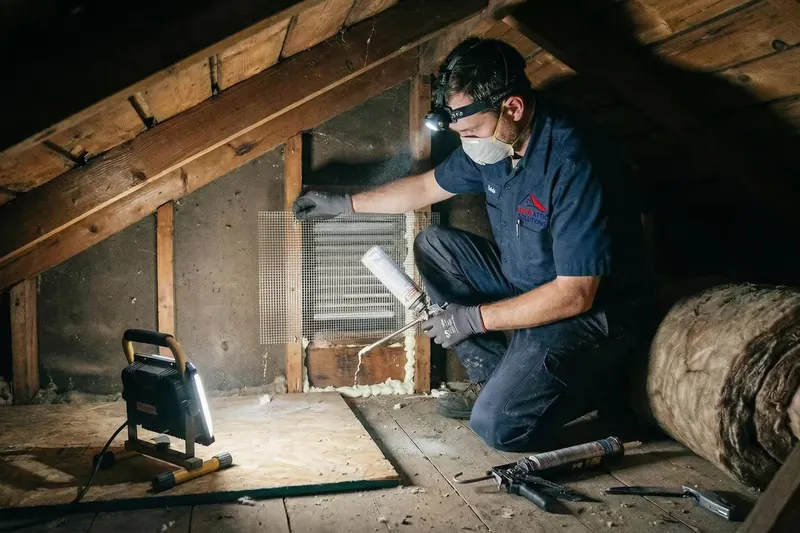
Scratching over the bedroom and the kitchen at once usually means several rodents using different routes through the attic or walls.
New droppings appearing after you've cleaned up means rodents are still active. Old, dry droppings alone can be leftovers.
Rodents learn. After a few catches, the rest often avoid traps set in the open. Placement in runways and regular resets matter.
If you deal with rodents each year when the rain starts, the house has open entry points and needs a plan, not another box of traps.
Duplexes, townhomes and rentals often share attic or crawl space with a neighbor, so one unit's problem spreads to the next.
Chewed boxes in the garage, torn insulation or nibbled pet food mean rodents are comfortable and have settled in.
Proof of work
Drag the slider to compare. Illustrations of typical results on homes like yours.

 BeforeAfter
 STEP 01
 STEP 02
 STEP 03
 STEP 04
How we do it
Each step has a purpose and a record. You can see where things stand at every visit.
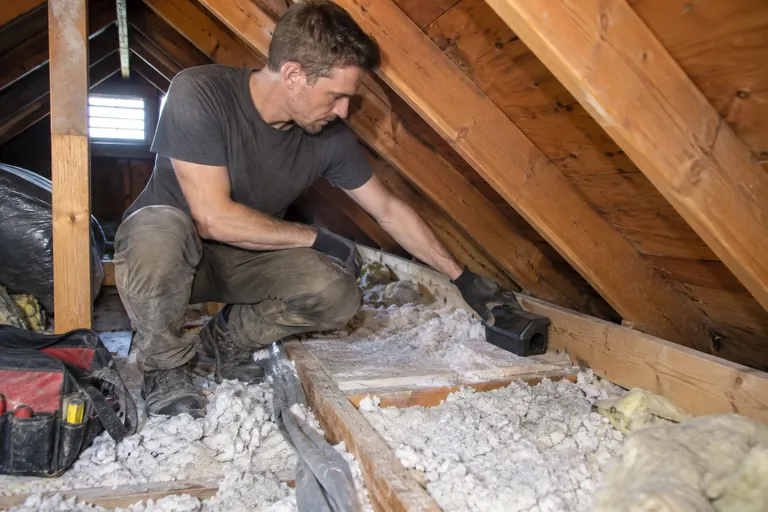
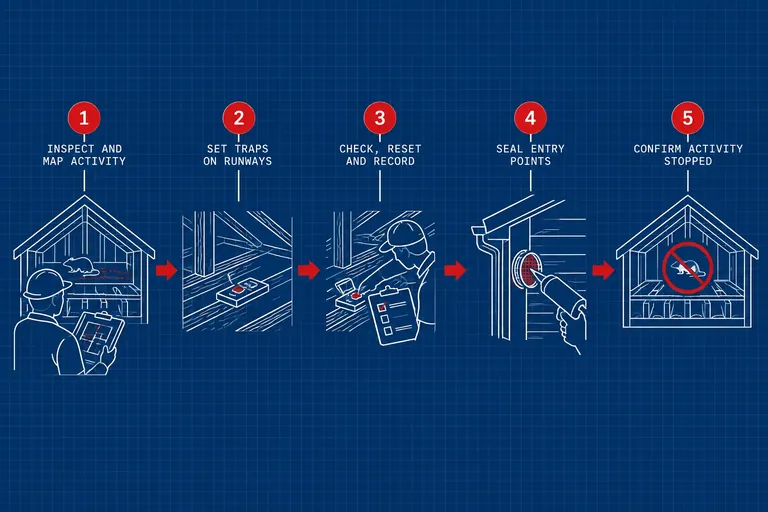
We go through the attic, crawl space, garage and exterior, photographing droppings, rub marks, nests and entry points. From that we map where rodents are traveling and nesting. That map decides where the traps go, so they sit on real runways instead of open floor where rodents walk around them.
Traps go in the attic, crawl space or garage where activity is heaviest. We tell you what we set, where each one is and how to keep kids and pets clear. If bait stations are part of the plan, we explain what they hold and where they sit before anything is placed.
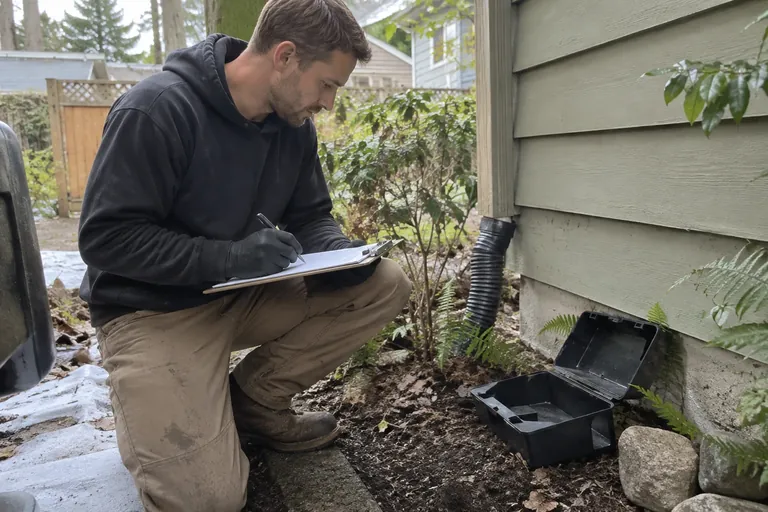
On follow-up visits we check each trap, remove catches, reset or move traps and note what changed. A falling catch and fewer fresh droppings show the population shrinking. If one area stays busy, that points to an entry point or nest we haven't found yet.
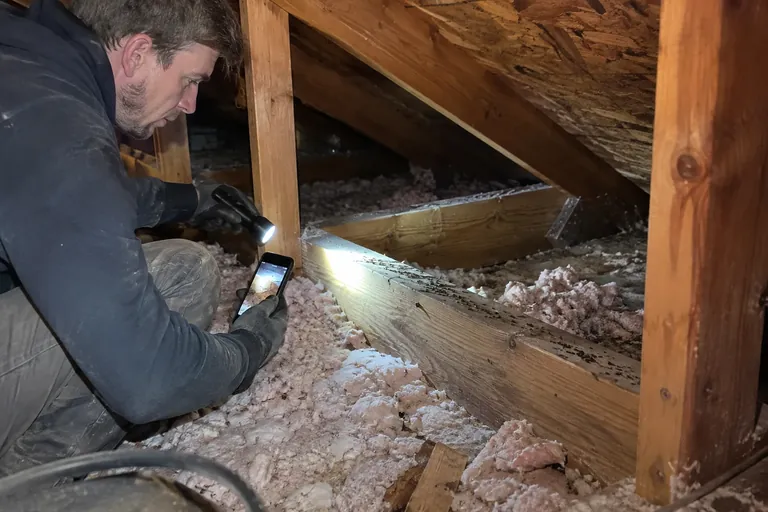
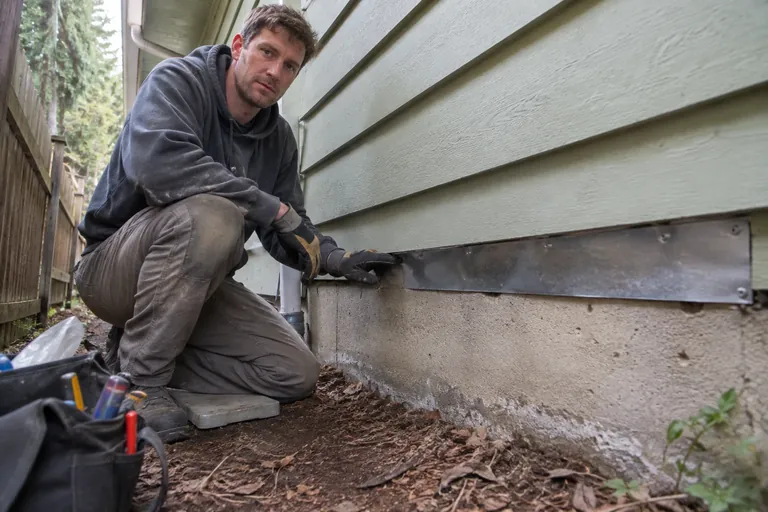
Once the catch drops off, we close the openings with metal mesh, hardware cloth and sheet metal. Sealing at this stage keeps new rodents from replacing the ones removed, and avoids trapping live animals inside your walls. We screen vents rather than block them, so the attic and crawl space still breathe.
We confirm the signs have stopped, remove the traps and give you photos of the before and after. If droppings and nesting have soiled the insulation, we quote cleanup or replacement so the attic or crawl space is left clean.
What you get
| Inspection | Attic, crawl space, garage and exterior, with photos and an activity map |
|---|---|
| Trapping | Traps placed on active runways in the attic, crawl space or garage |
| Trap checks | Return visits to clear, reset and reposition traps until catches stop |
| Activity tracking | Notes on catches and fresh droppings at each visit |
| Bait use | Only if needed; you're told what is used and where before it's placed |
| Sealing | Entry points closed with metal mesh, hardware cloth and sheet metal |
| Wrap-up | Traps removed, final photos, and a cleanup quote if insulation is soiled |
Puget Sound homes
Our region gives rodents what they want: mild winters, plenty of cover and a long wet season that pushes them indoors from October on. Himalayan blackberry, English ivy and dense laurel hedges shelter rat colonies across Seattle, Shoreline and Lynnwood. On the Eastside, greenbelts behind homes in Kirkland, Redmond and Sammamish give rats a steady supply of new arrivals. That is why control has to include sealing. Remove the rodents in one house and the colony next door sends replacements within weeks.
Rodent activity also shifts with the season. Fall brings the most new entries, as the rain sets in and food outside gets scarce. Rats breed through most of the year in our mild climate, so a nest in the attic can keep growing through winter and spring instead of dying back with a hard freeze. Homes near Lake Washington, Puget Sound beaches and creek ravines tend to see steady pressure year-round. A program that runs through a full cycle of activity, rather than a single visit, catches what a quick fix misses and tells you when the house is clear.

Pricing
Every program is quoted after the inspection. These factors make the biggest difference.
A few mice in the garage takes less time than an established rat colony in the attic and crawl space.
Heavier activity means more follow-up visits before catches stop and the house can be sealed.
Attic only, crawl space only, or both plus the garage. More areas mean more traps to place and check.
The number and height of openings, from foundation vents to roof vents, sets the sealing part of the quote.
Soiled insulation or vapor barrier is quoted separately once we know how far the damage goes.
We had a pretty bad rat problem in our attic. We heard noises every night. Guys from Super Attic Solutions came out and they trapped the rats and blocked all the holes that allowed the rats to get in. They were on time, professional and fairly priced.
FAQ
Still unsure? Call (800) 674-4933 and talk it through with us.
Removal is about getting the rodents that are inside out now. Control is the full program around it: inspection, trapping, repeat trap checks, tracking whether activity is falling, sealing, and a final check. Most Seattle-area homes with an established problem need the full program, because a one-time removal leaves the entry points and the next wave of rodents.
It depends on how many rodents are in the house and how many ways they're getting in. A small mouse problem can wrap up quickly. An attic rat colony takes longer, because traps need several rounds of checks before catches stop. We tell you at each visit what we're seeing, so you know where things stand.
Trapping and sealing are the core of our work. In some situations bait stations are part of the plan. We never place anything without telling you first what it is, where it goes and how to keep pets and children away from it. If you have concerns about a specific method, tell us at the inspection and we'll plan around them.
Sealing while rodents are still living inside traps them in your attic or walls. They chew new holes to get out, or they die where you can't reach them and the smell lasts for weeks. We trap first, wait until the catch drops off, then seal. The order matters.
No. We set, check, clear and reset the traps ourselves on follow-up visits. All you need to do is keep kids and pets away from the areas we mark and let us know if you hear new activity between visits. That feedback helps us decide where to move traps next.
Three things: traps stay empty across checks, no fresh droppings show up in areas we cleaned or marked, and the noises stop. We photograph activity at the start and compare at the end. When all three line up, we pull the traps and finish the job.
Related services
We trap the rats and mice living in your home, remove nests and droppings, then seal the way in.
Learn more →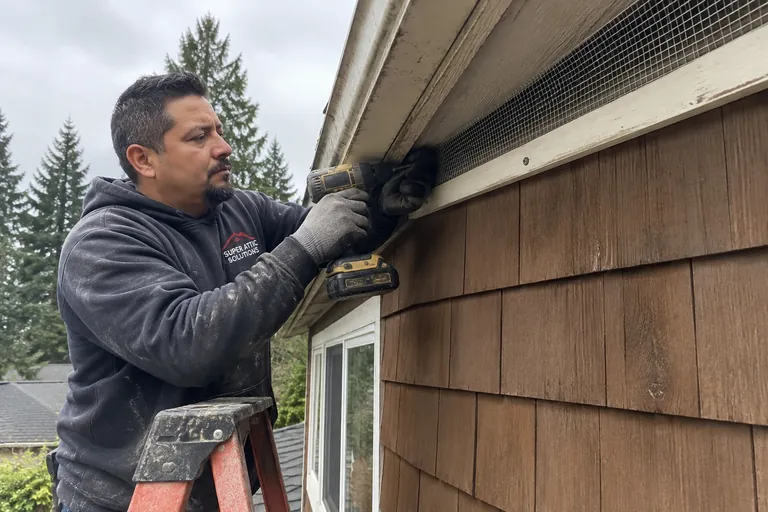
We find every gap rats and mice use, from roof vents to crawl space, and seal it with metal.
Learn more →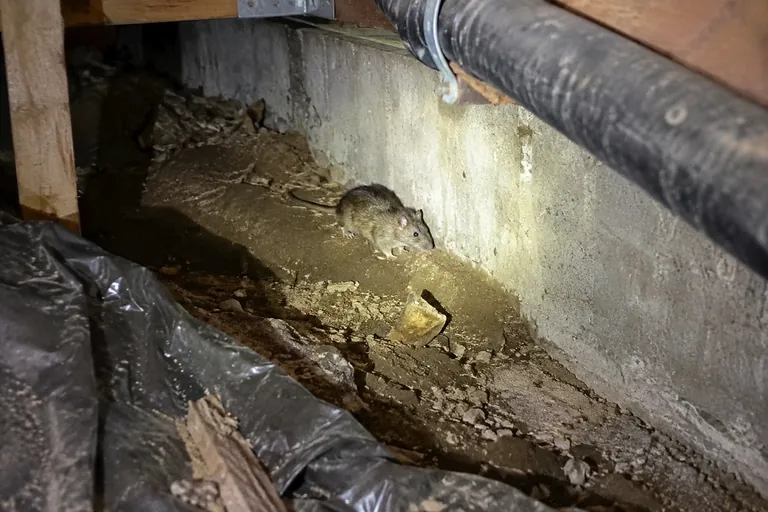
Roof rats, Norway rats, house mice or deer mice: we identify yours, then build the plan around it.
Learn more →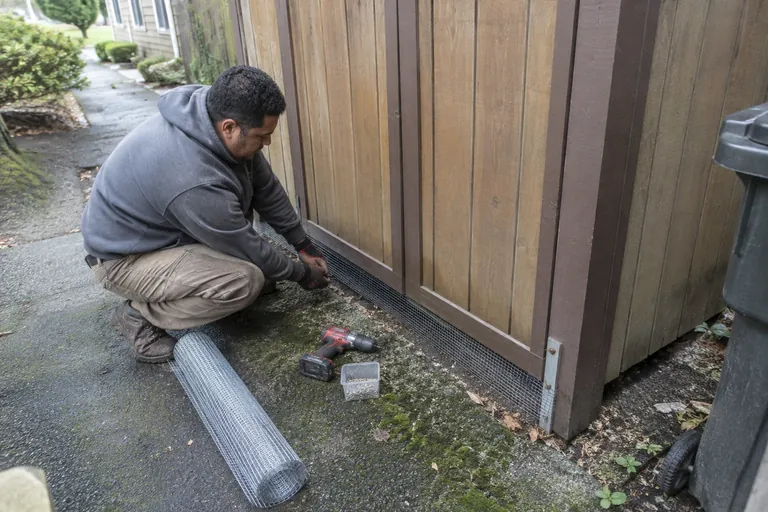
Trapping and sealing across apartments, condos and townhomes, with photo reports for managers and boards.
Learn more →Book a free inspection. We'll photograph your attic and crawl space and walk you through what we find, before you decide anything.