
Insulation
Batt insulation installation
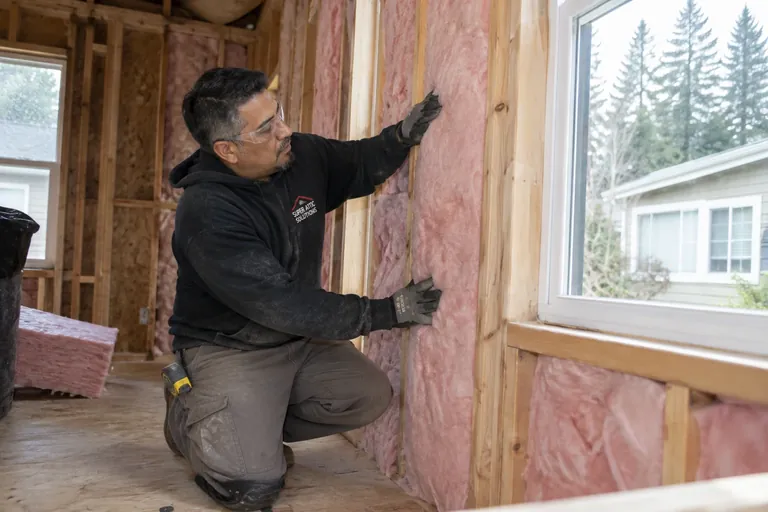
Fiberglass and mineral wool batts for crawl space floors, knee walls and open walls, fitted bay by bay.
Learn more →Fiberglass roll insulation · Seattle & Puget Sound
Rolls are continuous blankets of fiberglass cut to length on site. They cover long joist runs with fewer seams, and laid across the joists they bury the cold lines old insulation leaves.
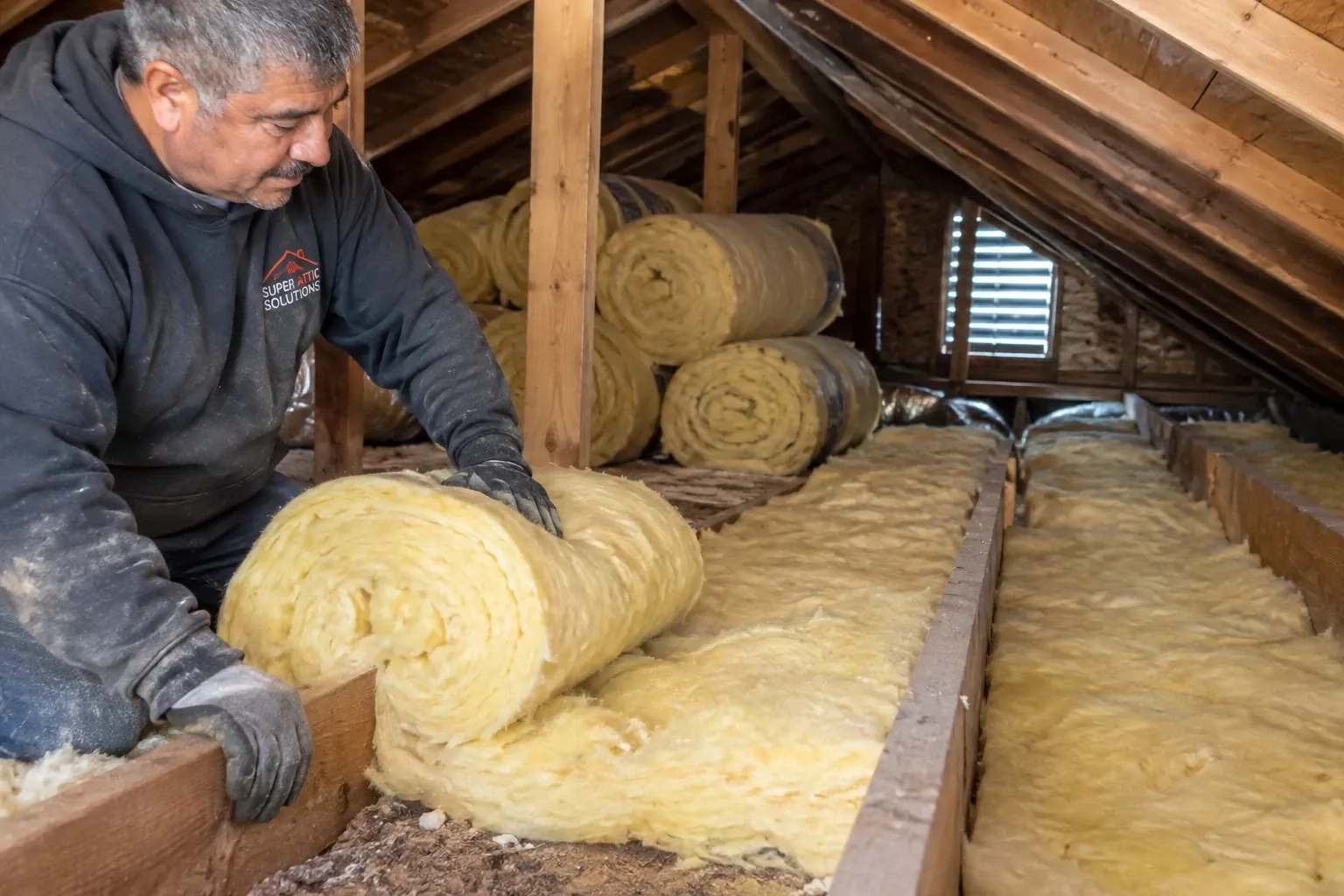 Unrolling fiberglass roll insulation between attic joists · Seattle, WA
The problem
Fiberglass rolls and batts are the same basic material. The difference is the shape. Batts come in short, pre-cut pieces. Rolls come as one long blanket that we cut to the exact length of each bay. On a long, open attic run, that means one piece from the eave to the ridge side of the bay instead of three or four pieces with gaps between them. Fewer seams means fewer places for heat to slip through.
Rolls do their best work as a second layer. Many attics have insulation that sits level with the tops of the ceiling joists. The wood joists themselves conduct heat, so every joist becomes a cold stripe across the ceiling. Unfaced rolls laid perpendicular to the joists, right across the top of the old layer, cover those stripes and the seams below in one pass. It's a simple, durable way to add depth.
Warning signs
Rolls suit some attics very well and others not at all. These are the good fits.
When existing insulation fills the bays but the joist tops show, a cross layer of rolls covers them and adds depth.
Attics with long, clear runs between the eaves let rolls go in as single pieces with few seams.
Rolls hold their shape better than loose fill when you step carefully on joists to reach a furnace or storage.
Open ceiling joists in a garage or shop are easy to cover with rolls once the gaps are sealed.
Newer additions often have long, regular framing that rolls cover cleanly without much cutting.
Rolls need clear bays. In attics with few cables and braces, they go in quickly and cleanly.
Proof of work
Drag the slider to compare. Illustrations of typical results on homes like yours.

 BeforeAfter
How we do it
Measure, seal, then lay the rolls in the direction that does the most good.
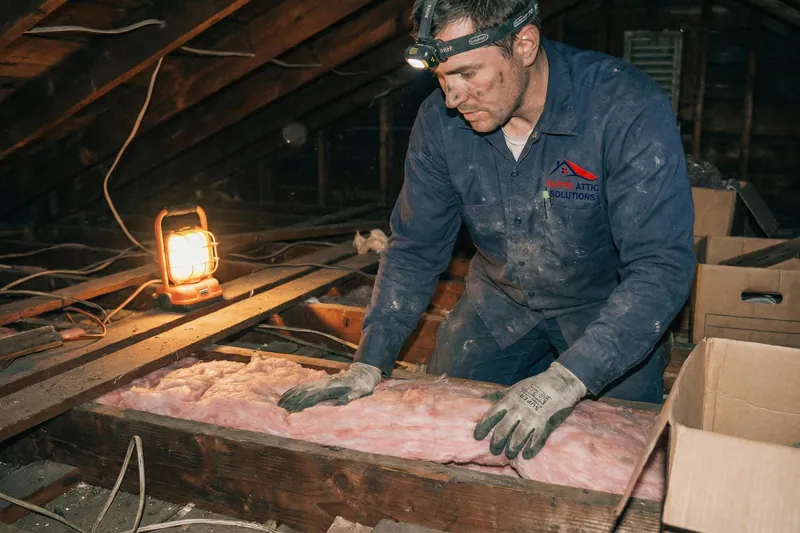
We measure bay lengths and depths, note joist spacing, wiring, ducts and obstacles, and check the existing insulation for moisture and droppings. That tells us whether rolls are the right fit, whether they go in the bays or across them, and which thickness gets you to the target.
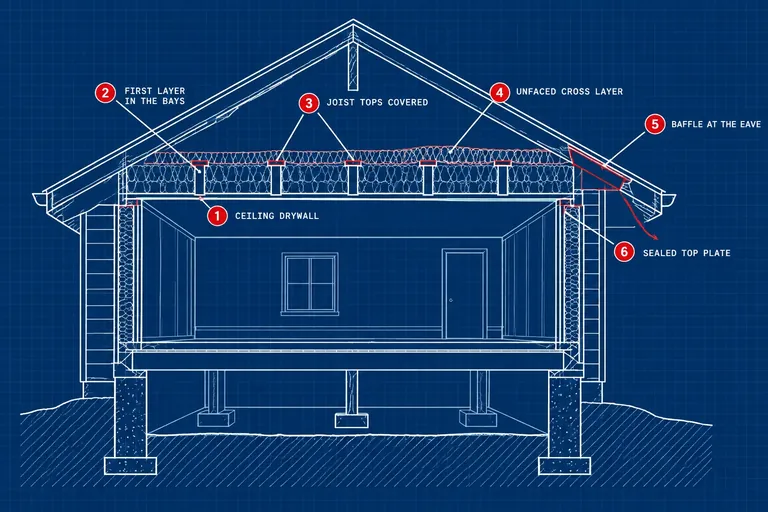
Before we cover anything, we seal leaks around plumbing, wiring, fixtures and top plates. Baffles go in over the soffit vents. We keep clearance around flues, chimneys and fixtures that aren't rated for insulation contact, and build a dam at the hatch.
If the bays are empty or the old layer comes out, we roll insulation into each bay, cut to length, with ends butted tight and split around any wiring. The first layer goes in level with the joist tops so the cross layer can sit flat on it.
Unfaced rolls go across the joists, at right angles to the layer below, with edges pushed tight together. We don't use faced rolls for this layer, because the facing would trap moisture between the layers. Ends are cut neatly at the eaves without blocking the baffles.
We walk the edges with a flashlight looking for gaps, lifted seams and spots near the hatch that got stepped on. The hatch gets insulated and weatherstripped. We clear offcuts and wrappers, clean the work path and photograph the finished attic for you.
What you get
| Material | Fiberglass rolls, unfaced or kraft-faced |
|---|---|
| Products | CertainTeed and Knauf fiberglass with ECOSE Technology |
| Typical areas | Attic floors, garage and shop ceilings, additions |
| Cross layer | Unfaced, perpendicular to joists, edges butted tight |
| Prep | Air sealing, eave baffles, flue clearance, hatch dam |
| Old insulation | Kept if dry and clean; removed if wet or soiled |
| Cleanup | Offcuts and wrappers removed, path cleaned |
| Photos | Before and after, plus close-ups of the eaves |
Compare
Same fiberglass, different shape. The shape changes where each one works best.
| Factor | Fiberglass rolls | Pre-cut batts |
|---|---|---|
| Shape | One long blanket, cut to length on site | Short pieces in standard lengths |
| Seams on long runs | Few; one piece per bay | More; several pieces butted end to end |
| Cross layer over joists | Well suited; long pieces span many joists | Works, but more seams to close |
| Short or broken-up bays | More cutting and waste | Faster where bays are short |
| Walls | Possible, but more handling | Usually the easier choice |
Puget Sound homes
Plenty of homes in Lynnwood, Everett, Federal Way and Kent have attics that were insulated once, decades ago, to roughly the depth of the ceiling joists. The insulation is still there and often still dry, but the joist tops are bare and the total is far below the R-49 to R-60 Washington now targets for new homes. A perpendicular layer of rolls over that old layer is one of the cleanest ways to close the gap without tearing anything out.
Fiberglass also handles our climate well. It doesn't absorb water the way paper-based insulation does, so a winter of damp attic air or a small leak that gets caught early won't ruin it. It doesn't settle, so the depth you get is the depth you keep. That said, rolls still need a sealed ceiling below them. From October to May, air leaks carrying shower steam and cooking moisture into the attic are the bigger risk, so we seal them before the rolls go down.

Pricing
Roll installs are quoted from the attic layout and the depth you want.
One cross layer over existing insulation costs less than filling empty bays and adding a cross layer.
Thicker rolls reach a higher R-value in one layer and cost more per roll.
Wiring, ducts, braces and short bays mean more cutting, more fitting and more time.
Air sealing, baffles and hatch work, which we do before any rolls go down.
If the existing layer is wet or soiled, removal comes first and adds to the job.
We had rodent problem in our house. Also our house had bare minimum insulation in some places. Isaac was very helpful, he also took some photos of the attic and crawl space. They gave me a reasonable quote for rodent proofing and insulation. Their crew was on time and finished the job in two days. Really appreciate their hard work.
FAQ
Still unsure? Call (800) 674-4933 and talk it through with us.
The material is the same. Batts are pre-cut pieces in standard lengths. Rolls are long continuous blankets that we cut to fit each bay. Rolls mean fewer seams on long runs and work well as a cross layer in attics. Batts are faster in walls and short bays.
Unfaced. A kraft facing acts as a vapor retarder, and putting one on top of an existing layer can trap moisture between the two layers. The second layer is always unfaced, laid perpendicular to the joists over the first one.
Wood joists conduct heat much more than insulation does. When insulation stops at the joist tops, every joist becomes a cold line across the ceiling. Laying the second layer across the joists covers them and the seams in the first layer, so the attic floor is insulated as one continuous blanket.
Fiberglass irritates skin, eyes and throat while it's being handled, which is why our crew wears long sleeves, gloves, eye protection and respirators. Once it's installed in the attic and left alone, it isn't drifting into your living space. We keep the hatch area closed off and clean the path.
Not directly. Weight compresses the insulation, and compressed insulation loses much of its value. If you need storage, we can build a raised platform so the rolls stay at full height underneath. Fiberglass rolls do hold up better than loose fill to occasional careful foot traffic on the joists.
It depends on the attic. In open attics with long, clear runs, or where a cross layer can cover old insulation, rolls are a strong option. In attics crowded with wiring, braces and odd-shaped bays, blown-in usually covers better. We'll show you photos and tell you which one we'd use.
Related services
Fiberglass and mineral wool batts for crawl space floors, knee walls and open walls, fitted bay by bay.
Learn more →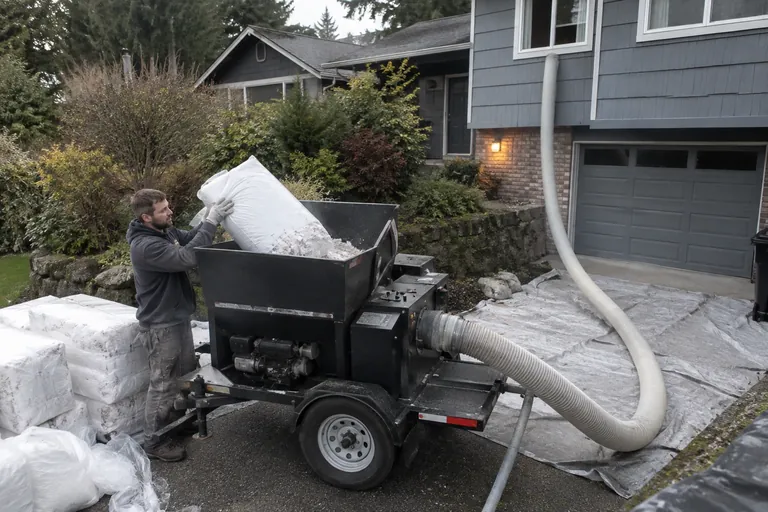
Fiberglass or cellulose loose fill blown to an even depth across the attic floor, corners included.
Learn more →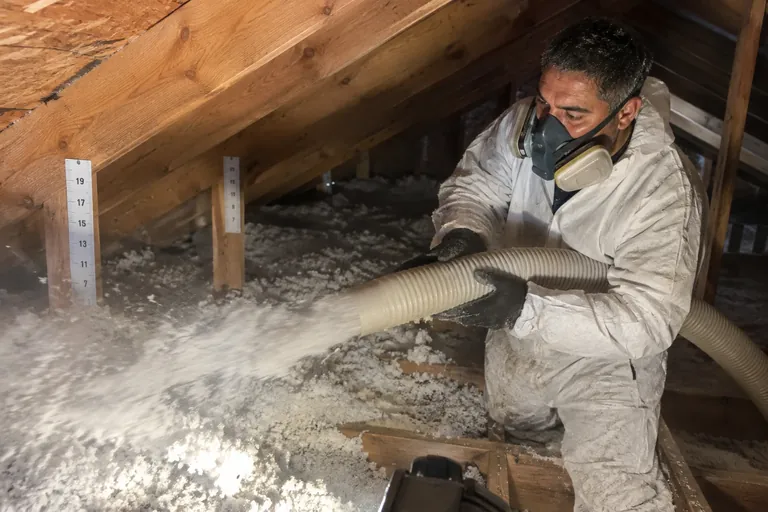
How much insulation your attic needs, which material fits, and what it takes to get there.
Learn more →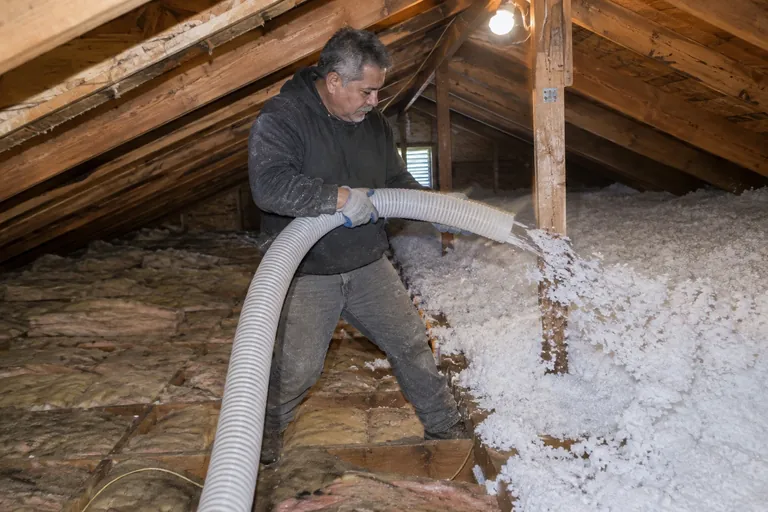
Old insulation out, space cleaned and sealed, new insulation in, as one planned project.
Learn more →Book a free inspection. We'll photograph your attic and crawl space and walk you through what we find, before you decide anything.