
Insulation
Soundproofing insulation
Mineral wool in interior walls and floors to cut noise between rooms, with honest advice on the rest.
Learn more →Rockwool insulation · Seattle & Puget Sound
Rockwool, or mineral wool, is spun from rock. It doesn't burn, sheds water and stands firm in the framing. It costs more than fiberglass, and in the right spots it earns it.
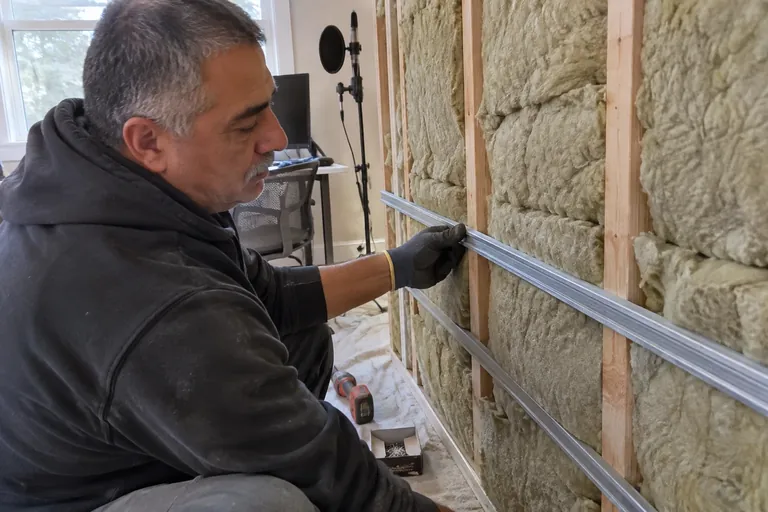
 Installing mineral wool insulation in a wall · Marysville, WA
The problem
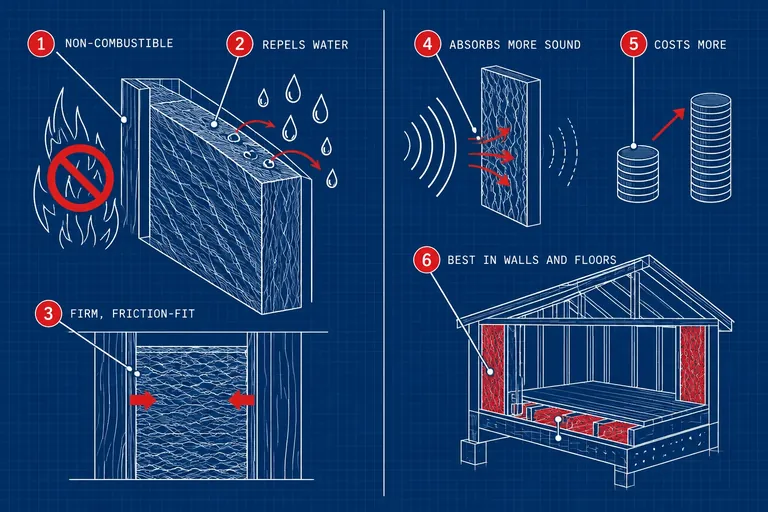
Rockwool, also called mineral wool or stone wool, is made by melting rock and recycled slag and spinning it into fibers, much like fiberglass is made from glass. The result is denser and firmer. A rockwool batt stands up on its own, friction-fits into a stud bay without staples and doesn't slump over time. It's non-combustible and holds up to very high temperatures. It also repels liquid water rather than wicking it in.
None of that makes it the best choice everywhere. Rockwool costs more than fiberglass batts and is heavier to handle. For a wide-open attic floor, blown fiberglass or cellulose usually does the job for less. Where rockwool pulls ahead is in walls, floors and spots near heat or moisture, and in rooms where you also want to cut down on noise. We'll tell you which spots in your house those are.
Warning signs
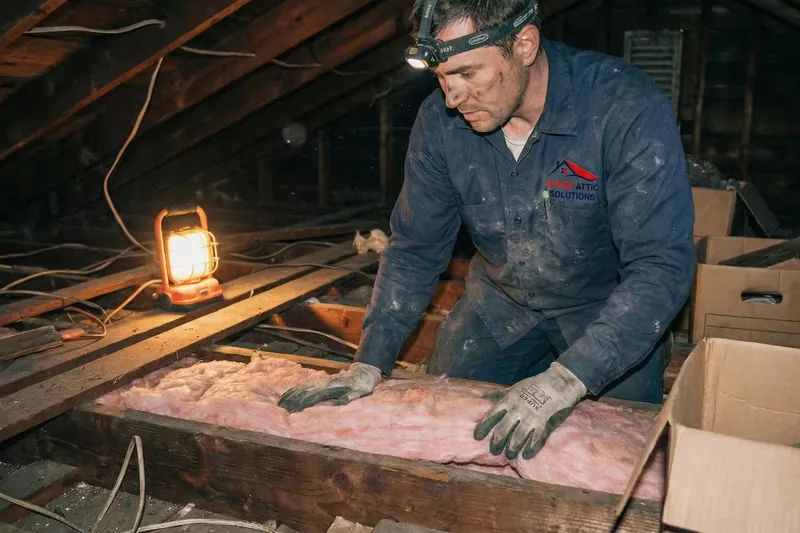
These are the places we most often recommend mineral wool over other materials.
Walls and ceilings around mechanical rooms and garages benefit from a material that won't burn or melt easily.
Mineral wool sheds water and holds its shape, so it stays up against the subfloor through wet winters.
Firm batts friction-fit snugly into stud bays and fill them edge to edge, with less risk of gaps.
Dense mineral wool absorbs sound better than lighter fiberglass in interior walls and floors between levels.
Rigid batts stay in place in vertical and sloped bays where softer insulation tends to slide down.
Some homeowners choose it simply for its fire resistance in areas they care most about.
Proof of work
Drag the slider to compare. Illustrations of typical results on homes like yours.
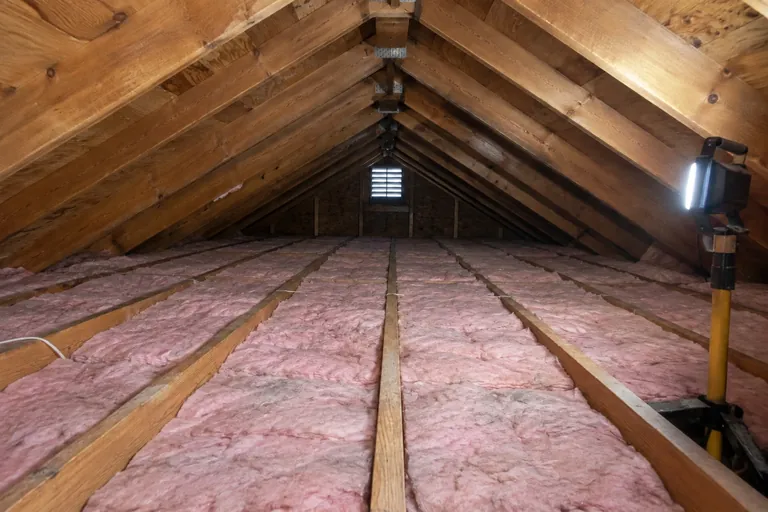
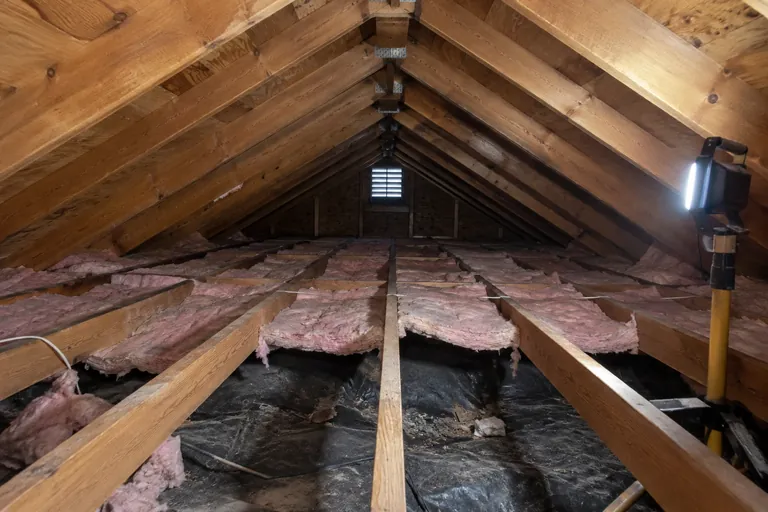 BeforeAfter
How we do it
Mineral wool is installed a lot like batts, with a few differences that matter.
During the inspection we look at where your house would benefit most: damp crawl space floors, walls near mechanical equipment, knee walls, rooms where sound is an issue. We'll often recommend mineral wool for some areas and a less costly material for the open attic floor.
We seal rim joists, subfloor penetrations, top plates and knee wall edges so air doesn't move around the insulation. Under floors we also look at the ground cover for tears and gaps. Old sagging or soiled insulation comes out and is bagged before the new batts go in.
Rockwool is cut with a long serrated knife, so each batt can be trimmed slightly oversized for a snug friction fit. Around wiring and boxes we cut clean notches. The firmness means it stays at full thickness instead of being crushed into tight spots.
In walls the batts press in and hold on their own. Under floors they go up tight against the subfloor with supports so they stay there. In knee walls and slopes they fill the bay edge to edge. Offcuts get used to fill small gaps rather than leaving them open.
Mineral wool sheds fine dust when cut, so we cut in a controlled spot, collect offcuts and clean up as we go. We photograph each area before the walls close or before we leave the crawl space, so you have a record of what's behind the drywall.
What you get
| Material | Mineral wool (stone wool) batts |
|---|---|
| Fire behavior | Non-combustible; holds up to very high heat |
| Moisture | Repels liquid water; doesn't wick |
| Typical areas | Walls, crawl space floors, knee walls, between floors |
| Fitting | Cut slightly oversized for a friction fit |
| Air sealing | Rim joists, top plates, penetrations, knee wall edges |
| Mixed jobs | Often paired with blown-in on the open attic floor |
| Photos | Every area before walls close or we leave |
Compare
Both are good insulation. Here's where they differ.
| Factor | Rockwool (mineral wool) | Fiberglass batts |
|---|---|---|
| Made from | Rock and slag spun into fibers | Glass spun into fibers |
| Fire behavior | Non-combustible; very high melting point | Glass won't burn, but facings can; lower melting point |
| Moisture | Repels water; holds its shape | Fibers don't absorb, but wet batts sag |
| Fit in framing | Firm; friction-fits without staples | Soft; needs care to avoid gaps |
| Sound absorption | Denser; absorbs more sound | Helps, but less than mineral wool |
| Cost | Higher | Lower |
Puget Sound homes
Crawl spaces are where rockwool earns its price here. Under homes in Seattle, Tacoma, Olympia and across the region, the crawl space stays damp from October to May. Fiberglass batts in that setting tend to absorb moisture from the air, get heavy and sag away from the subfloor over the years. Mineral wool sheds water and holds its shape, so it stays tight to the floor. It still needs a good vapor barrier on the ground and sealed rim joists to do its job.
Remodels are the other big use. Older Seattle homes being opened up for kitchen and bath work, and Eastside houses in Redmond, Sammamish and Issaquah getting ADUs and additions, often have empty or poorly filled walls. When the studs are exposed, firm mineral wool batts fill those bays cleanly and give the finished walls better fire resistance and a quieter feel. We work around your remodel schedule so the insulation goes in, gets photographed and is checked before any drywall covers it.

Pricing
Rockwool is priced by area, access and how it's mixed with other materials.
Which walls, floors or slopes get mineral wool, and how much of each.
Mineral wool costs more than fiberglass. Using it only where it matters keeps the total sensible.
Low crawl spaces and tight knee walls take longer than open stud bays during a remodel.
Sagging, wet or rodent-soiled insulation has to come out before new batts go in.
Rim joist sealing, penetration sealing and under-floor supports add to the job.
We had rodent problem in our house. Also our house had bare minimum insulation in some places. Isaac was very helpful, he also took some photos of the attic and crawl space. They gave me a reasonable quote for rodent proofing and insulation. Their crew was on time and finished the job in two days. Really appreciate their hard work.
FAQ
Still unsure? Call (800) 674-4933 and talk it through with us.
In some places, yes. Mineral wool is denser, non-combustible, repels water and fits more firmly in framing, and it absorbs more sound. Fiberglass costs less and does a fine job on open attic floors and many walls. We often use both in the same house, each where it fits best.
Mineral wool is made of stone fibers, which aren't a food source for mold, and it repels liquid water. Mold can still grow on dust or on wood next to it if a space stays wet. It's a good choice for damp areas, but it doesn't replace fixing the leak or putting down a vapor barrier.
Yes. Mineral wool batts work on attic floors, in knee walls and in sloped ceilings. For a large open attic floor, blown-in fiberglass or cellulose usually costs less for the same R-value. We often install rockwool in the knee walls and slopes and blow insulation over the open floor.
It's non-combustible, which means the stone fibers themselves don't burn, and it holds up to very high temperatures. That gives walls and ceilings better fire resistance. No insulation makes a house fireproof, and clearances around chimneys and flues still apply. We follow them on every job.
No insulation keeps rodents out. Rats and mice can still move through or nest near mineral wool. Keeping them out means trapping the ones inside and sealing every entry point. We do that before installing any new insulation, so it stays clean.
It sheds fine dust when it's cut, and fibers can irritate skin and eyes while handling it. Our crew wears gloves, long sleeves, eye protection and respirators, cuts in a controlled spot and cleans up as we go. Once installed and covered, it stays put.
Related services
Mineral wool in interior walls and floors to cut noise between rooms, with honest advice on the rest.
Learn more →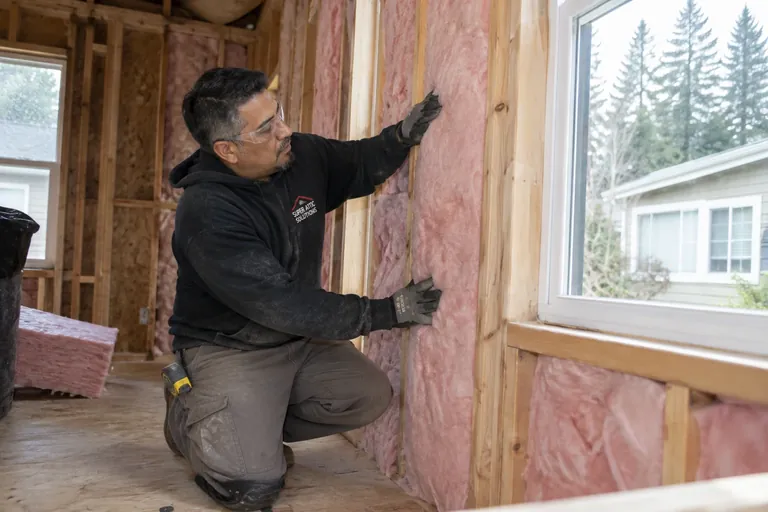
Fiberglass and mineral wool batts for crawl space floors, knee walls and open walls, fitted bay by bay.
Learn more →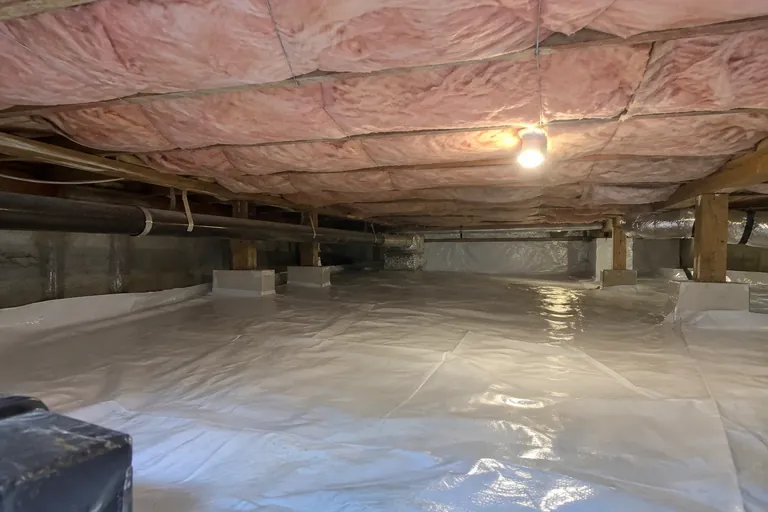
New underfloor batts, fitted tight to the subfloor and supported so they stay up.
Learn more →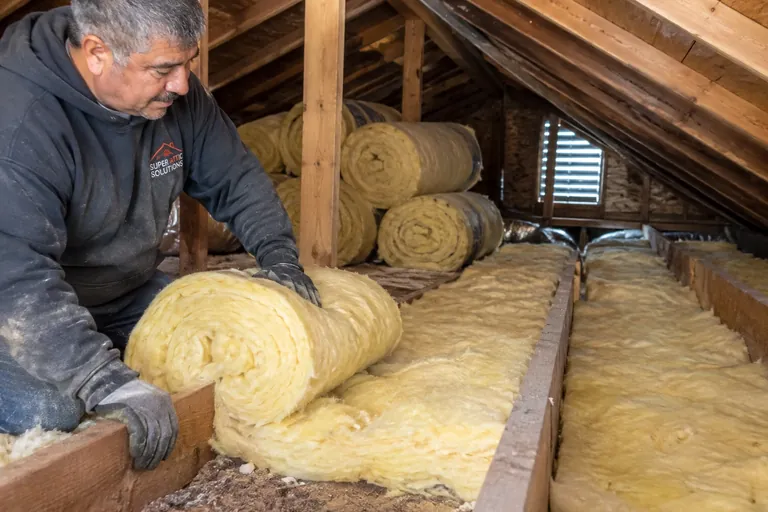
Continuous fiberglass rolls for long attic runs and cross layers over existing insulation.
Learn more →Book a free inspection. We'll photograph your attic and crawl space and walk you through what we find, before you decide anything.