Attic services
Attic cleaning
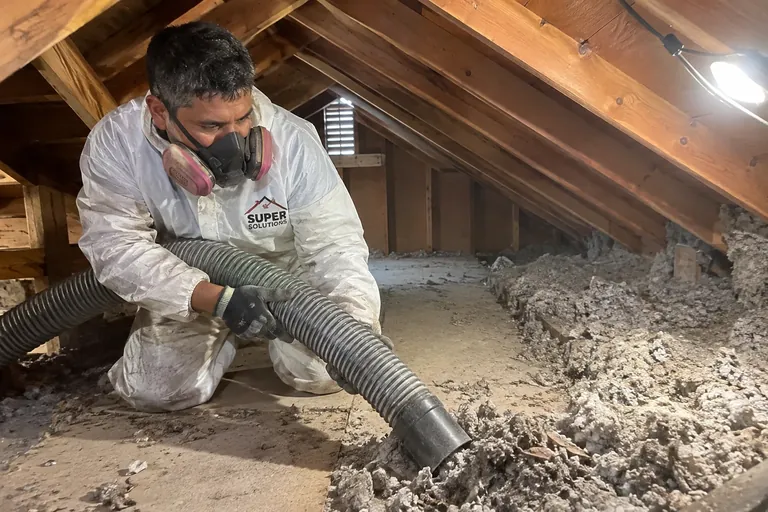
Removal of rodent droppings, nesting, old debris and soiled insulation, hauled out in sealed bags.
Learn more →Attic decontamination · Seattle & Puget Sound
Animal waste soaks into insulation and wood. We take out the soiled material, disinfect and deodorize the framing, and handle it all as the biohazard it is.
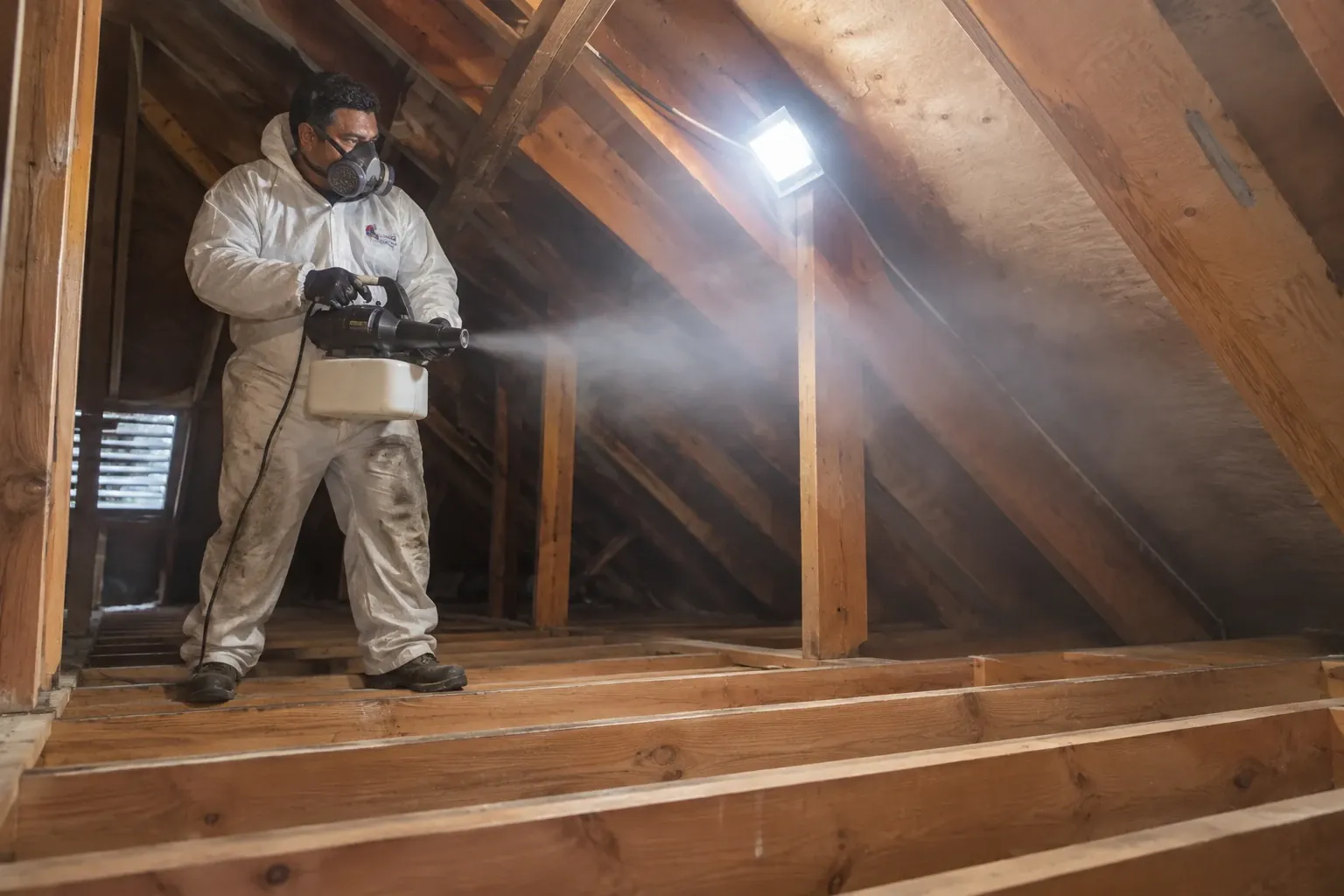 Sanitizing an attic after rodent cleanup · Seattle, WA
The problem
Once the animals are gone, the attic is still a problem. Urine soaks through insulation into the drywall paper and the wood of the joists. Droppings break down into dust. A rat or squirrel that dies in a wall or under the insulation leaves a smell that can fill a room. Raccoons pick one corner and use it as a latrine. None of this airs out on its own, and in a damp climate the odor comes back every time the attic warms up.
Attic decontamination deals with that contamination. It is different from a general cleanout. The focus is on biological waste: removing it safely, without spreading dust through your home, then treating the surfaces it touched so the smell and residue are gone. We start by making sure the animals are out and the entries are sealed, because decontaminating an attic that animals can still reach does not last.
Warning signs
Odor is usually the first clue. What you find when you look tells us how far the contamination has gone.
An ammonia or sour smell from ceiling vents, light fixtures or closets that gets worse in warm or humid weather.
Yellow or brown spots on drywall under the attic can be urine that soaked through the insulation and the paper facing.
A strong, sweet rotting odor concentrated in one room usually means a rodent or squirrel died in the attic or a wall.
A pile of large droppings in one spot of the attic or on the roof. Raccoon feces can carry roundworm eggs, so do not handle it.
Droppings collected under a gable vent or ridge, often with feathers or nesting material, where birds or bats roosted.
Insects gathering near a ceiling light or vent can be feeding on a carcass or waste above that spot.
Proof of work
Drag the slider to compare. Illustrations of typical results on homes like yours.
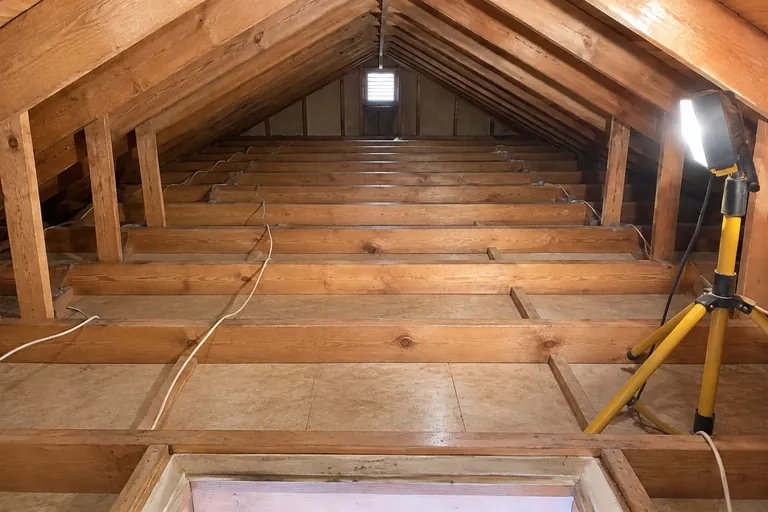
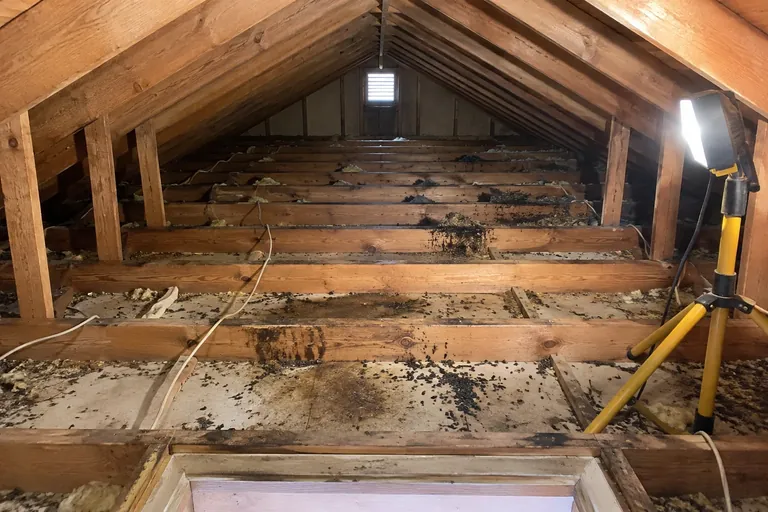 BeforeAfter
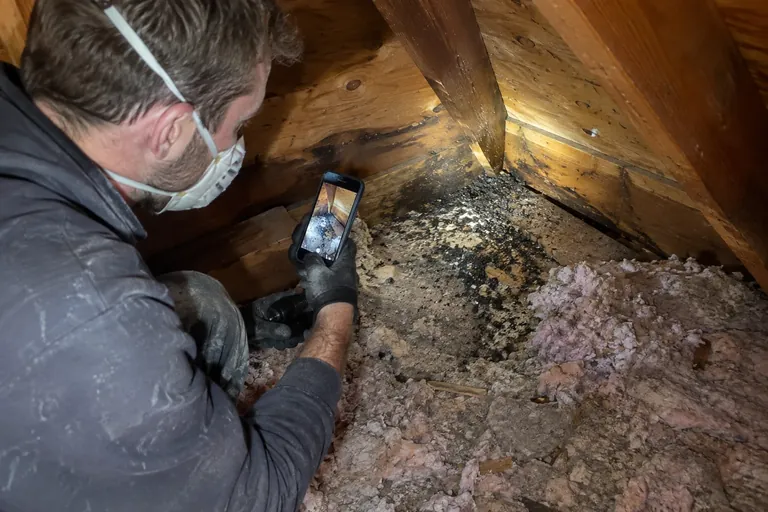 STEP 01
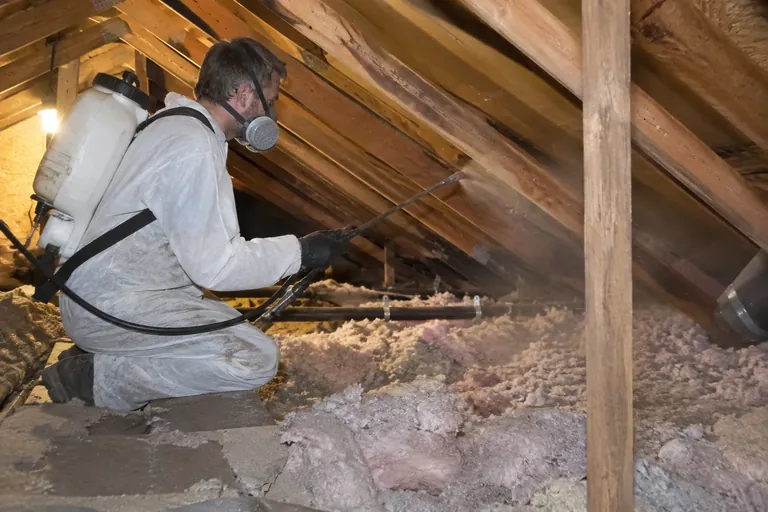 STEP 02
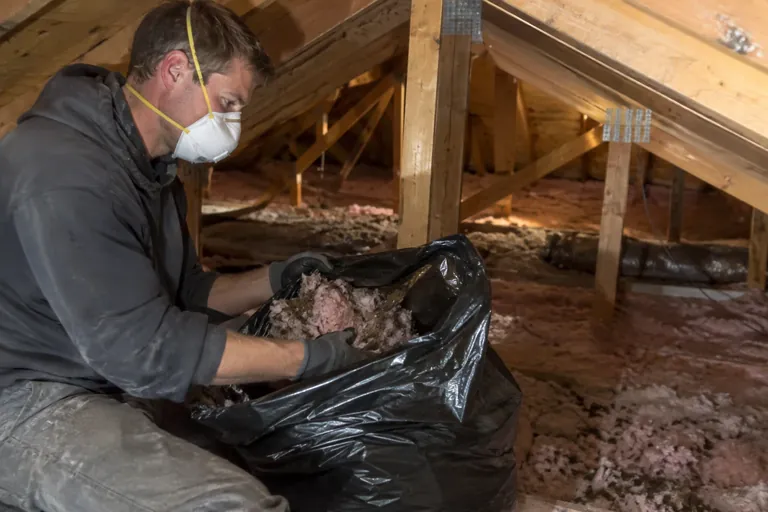 STEP 03
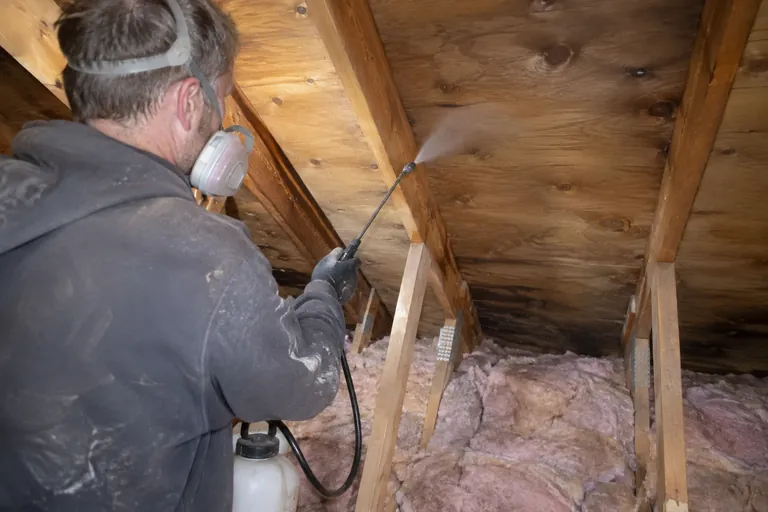 STEP 04
How we do it
We treat animal waste as a biohazard from start to finish. That changes how the crew dresses, how material is removed and how it leaves your house.
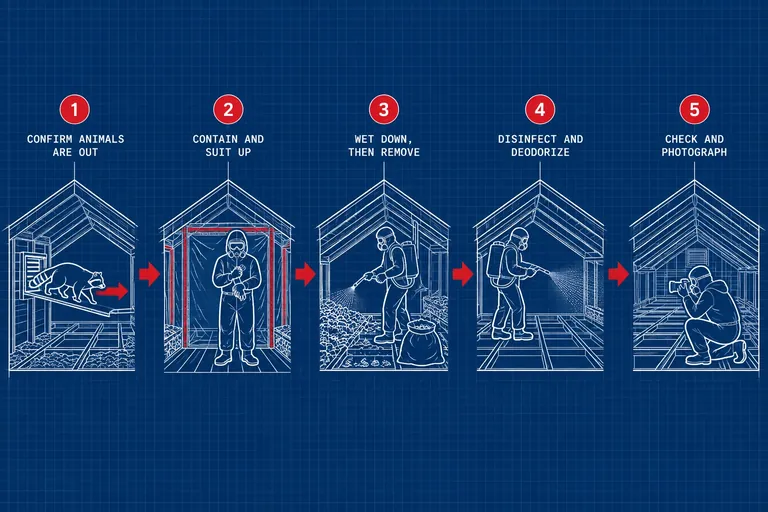
We inspect the attic and the outside of the house, find the entry points and look for fresh activity. If rodents are still active, we trap them and seal the entries first. For larger animals like raccoons, we confirm they have left before any cleanup starts.
The crew wears respirators, disposable suits and gloves for the whole job. We mask the attic hatch, cover the path through your home and keep vacuum bags outside, so dust from the attic does not reach your living space, your furniture or your heating ducts.
Droppings and latrine areas are misted with disinfectant before anything is picked up, which keeps contaminated dust out of the air. Waste, carcasses, nests and soiled insulation are then bagged in the attic, sealed shut and carried out of the house for disposal.
We apply a disinfectant and deodorizer to the joists, top plates, roof deck and any stained drywall backing. You are told which products we use and where. Heavily stained wood in latrine areas can be sealed with an odor-blocking coating.
We photograph the treated attic and walk you through the before and after pictures. If the attic needs new insulation or more sealing to stay clean, we tell you and quote it, so you can decide whether to do it now or later.
What you get
| Animals covered | Rats, mice, squirrels, raccoons, birds and bats |
|---|---|
| Waste removed | Droppings, latrines, nests, carcasses and urine-soaked insulation |
| Dust control | Disinfectant misting before removal; masked hatch; bags kept outside |
| Crew protection | Respirators, disposable suits and gloves for the whole job |
| Surface treatment | Disinfectant and deodorizer on framing; products named for you |
| Stained wood | Odor-blocking sealer on heavily soiled spots where needed |
| Disposal | Sealed bags removed from the property |
| Documentation | Before and after photos of each treated area |
Compare
Many jobs need both. The difference is what is being treated and how.
| Factor | Attic cleaning | Attic decontamination |
|---|---|---|
| Main goal | Remove debris, droppings and soiled insulation | Remove biological waste and treat the surfaces it touched |
| Dust control | Vacuum removal with a masked hatch | Disinfectant misting before removal, then vacuum and bag |
| Surfaces | Swept and vacuumed | Disinfected and deodorized; stained wood sealed if needed |
| Odor | Reduced by removing insulation | Treated at the source in the wood and drywall backing |
| Typical cause | Rodents, reroof debris, years of neglect | Long rodent activity, raccoon latrines, carcasses, birds or bats |
Puget Sound homes
Roof rats are the most common reason we decontaminate attics around Seattle. They nest high, they travel along the same runways every night, and their urine trails soak deep into insulation. Raccoons are common in Seattle, Bellevue, Kirkland and Tacoma neighborhoods and will tear open a soffit or roof vent to den in an attic, especially in spring. Squirrels move into the gaps behind gutters on homes surrounded by tall firs and cedars. Pigeons and starlings roost behind gable vents with missing screens.
The weather here makes odor worse. Attics stay damp from October to May, and moisture brings urine smell back to life, so a problem that seemed faint in August is strong again by November. Homes with crawl spaces can have the same issue below the floor. That is why we remove the soiled material and treat the wood instead of masking the smell with fragrance. We do this work across King, Snohomish, Pierce, Thurston and Skagit counties, from Mount Vernon down to Olympia.
Pricing
Decontamination is quoted after we see the attic. These factors matter most.
A raccoon latrine or a dead animal takes different handling than spread-out rodent droppings.
Contamination in one corner is a smaller job than urine trails across the whole attic.
Soaked insulation over a large area adds removal time and disposal.
Disinfecting only costs less than disinfecting plus sealing stained framing.
Low eaves, tight framing and a small hatch make the work slower.
Daniel was thorough, professional, and quick to respond to all my questions. He crawled into a hard to reach places in my attic to make sure all my needs were met. I appreciate how quickly the Super Attic team completed the job and now my attic, crawl space and garage look infinitely better.
FAQ
Still unsure? Call (800) 674-4933 and talk it through with us.
It can be. Rodent droppings and urine can carry hantavirus, and the risk comes from breathing contaminated dust. That is why you should never sweep or vacuum droppings dry. Raccoon feces can carry roundworm eggs. A small amount of droppings can be cleaned carefully with disinfectant, gloves and a respirator. Anything larger is a job for a crew with the right gear.
Find and remove the carcass and the material around it first. Sprays and air fresheners only cover the smell for a while. We locate the source by smell and by following runways, bag the animal with the soiled insulation, then disinfect and deodorize the wood underneath. If the animal died inside a wall, we tell you the options for reaching it.
We trap rodents and seal every entry point, then decontaminate. For raccoons and other larger animals, we make sure they are gone before cleanup and then seal the way they got in. We tell you exactly what we use and where, so you know what is in your attic.
We use a disinfectant on the framing and deck and a deodorizer for odor, and we name both on your work order. If you have pets, children or anyone sensitive to chemicals in the home, tell us at the inspection and we will talk through the products and how long to keep the attic hatch closed afterward.
It depends on your policy and the cause of the damage. Many policies exclude gradual rodent damage, while some cover sudden events or the damage that followed. We give you photos and a written scope, which is what most insurers ask for if you decide to file a claim.
Only where it is clean. Insulation soaked with urine or mixed with droppings cannot be disinfected in place; it has to come out. Insulation in parts of the attic the animals never reached can often stay. The inspection photos show you which areas are which before we write the scope.
Related services
Removal of rodent droppings, nesting, old debris and soiled insulation, hauled out in sealed bags.
Learn more →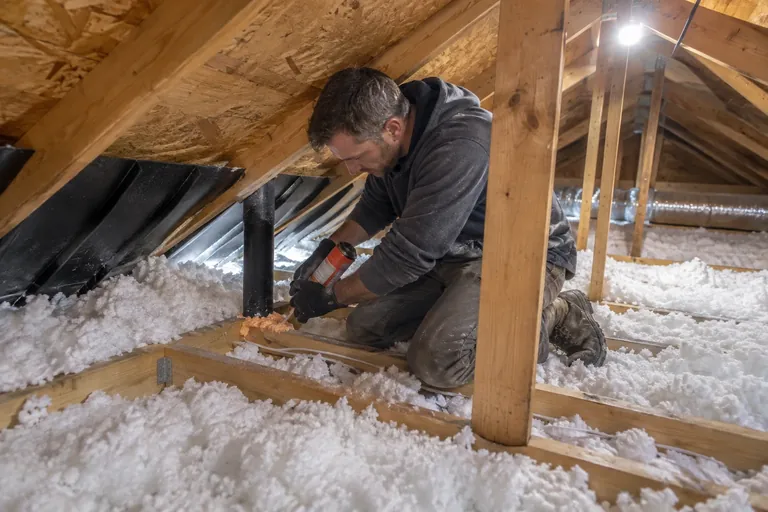
The full attic restore: cleanout, sanitizing, entry and air sealing, and new insulation in one project.
Learn more →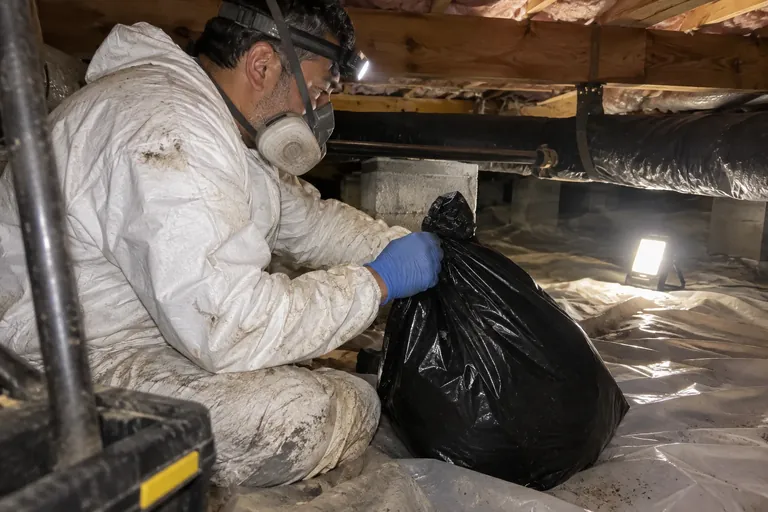
We locate the dead rodent or animal behind the smell, remove it, disinfect the area and seal the way in.
Learn more →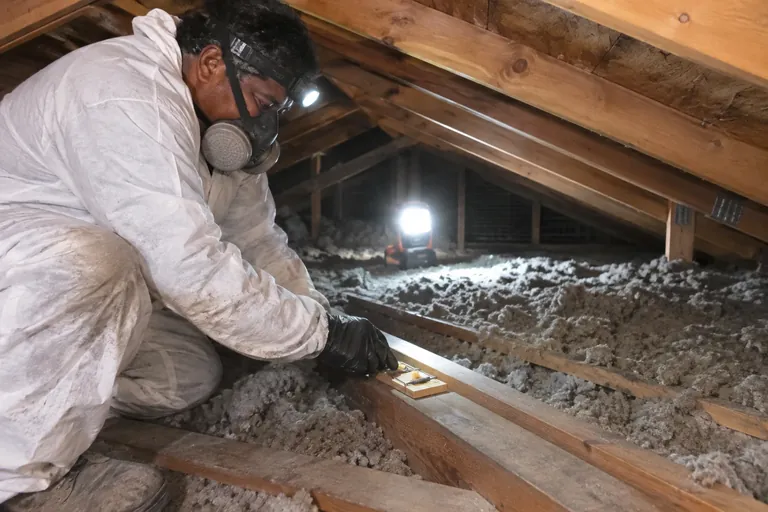
We trap the rats and mice living in your home, remove nests and droppings, then seal the way in.
Learn more →Book a free inspection. We'll photograph your attic and crawl space and walk you through what we find, before you decide anything.