
Insulation
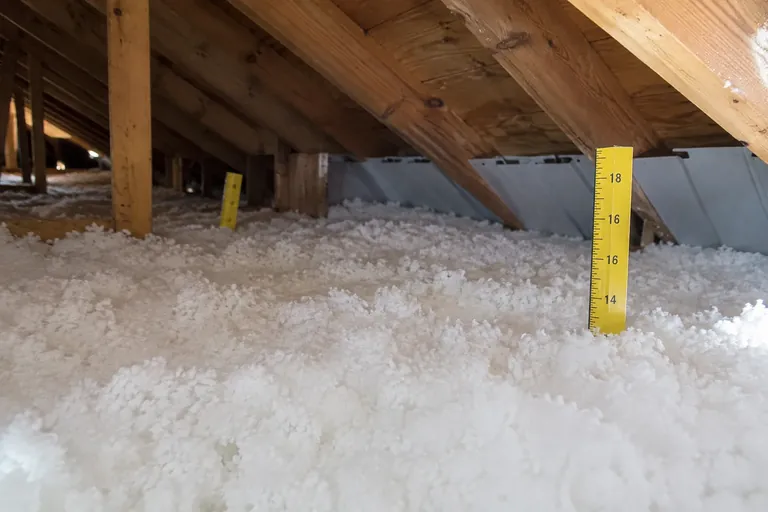
Attic insulation installation
The install itself: air sealing, eave baffles, flue clearances and an even layer to the planned depth.
Learn more →Air sealing · Seattle & Puget Sound
Warm air escapes through hundreds of small holes in your ceiling. We seal them from the attic side, at the top plates, lights, fans and chases, before new insulation covers them up.
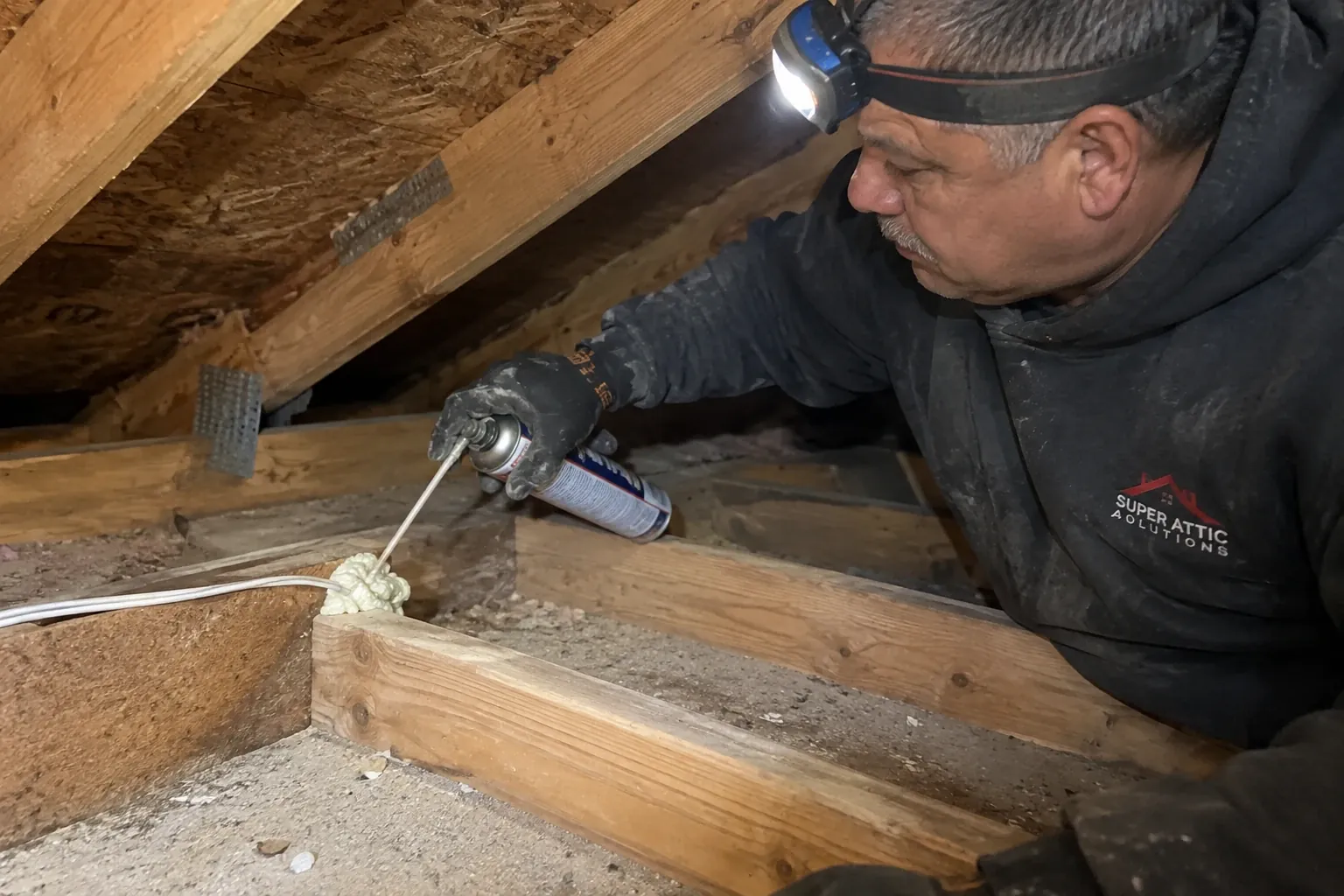 Air sealing a wire penetration in the attic top plate · Seattle, WA
The problem
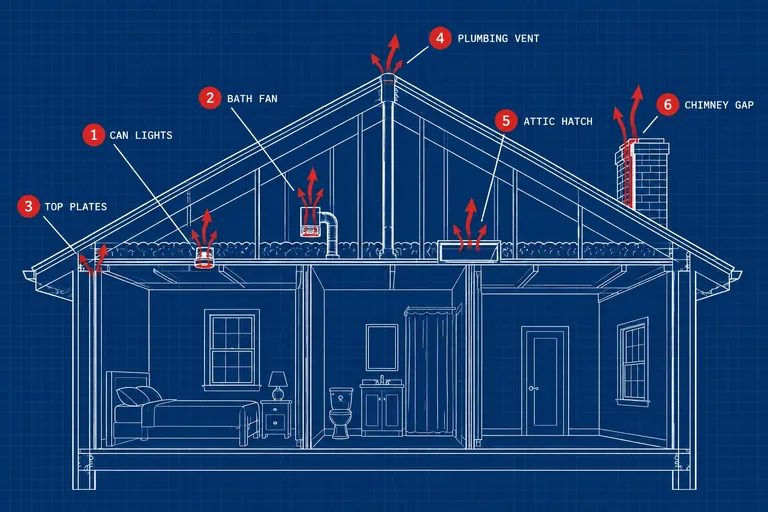
Fiberglass and cellulose slow heat moving through them, but air passes right through. Your ceiling is full of holes: where every interior wall meets the attic, where wires and pipes run up, around recessed lights and bath fans, and where chases for flues and plumbing open into the attic. Warm air from the house rises through all of them. You feel it as cold drafts downstairs, and you pay for it every month of our long heating season.
Air sealing closes those holes from the attic side. We use foam, fire-rated sealant, rigid foam board and sheet metal, depending on the gap and what is nearby. Timing matters. Once a deep layer of insulation goes in, the leaks are buried and nobody will reach them again for decades. That is why we seal before we insulate, and why we recommend it whenever an attic is cleaned out or re-insulated.
Warning signs
Air leaks leave clues in the attic and in the rooms below.
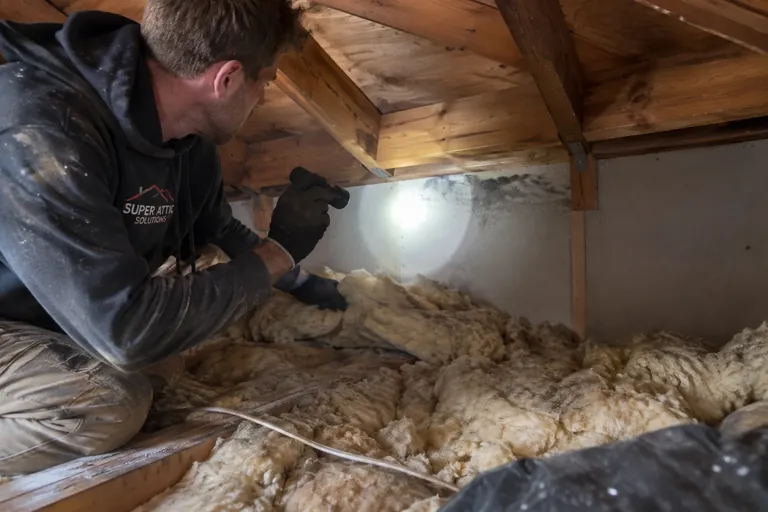
Gray or black patches on top of insulation over wall lines and fixtures are dust filtered out of air leaking from the house.
Some rooms feel drafty or never warm up, and the heat runs longer than it should on cold, windy days.
Frost on nail tips or dark patches on the roof deck in winter come from warm, moist house air condensing in the attic.
Older can lights under the attic are often not airtight, and each one is an open hole into the attic.
Dust lines around ceiling fixtures and the hatch, or attic smells in the house, mean air is moving between the two.
A bath fan with no duct, or a duct that ends in the attic, puts shower moisture right under the roof deck.
Proof of work
Drag the slider to compare. Illustrations of typical results on homes like yours.
 STEP 01
 STEP 02
 STEP 03
 STEP 04
How we do it
We seal from the attic side, working through the ceiling from the biggest holes to the smallest.
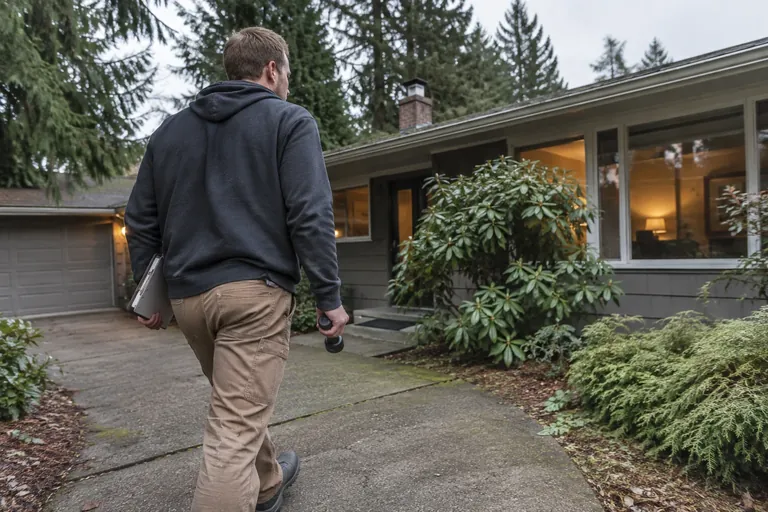
We go through the attic with lights, pull back insulation over wall lines and fixtures, and look for the dark stains that mark air leaks. We photograph what we find and mark the big openings: chases, dropped soffits, can lights, bath fans and the hatch. You see the photos before we start.
Dropped soffits over kitchen cabinets, open plumbing walls and duct chases are capped with rigid foam board or sheet goods, cut to fit and sealed at the edges. These large openings move the most air, so they come first, before the smaller gaps along the wall lines.
Where each interior wall meets the attic, the top plate has gaps and drilled holes for wires and pipes. We seal them with foam or caulk along the length of the wall line. Electrical boxes and plumbing stacks get sealed where they pass through the ceiling.
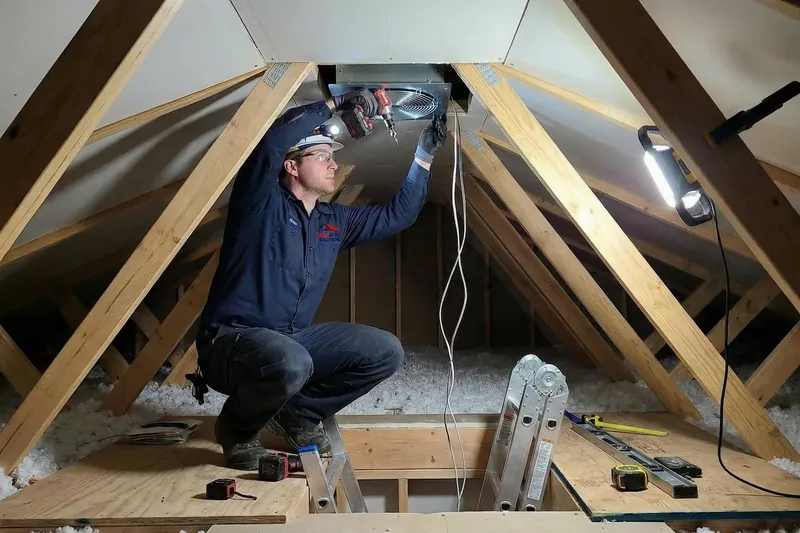
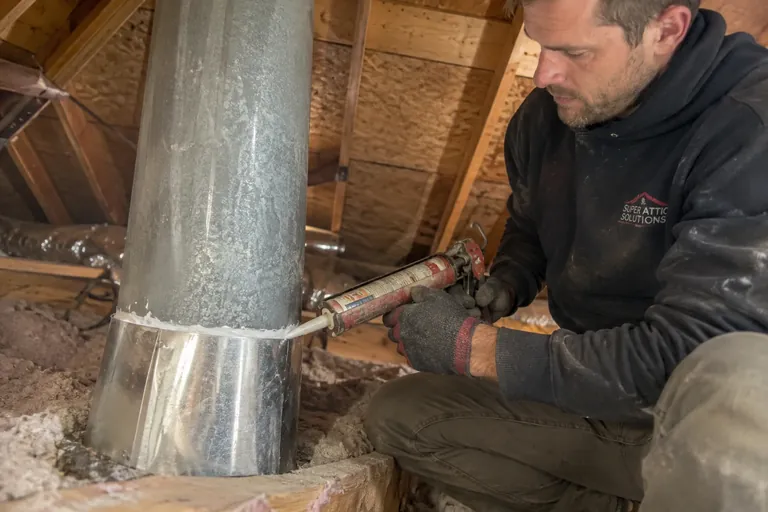
Around flues and chimneys we use sheet metal and fire-rated sealant, keeping the clearance the code requires. Recessed lights get rated airtight covers or are sealed where they are already airtight rated. Bath fan housings are sealed to the drywall and ducts checked to run outside.
We weatherstrip and insulate the attic hatch, install baffles at the eaves so soffit vents stay open, then take after photos. The attic is now ready for new insulation, which we can install in the same visit or quote separately.
What you get
| Top plates | Gaps and drilled holes along every interior wall line |
|---|---|
| Penetrations | Wire, pipe and electrical box holes through the ceiling |
| Large openings | Dropped soffits and chases capped with rigid foam or sheet goods |
| Flues and chimneys | Sheet metal and fire-rated sealant with code clearances kept |
| Recessed lights | Rated airtight covers, or sealed where already airtight rated |
| Bath fans | Housings sealed to the drywall; ducts checked to vent outside |
| Attic hatch | Weatherstripped and insulated |
| Photos | Leaks photographed before and after sealing |
Compare
Both put new insulation in the attic. Only one deals with the air moving through it.
| Factor | Insulate only | Air seal, then insulate |
|---|---|---|
| Drafts | Reduced a little | Reduced at the source |
| Moisture in the attic | Warm house air still reaches the roof deck | Much less house air reaches the attic |
| Insulation stays clean | Dark stains form again over leaks | Stays clean |
| Access to leaks later | Buried under insulation | Already sealed |
| Best time to do it | Not recommended on its own | Whenever the attic is empty or re-insulated |
Puget Sound homes
Our long, damp heating season makes air sealing especially worthwhile here. In winter, warm air inside the house rises and pushes out through the ceiling, pulling cold air in at the floors and windows. That warm air carries moisture. When it reaches a cold attic, it condenses on the roof deck, and from October to May it has little chance to dry. We regularly see black stains on north-facing sheathing that trace back to a single open chase or an unducted bath fan.
Every era of house leaks in its own way. Older Seattle homes with plaster ceilings often have open wall cavities that run straight up into the attic, and cracks around old light fixtures. Eastside homes in Bellevue, Redmond, Kirkland and Bothell from the 1970s through the 1990s tend to have dropped soffits over the kitchen, rows of recessed lights and bath fans that were never sealed. PSE customers may qualify for help with air sealing as part of an insulation project; we check what you qualify for and handle the paperwork with you.
Pricing
Air sealing is quoted after we see the attic and count the openings.
More can lights, bath fans, chases and interior walls mean more sealing work and material.
Sealing an empty attic is faster than working under or around insulation that has to be moved.
Capping dropped soffits and open chases takes more time and material than sealing small holes.
Sealing around flues needs sheet metal and fire-rated sealant, which adds to the work.
Low pitches and tight framing near the eaves slow the crew down.
Daniel was thorough, professional, and quick to respond to all my questions. He crawled into a hard to reach places in my attic to make sure all my needs were met. I appreciate how quickly the Super Attic team completed the job and now my attic, crawl space and garage look infinitely better.
FAQ
Still unsure? Call (800) 674-4933 and talk it through with us.
It is closing the gaps between your living space and the attic so warm air cannot escape upward. We seal top plates where walls meet the attic, holes for wires and pipes, recessed lights, bath fans, chases and the hatch. It is done from the attic side, before insulation goes in, using foam, sealants, foam board and sheet metal.
Yes. Insulation slows heat but lets air pass through, and once it is installed the leaks underneath are buried. Sealing first means the new insulation works as it should and stays clean and dry. If we are adding insulation to your attic, we always look at air sealing first and include it in the plan.
Yes, but how depends on the fixture. Some recessed lights are rated airtight and only need sealing where the housing meets the drywall. Older fixtures that are not airtight or not rated for contact with insulation need a rated cover that keeps clearance around the light. We check each fixture and use the right method for it.
Attic air sealing closes leaks into the attic, not the fresh air your house needs. Bath fans and kitchen hoods still exhaust moisture, and we make sure bath fans are ducted outside. If your home has older gas appliances that draw combustion air from the house, tell us and we will factor that into the plan.
Usually, a lot. Most winter moisture in Puget Sound attics comes from warm, humid house air leaking up through the ceiling and condensing on the cold roof deck. Sealing those leaks, and making sure bath fans vent outside, removes the main source. Good soffit and roof ventilation then handles what is left.
Puget Sound Energy programs sometimes include air sealing alongside insulation. The rules and amounts are set by PSE and change, so we do not promise a specific rebate. If you are a PSE customer, we check what you qualify for when we write the scope and handle the paperwork with you.
Related services
The install itself: air sealing, eave baffles, flue clearances and an even layer to the planned depth.
Learn more →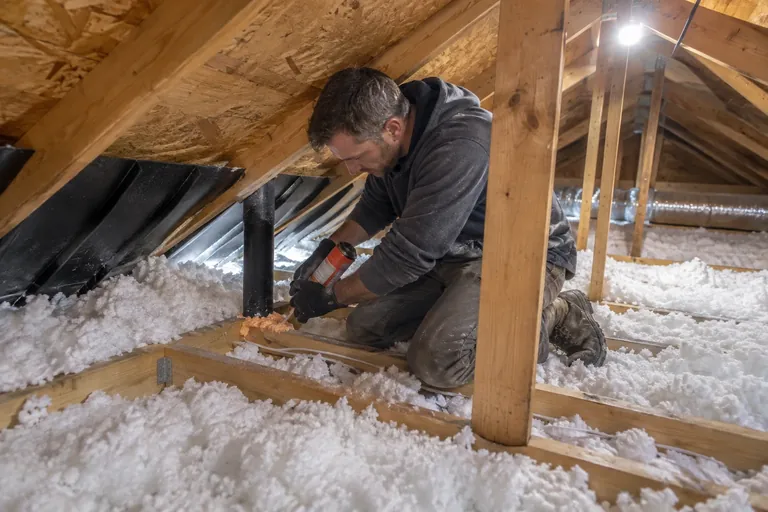
The full attic restore: cleanout, sanitizing, entry and air sealing, and new insulation in one project.
Learn more →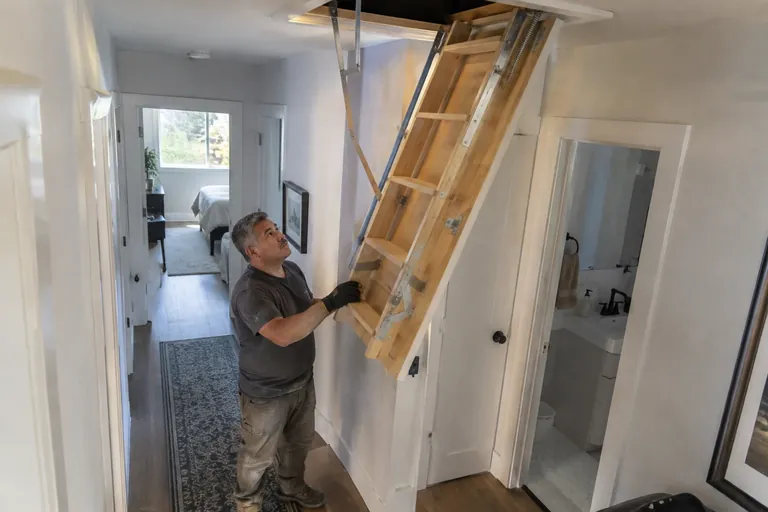
Insulated pull-down attic ladders, measured to your ceiling, framed in and sealed against drafts.
Learn more →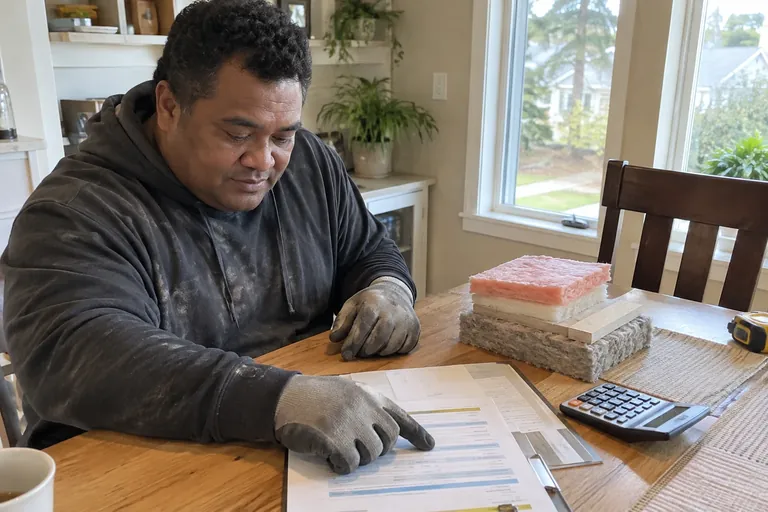
Help with PSE insulation rebates: we check what you qualify for and handle the paperwork with you.
Learn more →Book a free inspection. We'll photograph your attic and crawl space and walk you through what we find, before you decide anything.