
Crawl space & moisture
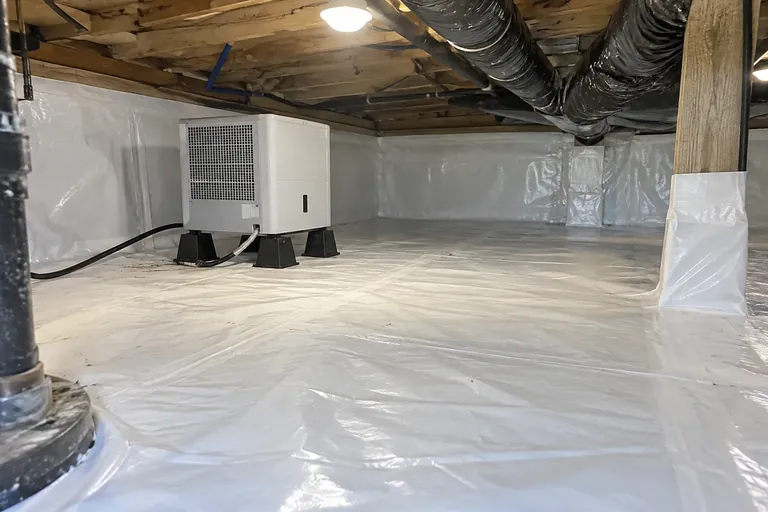
Crawl space encapsulation
A sealed liner on floor and walls, vents closed, a dehumidifier running. Recommended only where it pays off.
Learn more →Vapor barrier installers · Seattle & Puget Sound
Bare soil and torn plastic let ground moisture rise into your crawl space all winter. We lay a new ground cover, lapped at every seam and run to the foundation walls, so no dirt is left showing.
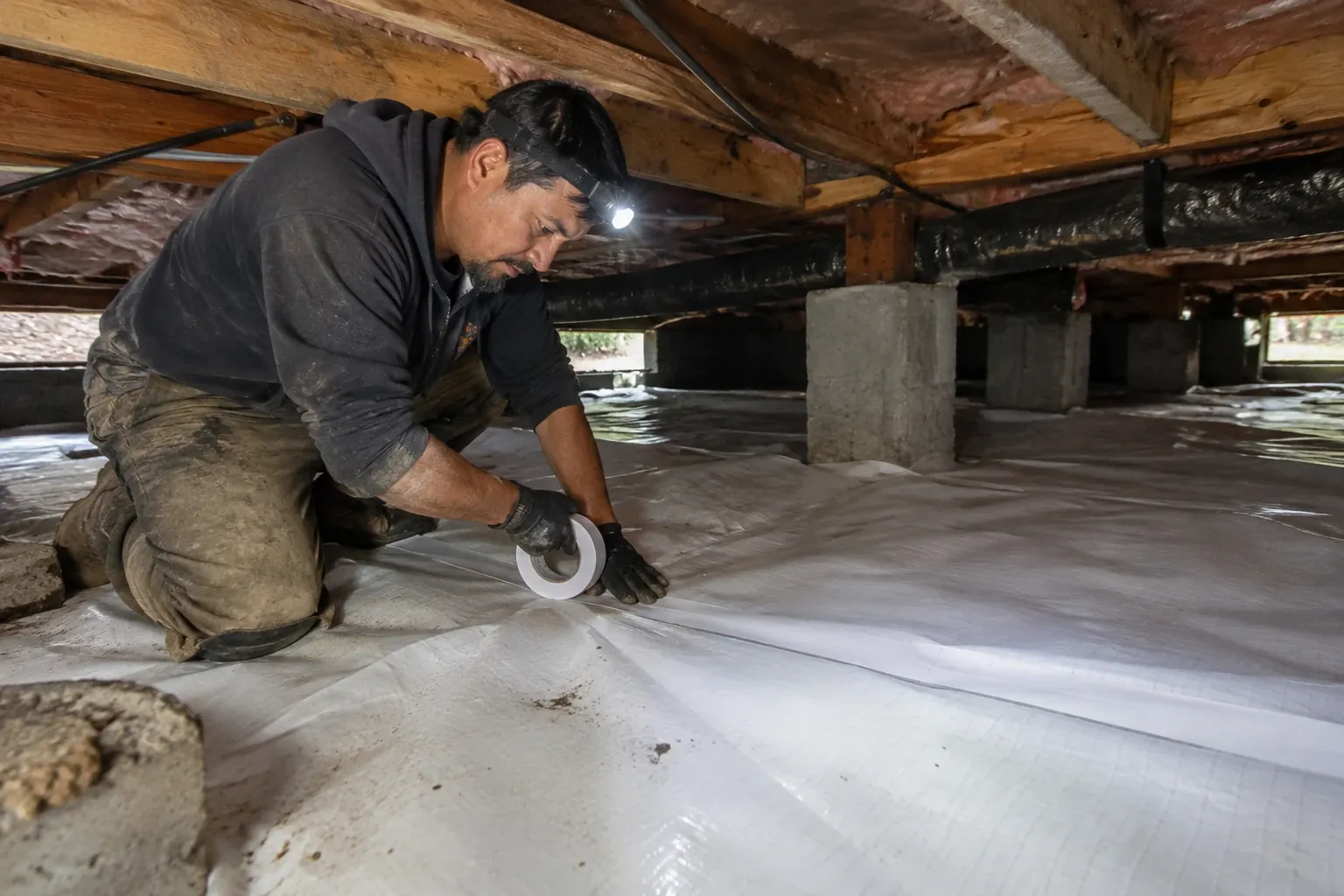 Installing and taping a crawl space vapor barrier · Seattle, WA
The problem
Soil under a house gives off moisture all the time. In the Puget Sound, where the ground stays wet from fall through spring, that moisture is steady. A ground cover, usually called a vapor barrier, is the sheet of polyethylene laid over the dirt to keep that water vapor from rising into the crawl space and soaking into joists, subfloor and insulation. Washington code requires one in crawl spaces, and for good reason: it's the cheapest moisture control a house can have.
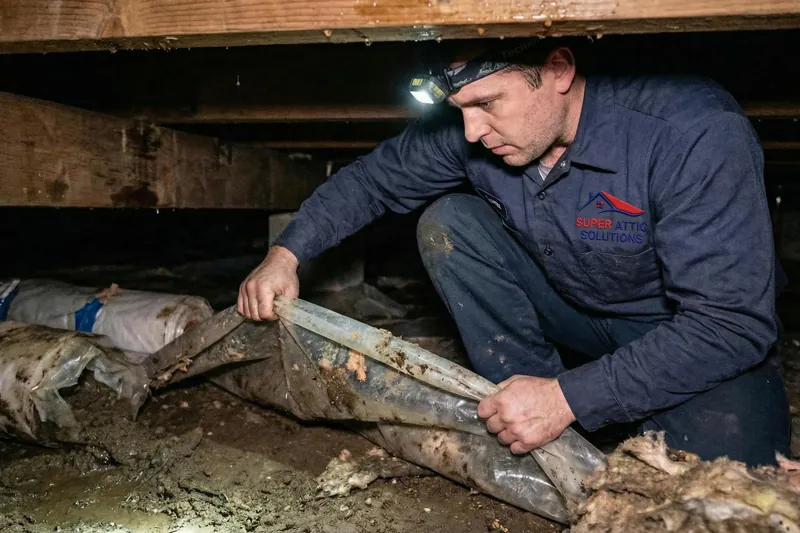
The trouble is that plastic doesn't stay perfect. Plumbers, cable installers and pest crews crawl across it and tear it. Rats chew through it. Thin original sheets get brittle and shift until whole patches of soil are bare. A barrier full of gaps does little. We replace it with a continuous cover: old plastic out, soil smoothed, new sheets lapped generously at every seam, run onto the foundation walls and fitted tightly around piers and pipes.
Warning signs
One look from the hatch usually tells you. Here's what we look for.
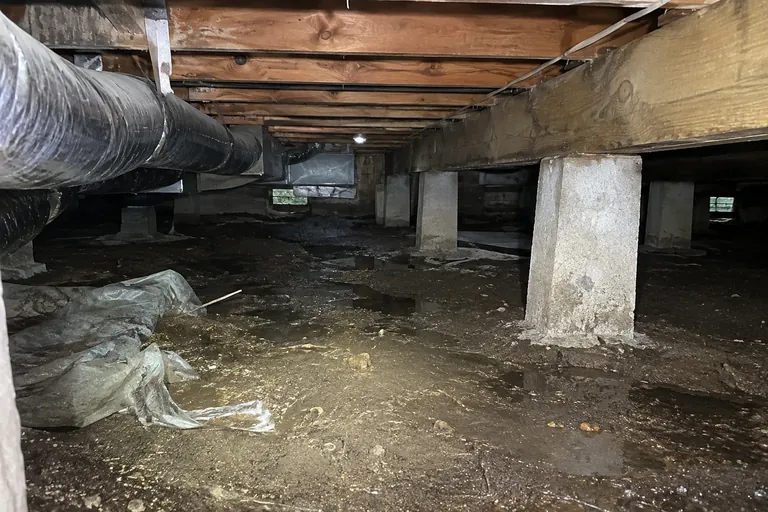
Any exposed dirt lets moisture rise freely. Patches near the hatch and along the walls are the most common gaps.
Plastic that cracks when you touch it, or has tears from foot traffic, is no longer working as a barrier.
Gaps between sheets, or edges that stop short of the foundation wall, leave bands of open soil.
Standing water on a ground cover means water is getting in from outside. That needs fixing before new plastic goes down.
Wet insulation and condensation on cold pipes point to high humidity in the crawl space, often from uncovered soil.
Older homes may have thin clear plastic or nothing. Washington code calls for black polyethylene or an approved equal.
Proof of work
Drag the slider to compare. Illustrations of typical results on homes like yours.
 BeforeAfter
 STEP 01
 STEP 02
 STEP 03
 STEP 04
How we do it
A good barrier comes down to coverage and the details at seams, walls and piers.
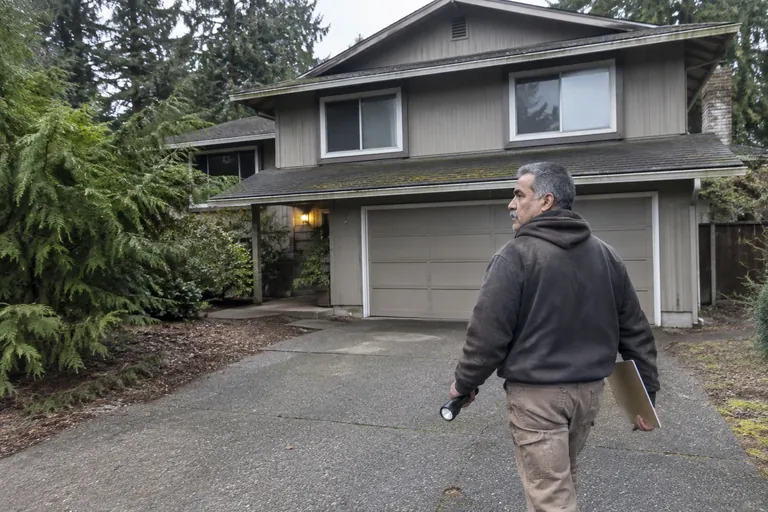
We go under and photograph the ground cover from end to end, marking torn sections, bare soil, short edges and any water sitting on the plastic. Outside, we check vents, gutters and downspouts for drainage clues. If water is coming in, we tell you before we quote, because a new barrier over a wet crawl space is wasted money.
Old torn plastic, construction scraps, rocks and fallen insulation are bagged and carried out through the hatch. Sharp objects that would puncture a new sheet get picked up, and high spots are knocked down so the plastic lies flat. If rodents have been active, droppings are misted and removed with the rest before anything new goes down.
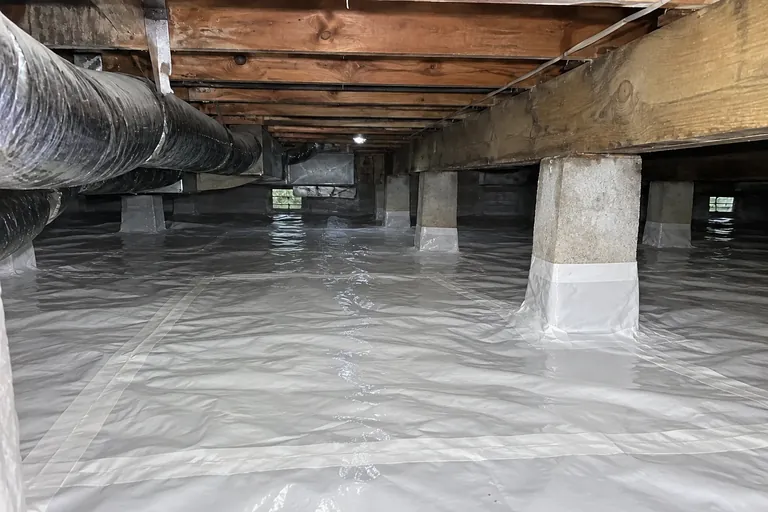
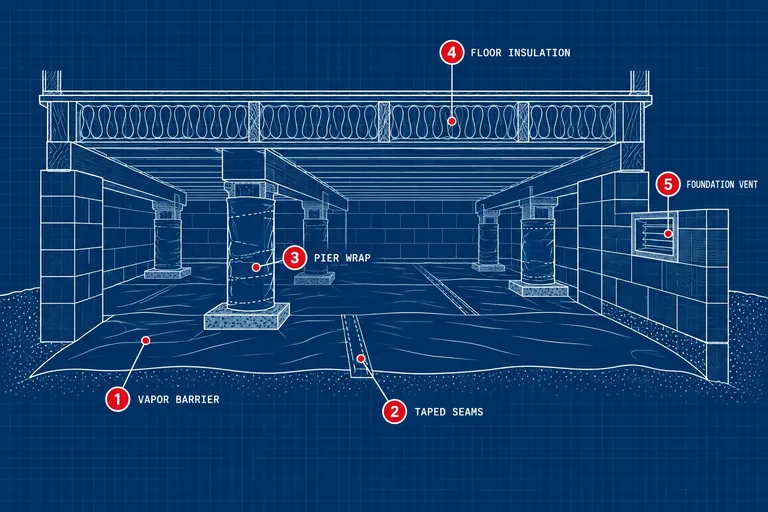
We roll out new sheets across the full crawl space, starting from the far wall. You choose 6-mil black polyethylene, the common code minimum, or a heavier reinforced sheet that stands up better to foot traffic. Sheets overlap generously at every seam and run onto the foundation walls instead of stopping short of them.
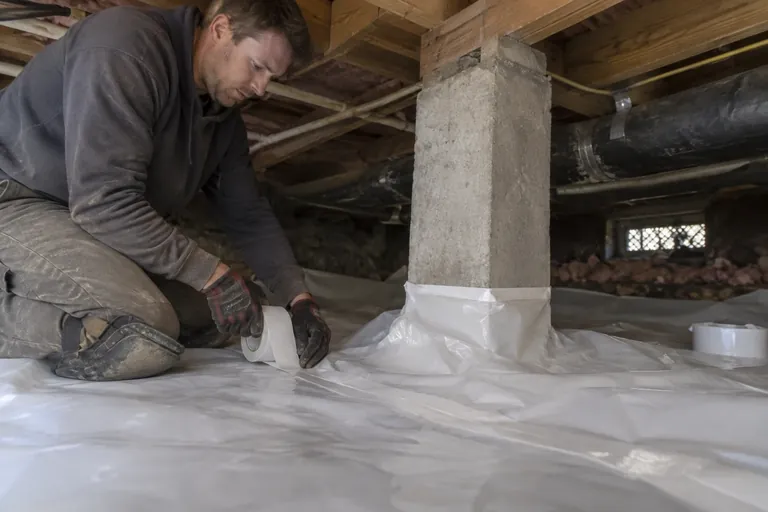
Seams are taped so the sheets act as one continuous cover. The plastic is cut and fitted around piers, posts and pipes, then taped so no soil shows at the base. Edges along the foundation are held in place so they don't slide back down the wall over time.
We walk the crawl space one more time, looking for missed gaps, loose seams and spots where the plastic lifted. You get after photos from the same angles as the inspection photos. Leftover plastic and packaging go out with us, and we note anything that may need attention later, such as vents or downspouts.
What you get
| Inspection | Free inspection with photos of the full ground cover and drainage clues |
|---|---|
| Old plastic | Torn, brittle or buried plastic removed and hauled away |
| Surface prep | Debris, rocks and sharp objects cleared; soil smoothed |
| Material | 6-mil black polyethylene or heavier reinforced sheeting |
| Seams | Generous overlaps at every joint, taped |
| Edges | Run onto the foundation walls, never stopped short |
| Piers and pipes | Plastic cut, fitted and taped around each penetration |
| After photos | Before-and-after photos taken from the same angles |
Compare
Both meet the code minimum. The difference is how well they hold up to the people and pests that use your crawl space.
| Factor | 6-mil polyethylene | Heavier reinforced sheet |
|---|---|---|
| Code | Meets the common code minimum | Goes beyond it |
| Durability | Fine for crawl spaces rarely entered | Holds up to foot traffic and repair crews |
| Puncture resistance | Can tear on rocks and debris | Reinforcement resists tears |
| Typical use | Standard vented crawl spaces | Frequent access, storage or encapsulation |
| Cost | Lower | Higher |
Puget Sound homes
Around Puget Sound, the soil under a house rarely dries out between October and May. In a vented crawl space, the ground cover is what stands between months of wet soil and your floor framing. That's why we pay so much attention to it. On the Eastside, many homes built from the 1970s through the 1990s still have their original plastic, now torn and shifted. In older Seattle houses, we often find no ground cover at all, or a few sheets of clear plastic from a past repair with bare soil around them.
A good ground cover also works with the rest of the house. Gutters choked with moss and downspouts that dump next to the foundation can push water under the plastic, where it pools on top. We look for that during the inspection. For most Seattle-area homes, a quality vapor barrier with open, screened vents is enough. Where the crawl space stays damp even with good plastic down, we'll talk through whether encapsulation makes sense and show you the moisture readings behind the advice.
Pricing
Vapor barrier jobs are priced by the space and what's in it. These are the main factors.
Square footage sets how much sheeting goes down and how long the crew spends under the house.
Removing torn plastic, debris and droppings first adds time, depending on how much is there.
Standard polyethylene costs less than heavier reinforced sheeting. We'll show you both.
Every pier, post and pipe means cutting, fitting and taping. Crowded crawl spaces take longer.
Low clearance and tight hatches slow the work, especially when moving heavier sheeting into place.
The company was quick to respond and send out Ron. Ron was great in communicating the issues we were having in our crawlspace. Had showed us the pictures of the crawl space and was able to get us booked the very next day. The crew was fantastic and worked throughout the day. The bonus was they were also able to take a handful of containers to the dump to assist saving us a dump run.
FAQ
Still unsure? Call (800) 674-4933 and talk it through with us.
Washington code calls for a ground cover of at least 6-mil black polyethylene or an approved equal, laid over all exposed soil. That works well in a crawl space nobody enters often. If plumbers, pest crews or you go under the house regularly, or you want to store things there, a heavier reinforced sheet holds up much better to knees and tools.
It should run onto the foundation walls rather than stopping short, so the soil at the edges stays covered. In a vented crawl space, the cover doesn't need to go all the way up and be sealed at the top of the wall. That full wall treatment, with sealed vents and a dehumidifier, is encapsulation, which is a different job.
Enough that soil never shows at a seam, even after people crawl across it. Code sets a minimum lap at the joints. We lap generously and tape the seams so the sheets can't pull apart. Short laps are the most common reason a ground cover starts showing bare dirt within a few years of going in.
Over damp soil, yes, since that's what it's for. Over standing water, no. If water collects in the crawl space, it's coming from somewhere: usually roof water from gutters and downspouts, soil that slopes toward the house, or a plumbing leak. We find the likely source during the inspection, and the water needs to be handled before a new barrier goes down.
Not always. A few small tears in otherwise sound plastic can be patched and taped. If the sheets are brittle, shifted, short of the walls or torn in many places, replacing the whole cover is usually a better use of money than chasing patches. We photograph the full crawl space and show you which situation you're in.
It depends more on traffic, pests and the sheet itself than on age alone. Plastic that nobody walks on and rodents can't reach lasts a long time. Covers in crawl spaces with frequent repair visits or rat activity wear out much faster. Sealing rodent entry points and choosing heavier sheeting where people crawl are the two best ways to make a new barrier last.
Related services
A sealed liner on floor and walls, vents closed, a dehumidifier running. Recommended only where it pays off.
Learn more →
A full moisture plan for your crawl space: barriers, vents, gutters, downspouts and drainage clues.
Learn more →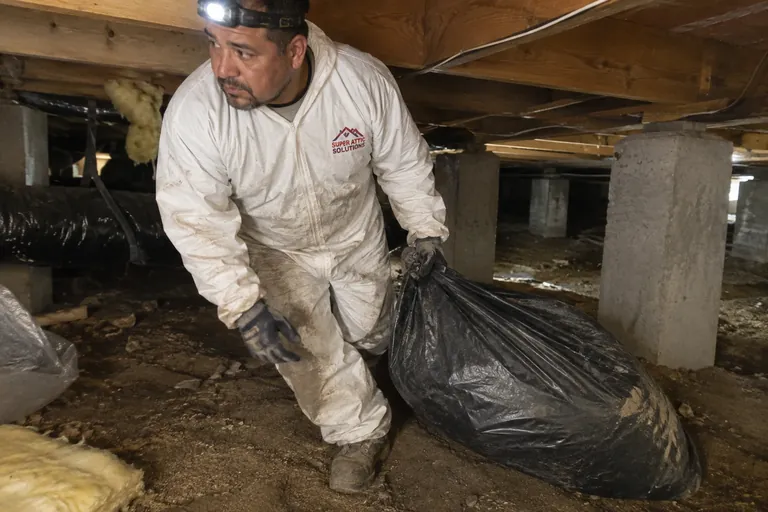
Droppings, fallen insulation, torn plastic and debris bagged and hauled out from under your house.
Learn more →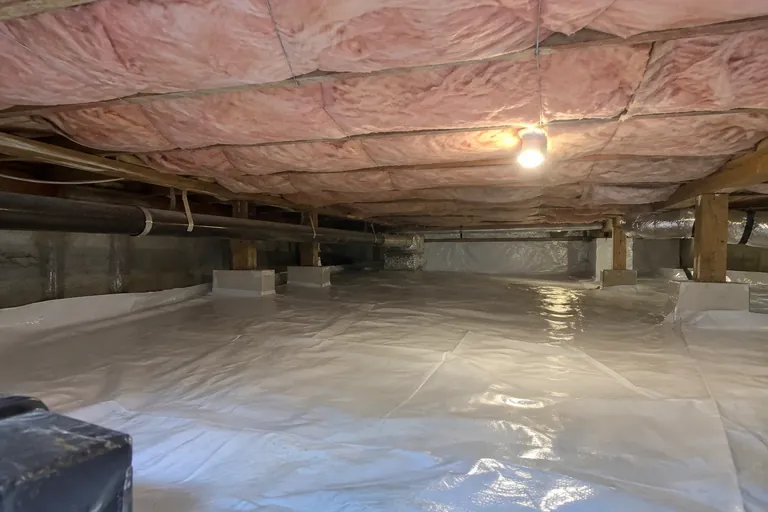
New underfloor batts, fitted tight to the subfloor and supported so they stay up.
Learn more →Book a free inspection. We'll photograph your attic and crawl space and walk you through what we find, before you decide anything.