
Crawl space & moisture
Crawl space insulation installation
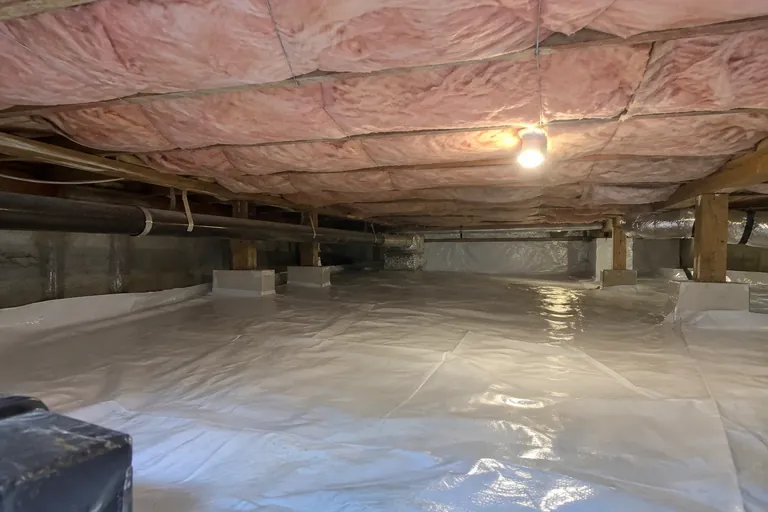
New underfloor batts, fitted tight to the subfloor and supported so they stay up.
Learn more →Crawl space insulation removal · Puget Sound
Underfloor batts that soaked up water, dropped to the soil or got packed with rat nests stop insulating and start smelling. We pull them, bag them in the crawl space and haul them away.
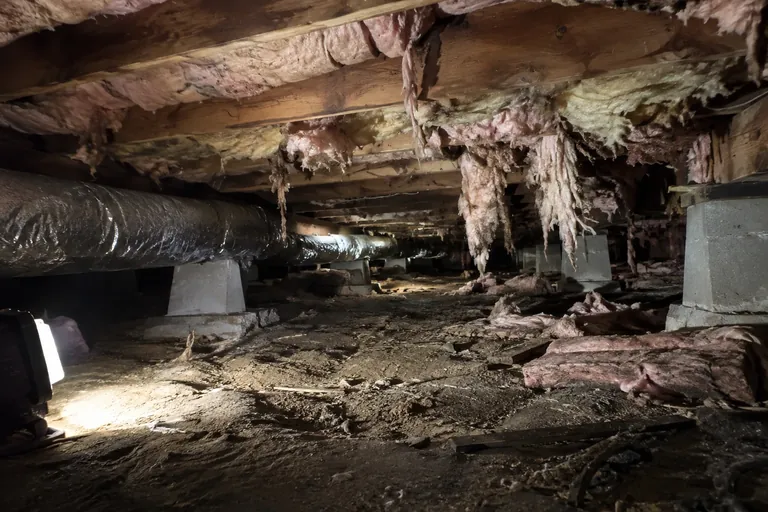
 Pulling fallen, wet insulation from crawl space joists · Seattle, WA
The problem
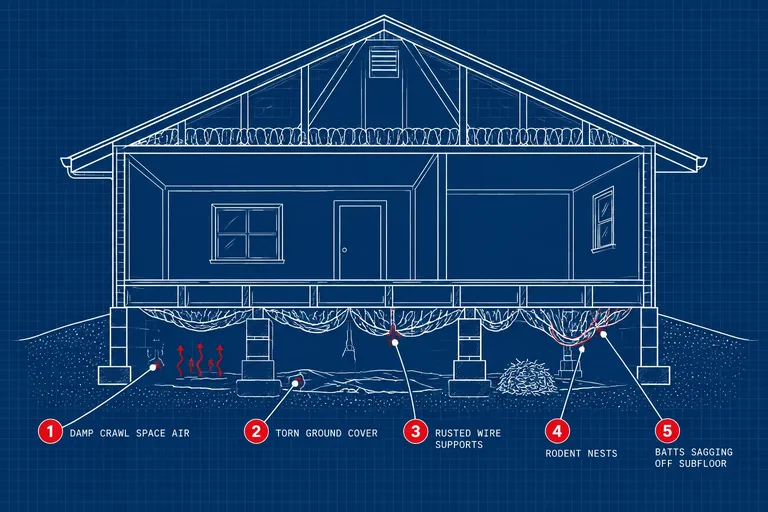
Fiberglass batts between floor joists only work when they stay dry, stay in place and stay pressed up against the subfloor. Under a lot of Puget Sound homes, none of that is true anymore. Batts soak up crawl space moisture, get heavy and slide out of their supports. Plumbers and cable installers push them aside and never put them back. Rats tunnel into them, nest in them and leave them full of droppings and urine. What's left is a ceiling of drooping, stained insulation that does little for your floors.
Removal is the step people want to skip, and it's the one that matters. New batts can't go in over old ones, and leaving wet material against the subfloor keeps the wood damp. We pull everything from the joist bays, bag it under the house and carry it out through the hatch. Once the joists are bare, we can see what the insulation was hiding: leaks at drain lines, mold on the subfloor, rot at the rim joist, or rodent damage to wiring.
Warning signs
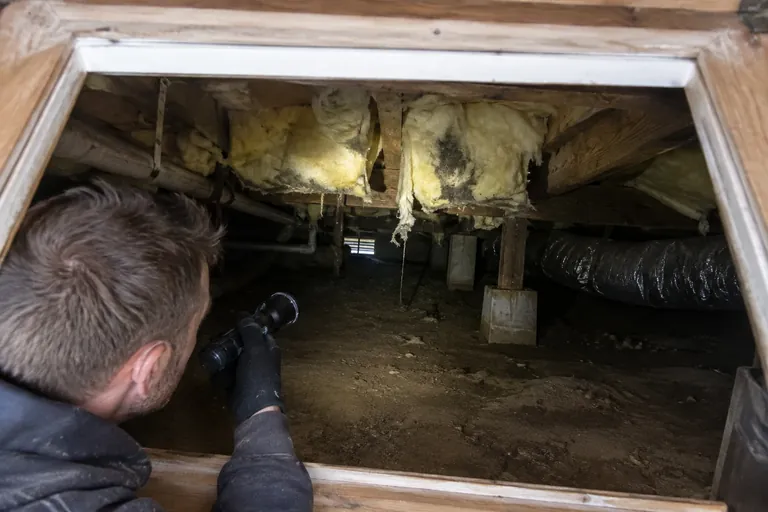
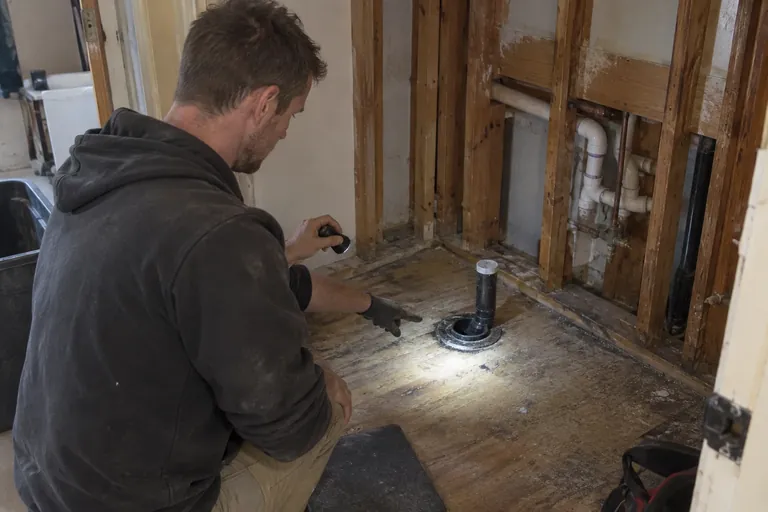
A quick look through the hatch with a flashlight often tells the story.
Once a batt drops away from the subfloor it no longer insulates. If many have fallen, the rest are usually close behind.
Rooms over the crawl space that feel colder underfoot than they once did often sit over bays where insulation has fallen.
Staining means the insulation has been wet, from a leak or crawl space humidity. Wet fiberglass holds moisture against the wood.
Rodents tear insulation into nests and leave droppings and urine through it. That material can't be cleaned, only removed.
Soiled or moldy batts send odors up through floor penetrations, especially around heat registers and plumbing.
Black or gray spotting on kraft facing usually means the subfloor above needs a look once the batt comes down.
Proof of work
Drag the slider to compare. Illustrations of typical results on homes like yours.

 BeforeAfter
 STEP 01
 STEP 02
 STEP 03
 STEP 04
How we do it
Removal under a floor is slow, dirty work in tight quarters. We keep it organized.
We go under and photograph the joist bays, noting fallen sections, wet or stained batts, rodent nests and any spots where the subfloor or plumbing looks wrong. You see those photos before we quote. We also check the ground cover and vents, because insulation usually fails for a reason, and that reason needs fixing before new batts go up.
The crew wears protective suits and respirators. We put runners down along any indoor path, stage bags and a tarp at the hatch, and bring in lighting. Areas with heavy droppings are misted with a disinfectant first so dust stays down. Wires and ducts are noted so nothing gets pulled loose along with the insulation.
Batts come out of the joist bays by hand, along with the rusty wire supports, staples and twine that held them. Fallen material on the soil is gathered up too. Everything is bagged under the house and passed out through the hatch, so the mess stays outside your living space. The bags are then hauled away for disposal.
With the joists exposed, we look closely at the subfloor, rim joists and sill plates. We point out leaks at drain lines and supply pipes, mold or rot on the wood, and chewed wiring or ducts. Soiled framing gets a disinfectant treatment. You get photos of the bare bays so you see exactly what the old insulation was covering.
Most homes get new underfloor insulation right after removal, along with a new ground cover so the batts stay dry this time. If something needs repair first, like a leaking drain line or open rodent entries, we sort out the order with you. You get one plan covering removal, fixes and new insulation, priced so you can see each part.
What you get
| Inspection | Free inspection with photos of joist bays, ground cover and vents |
|---|---|
| Protection | Suits, respirators, runners indoors and a staging tarp at the hatch |
| Batt removal | Wet, fallen, moldy and rodent-soiled batts pulled from every bay |
| Old supports | Rusted wire supports, staples and twine removed with the batts |
| Soil cleanup | Fallen insulation and nesting material picked up off the ground |
| Framing check | Subfloor, rim joists and sill plates inspected once exposed |
| Treatment | Disinfectant applied to soiled framing and soil |
| Disposal | All bags carried out through the hatch and hauled away |
Compare
Not every fallen batt has to go. Condition decides it, and the photos show which situation you're in.
| Factor | Re-hang existing batts | Remove and replace |
|---|---|---|
| Condition it suits | A few dry, clean batts that slipped down | Wet, stained, moldy or rodent-soiled batts |
| Framing visible | No, the wood stays covered | Yes, every bay is exposed and checked |
| Odor | Unchanged if batts are soiled | Source removed along with the batts |
| Insulation value | Only as good as the old batts | New batts fitted tight to the subfloor |
| Moisture fix | Often skipped | Ground cover and leaks handled first |
Puget Sound homes
Batts under the floor have a hard life here. Crawl space air stays damp most of the year, and fiberglass sitting in that air slowly takes on weight. Where the ground plastic is torn or missing, it happens faster: moisture rises from the soil, the batts sag, and the wire supports rust through. We see this constantly in Eastside homes from the 1970s through 1990s, where the original batts are now decades old, and in older Seattle houses where insulation was added under the floor long ago and never touched again.
Rodents make it worse. Roof rats and Norway rats both move into crawl spaces through foundation vents and gaps at pipes, and a bay of fiberglass is a ready-made nest. Once that happens, removal is the only real option. We seal the entry points before new batts go up, so the next rats don't move into fresh insulation. If the home is on Puget Sound Energy service and new insulation is part of the job, we check what you qualify for and handle the rebate paperwork with you.
Pricing
Removal is priced after we've seen the bays. These are the factors that matter most.
More floor area means more joist bays to empty and more bags to carry out.
Low clearance, ducts and plumbing in the way, and a small hatch all slow down removal.
Dry, fallen batts come out quickly. Soaked or rodent-packed batts are heavier and take more care.
Heavy droppings mean more protective steps, more treatment and often entry sealing on the same visit.
New insulation, ground cover and repairs found on the bare framing are quoted as separate line items.
The company was quick to respond and send out Ron. Ron was great in communicating the issues we were having in our crawlspace. Had showed us the pictures of the crawl space and was able to get us booked the very next day. The crew was fantastic and worked throughout the day. The bonus was they were also able to take a handful of containers to the dump to assist saving us a dump run.
FAQ
Still unsure? Call (800) 674-4933 and talk it through with us.
No. Underfloor batts need to sit tight against the subfloor, and adding new batts under old ones leaves the old, often damp material trapped against the wood. If the old batts are dry, clean and only a few have fallen, we may re-hang them. If they're wet, moldy or full of droppings, they come out first.
Wet fiberglass mostly damages the house: it keeps the subfloor and joists damp, which invites mold and rot. Batts soiled by rodents are a different matter. Droppings can carry hantavirus, so they shouldn't be handled without protection or swept up dry. That's why our crew wears suits and respirators and mists heavily soiled areas before removal.
It depends on the size of the crawl space, how much clearance there is and the condition of the batts. Open crawl spaces with dry, fallen batts go fastest. Tight clearance, ducts in the way and soaked or rodent-packed insulation slow things down. We give you a time estimate with the quote, including how new insulation fits into the schedule.
Usually moisture and age. Batts take on water from damp crawl space air or bare soil, get heavier and pull away from whatever holds them. Old wire supports rust, staples let go, and plumbers or cable installers move batts and leave them hanging. Rodents tunneling through them speed it up. Fixing the ground cover is the first step to keeping new batts in place.
Yes. Moldy batts are bagged in the crawl space and removed like any other soiled insulation. Once the bays are bare, we check the subfloor and joists above for growth, since the batt usually isn't the only thing affected. If the wood needs cleaning or treatment, that falls under our mold remediation work, and we show you photos of the affected areas.
Only for a short time, and only if the batts aren't replaced. Fallen, failing insulation was already doing little, so the difference is often small. We usually schedule new underfloor insulation right after removal, once leaks and the ground cover are sorted out, so your floors end up better insulated than they were before the job.
Related services
New underfloor batts, fitted tight to the subfloor and supported so they stay up.
Learn more →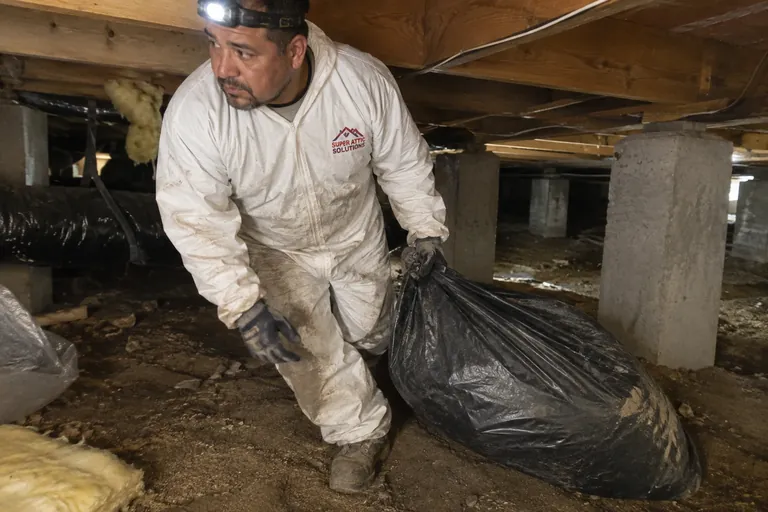
Droppings, fallen insulation, torn plastic and debris bagged and hauled out from under your house.
Learn more →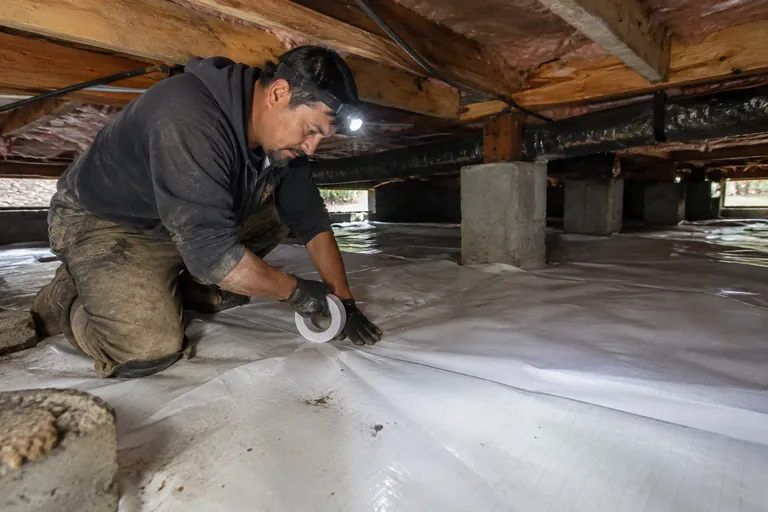
New crawl space ground cover, 6-mil or reinforced, lapped at the seams and run to the foundation walls.
Learn more →
Old insulation out, space cleaned and sealed, new insulation in, as one planned project.
Learn more →Book a free inspection. We'll photograph your attic and crawl space and walk you through what we find, before you decide anything.