

Heating, cooling & ducts
Furnace repair
Furnace diagnosis and repair: igniters, flame sensors, blowers, switches and airflow, with safety checks.
Learn more →Furnace replacement · Seattle & Puget Sound
Age, repair history and how your house actually heats tell you when a furnace is done. We give you a straight answer, then size and install the replacement properly.
 Moving a new furnace into place · Seattle, WA
The problem
Furnaces rarely fail all at once. They wear out piece by piece. The igniter goes one winter, the blower motor the next, then the inducer starts to whine. Each repair seems reasonable on its own. The real question is if the furnace as a whole still has years in it, or if you're paying to keep an old machine limping along. A cracked heat exchanger, rust in the burner area or a control board that's no longer made usually settles it.
Efficiency is the other side. Older standard furnaces send a share of their heat up the vent. Newer condensing furnaces capture more of it, venting through plastic pipe and draining off the water they produce. That doesn't mean every old furnace should go tomorrow. It means that when replacement is on the table, you should know what a new one changes and what it takes to install. We lay that out clearly before you decide.
Warning signs
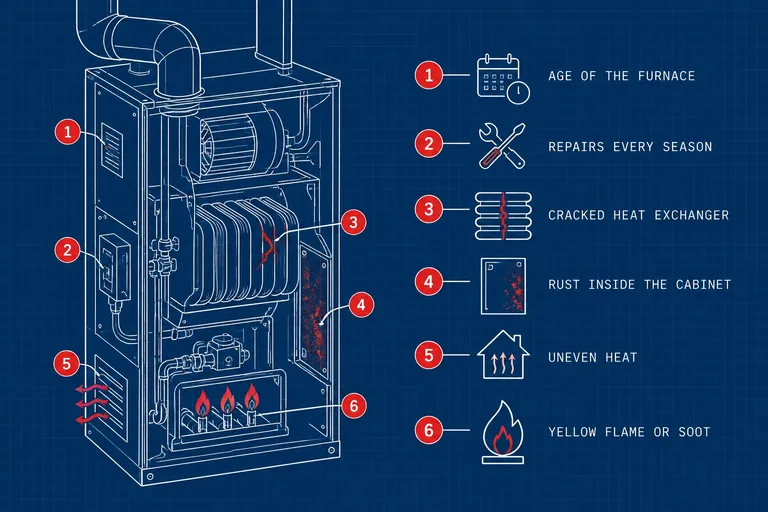
Any one of these is worth a conversation. Two or three together usually point to replacement.
If the furnace went in when the house was built in the 1980s or 1990s, it's well past the age most furnaces are expected to last.
When a new part fails every winter, the repair bills start to add up to a real share of the cost of a new furnace.
A cracked heat exchanger can let combustion gases into the airstream. It's a serious safety problem and usually ends the furnace's life.
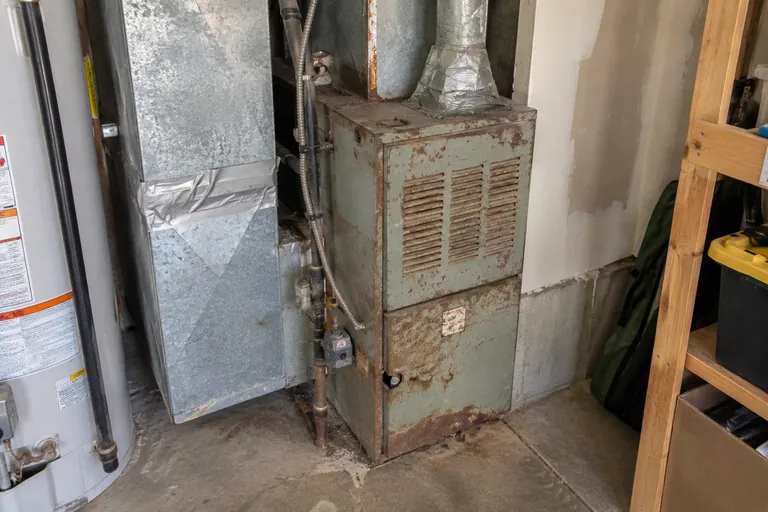
Rust on the burners, heat exchanger or cabinet floor, common in damp crawl spaces, means the furnace is breaking down.
If you're paying more each winter for a house that heats less evenly, both the furnace and the ducts deserve a look.
A lazy yellow flame or soot around the burners means poor combustion. Turn the furnace off and have it checked.
Proof of work
Drag the slider to compare. Illustrations of typical results on homes like yours.

 BeforeAfter
How we do it
Replacement starts with sizing and venting, not with picking a box.
We look at the furnace's age, condition, repair history and safety: heat exchanger, burners, venting and gas line. We also look at the ducts in the attic or crawl space, since a new furnace connected to leaky ducts won't heat any better. You get photos and a plain repair-or-replace recommendation.
Older furnaces were often oversized, and many homes have had insulation and window upgrades since. We size the new furnace to how the house heats today. A right-sized furnace runs longer, quieter cycles, heats more evenly and avoids the start-stop wear of an oversized unit.
A condensing furnace vents through plastic pipe and needs a condensate drain; a standard furnace vents through metal into a chimney or flue. If you're switching types, we plan the new vent route and drain, and check how the change affects a water heater sharing the old vent.
Gas and power are shut off, the old furnace is disconnected and hauled away, and the new one is set level on its base. We connect gas, venting, drain and electrical, and seal the supply and return plenums to the furnace so it isn't pulling air from the garage or crawl space.
We fire the new furnace, check gas pressure, temperature rise and venting, and set up the thermostat. Airflow is checked at the registers. You get a walk-through on the filter and settings, plus photos of the finished install for your records.
What you get
| Assessment | Age, safety, repair history and duct condition, with photos |
|---|---|
| Sizing | Furnace sized to the house as it is today |
| Removal | Old furnace disconnected and hauled away |
| Venting | New vent pipe fitted to the furnace type; shared vents checked |
| Condensate drain | Drain installed and tested on condensing furnaces |
| Plenums | Supply and return connections sealed to the new furnace |
| Gas and electrical | Gas line connected and leak checked; wiring connected |
| Start-up | Gas pressure, temperature rise and airflow checked |
Compare
Both are common replacements. The right one depends on your venting, drainage and plans.
| Factor | Standard furnace | Condensing furnace |
|---|---|---|
| Efficiency | Lower; more heat goes up the vent | Higher; captures heat from the exhaust gases |
| Venting | Metal vent, often into a chimney or shared flue | Plastic pipe, usually out a side wall or the roof |
| Drainage | No condensate drain needed | Needs a condensate drain and trap |
| Install fit | Simpler swap where the old vent is reused | May need a new vent route and drain |
| Shared vents | Water heater can often keep sharing the vent | Water heater venting may need updating |
Puget Sound homes
The long, mild heating season here wears furnaces down through hours rather than hard cold. A furnace in Lynnwood or Renton might run most days from October to May, year after year. Location adds to it. Furnaces in damp crawl spaces rust from the bottom up. Garage furnaces in Eastside homes breathe in dust from cars and workbenches. And some older Seattle homes still have furnaces converted from oil, sitting in basements with ductwork laid out for a very different system.
When we replace a furnace, we also think about the next step. Many homeowners here are pairing a new furnace with a heat pump, so the heat pump handles most of the heating and the furnace covers the coldest days. If that's on your list, it's easier to plan for it now than to rework things later. And because the ducts in so many local homes run through attics and crawl spaces, we check and seal them as part of the job.
Pricing
Your quote lists the furnace, the venting and any duct work separately. These are the factors.
Standard and condensing furnaces differ in cost, and so do single-stage, two-stage and variable-speed models.
Switching furnace types can mean a new vent route through a wall or roof and a new condensate drain.
A garage or basement swap is simpler than replacing a furnace in a tight closet, attic or crawl space.
Rusted plenums or leaky ducts at the furnace are worth replacing during the swap.
Pairing the furnace with a heat pump adds an outdoor unit, a coil and controls to the job.
Great service. I highly recommend this company. Wish I would have found them years ago... Isaac, Kareem and Irving were professional, courteous, and friendly. Pricing was clear and there were no surprises. Very happy with our experience.
FAQ
Still unsure? Call (800) 674-4933 and talk it through with us.
It varies a lot with how it was installed, how it's been maintained and where it sits. A furnace in a dry basement with regular filter changes outlasts one in a damp crawl space that ran on clogged filters. Rather than going by age alone, we look at condition, safety and repair history and tell you honestly how much life we think is left.
Repair is usually right for a single, common part on a furnace in decent shape. Replacement makes sense when the furnace is old, repairs come every season, or there's a safety problem like a cracked heat exchanger. We give you both options with a clear explanation, so you can weigh the cost of keeping it running against the cost of replacing it.
The heat exchanger is the metal chamber that keeps combustion gases separate from the air that goes to your rooms. Years of heating and cooling can crack it. A crack can let combustion gases, including carbon monoxide, mix with your house air. That's why a confirmed crack usually means replacing the furnace rather than repairing it, and why working CO alarms matter.
A condensing furnace wastes less heat, which counts over a long Puget Sound heating season. It also needs plastic venting and a condensate drain, which may mean new routing in your house. If your water heater shares the old vent, that venting may need updating too. We'll show you what it takes in your house so you can compare the options fairly.
Many homeowners here do. A ducted heat pump can use your existing ducts and handle both heating and cooling, with electric backup heat or a gas furnace for the coldest days. Some keep a new furnace and add a heat pump alongside it. We'll explain both paths and which fits your house, your ducts and your electrical service.
Not always. Sound, sealed ducts can be reused. But a new furnace connected to leaky or crushed ducts in the attic or crawl space will still leave rooms cold. We inspect the ducts as part of every furnace quote and photograph what we find, so you can decide whether to fix them during the swap.
Related services
Furnace diagnosis and repair: igniters, flame sensors, blowers, switches and airflow, with safety checks.
Learn more →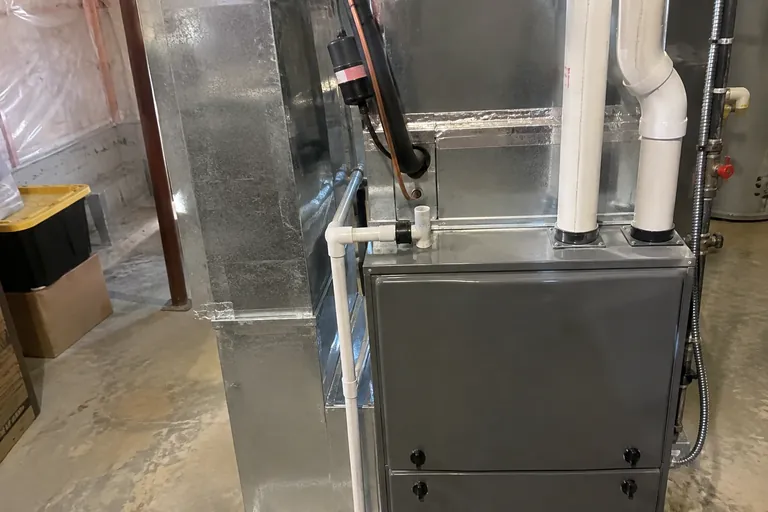
New furnace with AC or heat pump installed as a matched pair, with the ducts sealed and sized to carry both.
Learn more →
New HVAC systems planned from a load calculation, with ducts laid out room by room and permits planned in.
Learn more →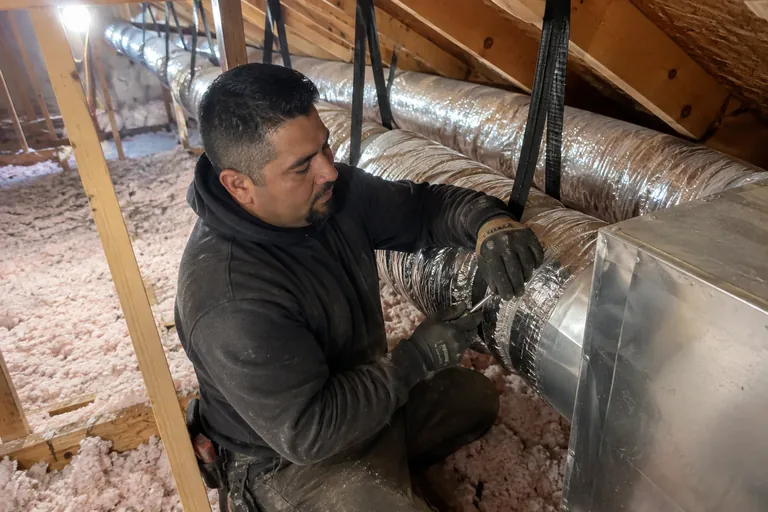
Damaged, leaky and rodent-fouled duct runs pulled and replaced, with sealed joints and photos of the work.
Learn more →Book a free inspection. We'll photograph your attic and crawl space and walk you through what we find, before you decide anything.