
Insulation
Attic insulation
How much insulation your attic needs, which material fits, and what it takes to get there.
Learn more →Attic insulation installation · Seattle & Puget Sound
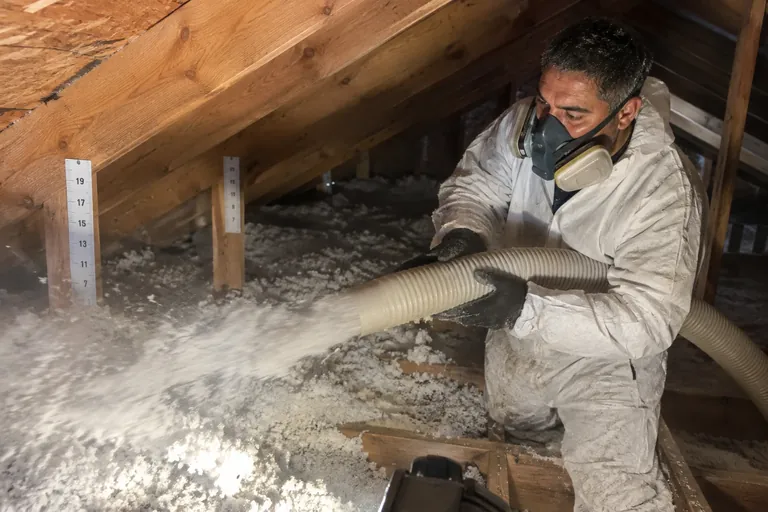
A good install is mostly prep. We seal the air leaks, open the eave vents and guard the hot spots, then lay down an even layer across every corner of the attic floor.
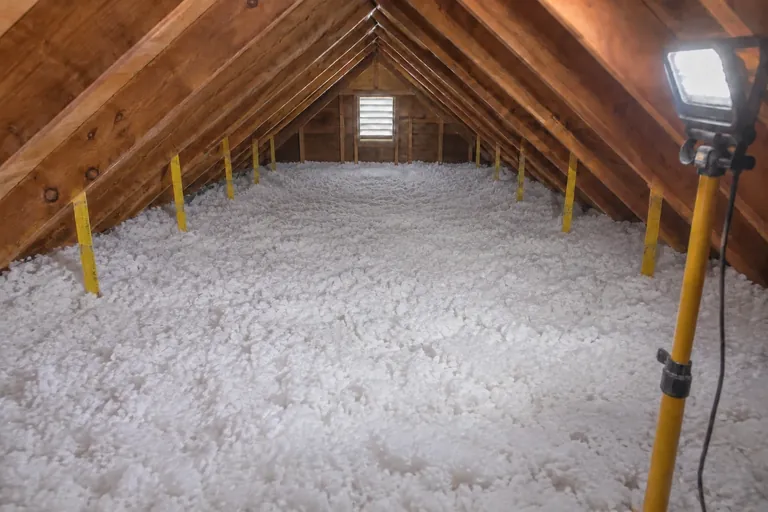
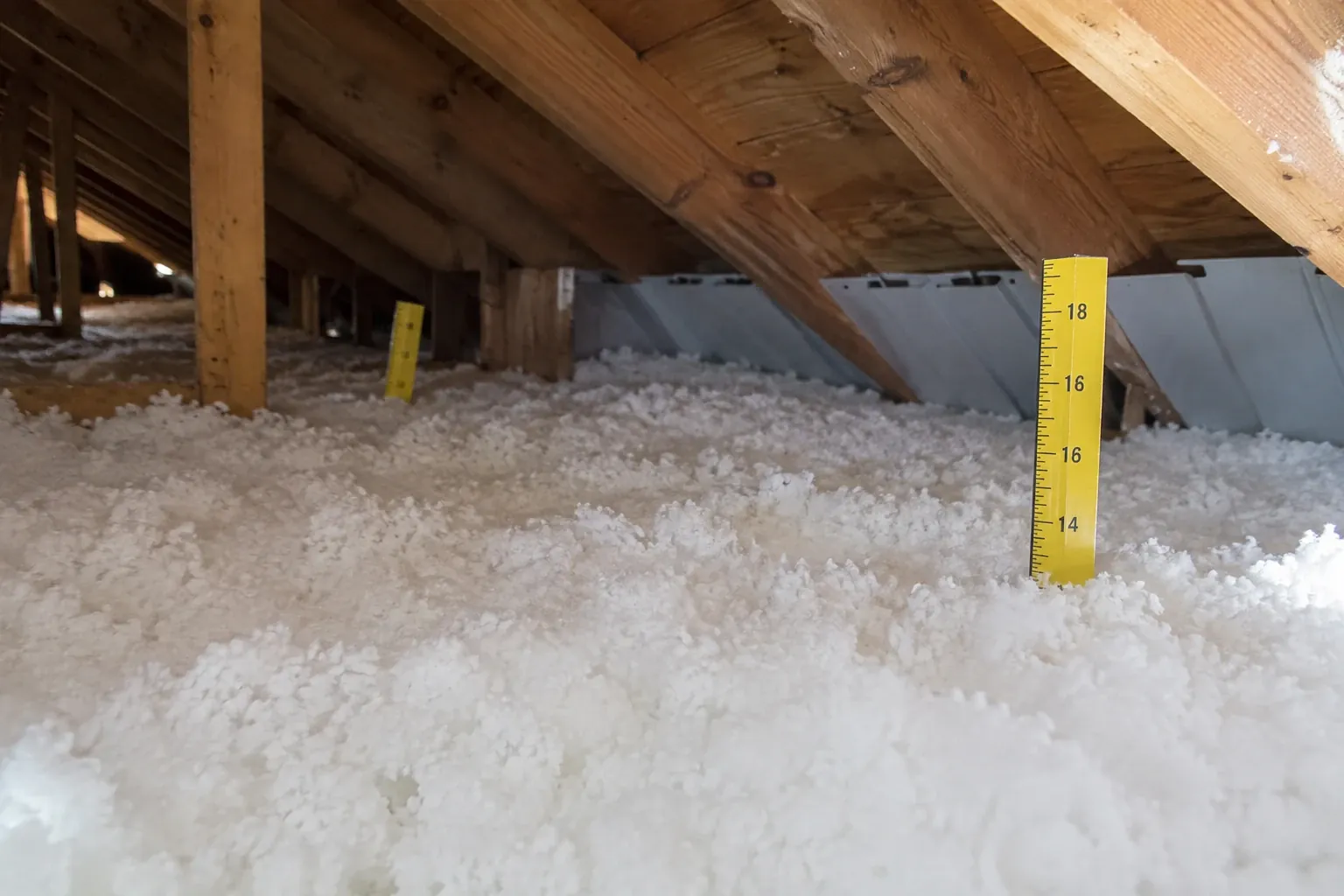 Newly installed attic insulation at full depth with depth rulers · Seattle, WA
The problem
Two attics can get the same bags of the same material and end up with very different results. In one, the installer blows insulation over open gaps around pipes and wires, buries the soffit vents and leaves the far corners thin because they were hard to reach. In the other, the leaks are sealed first, the eaves stay vented and the depth is even from wall to wall. The second attic keeps heat in. The first one mostly looks full.
Our installs follow the second pattern every time. Most of the work happens before the insulation hose ever goes up the ladder. That prep is what keeps warm air from leaking through the layer, keeps moisture from collecting on the roof deck in our long wet season, and keeps the new insulation doing its job for decades instead of a few winters.
Warning signs
These are the situations that usually bring people to us for an install.
Some homes were built with a thin layer, or with insulation missing over additions, bump-outs and the low edges over exterior walls.
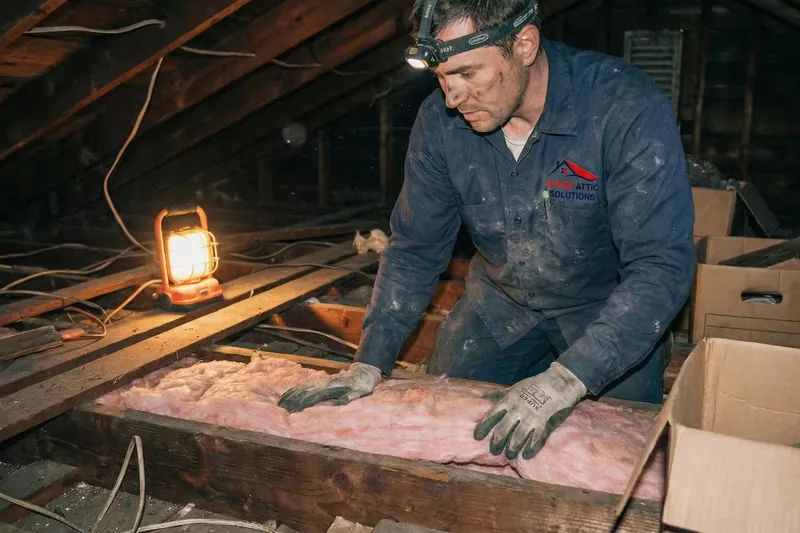
After a removal for rodents, mold or a roof leak, the attic floor is bare and the rooms below have almost nothing over them.
A reroof is a good moment to fix eave ventilation and sort out the attic at the same time, while the roof deck is being looked at.
A tighter, better-insulated attic lets a new heat pump or furnace keep up with less effort. It's worth doing in the same season.
Older recessed lights and bath fans leak warm air straight into the attic. Install day is when those get covered and sealed.
If you want to keep a storage area, we plan a raised walkway or deck so insulation can stay at full depth underneath it.
Proof of work
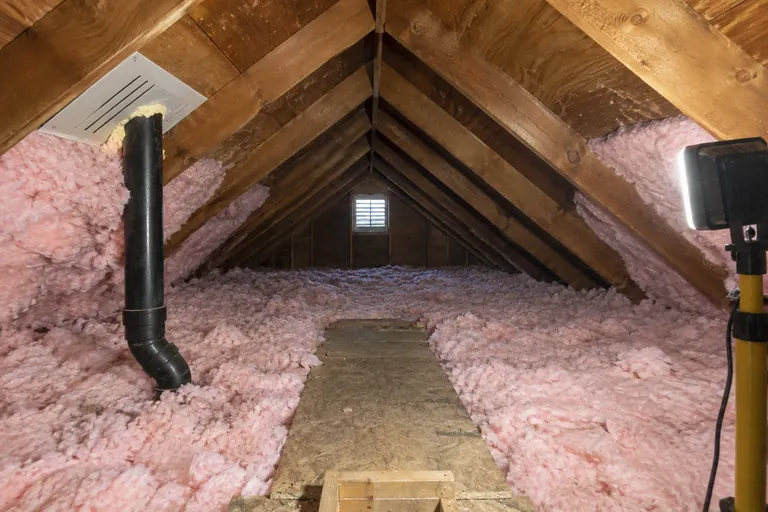
Drag the slider to compare. Illustrations of typical results on homes like yours.
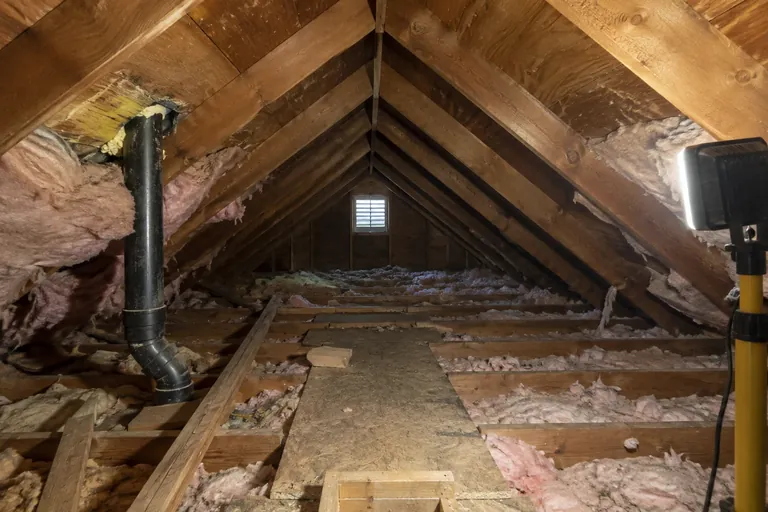 BeforeAfter
 STEP 01
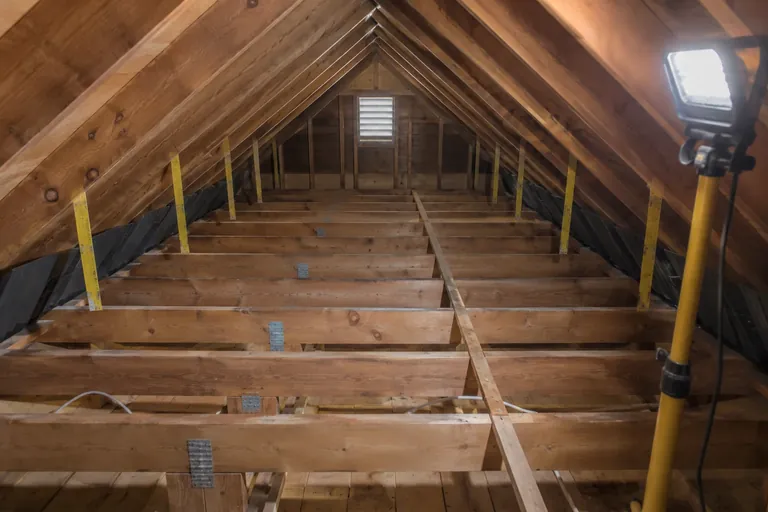
 STEP 02
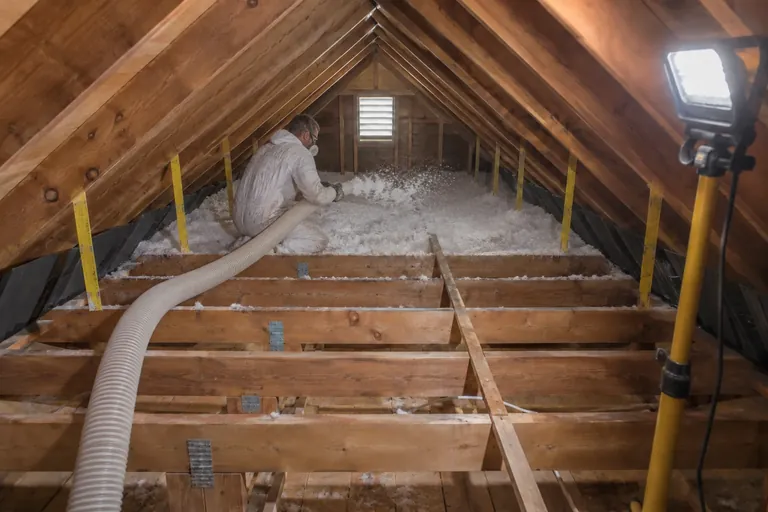
 STEP 03
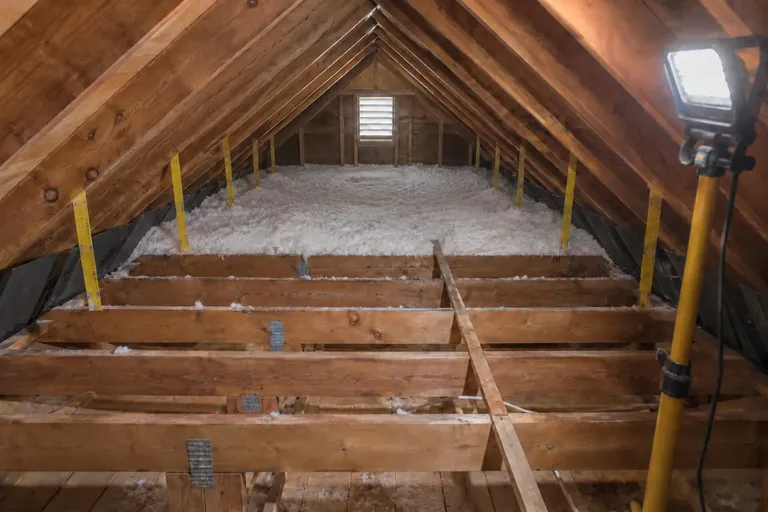
 STEP 04
How we do it
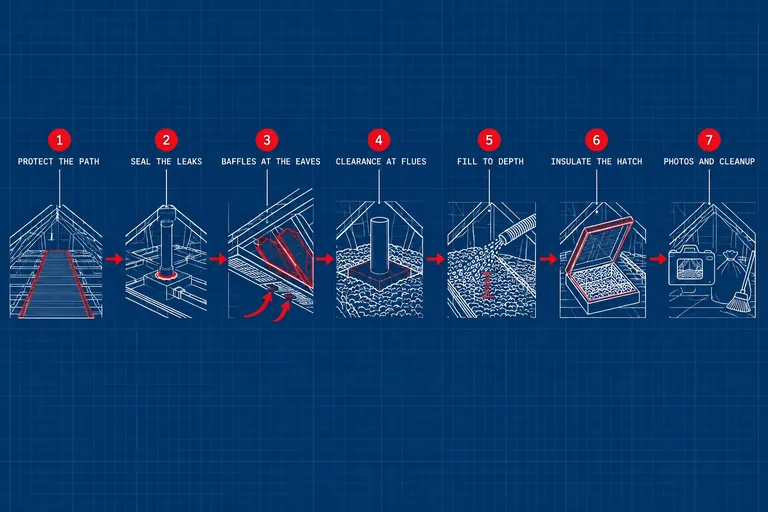
A typical attic install, in the order we do it.
We cover floors and furniture from the front door to the attic hatch and set up the insulation hose so it runs cleanly from the truck. If your hatch is in a closet, we clear and protect that space first. You don't need to move out or leave while we work.
We seal gaps around plumbing stacks, wiring holes, duct boots, light fixtures and the tops of interior walls. Older recessed lights get covers or proper clearance. These small openings move a surprising amount of warm, moist air from your rooms into the attic.
Baffles go in at every rafter bay over the soffit vents so the eaves keep breathing. We build a dam around the attic hatch so insulation stays put, and we keep required clearance around chimneys, flues and any light fixture that isn't rated for contact with insulation.
We blow or lay the insulation across the whole attic floor, working from the far corners back toward the hatch so nothing gets stepped on. We set depth markers on the joists so the finished depth is easy to check, and we insulate and weatherstrip the hatch cover.
We check depth in several spots, look over the eaves and clearances one more time, and photograph the finished attic from the same places as the before shots. Then we clean the work path, roll up the covers, put the hatch back and show you the photos before we leave.
What you get
| Air sealing | Top plates, plumbing and wiring holes, duct boots, fixtures |
|---|---|
| Eave baffles | Every rafter bay over a soffit vent |
| Clearances | Dams and gaps around chimneys, flues and non-rated fixtures |
| Hatch | Insulated and weatherstripped cover, with a dam around the opening |
| Insulation | Blown fiberglass, cellulose, batts, rolls or rockwool to plan |
| Depth check | Measured in several spots, with depth markers on the joists |
| Photos | Before and after, from the same spots |
| Cleanup | Floors covered on the way in, cleaned on the way out |
Compare
Some quotes skip the sealing to look cheaper. Here's what changes.
| Factor | Sealed, then insulated | Insulation only |
|---|---|---|
| Air leaks from rooms | Gaps closed at the source | Warm air keeps leaking up through the layer |
| Moisture on roof deck | Less humid air reaches the sheathing | Condensation risk stays the same |
| Soffit vents | Kept open with baffles | Often buried under new material |
| Comfort upstairs | Fewer drafts and steadier temperatures | Better than before, but drafts remain |
| Fixing it later | Done once while the floor is bare | Sealing later means digging through new insulation |
Puget Sound homes
In the Puget Sound, the biggest risk in an attic isn't cold. It's moisture. Warm air from showers, cooking and breathing rises into the attic through small gaps, meets roof sheathing that stays cool and damp from October to May, and condenses. Over a few seasons that shows up as dark staining, rusty nail tips and mold on the underside of the roof. Sealing those gaps before insulating does more for an attic here than extra depth alone. That's why our crews spend real time on the gaps.
Ventilation is the other half. Many homes here have soffit vents that were buried by an earlier insulation job, especially Eastside houses from the 1970s through the 1990s and older Seattle homes with shallow eaves. Baffles keep a clear channel from the soffit up to the roof vents so the attic can dry out between storms. On houses with cedar shakes, a low-slope roof or a vaulted section, we look closely at how the attic breathes before we fill it.
Pricing
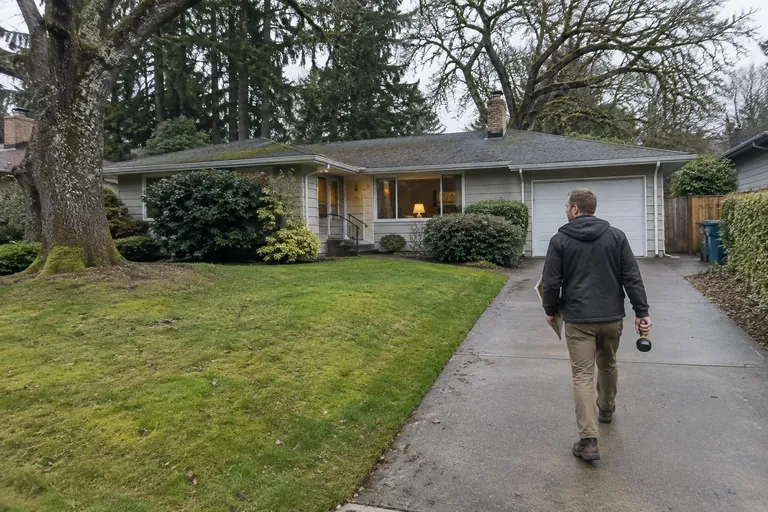
Every install is quoted after we've been in your attic.
Larger floors take more material. Low-pitch roofs and tight eaves take more time to reach and fill properly.
Each light fixture, fan, duct boot and plumbing stack is a separate sealing job. Some attics have many.
The material you choose and how far we're building up from what's there now.
How many rafter bays need baffles, and whether the hatch needs a dam, insulation or a new cover.
Raised walkways or decks over full-depth insulation add framing time and materials.
We had rodent problem in our house. Also our house had bare minimum insulation in some places. Isaac was very helpful, he also took some photos of the attic and crawl space. They gave me a reasonable quote for rodent proofing and insulation. Their crew was on time and finished the job in two days. Really appreciate their hard work.
FAQ
Still unsure? Call (800) 674-4933 and talk it through with us.
Most single-family attics are done in a day, including air sealing and cleanup. Larger attics, homes with lots of recessed lights, or jobs that start with removal of the old layer can run two days. We give you a time estimate with the quote, and the crew tells you at the start of the day what to expect.
Someone needs to let us in and be reachable during the day. You don't have to stay in one spot or leave the house. Most people go about their day while we work. We'll ask you to keep pets away from the open door and the hose path.
Very little. The insulation goes from the truck to the attic through a hose, and the path inside is covered. Blowing insulation is dusty in the attic itself, so we keep the hatch area closed off as much as possible and clean the path, the closet and the hatch surround before we leave.
Yes. Once the attic floor is covered in a deep layer, the gaps around pipes, wires and fixtures are buried and much harder to reach. Sealing first closes the paths that carry warm, moist air into the attic. Insulation slows heat moving through the ceiling; it doesn't stop air pushing through gaps.
Baffles are channels set between the rafters at the eaves. They hold insulation back from the soffit vents so outside air can flow in low and out through the roof vents. Without them, new insulation often blocks the vents, the attic stops drying out, and moisture builds up on the roof deck.
It depends on the fixture. Lights rated for insulation contact can be covered. Older ones that aren't rated need clearance or an approved cover so they don't overheat. We check each fixture during the inspection, tell you what you have and plan the install around it.
Related services
How much insulation your attic needs, which material fits, and what it takes to get there.
Learn more →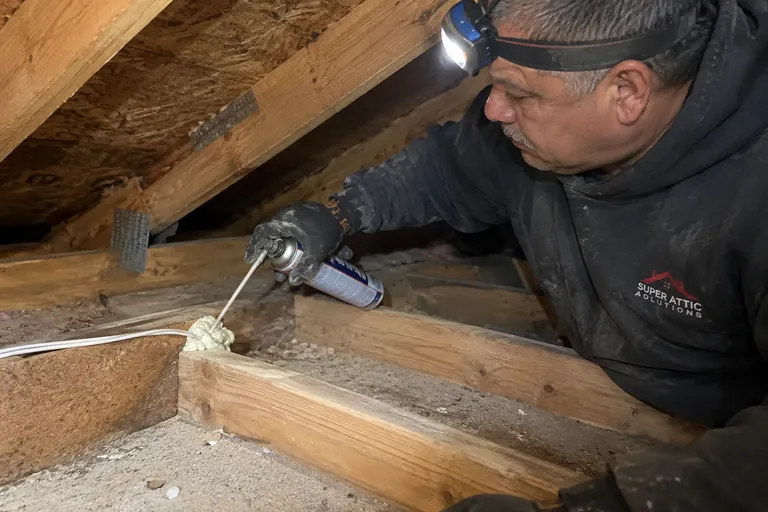
Sealing top plates, can lights, bath fans and chases from the attic side before new insulation goes in.
Learn more →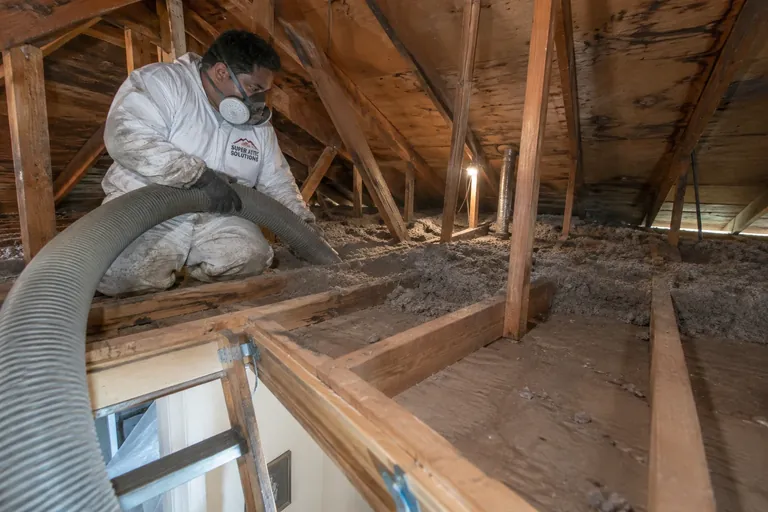
Vacuum removal of old, wet or contaminated attic insulation, bagged outside and hauled away.
Learn more →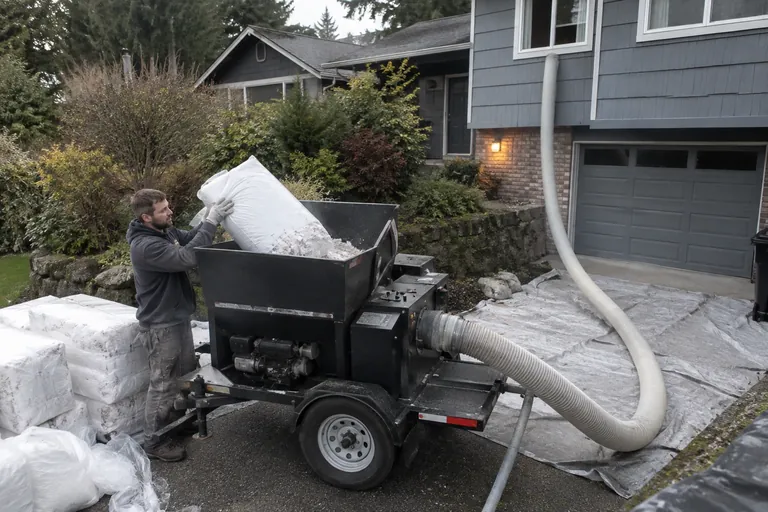
Fiberglass or cellulose loose fill blown to an even depth across the attic floor, corners included.
Learn more →Book a free inspection. We'll photograph your attic and crawl space and walk you through what we find, before you decide anything.