
Attic services
Attic fan installation
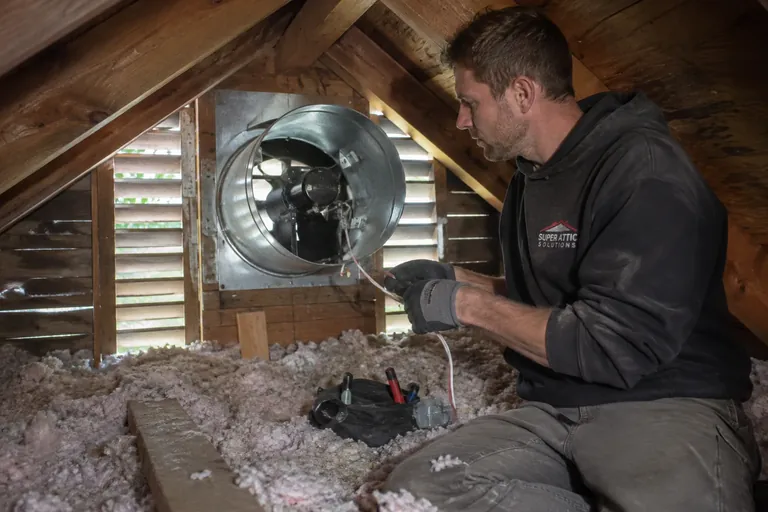
Powered roof and gable fans, sized to the attic, with intake balanced and ceiling leaks sealed first.
Learn more →Solar attic fan installation · Seattle & Puget Sound
A solar attic fan uses its own panel to push hot air out of the attic on sunny days. No wiring, no running cost. We place it where the sun reaches and make sure the attic is ready for it.
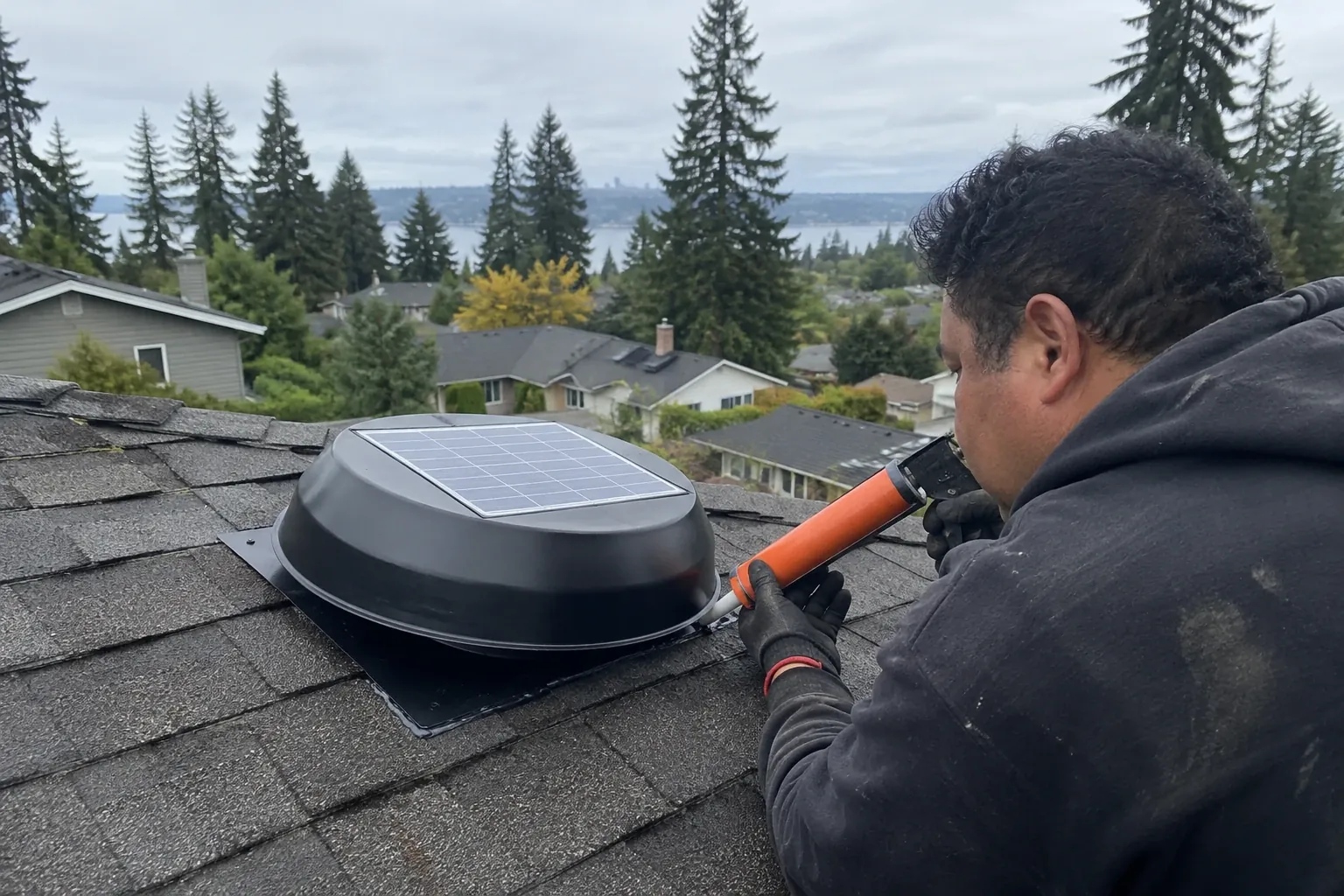 Solar attic fan on a composition shingle roof · Mercer Island, WA
The problem
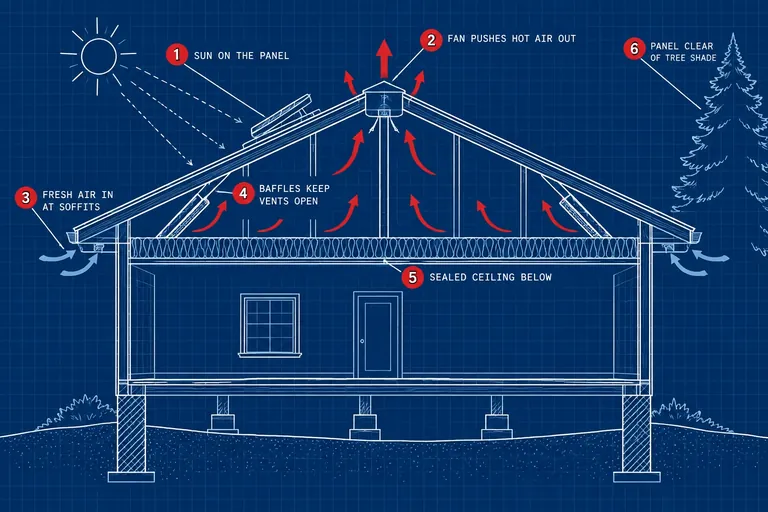
An attic gets hot for one reason: sun on the roof. A solar attic fan runs on that same sun. Its panel, mounted on the fan or on a separate bracket, powers a small motor that pushes hot air out of the attic. The brighter the sun, the faster the fan spins, so it works hardest on exactly the afternoons the attic needs it most. When clouds roll in or the sun goes down, it slows and stops.
There is no wiring to the house and no electricity bill, which makes installation simpler than a hardwired fan. The rules of ventilation still apply. The fan needs fresh air coming in through the soffit vents to replace what it pushes out. If the soffits are blocked or the ceiling is leaky, even a solar fan can pull air up from your rooms. Free power does not make that air free, so we check intake and air sealing before we install.

Warning signs
Solar fans work best on certain roofs and in certain attics. These are the good candidates.
A south or west roof slope that gets direct sun through the afternoon, without tall firs or neighbors' trees in the way.
There is no outlet or circuit near where a fan would go, and running new wiring would be awkward.
Rooms under the attic heat up on clear summer afternoons and stay warm into the evening.
The roof uses box vents or gable vents for exhaust, so a fan will not short-circuit through a ridge.
You want added ventilation without another motor on your electric bill or a thermostat to maintain.
Adding the fan during a reroof makes flashing it into the new shingles simple and clean.
How we do it
Placement decides how well a solar fan works. We spend time on it before anything is cut.
We look at which roof faces get afternoon sun and where trees, chimneys and neighboring houses cast shade. If the best fan location is shaded, a model with a separate panel lets us put the panel in the sun and the fan where the attic needs it.
Inside the attic, we check that soffit vents are open and not buried by insulation, and look for air leaks around lights, bath fans and the hatch. We add baffles and seal the leaks so the fan draws outside air from the eaves instead of air from your rooms.
We pick a fan sized to the attic and decide between a built-in panel and a remote panel. If the roof already has a ridge vent, we talk through whether a fan makes sense or whether more soffit intake would do the job better.
We cut the roof opening between rafters, set the fan, and flash it under the shingles above and over them below so water runs off. On cedar shakes and older roofs, we take extra care lifting the roofing so nothing cracks.
With the panel in sun, we confirm the fan spins up and that air is moving in from the soffits. We photograph the fan, the flashing and the attic side so you can see the finished work without climbing up yourself.
What you get
| Power | Solar panel on the fan or a separate panel bracket; no house wiring |
|---|---|
| Placement | Sun and shade mapped; fan placed for exhaust, panel placed for sun |
| Roof types | Composition shingles, cedar shakes and other roofs, flashed to suit |
| Intake check | Soffit vents checked; baffles added where insulation blocks them |
| Air sealing review | Ceiling leaks found and sealed before the fan goes in |
| Ridge vent check | Fan kept away from ridge vents to avoid short-circuiting |
| Testing | Fan run in sun; soffit airflow confirmed |
| Estimate | Free inspection and advice on whether solar suits your roof |
Compare
Both move hot air out. The differences are power, control and where they can go.
| Factor | Solar attic fan | Hardwired attic fan |
|---|---|---|
| Power source | Its own solar panel | House electrical circuit |
| Running cost | None | Uses electricity when it runs |
| When it runs | In daylight, faster in strong sun | When the thermostat or humidistat calls |
| Control | Sun-driven; some models add a thermostat | Thermostat, with optional humidistat |
| Placement limits | Needs sun on the panel; remote panels help | Needs power nearby; no sun needed |
| Best for | Sunny roofs without easy power access | Shaded roofs or homes wanting humidity control |
Puget Sound homes
Cloudy winters are less of a drawback than people expect. A solar fan runs when the sun is out, and sunny days are exactly when attics overheat. From late spring through early fall, the Puget Sound gets long, bright days, and the hot spells of the last few summers have pushed attic temperatures well past what many homes were built for. That is when a solar fan does its work. In the gray months it mostly rests, which is fine, because winter attic problems here come from moisture, not heat.
Shade is the real issue. Homes in Sammamish, Issaquah, Woodinville, Maple Valley and much of the Eastside sit under tall Douglas firs and cedars that shade the roof for part of the day. Moss on north-facing slopes is a clue that the sun rarely reaches. We map the shade before choosing a spot, and a remote panel often solves it. For winter moisture, air sealing the ceiling is the real fix, and we can do it in the same visit as the fan.
Pricing
We quote solar fan jobs after checking the roof, the shade and the attic.
Built-in panel fans and models with a separate panel cost different amounts to buy and install.
Composition shingles are simpler to flash than cedar shakes, tile or older brittle roofing.
Steep or high roofs need more safety setup and take longer to work on.
Sealing ceiling leaks and adding baffles or soffit vents adds time but makes the fan work.
Larger or divided attics sometimes need more than one fan for even airflow.
Daniel was thorough, professional, and quick to respond to all my questions. He crawled into a hard to reach places in my attic to make sure all my needs were met. I appreciate how quickly the Super Attic team completed the job and now my attic, crawl space and garage look infinitely better.
FAQ
Still unsure? Call (800) 674-4933 and talk it through with us.
Yes, on sunny days, which is when attics get hot. In summer the Puget Sound has long, bright afternoons, and a solar fan runs through them. On cloudy winter days it runs slowly or not at all. That is acceptable, because winter attic problems here come from moisture leaking up from the house, which air sealing fixes better than any fan.
No. The fan is powered by its own solar panel and is not connected to your home's electrical system. That is one of the main reasons people choose solar: there is no new circuit to run through the attic and no switch or outlet needed. We handle the roof work and the attic prep.
Most models do not, because they have no battery. They run when the panel is in light and stop when the sun goes down. That matches the attic, which cools off at night on its own once the sun is off the roof. A few models offer battery or plug-in backup; we can talk through whether that is worth it for your attic.
Often, yes. Some models have a panel that mounts separately from the fan on a bracket, connected by a cable. We can put the panel on the sunniest part of the roof and the fan where it ventilates best. If the whole roof is shaded most of the day, a hardwired fan is the better choice.
Not when it is flashed correctly. The fan's flashing goes under the shingles above it and over the shingles below, so water runs down and off. We seal the fasteners and check the flashing on composition and shake roofs alike. Most leaks around roof fans come from flashing installed upside down or nails left exposed.
It adds exhaust, but it does not replace the need for intake. The attic still needs soffit vents to let fresh air in. In some attics a solar fan lets us cover more ground with fewer box vents, but we keep the overall balance of intake and exhaust in mind before closing any existing vents.
Related services
Powered roof and gable fans, sized to the attic, with intake balanced and ceiling leaks sealed first.
Learn more →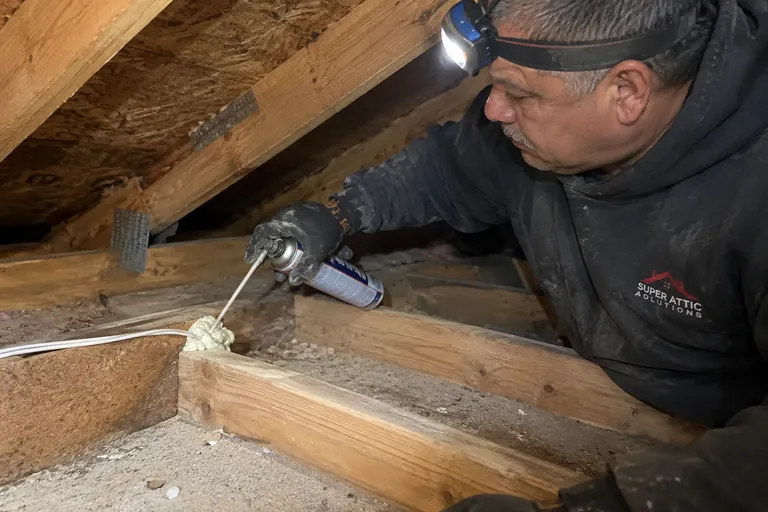
Sealing top plates, can lights, bath fans and chases from the attic side before new insulation goes in.
Learn more →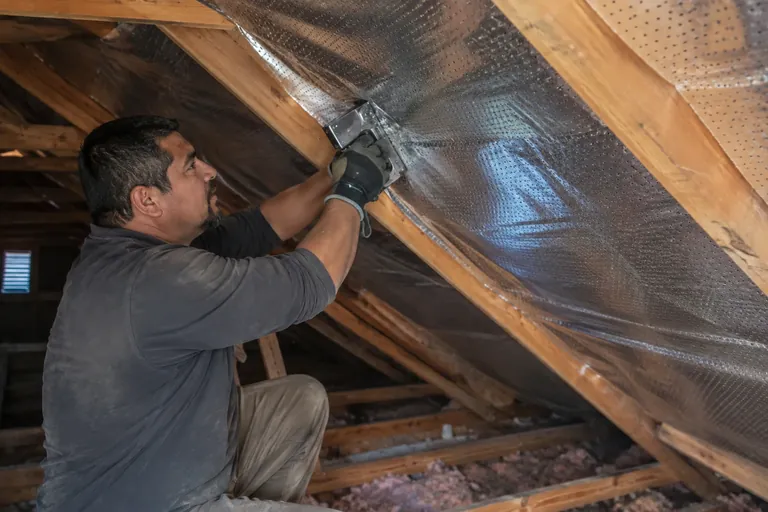
Reflective foil under the roof deck to cut summer heat in top-floor rooms, installed with an air gap.
Learn more →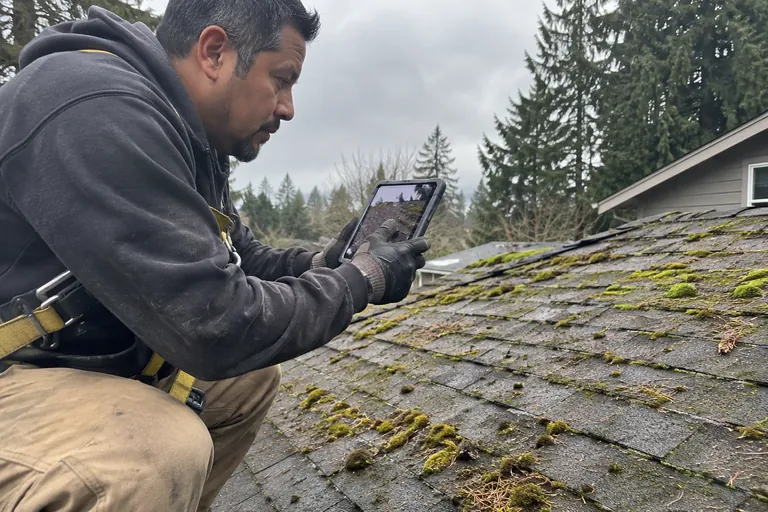
Outside and attic-side roof checks: flashing, moss, deck staining, daylight and ventilation, with photos.
Learn more →Book a free inspection. We'll photograph your attic and crawl space and walk you through what we find, before you decide anything.